PLC Selection Guide for Real Factory Needs
Author
Date Published
Reading Time
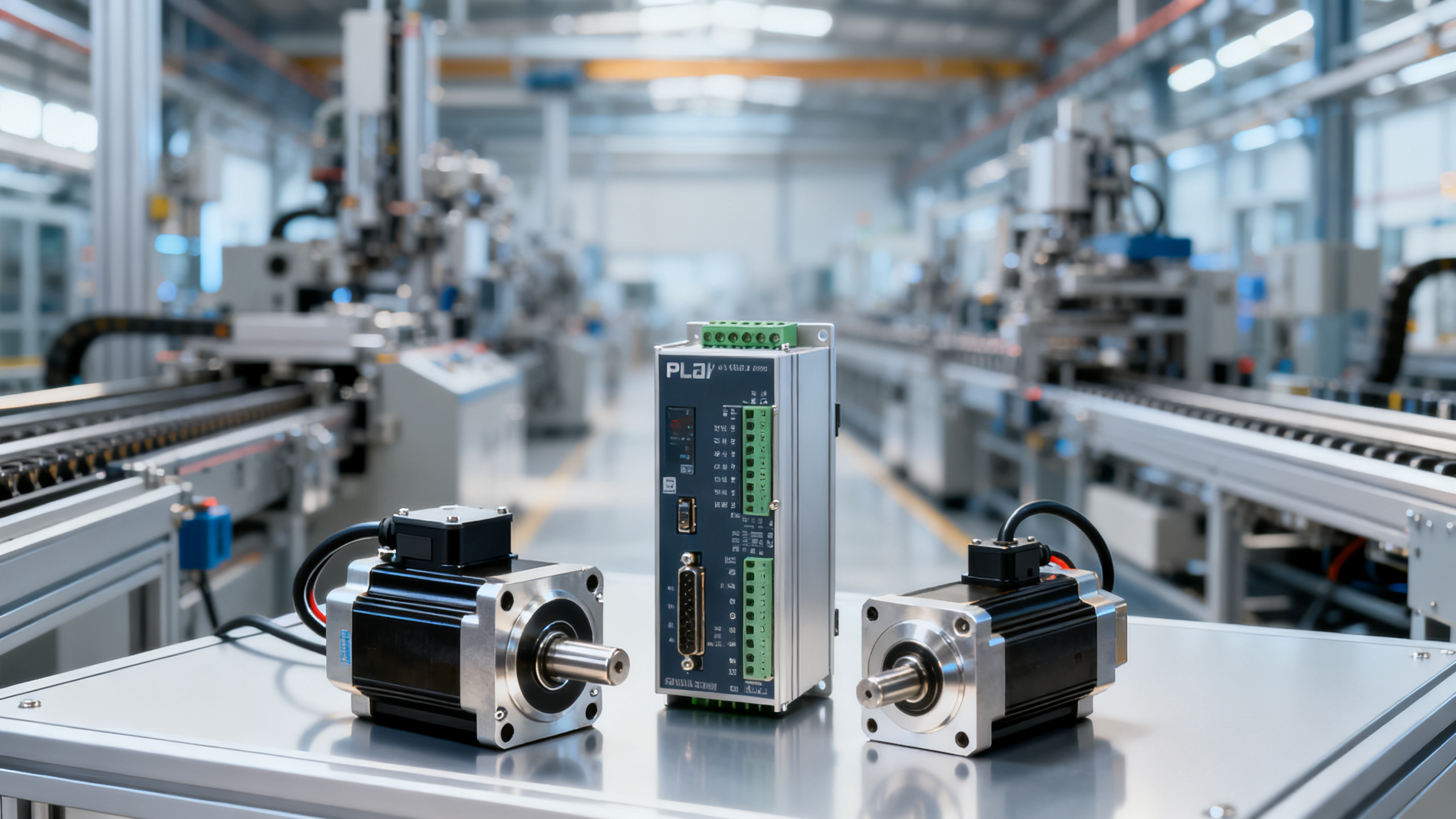
Choosing the right programmable logic controller plc means balancing control performance, safety, scalability, and long-term cost in real industrial environments. From variable frequency drive vfd integration and industrial servo motors to solid state relays ssr and uninterruptible power supply ups support, this guide helps information seekers, operators, buyers, and decision-makers evaluate PLC options with practical, factory-focused insight.
In heavy industrial facilities, a PLC is not just a controller on a panel. It is the coordination layer between field devices, power systems, operator actions, alarms, and production continuity. A poor selection can create communication bottlenecks, unplanned downtime, safety exposure, and expensive retrofit work within 12 to 24 months.
For EPC teams, plant engineers, procurement managers, and industrial decision-makers, the best PLC choice is usually the one that fits the actual factory environment, I/O structure, maintenance capability, and future expansion plan. This article focuses on how to evaluate PLC options in mixed industrial settings where reliability, compliance, and integration matter more than brochure specifications alone.
Start with the Real Control Environment
The first step in PLC selection is defining the operating context. A controller used in a water treatment skid, metals handling line, HVAC plant room, or packaging section may share basic logic functions, but the load profile, cycle speed, environmental stress, and safety interface can differ significantly. Temperature ranges of 0°C to 55°C may be acceptable in a cabinet room, while harsher sites may demand extended tolerance and stronger enclosure protection.
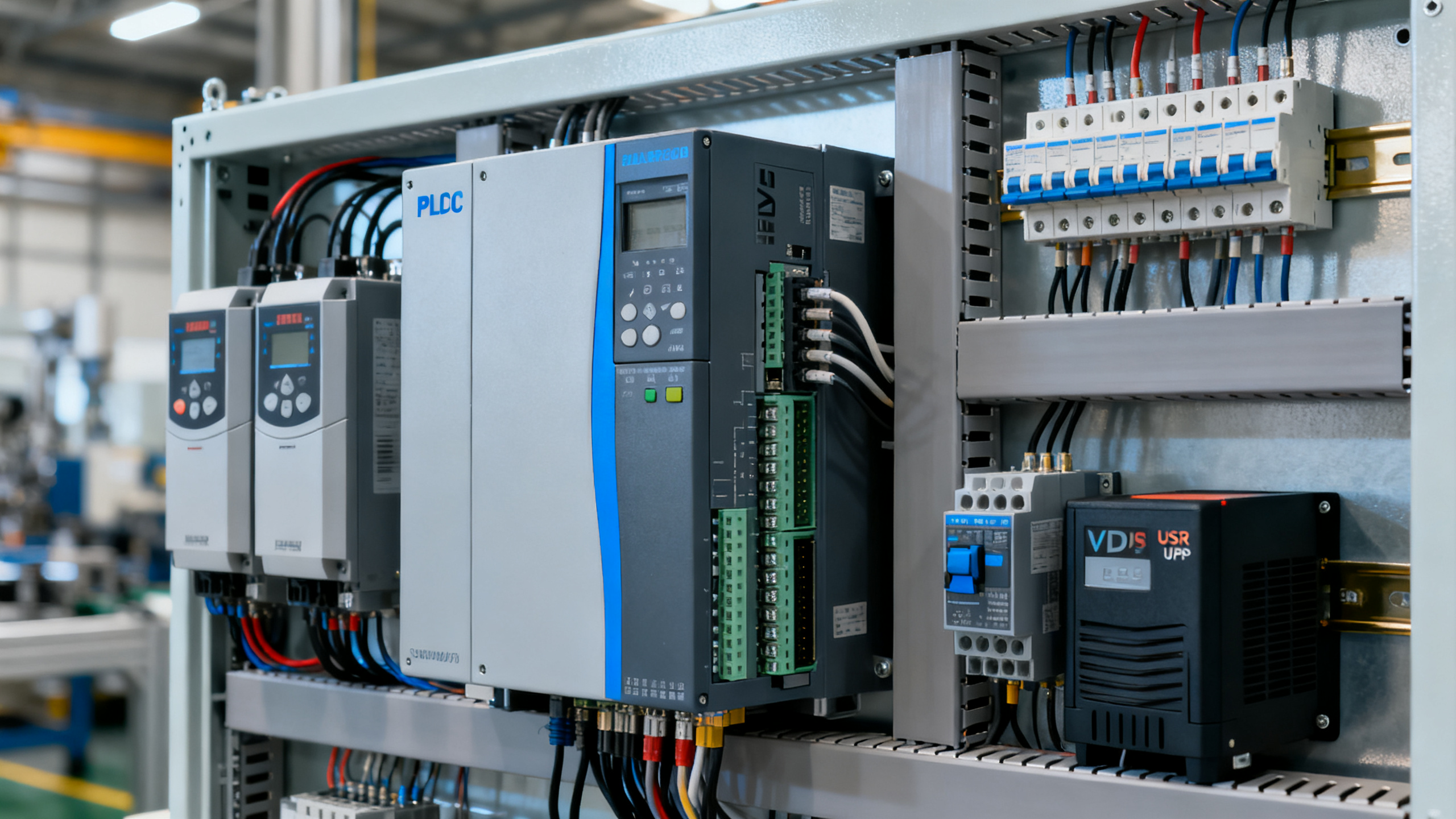
A factory-focused assessment should map at least 4 core layers: field inputs and outputs, motion or drive requirements, communication architecture, and continuity expectations during power events. If a line includes VFDs, servo axes, SSR-controlled heating, and a UPS-backed control cabinet, the PLC must support stable integration rather than isolated device control.
Many underperforming systems were not caused by weak PLC hardware, but by incomplete scope definition. Plants often estimate current needs correctly but understate future additions such as 20% more I/O, a secondary HMI, remote diagnostics, or data logging for maintenance and quality review. That creates forced expansion with extra modules, new licenses, and additional engineering hours.
Key site questions before comparing brands or series
- How many digital inputs, digital outputs, analog inputs, and analog outputs are needed now, and what is the likely increase over the next 2 to 3 years?
- Does the process require millisecond-level response, coordinated motion, PID loops, or only sequence control?
- Which protocols must be supported: Modbus TCP, Profinet, EtherNet/IP, Profibus, RS-485, or mixed legacy networks?
- What is the required recovery behavior after a voltage dip, short outage, or full restart?
The table below shows how common industrial scenarios shape PLC requirements. This helps procurement and engineering teams avoid treating all control projects as if they had the same complexity or risk level.
The practical takeaway is simple: match the PLC to the process profile, not just the purchase budget. In many factories, the cost difference between an undersized and properly sized PLC may be moderate at purchase stage, but the downstream cost of redesign, panel changes, and production disruption can be much higher.
Define the Right PLC Architecture and I/O Strategy
Once the operating environment is clear, the next task is choosing the architecture. In broad terms, most factories compare compact PLCs, modular PLCs, and distributed control-friendly PLC platforms. The right choice depends on I/O volume, cabinet space, process segmentation, and whether future expansion is expected in 6 months or 5 years.
Compact PLCs often work well for standalone skids or low-to-medium complexity cells with roughly 20 to 80 I/O points. They can reduce panel footprint and simplify wiring. However, they may become restrictive when adding extra analog channels, specialty modules, or network redundancy. Modular PLCs are usually better for plants expecting staged expansion, multi-panel deployment, or mixed signal types.
An effective I/O strategy should also separate critical and non-critical signals. Emergency stops, safety feedback, burner permissives, and utility shutdown interlocks should not be treated the same as status lamps or non-essential indication. This distinction influences module type, redundancy planning, and whether separate safety PLC or safety-rated I/O is required.
I/O planning factors that affect long-term cost
Teams should reserve headroom. A common industrial planning rule is to keep 15% to 30% spare I/O capacity, especially in projects that may later add sensors, valves, or metering points. This reserve reduces the need for urgent module replacement and saves engineering time during plant modifications.
Analog design deserves special attention. If a process uses temperature transmitters, pressure loops, flow monitoring, or level control, signal stability and module resolution matter. For example, heating systems with SSR switching and PID control can be sensitive to noise, grounding, and poor module isolation. In these cases, basic digital-focused PLC choices may create control instability even if the logic program itself is sound.
Typical architecture comparison
The table below compares common PLC structures in practical B2B selection terms rather than only hardware taxonomy.
In procurement terms, architecture should be evaluated over the asset lifecycle. A lower upfront controller price may look attractive, but if it drives additional relays, external gateways, rewiring, or software limitations, the installed cost can rise by 10% to 25% compared with a better-aligned platform.
Evaluate Integration with Drives, Motion, Power, and Safety
A PLC rarely works alone in modern industry. It must communicate cleanly with VFDs, industrial servo motors, motor starters, SSRs, HMIs, sensors, analyzers, and sometimes supervisory software. Selection therefore depends not only on logic capacity but also on how effectively the controller manages mixed device ecosystems without introducing latency or maintenance complexity.
For VFD integration, check whether the PLC can support command, speed reference, feedback, alarm status, and fault reset through the preferred communication method. Hardwired control is still used in many plants, but networked integration often improves diagnostics and reduces terminal count. On lines with 8 to 40 drives, protocol compatibility and diagnostic clarity can noticeably affect commissioning time.
Servo applications require even more care. If positioning, indexing, electronic camming, or synchronized motion is part of the process, the PLC must be evaluated for motion instructions, network determinism, and supported axis count. A controller suitable for pump logic may not be appropriate for a 4-axis or 8-axis assembly system even if the raw I/O count appears sufficient.
Power continuity and control stability
UPS support is often overlooked during PLC selection. In facilities with unstable utility power or critical batch states, even 5 to 15 minutes of clean control power can protect recipes, event logs, alarm history, and orderly shutdown routines. The PLC should be reviewed for power supply behavior, restart logic, retentive memory handling, and communication recovery after a short interruption.
SSR-controlled loads, especially in thermal systems, also affect selection. Fast switching, heat management, and noise sensitivity can influence output design and cabinet layout. If the process depends on stable temperature control within tight ranges such as ±1°C to ±2°C, the controller’s analog processing and update consistency become more relevant than basic relay logic capabilities.
Integration checklist for real factory projects
- Confirm supported protocols for present and future equipment, including at least one open or widely used industrial network.
- Review the number of drives, servo axes, and remote nodes expected in phase 1 and phase 2 deployment.
- Check alarm handling, diagnostics depth, and whether fault data can be surfaced clearly to HMI or SCADA.
- Assess startup and recovery behavior after a power event, UPS transfer, or device communication loss.
The most reliable PLC solution is the one that simplifies the whole control stack. That includes wiring discipline, troubleshooting speed, safe-state behavior, and the ability of maintenance teams to isolate a failed module or field device within minutes rather than hours.
Procurement Criteria: Beyond Price per Controller
Industrial buyers should treat PLC procurement as a lifecycle decision, not a catalog line item. Controller cost matters, but so do software licensing, spare part strategy, lead times, panel engineering impact, support coverage, and technician familiarity. A lower controller price can be neutralized quickly if the site later faces expensive training, long replacement delays, or limited local support.
Lead time is a practical risk factor. In some supply conditions, standard CPUs or I/O modules may ship in 2 to 6 weeks, while specialty modules or safety components can take longer. Buyers should check not only the headline PLC availability but also the full bill of materials, including power supplies, communication cards, terminal bases, and spare modules.
Documentation quality also affects total cost. Clear manuals, wiring references, alarm mapping, and software backup procedures reduce future dependence on a single programmer or integrator. In complex plants, maintainability can be as valuable as raw performance because it shortens fault response and supports multi-shift operations.
Core procurement factors to score
The table below can be used as a simple cross-functional scoring tool for engineering, operations, and sourcing teams during vendor comparison.
For many industrial organizations, the strongest buying decision comes from combining 4 viewpoints: engineering fit, maintenance practicality, sourcing resilience, and expansion potential. That broader lens tends to reduce surprises after installation and supports better asset planning across multiple facilities.
Implementation, Risk Control, and Common Selection Mistakes
Even a well-selected PLC can disappoint if implementation planning is weak. Control projects should define not just hardware choice, but also software standards, FAT and SAT expectations, spare philosophy, naming conventions, cybersecurity basics, and maintenance handover. A disciplined rollout often reduces commissioning delays and improves long-term serviceability.
A practical implementation path usually includes 5 stages: application definition, hardware architecture, panel and network design, factory testing, and site startup. For medium complexity systems, that process may run 4 to 10 weeks depending on panel fabrication, I/O count, documentation depth, and site readiness. Compressing those stages too aggressively can transfer hidden risk into startup.
Common mistakes include selecting a PLC only by existing brand familiarity, ignoring spare I/O capacity, underestimating analog and communication needs, or treating safety integration as an add-on. Another frequent issue is failing to plan the service model. A technically strong controller can still become a weak business choice if the plant cannot source modules quickly or train shift technicians effectively.
Frequent errors to avoid
- Buying for today’s exact I/O count with 0% reserve, which creates immediate expansion pressure after small process changes.
- Assuming all PLCs handle VFDs, servo devices, and third-party instruments with the same level of diagnostics or ease.
- Ignoring power quality and UPS behavior in facilities where brownouts or brief outages happen several times per year.
- Approving a platform without confirming local support, spare stocking, and software access for future maintenance teams.
FAQ for buyers and plant teams
How much spare capacity should a PLC system include?
For many industrial projects, 15% to 30% spare I/O is a practical planning range. Higher reserve may be justified in brownfield sites where future modifications are likely but not yet fully defined.
When is a modular PLC better than a compact PLC?
A modular PLC is usually the stronger choice when the project involves more than one panel, mixed analog and digital signals, remote I/O, specialty modules, or phased expansion. It is often preferred once the control scope exceeds simple machine-level logic.
Should UPS support be included in every PLC cabinet?
Not in every case, but it should be evaluated in every case. UPS support becomes especially valuable for critical utilities, batch processes, data retention, and controlled shutdown logic where even short interruptions can create product loss or restart risk.
The strongest PLC selection outcome comes from aligning controller choice with process demands, device integration, maintenance capability, and supply continuity. For factories handling drives, motion, power stability, and safety-sensitive operations, selection should be based on system fit rather than controller price alone.
Global Industrial Core supports industrial buyers, plant teams, and engineering decision-makers with practical guidance across electrical, measurement, safety, and foundational infrastructure systems. If you are comparing PLC platforms for a new line, retrofit, or multi-site standardization project, now is the right time to review the architecture before procurement locks in avoidable constraints.
Contact us to discuss your application, request a tailored selection framework, or explore broader control and power integration solutions for resilient industrial operations.
Expert Insights

Chief Security Architect
Dr. Thorne specializes in the intersection of structural engineering and digital resilience. He has advised three G7 governments on industrial infrastructure security.
Related Analysis
Core Sector // 01
Security & Safety
- How to Select Overhead Line FittingsAuthor :Heavy Industry Strategist

- Cross Arms and Hardware: Steel or CompositeAuthor :Heavy Industry Strategist

- Composite Polymer Insulators: Pros and LimitsAuthor :Heavy Industry Strategist

- Porcelain Insulators Wholesale: Avoid These IssuesAuthor :Heavy Industry Strategist

- Power Factor Correction Capacitor: Is It NeededAuthor :Heavy Industry Strategist

- How to Pick an Industrial Battery ChargerAuthor :Heavy Industry Strategist

- UPS Buying Mistakes to Avoid in 2026Author :Heavy Industry Strategist

- Wholesale Stepper Motors: Which Type FitsAuthor :Heavy Industry Strategist