Wholesale Stepper Motors: Which Type Fits
Author
Date Published
Reading Time
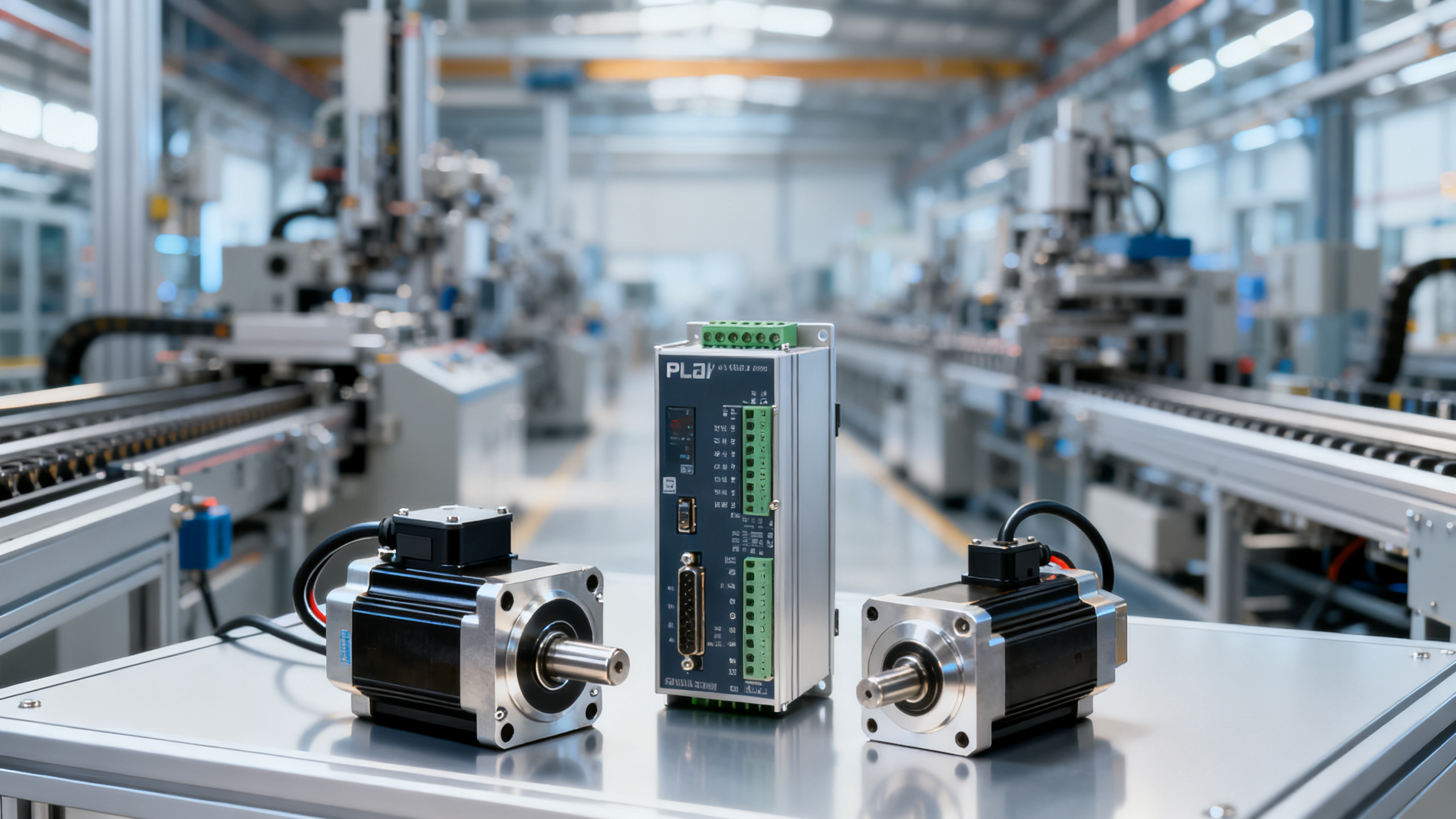
Choosing the right wholesale stepper motors can directly affect accuracy, efficiency, and long-term system reliability. For buyers comparing industrial servo motors, variable frequency drive vfd solutions, programmable logic controller plc integration, and soft starters wholesale, this guide explains which stepper motor type best fits different industrial applications, control demands, and procurement priorities.
How to classify wholesale stepper motors before you compare price
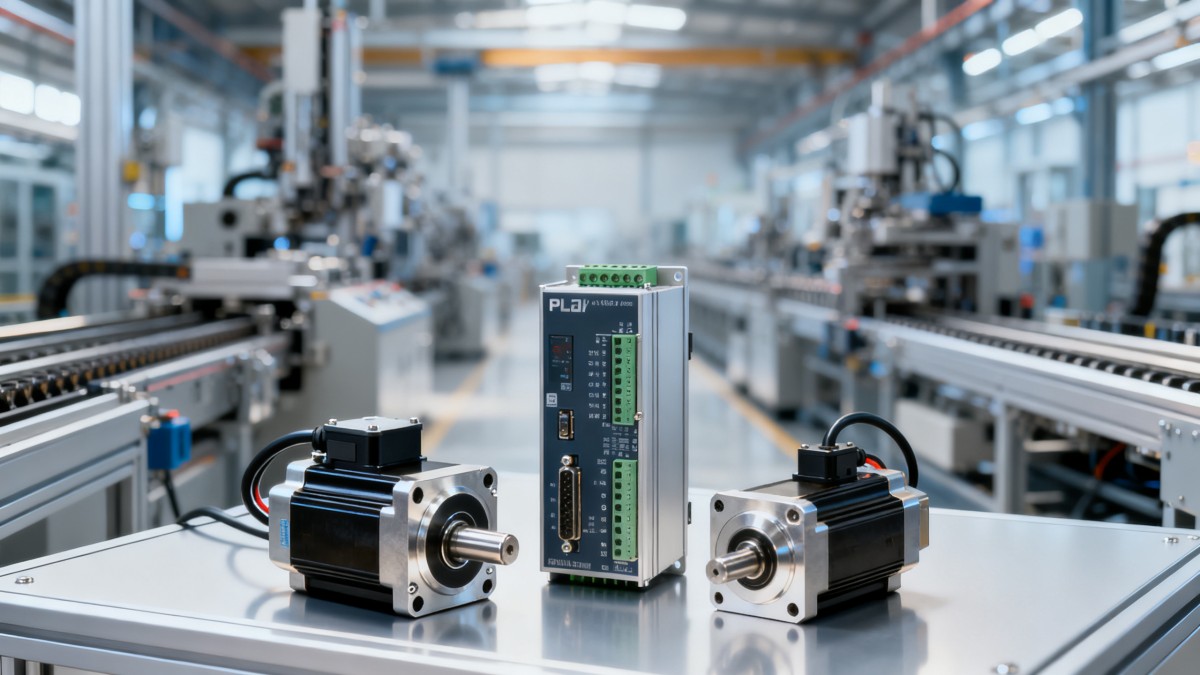
In industrial sourcing, stepper motor selection should begin with motion requirements rather than catalog price. A wholesale stepper motor may look cost-effective at first glance, but if torque drops too sharply above 300 rpm, or if the motor cannot maintain positioning under intermittent load, the total system cost rises through downtime, tuning delays, and replacement cycles. For procurement teams, the first task is to define the load profile, duty cycle, control architecture, and installation environment.
Most industrial buyers group stepper motors into three practical categories: permanent magnet stepper motors, variable reluctance stepper motors, and hybrid stepper motors. In most modern equipment, hybrid stepper motors dominate because they offer a useful balance of holding torque, positioning precision, and compatibility with common drivers. However, that does not mean every application needs the highest available specification. A conveyor diverter, lab dispenser, indexing table, and compact valve actuator each reward different design priorities.
For operators and maintenance teams, classification also matters because installation and troubleshooting differ. A 2-phase hybrid unit paired with a microstepping driver and PLC pulse control behaves differently from an integrated closed-loop stepper package. In facilities where commissioning windows are only 2–4 weeks, simpler architectures often reduce startup risk. In continuous-use environments, thermal management, enclosure layout, and cable routing may matter as much as nominal torque.
Global Industrial Core supports this kind of sourcing decision by framing motors as part of a wider industrial control chain. Stepper motor selection rarely stands alone. It often intersects with industrial servo motors for higher-speed segments, VFD-controlled drives for rotating equipment, PLC logic for synchronization, and soft starters wholesale programs for broader plant electrical planning. That system view helps decision-makers avoid isolated component purchases that later create integration friction.
The 3 main motor types buyers should understand
- Permanent magnet stepper motors: commonly used where moderate resolution and simpler control are acceptable. They can suit light-duty positioning tasks and compact devices with lower acceleration demands.
- Variable reluctance stepper motors: selected in more limited cases where simple construction and fast step response are valued, but holding torque and smoothness are usually less competitive.
- Hybrid stepper motors: the most common choice for industrial wholesale stepper motors because they combine finer step accuracy, stronger low-speed torque, and broad driver availability in NEMA and metric frame options.
The table below gives a practical comparison that helps buyers quickly narrow down which stepper motor family fits their application and budget level.
For most B2B buyers, hybrid stepper motors remain the default shortlist option, but the right answer still depends on torque-speed behavior, resolution target, control method, and operating temperature. The best procurement outcome comes from matching the motor type to the process, not from choosing the most advanced label.
Which stepper motor fits which industrial application?
Application fit is where many wholesale stepper motor decisions succeed or fail. A motor that performs well on a bench test may underperform in a dusty enclosure, at high ambient temperature, or under repeated stop-start motion. In the general industrial sector, stepper motors are commonly used in labeling systems, feeder mechanisms, valve positioning, inspection fixtures, dosing units, compact gantries, and auxiliary motion stages. In these applications, repeatability often matters more than raw speed.
If the machine must move short distances repeatedly with frequent dwell periods, stepper motors are often a strong fit. They provide stable holding torque and straightforward command control through PLC pulse trains or dedicated motion cards. Typical sweet spots include low-to-medium speed positioning, especially where movement occurs in cycles of a few milliseconds to several seconds. For multi-axis systems, controller compatibility becomes critical, particularly when the machine also includes VFD drives or industrial servo motors on other axes.
Where the application demands fast acceleration above the usual stepper torque band, or where load inertia changes significantly, servo solutions may be more suitable. Buyers comparing industrial servo motors and stepper motors should focus on mismatch risk. A stepper is often chosen for predictable loads and controlled travel lengths. A servo is often favored when speed, dynamic correction, or feedback-driven performance must remain stable across a wider operating envelope.
Operators should also consider environmental severity. In process plants, ambient temperatures may range from 10°C to 40°C in enclosed cabinets, while dust or vibration can reduce connector reliability. For such cases, the better question is not only which motor type fits, but which integrated motor-driver-cable package can maintain stable output for 8-hour, 16-hour, or 24-hour duty expectations.
Scenario-based selection logic
Light-duty indexing and dispensing
For dispensers, feeders, compact laboratory automation, and repetitive indexing modules, a hybrid stepper motor with microstepping is usually the most practical choice. It supports smooth incremental motion and simplifies integration with standard PLC outputs. In low-load equipment, buyers often prioritize frame size, mounting space, and driver simplicity over peak speed.
Packaging and synchronized line motion
In packaging or labeling equipment, stepper motors can work well for feeders, print alignment, or cutter positioning. However, if line speed varies frequently or if the axis must recover automatically from missed motion, a closed-loop stepper or servo motor may offer lower operational risk. This is especially true when the machine includes 3–5 coordinated motion points under one PLC.
Heavy load positioning or high-speed cycles
If the process involves high inertia, aggressive acceleration, or extended speed above the typical efficient range of a stepper, servo systems should enter the comparison early. This does not eliminate stepper motors, but it changes the shortlist. Procurement teams should compare not only motor price, but also tuning time, gearbox needs, current draw, and recovery behavior after overload events.
The following application table helps stakeholders align technical fit with operational conditions and budget expectations.
This comparison shows why industrial application context should lead the selection process. Buyers who specify motion profile, environment, and control method early usually avoid the most common sourcing mistakes.
What technical parameters matter most in procurement and integration?
For information researchers and procurement managers, technical data sheets can look complete while still hiding critical selection risks. The most important values are not always the most visible ones. Static holding torque, for example, is useful, but it does not describe how a wholesale stepper motor behaves at operating speed. Buyers should request torque-speed curves, current rating, phase configuration, inductance, rotor inertia, insulation class, and recommended driver voltage range.
In actual industrial use, three core indicators often decide success: usable torque in the target speed band, thermal behavior under duty cycle, and control compatibility with the host system. If the machine runs at 150 rpm, 300 rpm, or 600 rpm, the motor should be evaluated at that actual band rather than at standstill. If the cabinet has limited airflow, temperature rise becomes a design issue, not a maintenance issue. And if the PLC output pulse frequency is limited, control capability may cap the motor’s practical performance before the mechanics do.
Integration with PLC platforms is especially important in general industry projects. Many plants already standardize around programmable logic controller PLC architectures, so stepper driver selection must match signal type, pulse train capability, acceleration profile, and fault feedback strategy. In mixed-drive installations, a plant may use VFDs for pumps and fans, soft starters wholesale packages for larger motors, and stepper axes for precision modules. Electrical noise management and common grounding practices can affect reliability across the whole panel.
For decision-makers, the practical question is simple: can this motor meet the process target without adding hidden engineering hours? A low unit price loses value if commissioning takes 7–15 extra days because the driver is unstable, the motor overheats, or the pulse command structure conflicts with the control platform.
5 technical checkpoints before issuing a purchase order
- Confirm the real operating speed range, not only the static torque figure. This avoids oversizing or selecting a motor that stalls once speed rises.
- Match motor current, driver current, and cabinet cooling capacity. Thermal mismatch is one of the most common causes of unstable production starts.
- Check command and feedback interfaces with the PLC or motion controller, including alarm wiring and emergency stop behavior.
- Review shaft, flange, coupling, and mounting tolerances to reduce vibration, backlash, and alignment issues.
- Ask for documentation covering insulation, connection diagrams, recommended driver settings, and common commissioning parameters.
These checkpoints help bridge engineering and procurement. They also create a more reliable comparison when reviewing stepper motors against industrial servo motors or other motion options.
How to compare stepper motors, servo motors, VFD systems, and soft starters
Industrial buyers often compare wholesale stepper motors with technologies that serve different roles. That can lead to costly confusion. A stepper motor is primarily a positioning solution. A servo motor is also a positioning solution, but usually with wider dynamic control and feedback responsiveness. A VFD is generally used to control the speed of AC motors in rotating applications such as fans, pumps, and conveyors. Soft starters wholesale programs focus on reducing inrush current and mechanical shock during motor starting, not on precision positioning.
The right comparison framework depends on the process objective. If the target is accurate step-by-step motion over fixed travel, stepper motors deserve first consideration. If the target is variable-speed continuous rotation under fluctuating load, a VFD-driven motor is more relevant. If startup stress on a large induction motor is the main issue, a soft starter is the correct category. If the axis must maintain accuracy under changing inertia and recover dynamically from disturbance, servo technology may justify the higher system cost.
For enterprise decision-makers, this distinction matters during capital planning. It reduces category overlap and helps allocate budgets correctly across motion control, process drives, and power management. A plant modernization program may legitimately require all four: stepper axes for feeders, servo motors for high-speed packaging heads, VFDs for utility systems, and soft starters for larger line motors.
The comparison table below is designed for cross-functional teams who need a fast, practical decision map rather than a purely theoretical definition.
This side-by-side view helps procurement teams write cleaner specifications and ask the right suppliers the right questions. It also shortens internal approval cycles because technical and financial stakeholders can evaluate each technology against the correct objective.
What should buyers check on compliance, lead time, and supply risk?
In industrial infrastructure and manufacturing projects, motor sourcing is not only about function. It also involves documentation quality, conformity expectations, packaging robustness, replacement planning, and supply continuity. Depending on destination market and machine category, buyers may need to review CE-related documentation, UL-relevant component pathways, RoHS expectations, or ISO-based quality management consistency across the supply chain. The exact requirement depends on the equipment scope and jurisdiction, so procurement teams should define this early.
Lead time is another common blind spot. Standard stepper motor frames may be available more quickly than customized shaft lengths, integrated brakes, pre-assembled cables, or special connector layouts. In typical B2B sourcing, standard configurations may move in 7–15 days, while customized assemblies can extend to 3–6 weeks depending on component availability and testing steps. For line builders with rigid FAT schedules, this timing difference should be reflected in the sourcing plan from day one.
Supply risk rises when documentation is incomplete. A motor with no clear terminal diagram, no driver matching guidance, or no thermal recommendations can slow installation even if the product ships on time. For EPC contractors and industrial procurement directors, the smarter path is to evaluate the complete delivery package: motor, driver compatibility, mounting data, cable definitions, inspection method, and spare strategy for at least the first 12 months of operation.
Global Industrial Core approaches these decisions through a sourcing-and-reliability lens. That means helping buyers assess not only which wholesale stepper motors fit technically, but also which options reduce compliance uncertainty, support plant integration, and align with broader electrical and mechanical procurement plans.
A practical pre-award checklist for industrial buyers
- Define whether the order is for sample validation, pilot batch, or scaled production. The quality review depth and lead time expectation may differ across all 3 stages.
- Confirm required documents before payment approval, including drawings, wiring references, and any market-specific conformity support relevant to the equipment.
- Set acceptance criteria for torque, temperature rise, noise, and connection inspection so incoming checks are consistent across sites.
- Plan spare coverage for wear-related accessories, drivers, and key mounting components where downtime cost is high.
These steps reduce rework and create cleaner supplier comparisons, particularly when multiple countries, factories, or system integrators are involved.
FAQ and next-step guidance for stepper motor sourcing
Many searchers do not start with a full specification. They start with a problem: missed steps, unclear torque margins, uncertain PLC matching, or concern over delivery time. The answers below address the most common sourcing questions raised by researchers, operators, buyers, and decision-makers.
How do I know if a stepper motor is enough, or if I need a servo?
Start with four factors: speed, load variation, positioning accuracy, and recovery requirement. If the axis operates in a predictable load range and mainly performs repeated low-to-medium speed positioning, a stepper motor is often sufficient. If speed is high, inertia changes frequently, or the axis must correct itself dynamically after disturbance, servo comparison becomes necessary. A quick screening step is to review the required operating band at 150–600 rpm and compare it against the motor’s usable torque curve rather than static torque alone.
What matters most when buying wholesale stepper motors in volume?
Volume buyers should focus on consistency as much as performance. Key areas include torque-speed stability across batches, connector and cable standardization, documentation quality, driver matching, and lead time predictability. In many industrial projects, the savings from avoiding one commissioning delay or one field retrofit outweigh minor unit-price differences across a medium batch or annual frame agreement.
Can a PLC control stepper motors directly?
In many systems, yes, through pulse and direction outputs or dedicated motion modules. However, the practical answer depends on pulse frequency capability, acceleration control, fault handling, and driver interface requirements. Before ordering, verify 4 items: command type, alarm return method, emergency stop behavior, and synchronization needs with other devices such as VFDs or servo axes.
What are common buyer mistakes with stepper motors?
The most frequent errors are selecting by holding torque only, ignoring thermal conditions, overlooking driver quality, and assuming every stepper can replace a servo. Another common issue is treating motors as standalone items when the real procurement unit should be the motor-driver-control package. In industrial environments, the interface around the motor often determines reliability more than the nameplate itself.
Why choose a sourcing partner with broader industrial system insight?
Because stepper motor performance depends on the surrounding system. Projects involving PLC integration, industrial servo motors, VFD infrastructure, and soft starters wholesale planning need component choices that work together. A sourcing partner with cross-discipline industrial knowledge can help shorten evaluation cycles, identify mismatched specifications early, and support clearer RFQs for plant, OEM, or EPC environments.
Why work with Global Industrial Core for your next evaluation?
Global Industrial Core helps B2B buyers move from broad product search to defensible procurement decisions. If you need support on parameter confirmation, wholesale stepper motor type selection, driver and PLC matching, lead time review, alternative comparison with industrial servo motors, or documentation expectations for regulated projects, the discussion can be structured around your actual application. You can also inquire about sample support, batch planning, custom configuration feasibility, and quotation alignment for multi-site or multi-equipment programs.
A useful first consultation usually includes 5 inputs: application description, load data, speed target, control platform, and project timeline. With those basics, it becomes easier to evaluate whether a standard hybrid stepper motor, a closed-loop package, or an alternative motion solution is the better commercial and technical fit.
Expert Insights

Chief Security Architect
Dr. Thorne specializes in the intersection of structural engineering and digital resilience. He has advised three G7 governments on industrial infrastructure security.
Related Analysis
Core Sector // 01
Security & Safety
- How to Select Overhead Line FittingsAuthor :Heavy Industry Strategist

- Cross Arms and Hardware: Steel or CompositeAuthor :Heavy Industry Strategist

- Composite Polymer Insulators: Pros and LimitsAuthor :Heavy Industry Strategist

- Porcelain Insulators Wholesale: Avoid These IssuesAuthor :Heavy Industry Strategist

- Power Factor Correction Capacitor: Is It NeededAuthor :Heavy Industry Strategist

- How to Pick an Industrial Battery ChargerAuthor :Heavy Industry Strategist

- UPS Buying Mistakes to Avoid in 2026Author :Heavy Industry Strategist

- Wholesale Stepper Motors: Which Type FitsAuthor :Heavy Industry Strategist