Power Factor Correction Capacitor: Is It Needed
Author
Date Published
Reading Time
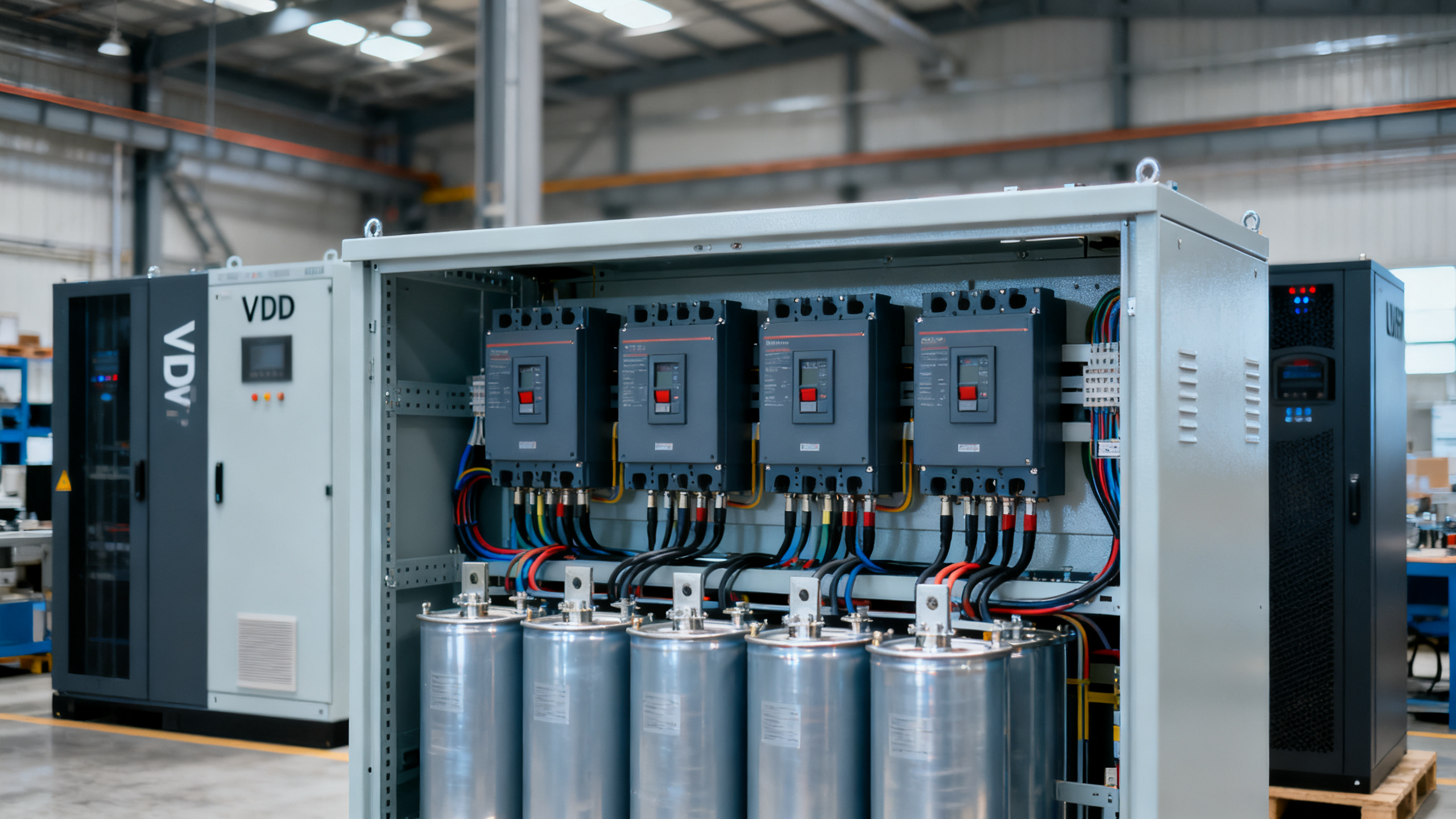
Is a power factor correction capacitor truly necessary for modern industrial systems? For researchers, operators, buyers, and decision-makers evaluating electrical efficiency, compliance, and long-term operating costs, understanding its role is essential. From variable frequency drive vfd setups to uninterruptible power supply ups integration, the right power factor correction capacitor can improve power quality, reduce penalties, and support more resilient infrastructure.
In heavy industry, commercial facilities, and mixed-use industrial estates, the question is rarely whether reactive power exists. The real question is how much it is costing the operation in wasted capacity, utility charges, voltage instability, and reduced room for future expansion. A power factor correction capacitor becomes relevant when inductive loads such as motors, transformers, welders, compressors, and HVAC systems pull more reactive power than the system can economically tolerate.
For procurement teams, the topic is not only technical. It directly affects transformer loading, cable sizing, demand charges, panel design, and maintenance planning over a 3-year to 10-year asset cycle. For operators, poor power factor can show up as overheating, nuisance tripping, or a plant that appears fully loaded even when useful output has not reached its design threshold.
This article explains when a power factor correction capacitor is needed, when it is not, how to select the right configuration, and what risks to avoid in applications involving VFDs, UPS systems, and broader industrial power distribution.
What a Power Factor Correction Capacitor Does in Industrial Power Systems
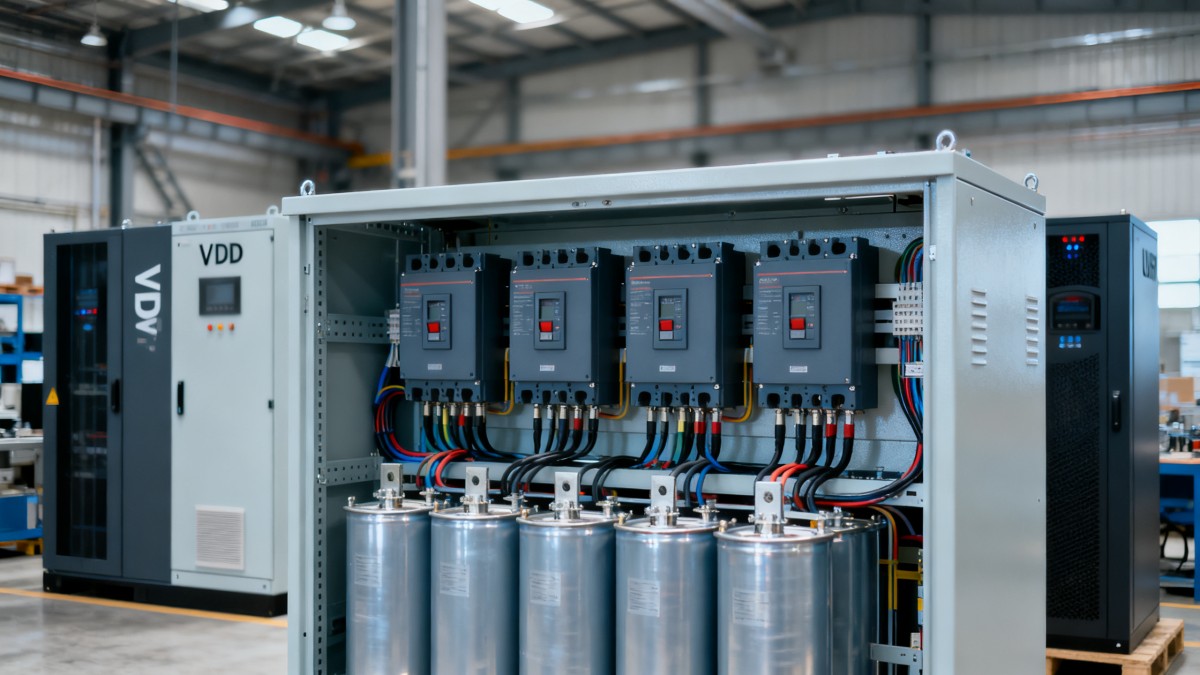
A power factor correction capacitor supplies reactive power locally, reducing the amount that must be drawn from the upstream network. In practical terms, it helps a facility move its power factor from values such as 0.72 or 0.80 closer to 0.95 or above, depending on the utility target and the system design. That improvement can release transformer capacity, reduce line current, and lower avoidable charges tied to poor power factor.
Most industrial loads are not purely resistive. A 75 kW motor, a large air compressor, or a bank of magnetic ballasts can all introduce inductive demand. Even when real power consumption remains stable, apparent power rises, meaning the electrical infrastructure must carry more current than necessary. This is why a plant with stable output can still experience excessive loading at the switchboard.
Power factor correction is commonly deployed at 3 levels: centralized correction at the main distribution board, group correction for a process area, and individual correction for dedicated motor loads. The most suitable level depends on load variation, harmonic content, and how often equipment starts and stops during a shift. In a process line with fast cycling loads every 30 to 90 seconds, automatic stepped correction is often more practical than fixed capacitors.
A power factor correction capacitor is not a universal cure for every power quality issue. It does not replace harmonic filtering, voltage regulation, surge protection, or proper grounding. However, in systems where the main inefficiency is reactive power demand, it is often one of the fastest electrical upgrades to justify on a cost-per-impact basis.
Key electrical effects that matter to operations
- Lower current draw for the same useful output, which can reduce thermal stress on cables and switchgear.
- Improved utilization of transformers, generators, and feeders, especially where spare capacity is below 15%.
- Potential reduction in utility penalties when the billing threshold is set at 0.90, 0.92, or 0.95.
- Better voltage support at load points in long cable runs or distributed plant layouts.
The table below shows how plant conditions typically influence the need for power factor correction. These are planning ranges, not a substitute for a site study, but they help buyers and engineers identify priority situations.
The main takeaway is simple: if the system is inductive, consistently below the target power factor, and paying for avoidable current or utility penalties, a power factor correction capacitor is usually not optional. It becomes an operating efficiency tool and, in many cases, a capacity recovery measure.
When Is a Power Factor Correction Capacitor Actually Needed?
The need becomes clear when electrical data and business impact align. If monthly utility bills include reactive power charges, if feeder current remains high despite moderate production output, or if a transformer runs near 80% to 90% loading during routine operations, correction should be evaluated without delay. In many facilities, the issue is not visible until expansion plans reveal that spare electrical capacity is already consumed by poor power factor.
Typical candidates include manufacturing plants with motor loads above 40% of connected demand, water treatment facilities with large pump sets, warehouses with centralized HVAC and refrigeration, and process industries using conveyors, crushers, compressors, and older induction equipment. In these settings, the cumulative reactive burden can be significant even when each individual machine seems manageable.
On the other hand, not every installation needs conventional capacitor correction. Facilities dominated by modern active front-end drives, highly electronic office loads, or low-load standby systems may see limited benefit from standard capacitor banks. In such cases, the better solution may involve active harmonic filtering, improved load balancing, or no correction at all until operating patterns change.
A disciplined decision starts with at least 7 to 14 days of load profiling. Short snapshots can miss shift changes, seasonal HVAC patterns, and weekend demand behavior. Decision-makers should examine average power factor, minimum and peak values, kvar demand, harmonic distortion, and the timing of major inductive loads. Without this, a capacitor bank can be undersized, oversized, or poorly switched.
Practical triggers for a site assessment
- Utility billing shows reactive energy or low power factor penalties for 2 or more billing cycles.
- Measured power factor stays below 0.90 during at least 30% of operating hours.
- Transformers, generators, or main feeders are close to capacity and expansion is planned within 12 to 24 months.
- Voltage dips or overheating appear in long cable runs supplying motor clusters.
Situations where caution is required
Applications with high harmonic distortion need more than a basic capacitor bank. VFD-rich systems, rectifier loads, and some UPS topologies can excite resonance if standard capacitors are added without detuning reactors. In these cases, a 5.67%, 7%, or 14% detuned configuration may be considered depending on network conditions, harmonic spectrum, and local engineering practice.
Another caution area is intermittent or lightly loaded generators. Overcorrection can drive the power factor too far leading, which may destabilize generator voltage regulation. This is one reason temporary power systems and backup generation schemes often require staged control logic rather than fixed correction.
The comparison below helps distinguish straightforward cases from those requiring more advanced design review.
For most industrial buyers, the decision threshold is practical: if correction improves billing performance, frees capacity, and does not introduce harmonic or control risks, then the power factor correction capacitor is needed. If those conditions are not confirmed, more measurement should happen before purchase.
How VFD and UPS Applications Change the Decision
VFD and UPS systems are now common in modern industrial infrastructure, but they change how a power factor correction capacitor should be selected. A legacy rule of simply adding kvar to offset motor loads is no longer enough. Drives and UPS units introduce non-linear current, harmonic distortion, switching behavior, and control interactions that affect both capacitor life and network stability.
With VFD installations, the motor itself may no longer be the main reason for poor displacement power factor at the grid interface. Some drive designs already present a relatively favorable input power factor, while still contributing current harmonics. That means a site can appear acceptable on one metric but problematic on another. A capacitor bank that ignores harmonic conditions may run hot, trip frequently, or resonate with the supply impedance.
UPS-backed systems require similar care. In data-sensitive process control rooms, healthcare support buildings, and continuous manufacturing environments, the upstream power correction strategy must not compromise backup performance or bypass behavior. Capacitor switching transients can also affect sensitive electronics if placement and protection are poorly engineered.
The safest approach is to review the single-line diagram, identify where the VFDs and UPS units sit relative to the main distribution board, and determine whether correction should be centralized, section-based, or integrated with filtering. In many plants, 1 poorly placed capacitor bank can create more operating instability than 3 smaller coordinated banks.
Design checkpoints for VFD-heavy and UPS-supported systems
- Measure total harmonic distortion and review dominant harmonic orders before specifying kvar capacity.
- Check whether the system requires detuned reactors instead of plain capacitor stages.
- Coordinate switching steps with load variation; 6-step or 12-step banks are common in variable industrial demand.
- Verify compatibility with generator mode, bypass mode, and protective relay settings.
Common misunderstanding
A frequent mistake is assuming that because a facility uses VFDs, no power factor correction capacitor is needed. In reality, the answer depends on upstream measurements, utility billing method, harmonic profile, and whether legacy motor loads remain on direct-on-line starters. Mixed facilities often need a hybrid strategy rather than a yes-or-no answer.
Another mistake is placing correction directly at the output of a VFD. Standard practice is to avoid conventional capacitors on the drive output side unless explicitly allowed by the equipment manufacturer and supported by the application design. The output waveform is not suitable for generic correction components.
In UPS environments, buyers should also distinguish between improving upstream facility power factor and altering the UPS input conditions in ways the original design did not intend. Coordination with the electrical engineer and the critical power vendor is especially important when uptime expectations exceed 99.9% and process loss is expensive.
Selection Criteria: Capacity, Configuration, Compliance, and Procurement Risk
Choosing a power factor correction capacitor bank should start with system data, not catalog convenience. Buyers need to know the existing power factor, target power factor, average and peak kW, duty cycle, ambient temperature, switching frequency, voltage level, and harmonic environment. A nominal kvar figure without this context often leads to poor field performance or excessive maintenance.
A common industrial target is to improve power factor to 0.95 or 0.98 rather than chasing a theoretical 1.00. Overcorrection can cause leading power factor under low-load conditions and may create generator or voltage control issues. In facilities with seasonal load fluctuation, an automatic controller with multiple steps usually provides better year-round behavior than a single fixed stage.
Compliance matters as much as capacity. For industrial procurement, teams should verify insulation class, temperature tolerance, switching contactor suitability, protective devices, enclosure rating, and whether the assembly aligns with applicable CE, UL, or relevant regional installation practices. In dusty or high-temperature areas, enclosure ventilation and thermal management can materially affect capacitor lifespan.
From a sourcing perspective, the lowest upfront price can become the highest 24-month ownership cost if the bank lacks harmonic detuning, spare parts access, or clear service documentation. For mission-critical sites, a decision matrix that includes lead time, serviceability, and local commissioning support is often more valuable than a narrow comparison of kvar and panel cost.
Core buying criteria
- Electrical fit: voltage, frequency, kvar steps, and expected load variation.
- Power quality fit: harmonic conditions, detuning need, and switching transient control.
- Mechanical fit: enclosure design, cooling, footprint, and installation environment.
- Commercial fit: lead time, warranty terms, spare part path, and commissioning support.
The table below can be used as a practical screening tool during vendor comparison or internal technical review.
For many industrial buyers, the most reliable path is a specification package that includes load data, environmental conditions, harmonic expectations, and acceptance criteria. That keeps vendor proposals comparable and reduces the chance of approving a technically incomplete solution.
Installation, Maintenance, and Common Mistakes to Avoid
Even a correctly sized power factor correction capacitor can underperform if installation quality is weak. Location matters. The bank should be installed where ventilation, cable routing, protection coordination, and maintenance access are practical. High ambient conditions above 40°C, contaminated air, or cramped panel spacing can accelerate aging and increase failure rates over a 12-month to 36-month period.
Commissioning should include insulation checks, torque verification, controller setup, step response confirmation, and measurement of current, voltage, and power factor under at least 2 or 3 operating states. It is not enough to energize the panel and confirm that indicator lights are on. The bank must demonstrate stable correction without hunting, nuisance switching, or abnormal heating.
Maintenance is usually straightforward but should be planned. A quarterly visual inspection and a more detailed 6-month review are common for industrial environments. Teams should check for bulging capacitor cans, discoloration, fan failure, loose terminals, contactor wear, controller alarms, and unusual harmonic or temperature trends. In harsh environments, inspection frequency may need to increase to every 8 to 12 weeks.
One of the most costly mistakes is treating the power factor correction capacitor as a fit-and-forget component. Process changes, new VFD installations, added UPS capacity, or production schedule shifts can change the electrical profile enough that the original correction strategy no longer fits. A recheck after major load changes is a low-cost safeguard.
Frequent implementation mistakes
- Sizing from nameplate load only instead of measured operating data.
- Ignoring harmonics in facilities with multiple VFDs or rectifier-based loads.
- Installing fixed correction where load cycles vary sharply across shifts.
- Skipping post-install performance verification and assuming savings automatically occur.
FAQ: Short answers for buyers and operators
How quickly can benefits appear? If low power factor penalties already exist, billing impact may be visible in the next 1 to 2 cycles after correct commissioning. Operational benefits such as released capacity and reduced current stress appear immediately once the system stabilizes.
Is individual motor correction always better than centralized correction? Not always. Individual correction works well for steady dedicated loads, while centralized or stepped correction is usually better for mixed plant demand with frequent variation.
What is the usual project sequence? A practical 5-step path is measurement, design review, vendor comparison, installation and commissioning, then post-install verification after 2 to 4 weeks of operation.
Can an old system be upgraded instead of replaced? In some cases yes, especially if only controllers, contactors, or a few capacitor stages need renewal. But if thermal damage, poor enclosure condition, or harmonic mismatch exists, partial upgrades may only delay a full replacement decision.
Decision Framework for Researchers, Buyers, and Industrial Leaders
So, is a power factor correction capacitor needed? In many industrial systems, yes, but only when the answer is supported by measurement, operating context, and electrical design discipline. The strongest business cases usually involve 3 concurrent factors: low measured power factor, tangible utility or capacity impact, and a network condition that can support correction safely.
For researchers and technical evaluators, the priority is data quality. For operators, the priority is stable performance and maintainability. For procurement teams, it is lifecycle value, compliance fit, and delivery confidence. For decision-makers, it is whether the solution reduces risk while preserving headroom for future expansion. A good selection process respects all 4 viewpoints instead of focusing on upfront price alone.
Facilities with standard inductive loads and low harmonic distortion often benefit from relatively simple correction schemes. Sites with VFD, UPS, or generator complexity should move toward engineered solutions with detuning, staged control, and proper commissioning. In both cases, the objective is the same: improve usable electrical capacity, reduce avoidable costs, and support reliable industrial operation.
If you are evaluating a new installation, troubleshooting an existing low power factor issue, or comparing sourcing options for industrial power quality equipment, a structured technical review will save time and reduce procurement risk. Contact Global Industrial Core to discuss your application, request a tailored evaluation framework, or learn more about resilient power infrastructure solutions for modern industry.
Expert Insights

Chief Security Architect
Dr. Thorne specializes in the intersection of structural engineering and digital resilience. He has advised three G7 governments on industrial infrastructure security.
Related Analysis
Core Sector // 01
Security & Safety
- How to Select Overhead Line FittingsAuthor :Heavy Industry Strategist

- Cross Arms and Hardware: Steel or CompositeAuthor :Heavy Industry Strategist

- Composite Polymer Insulators: Pros and LimitsAuthor :Heavy Industry Strategist

- Porcelain Insulators Wholesale: Avoid These IssuesAuthor :Heavy Industry Strategist

- Power Factor Correction Capacitor: Is It NeededAuthor :Heavy Industry Strategist

- How to Pick an Industrial Battery ChargerAuthor :Heavy Industry Strategist

- UPS Buying Mistakes to Avoid in 2026Author :Heavy Industry Strategist

- Wholesale Stepper Motors: Which Type FitsAuthor :Heavy Industry Strategist