How to Evaluate a Welding Helmet Factory Before Choosing a Long-Term Supplier
Author
Date Published
Reading Time
How to Evaluate a Welding Helmet Factory Before Choosing a Long-Term Supplier
Choosing the right welding helmet factory is about more than price. It affects worker safety, compliance, delivery reliability, and long-term purchasing cost.
A weak supplier can create hidden losses. Those losses often appear through defects, delayed shipments, failed inspections, and rising replacement rates.
That is why supplier evaluation needs structure. A welding helmet factory should be reviewed as a manufacturing system, not just a catalog source.
In practical sourcing, the best partner usually proves three things early. It can meet standards, hold quality consistency, and support stable scale over time.
Start with Compliance and Product Safety
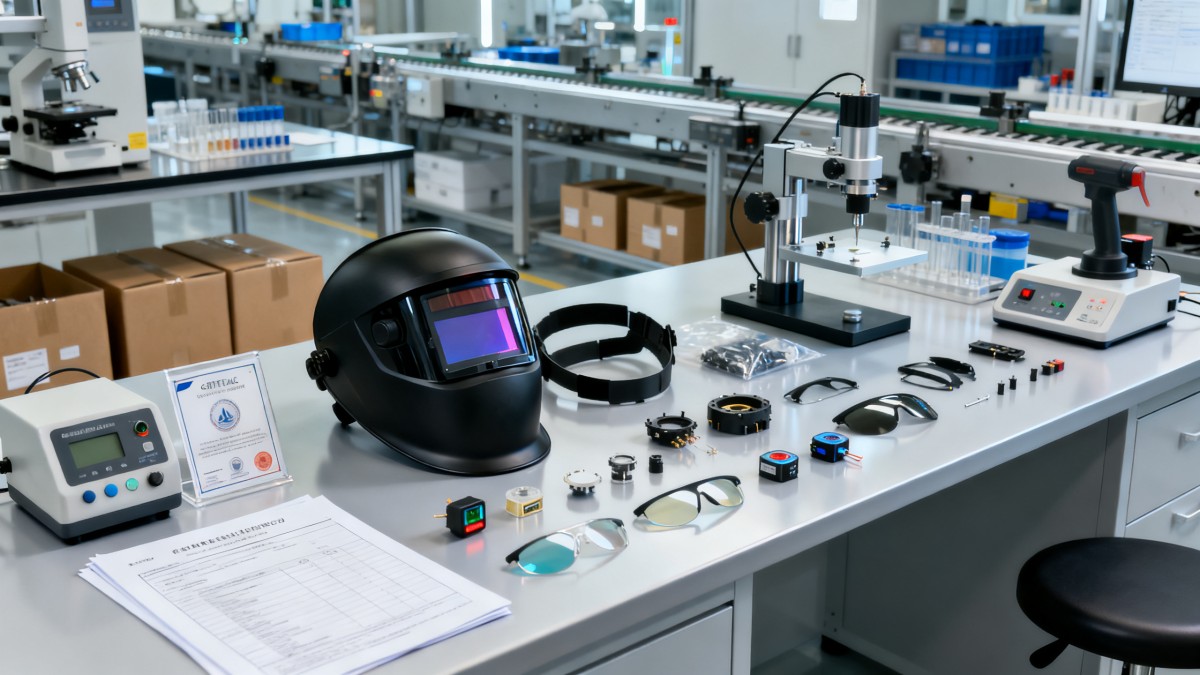
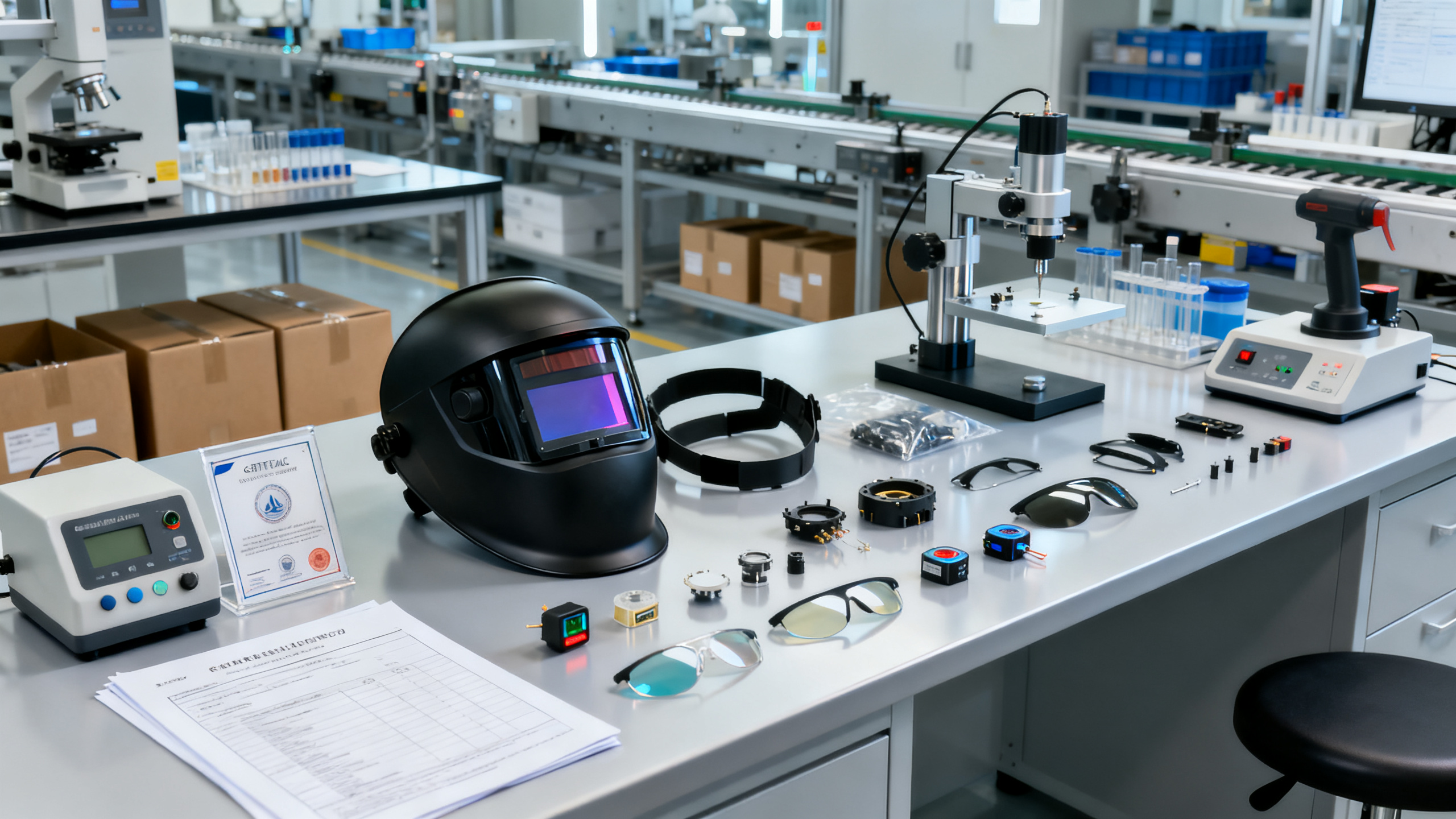
The first screen for any welding helmet factory is compliance. If certifications are weak or unclear, the supplier should move down the list quickly.
Ask for valid documentation tied to the exact helmet models you may buy. Generic certificates without model linkage are not enough.
For most industrial applications, review CE, ANSI, ISO, and other market-specific requirements. The target market decides which documents actually matter.
Also confirm the performance of auto-darkening filters. Optical clarity, switching speed, UV and IR protection, and arc sensor sensitivity should be test-backed.
A capable welding helmet factory should provide:
- Product-specific certification files
- Recent lab reports from recognized testing bodies
- Material declarations for shells, lenses, and headgear parts
- Traceable revision records for design updates
This is also where risk starts to separate serious factories from trading-only operations. Real manufacturers usually answer technical questions with speed and evidence.
Check Whether the Welding Helmet Factory Actually Controls Production
A long-term supplier should control its own process. If production is fragmented across too many subcontractors, consistency becomes harder to protect.
Ask which steps are in-house. Shell molding, lens assembly, electronics fitting, headgear assembly, testing, and packaging should all be mapped clearly.
More importantly, verify how the welding helmet factory handles incoming inspection. Weak control over raw materials often creates later field failures.
During a factory audit, look for visible process discipline. Work instructions, batch records, calibration logs, and defect segregation areas tell you a lot.
If a supplier claims high volume, compare that claim with machine count, labor organization, shift structure, and finished goods flow.
Useful audit questions include:
- Which core components are made internally?
- Which suppliers provide the LCD filter, sensors, and headgear?
- How are nonconforming units recorded and reworked?
- What is the final inspection pass rate by model?
- How often are tooling and test devices calibrated?
A welding helmet factory that owns its process usually gives more stable lead times, cleaner corrective actions, and better engineering response.
Evaluate Quality Systems Beyond the Certificate
Many suppliers show ISO 9001. That alone does not confirm dependable execution. The real question is how the quality system works under pressure.
Ask for internal quality metrics over the last twelve months. Defect rates, customer claims, return percentages, and corrective action closure times reveal maturity.
Sample inspection standards matter too. A welding helmet factory should define acceptance criteria for shell impact resistance, lens function, shade stability, and fit comfort.
It is worth checking whether final tests simulate real use. Bench checks are useful, but they should not replace durability and repeated-cycle validation.
Look for evidence of process control such as:
- Incoming material inspection records
- In-process quality checkpoints
- AQL or equivalent shipment release methods
- Failure analysis reports with root cause detail
- Preventive action tracking after recurring issues
The better signal is not a perfect claim rate. It is whether the welding helmet factory can explain failures honestly and show durable fixes.
Test Product Performance in Real Purchasing Conditions
A supplier may look strong on paper and still perform poorly in the field. That is why sample validation should reflect actual operating conditions.
Review comfort, balance, shell durability, lens clarity, and headgear adjustment under repeated use. Workers often reject helmets that meet standards but feel unstable.
For auto-darkening models, test response speed under different amperage ranges and light conditions. False triggering and delayed switching are serious warning signs.
A strong welding helmet factory should support pilot orders or pre-mass-production evaluation. That reduces risk before a larger contract commitment.
In actual procurement work, compare at least three sample groups:
This step often changes the ranking. The lowest quote from one welding helmet factory may become the highest total cost after field testing.
Measure Capacity, Lead Time, and Supply Stability
Long-term sourcing depends on continuity. Even a high-quality welding helmet factory becomes risky if it cannot maintain supply during demand swings.
Review monthly output, peak capacity, order backlog, and production planning methods. Ask for lead time by standard models and by customized versions.
Then go deeper into component exposure. Auto-darkening helmets rely on electronics, batteries, sensors, and filter cartridges that may face longer replenishment cycles.
A mature welding helmet factory should identify single-source parts and show contingency plans. That includes alternate suppliers, safety stock, and approved substitutes.
It also helps to review shipping discipline. On-time delivery history, export documentation accuracy, and carton labeling consistency all affect receiving efficiency.
From a cost angle, unstable supply can be more expensive than a higher unit price. Expedited freight and emergency replacement orders quickly erase nominal savings.
Compare Total Cost, Not Just the Unit Quote
Price still matters, but it should be read in context. The right welding helmet factory supports lower lifecycle cost, not only a lower purchase order value.
Include tooling charges, sample fees, certification costs, packaging options, spare parts availability, warranty terms, and defect replacement handling.
Also ask about engineering support for private label, custom graphics, or specification changes. Flexible support can reduce future switching costs.
A useful cost model for welding helmet factory comparison should cover:
- Quoted unit cost by annual volume tier
- Expected defect and return cost
- Freight and inventory buffer cost
- Compliance and retesting expenses
- After-sales service response cost
When these factors are added, the most competitive welding helmet factory is often not the one with the cheapest opening quote.
Look for Communication Quality and Long-Term Fit
A long-term supplier relationship needs operational clarity. Communication quality is often the earliest predictor of how problems will be handled later.
Notice response speed, technical accuracy, document control, and willingness to discuss weak points. Evasive answers usually become larger issues after onboarding.
The best welding helmet factory acts like a manufacturing partner. It shares realistic timelines, alerts you to component risks, and proposes solutions early.
It is also smart to check commercial stability. Business license data, export history, key customer references, and dispute patterns add useful context.
If possible, score each welding helmet factory with a weighted matrix. This keeps the final choice grounded in evidence instead of impression.
Make the Final Decision with a Structured Supplier Scorecard
A practical decision framework reduces sourcing mistakes. It also helps internal alignment when quality, safety, operations, and cost priorities compete.
Score each welding helmet factory across five areas: compliance, production control, quality system, supply stability, and total cost.
Then confirm the result with samples, an audit, and commercial review. No single document should decide a long-term supplier appointment.
In the end, the right welding helmet factory is the one that reduces operational risk while supporting dependable scale and defendable cost.
That approach leads to better safety outcomes, smoother procurement cycles, and a supplier base that can hold up under real industrial pressure.
Before signing a long-term agreement, build a short list, run a documented evaluation, and let evidence decide the supplier.
Technical Specifications
- How to Select Electronic Hotel Key Card Locks for Guest Rooms and Staff AreasAuthor :Safety Compliance Lead
- How to Select Lab Instruments for Reliable Chemical Analysis WorkflowsAuthor :Precision Metrology Expert
- How to Size a UPS for Server Rooms: Load, Runtime, and Redundancy FactorsAuthor :Grid Infrastructure Analyst
Expert Insights

Chief Security Architect
Dr. Thorne specializes in the intersection of structural engineering and digital resilience. He has advised three G7 governments on industrial infrastructure security.
Related Analysis
- Sep 17, 2026How to Select Electronic Hotel Key Card Locks for Guest Rooms and Staff AreasAuthor :Safety Compliance Lead
- Sep 16, 2026How to Select Lab Instruments for Reliable Chemical Analysis WorkflowsAuthor :Precision Metrology Expert
- Sep 15, 2026How to Size a UPS for Server Rooms: Load, Runtime, and Redundancy FactorsAuthor :Grid Infrastructure Analyst
Core Sector // 01
Security & Safety
- Can One Supplier Provide Both IEC- and ATEX-Certified Safety Equipment?Author :Safety Compliance Lead

- Are Dual IEC and NEC Safety Certifications Worth the Cost?Author :Safety Compliance Lead

- What Is the Difference Between Class I and Class II PPE?Author :Safety Compliance Lead

- Which Oil and Gas Safety Standards Should Contractors Meet Before Site Mobilization?Author :Safety Compliance Lead

- EU REACH Adds PFAS Cap for PPE WorkwearAuthor :Safety Compliance Lead

- How to Evaluate a Chemical Resistant Suit Supplier for Industrial Safety ProcurementAuthor :Safety Compliance Lead

- EU REACH Sets 50 ppb PFAS Cap for PPE WorkwearAuthor :Safety Compliance Lead

- EU Tightens PFOA Limit for PPE and Industrial Filter MediaAuthor :Safety Compliance Lead