What Is the Difference Between Class I and Class II PPE?
Author
Date Published
Reading Time
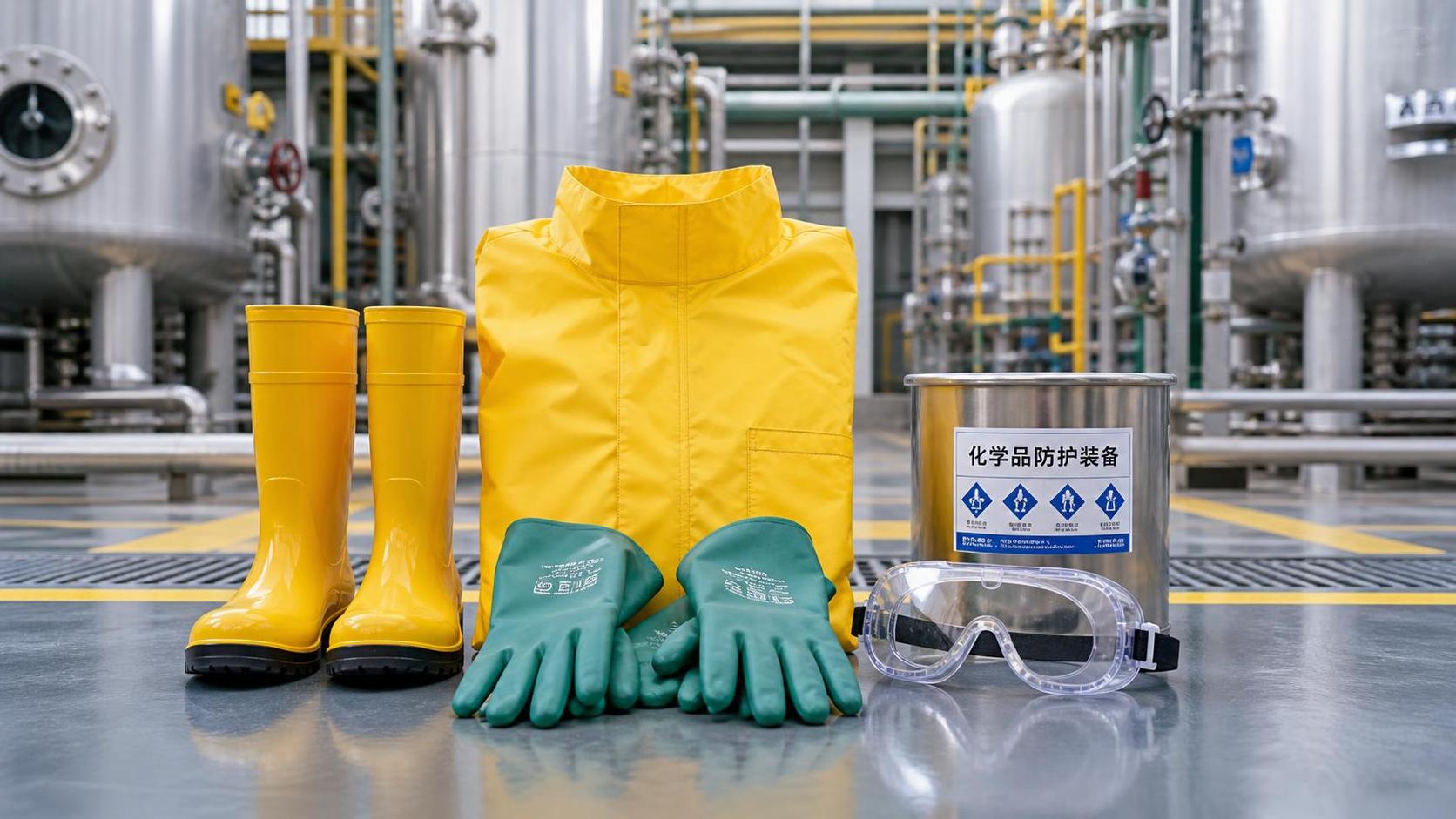
What’s the difference between Class I and Class II personal protective equipment for chemical sites? The answer affects more than purchasing decisions—it shapes worker protection, regulatory compliance, and operational continuity. The critical point is that “Class I” and “Class II” are not universal chemical-PPE classifications. Their meaning changes with the regulation, product category, and country in question.
That distinction matters because a garment, glove, helmet, or high-visibility vest marked “Class II” may meet a legitimate standard while offering little or no protection against the chemical hazard at hand. On a chemical site, PPE selection must begin with the substance, exposure route, concentration, temperature, task duration, and emergency scenario—not with a class number seen in a catalogue.
There is no single Class I versus Class II rule for chemical PPE
The phrase is often used as though it describes two levels of chemical protection. In practice, it can refer to very different systems:
- EU PPE categories: Category I, II, and III under Regulation (EU) 2016/425.
- High-visibility apparel classes: Class 1, 2, or 3 under standards such as ANSI/ISEA 107 in the United States.
- Electrical insulating equipment classes: Class 00 through Class 4 for insulating gloves under ASTM and IEC-based systems.
- Chemical protective clothing types: Type 1 through Type 6 under European standards, where “Type” describes the garment’s protection against gases, liquids, sprays, or particulate matter.
- Product-specific manufacturer classifications: Some suppliers use “Class I” and “Class II” internally for product ranges, which may not be a regulatory designation at all.
For chemical sites, the most consequential comparison is usually between EU Category I and Category II PPE. However, even this comparison does not fully answer whether the equipment is adequate for chemical handling, because serious chemical risks generally fall within Category III.
Under EU rules, Category I and Category II mean different levels of risk—not different chemical barriers
Under Regulation (EU) 2016/425, PPE is classified according to the severity and nature of the risk from which it is intended to protect the user.
Category I PPE is designed for protection against minimal risks. These are risks where the user can assess the level of protection safely and where the consequences of inadequate protection are expected to be gradual and reversible. Typical examples include protection from superficial mechanical injury, mild weather conditions, sunlight, or contact with hot surfaces that do not exceed 50°C.
On a chemical site, Category I may include limited-purpose items used in low-risk support activities, such as basic protective eyewear for dust, general work gloves for dry handling, or clothing intended to keep workers clean. It should not be assumed to protect against harmful chemical contact merely because it is described as protective equipment.
Category II PPE covers risks that are neither minimal nor classified as capable of causing very serious consequences such as death or irreversible damage to health. This category includes a wide range of industrial PPE, often including safety footwear, industrial helmets, eye protection, hearing protection, and certain mechanical protective gloves or garments.
Category II products must undergo EU type examination by a notified body before they can be placed on the EU market. That makes Category II more formally assessed than Category I, but it does not automatically mean it is appropriate for toxic, corrosive, carcinogenic, or high-consequence chemical exposure.
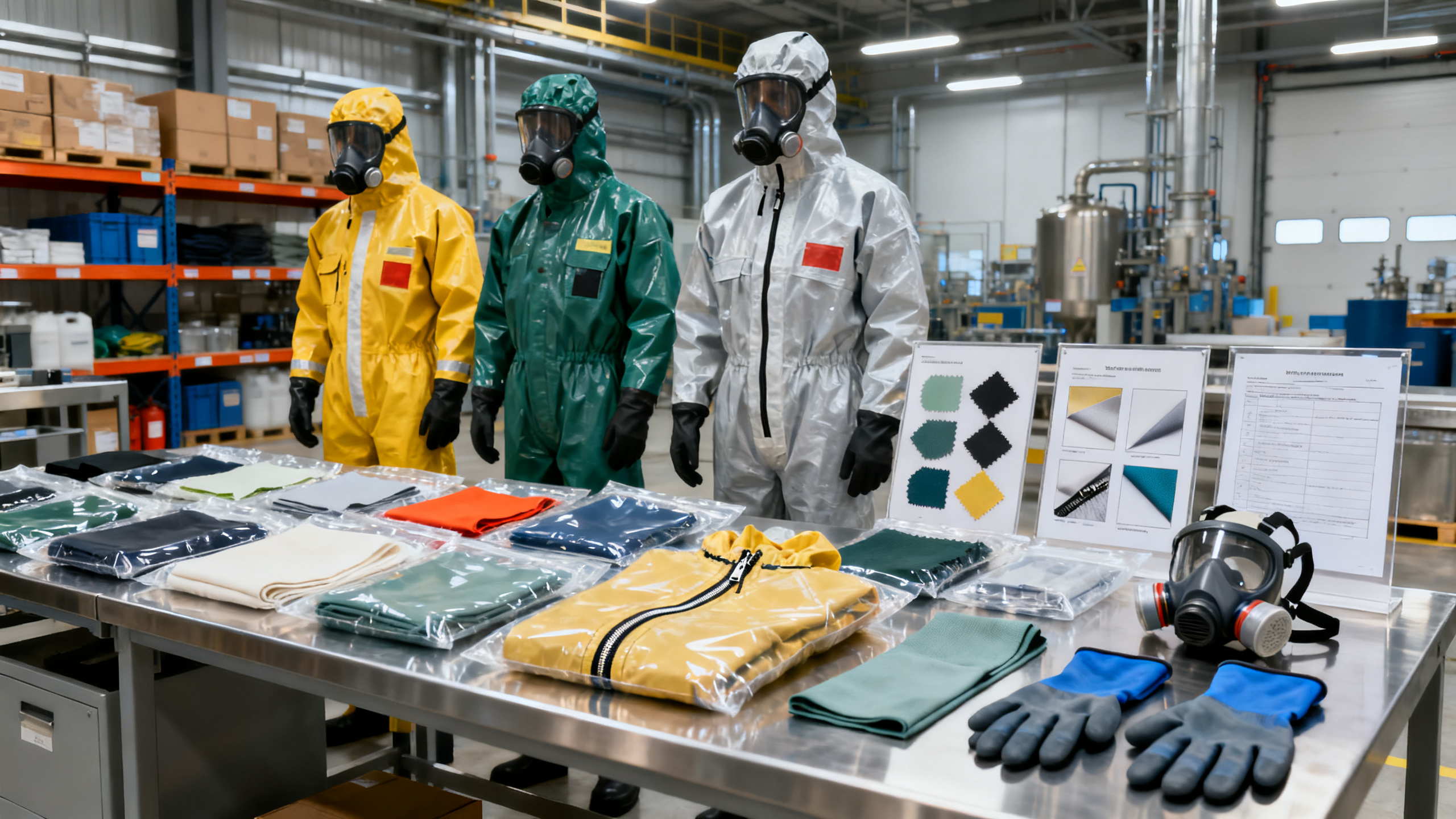
Category III PPE is the central category for many chemical-site hazards. It covers risks that may cause death or irreversible harm, including hazardous substances and mixtures, harmful biological agents, oxygen-deficient atmospheres, and certain high-temperature or electrical risks. Chemical protective suits for serious liquid or gas exposure, respiratory protective equipment, and many chemical-resistant gloves used against dangerous substances are commonly within Category III.
In other words, if the task involves the possibility of splash from concentrated acid, solvent permeation, toxic vapor exposure, unknown chemical residues, or emergency response, the practical choice is rarely “Class I or Class II.” The question becomes whether the PPE has the required Category III status and product-specific chemical performance data.
A Class II high-visibility vest is not chemical PPE
A frequent source of confusion on industrial projects is the use of “Class II” to describe high-visibility apparel. Under ANSI/ISEA 107, for example, Class 2 garments provide greater conspicuity than Class 1 garments through larger areas of fluorescent background material and retroreflective material. They are intended for work where visibility to vehicle operators is an important control measure.
This is valuable at tank farms, loading areas, construction interfaces, road crossings, and logistics yards. But the classification evaluates visibility, not resistance to chemical penetration, permeation, degradation, flame spread, or toxic vapor ingress.
A Class 2 high-visibility vest worn over chemically resistant coveralls can improve vehicle-related safety. It should not replace a chemical protective outer layer. More importantly, adding a conventional high-visibility vest over a chemical suit can create practical problems: it may snag, interfere with suit closure, become contaminated, obscure inspection points, or be difficult to decontaminate. If visibility is needed during chemical work, the preferred solution is often a garment designed and certified to provide both the required chemical protection and high-visibility performance, or a site-approved visibility solution compatible with the protective ensemble.
The chemical hazard determines the PPE specification
For chemical protection, labels such as Class I or Class II are only a starting point for interpreting paperwork. A technically sound selection process asks what can reach the worker, how it can reach them, and what happens if the barrier fails.
Chemical identity is the first filter. The safety data sheet is essential, but its PPE section may provide only broad guidance. The actual selection should consider the exact substance or mixture, including impurities and formulation changes. A glove resistant to a neat solvent may not perform the same way against a solvent blend. A coverall that handles dry powders may fail rapidly when exposed to pressurized liquid spray.
Exposure route is equally important. Chemical hazards can affect the skin, eyes, respiratory system, or the body through contaminated clothing. A face shield helps protect against splash but does not seal around the eyes; chemical splash goggles may still be required. A suit may provide strong liquid resistance while offering no safe protection against an airborne vapor that can enter through closures, interfaces, or breathing pathways.
Exposure conditions change performance. Concentration, temperature, pressure, contact time, abrasion, flexing, and repeated use all affect barrier performance. Chemical permeation rates often increase as temperature rises. A glove that is suitable for incidental splash may be unacceptable for full immersion, extended contact, or work involving tools that compromise the material through puncture and abrasion.
Task design matters. Transfer operations, sampling, drum decanting, line breaking, confined-space entry, cleaning, waste handling, and spill response present very different exposure profiles. Procurement should avoid treating a single “chemical PPE kit” as suitable for every task in a facility.
What Category I PPE can realistically do on a chemical site
Category I equipment may have a place in low-hazard work zones, but its limitations should be explicit. It can be appropriate where the risk assessment confirms that exposure is limited to nuisance contamination, dry non-hazardous dust, mild environmental conditions, or minor mechanical risks. Examples might include routine housekeeping outside process areas or handling sealed, intact packaging with no credible release scenario.
The danger is functional drift: equipment originally supplied for low-risk work gradually becomes standard issue in locations where the process has changed, contractors perform unfamiliar tasks, or maintenance creates exposure pathways not present in normal operation.
Category I also relies heavily on the manufacturer’s own conformity assessment. This does not make the equipment poor quality, but it means buyers must be careful not to infer independently verified protection against hazards that the product was never designed to address.
Where Category II PPE fits—and where it stops
Category II PPE often forms the durable everyday layer of industrial protection. Safety helmets, protective footwear, impact-resistant eyewear, hearing protectors, and mechanical gloves may all be needed on chemical sites regardless of chemical exposure. Their role is often to control adjacent hazards: dropped objects, slips, noise, low-energy impacts, or routine handling injuries.
The limitation is that a Category II designation does not establish chemical compatibility. A safety spectacle marked to an impact standard may not be a chemical splash goggle. A general-purpose coated glove may have excellent abrasion resistance but poor resistance to ketones, aromatics, chlorinated solvents, acids, or caustics. Safety footwear may protect toes while allowing liquid chemicals to enter through the tongue, seams, or upper material.
When a task combines mechanical and chemical hazards, the correct answer is not automatically the heaviest-duty item. A thick glove can reduce dexterity, increasing the likelihood of spills or unsafe tool handling. A garment with strong chemical resistance can increase heat stress. PPE selection is therefore an optimisation exercise: adequate barrier performance, acceptable dexterity, compatible interfaces, workable duration, and a credible emergency removal process.
For chemical exposure, look beyond the category mark
A CE mark and category designation are necessary indicators in regulated markets, but they are not a complete chemical-protection specification. The purchase file should identify the standards and performance information relevant to the intended exposure.
For chemical protective clothing in Europe, common references include:
- EN 14605 for garments offering protection against liquid chemicals, including liquid-tight and spray-tight clothing;
- EN 943 for protection against liquid and gaseous chemicals, including gas-tight suits;
- EN 13034 for limited protection against liquid chemicals, commonly associated with Type 6 clothing;
- EN ISO 13982-1 for protection against airborne solid particulates.
For gloves, EN ISO 374 is a key reference. Its chemical resistance marking and associated test information help identify tested substances, but users should still review breakthrough time, permeation data, thickness, and intended contact conditions. A letter code on a glove is not a universal guarantee for every chemical in the same family.
For respiratory protection, selection must be based on contaminant type, concentration, oxygen level, exposure limit, and whether an immediately dangerous atmosphere could occur. Filtering facepieces and cartridge respirators have strict limitations. In unknown concentrations, oxygen-deficient conditions, confined spaces, or potentially life-threatening releases, supplied-air or self-contained breathing apparatus may be required under the site’s respiratory protection programme and local regulations.
Interfaces are often the weakest point in the ensemble
Chemical protection fails most often at the boundary between items rather than through the centre of a garment. Glove-to-sleeve overlap, hood-to-face seal, boot-to-leg interface, zipper flap design, facepiece compatibility, and the ability to tape or seal joints all need review.
This is especially important where workers reach overhead, kneel, climb, operate valves, or work inside congested equipment. A suit that looks fully enclosed while standing may expose the wrist when arms are extended. A glove cuff may channel liquid into the sleeve if it is worn in the wrong orientation for the task. Protective footwear may become a contamination reservoir if decontamination steps are not planned.
Fit testing, wear trials, and supervised donning and doffing are not administrative extras. They reveal whether the equipment can be used safely in the conditions for which it was purchased. The removal stage deserves particular attention because contaminated PPE can transfer chemicals to skin, clothing, vehicles, and clean areas.
Questions that should be resolved before ordering
A reliable procurement decision usually requires answers to a small number of specific questions:
- Which chemicals, mixtures, and concentrations are present in the work activity?
- Is the exposure likely to be incidental splash, repeated splash, spray, immersion, vapor, dust, or an emergency release?
- What is the maximum realistic contact duration before replacement or decontamination?
- Does the product’s test data cover the actual chemical and conditions of use?
- Is the PPE classified and certified for the risk level required in the destination market?
- Will it work with respiratory equipment, helmets, harnesses, communication devices, and fall-protection systems?
- Can workers perform the task without unacceptable heat burden, reduced vision, or loss of dexterity?
- Are sizes, batch traceability, instructions, shelf-life controls, and replacement stock available across all operating locations?
For international supply chains, documentation deserves the same attention as the physical item. Product labels, declarations of conformity, notified-body references where applicable, test reports, instructions for use, and lot identification should match the destination market and the customer’s approved specification. A technically suitable product can still create project delays if certificates, language requirements, or traceability records are incomplete.
The practical distinction: class labels do not replace risk assessment
Class I and Class II PPE can describe meaningful differences within the relevant standard, but neither label should be used as shorthand for chemical protection. Under the EU PPE framework, Category I is for minimal risks and Category II is for intermediate risks; many significant chemical hazards require Category III PPE. In high-visibility standards, Class 1 and Class 2 address visibility, not chemical resistance.
The safest purchasing and site-management approach is to treat classification as one compliance checkpoint within a broader assessment. Verify the hazard, match the product’s tested performance to the exposure, examine the complete PPE ensemble, and confirm that workers can wear, remove, and replace the equipment correctly. That is the difference between buying PPE that carries an appropriate label and deploying PPE that provides defensible protection on a chemical site.
Technical Specifications
- Air Handling Unit Supplier Checklist: Performance Data, Lead Times, and SupportAuthor :Environmental Engineering Director
- Buying Fiberglass Water Tanks Wholesale: Compare Quotes and Delivery CostsAuthor :Environmental Engineering Director
- Choosing an XLPE Power Cable Supplier: Test Reports, Traceability, and Lead TimesAuthor :Grid Infrastructure Analyst
Expert Insights

Chief Security Architect
Dr. Thorne specializes in the intersection of structural engineering and digital resilience. He has advised three G7 governments on industrial infrastructure security.
Related Analysis
- Oct 19, 2026Air Handling Unit Supplier Checklist: Performance Data, Lead Times, and SupportAuthor :Environmental Engineering Director
- Oct 18, 2026Buying Fiberglass Water Tanks Wholesale: Compare Quotes and Delivery CostsAuthor :Environmental Engineering Director
- Oct 17, 2026Choosing an XLPE Power Cable Supplier: Test Reports, Traceability, and Lead TimesAuthor :Grid Infrastructure Analyst
Core Sector // 01
Security & Safety
- Can One Supplier Provide Both IEC- and ATEX-Certified Safety Equipment?Author :Safety Compliance Lead

- Are Dual IEC and NEC Safety Certifications Worth the Cost?Author :Safety Compliance Lead

- What Is the Difference Between Class I and Class II PPE?Author :Safety Compliance Lead

- Which Oil and Gas Safety Standards Should Contractors Meet Before Site Mobilization?Author :Safety Compliance Lead

- EU REACH Adds PFAS Cap for PPE WorkwearAuthor :Safety Compliance Lead

- How to Evaluate a Chemical Resistant Suit Supplier for Industrial Safety ProcurementAuthor :Safety Compliance Lead

- EU REACH Sets 50 ppb PFAS Cap for PPE WorkwearAuthor :Safety Compliance Lead

- EU Tightens PFOA Limit for PPE and Industrial Filter MediaAuthor :Safety Compliance Lead