How to Choose Heat-Resistant PPE for Desert Construction
Author
Date Published
Reading Time
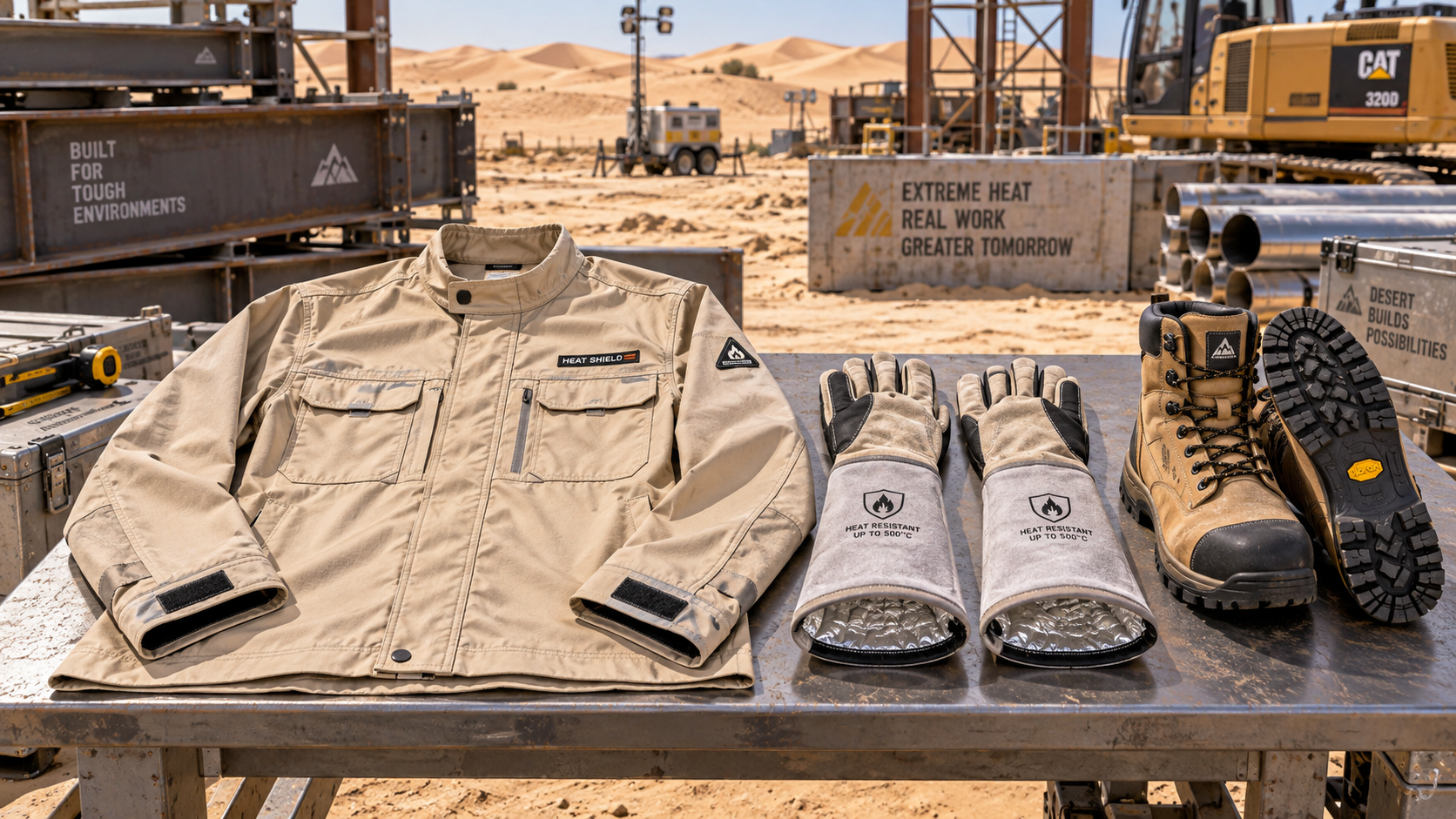
Choose heat-resistant PPE for desert construction by matching protection to the actual exposure: hot surfaces, flame, radiant heat, electrical arc, or a combination of hazards. Then assess how the complete ensemble affects body cooling during the task. A garment that tolerates heat can still trap sweat, restrict movement, and increase heat strain. The right selection provides verified protection where it is needed while keeping unnecessary insulation and coverage out of the work process.
Begin with the work itself. Handling sun-heated steel, cutting metal, placing hot asphalt, and working near electrical equipment require different protection. Desert air temperature alone cannot define the appropriate glove, fabric, or face shield. Surface temperature, exposure duration, physical workload, and the consequences of a foreseeable incident determine the specification.
Separate environmental heat from the hazard requiring protection
Environmental heat raises the body’s cooling demand. Contact heat transfers energy through a glove or garment when it touches a hot object. Radiant heat arrives from sources such as heated equipment or hot material without direct contact. Flame and electrical arc introduce additional hazards that require specifically evaluated clothing and equipment. These exposures sometimes overlap, but protection against one does not establish protection against the others.
A useful task assessment records the heat source, the expected duration of exposure, the body areas exposed, and other hazards such as sharp edges, dust, or chemicals. Include abnormal but foreseeable events, such as a dropped component requiring recovery or a hose connection releasing hot material. Avoid specifying the entire site around the most demanding task when that task can be isolated and assigned a dedicated ensemble.
For hot components, measure representative surfaces under actual site conditions. Infrared readings need care: shiny metal, viewing angle, and emissivity settings affect accuracy. An underestimated surface temperature can lead to an inadequate glove specification even when the product documentation is otherwise sound.
Read thermal performance as a set of limits
“Heat resistant” is an incomplete purchasing description. Product documentation should identify the protection tested, the applicable standard and edition, the achieved performance, and any conditions of use. A general temperature claim without a test method, exposure time, or protected area gives little basis for comparing products.
Contact heat testing evaluates performance under defined laboratory conditions. It does not establish an unrestricted safe holding time on site. Grip pressure, material thickness, moisture, compression, repeated contact, and wear change heat transfer. A glove suited to briefly repositioning a hot part may be unsuitable for carrying that part over a long distance.
Likewise, flame resistance describes behavior under specified flame exposure; it does not prove protection against every thermal hazard. Arc-rated clothing has a separately assessed performance relevant to electrical arc exposure. Reflective outer surfaces used for intense radiant heat do not automatically provide suitable contact heat, electrical, or general construction protection.
Use the standards relevant to the work location and hazard assessment. A conformity mark or management-system certificate does not, by itself, establish the thermal performance of an individual item. Request documentation that corresponds to the exact model, fabric construction, and configuration supplied, including any limitations associated with laundering or accessories.
Choose the fabric and garment construction together
Fabric weight provides only part of the picture. Heavier material often increases insulation, but heat burden also depends on air permeability, moisture transport, fit, and the number of layers. Two garments of similar weight can feel substantially different during climbing, lifting, or sustained outdoor work.
Where flame protection is required, both inherently flame-resistant materials and suitably treated fabrics can be appropriate when their documented performance meets the task requirements. Compare the finished garment and its care instructions rather than choosing by fiber name alone. Seams, closures, reinforcement panels, reflective trim, and pockets must support the intended protection.
Ordinary lightweight synthetics deserve particular attention where flame or arc exposure is credible because some melt when heated. Cotton avoids that specific melting behavior but is combustible unless appropriately treated; it is not a substitute for required flame-resistant clothing. Base layers also belong in the assessment because the outer garment does not make every underlying fabric suitable.
Garment fit should allow reaching, crouching, and climbing without opening protective overlaps. Excessively tight clothing restricts movement and compresses insulating spaces. Loose fabric introduces snagging hazards around equipment. Ventilation features are useful only when their position and construction preserve the protection required by the task.
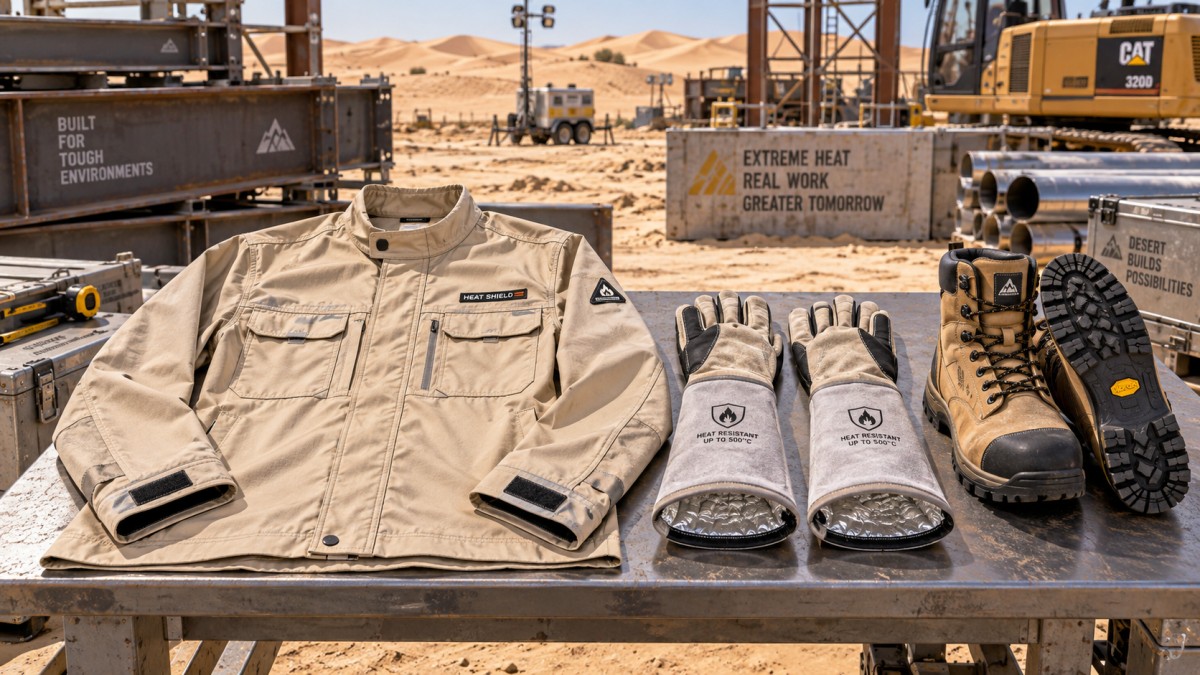
Pay attention to the complete clothing arrangement: sleeve-to-glove overlap, trouser position relative to boots, neck coverage, and closures. For work involving sparks or hot debris, folds and open pockets can collect material. A well-rated fabric offers limited protection if the garment arrangement channels hot particles toward the skin.
Gloves and boots need task-specific tradeoffs
Contact heat, dexterity, and grip
Select gloves for the hottest credible contact and the expected handling duration, then assess cut resistance and grip. Thick insulation that prevents a secure hold can create dropped-load hazards. Conversely, a thin glove with excellent dexterity may transfer heat too quickly when holding a sun-heated plate or fitting.
Leather, textile insulation, and coated constructions offer different combinations of flexibility, abrasion resistance, and thermal performance. A coating that performs well for grip is not automatically suitable for hot contact. Request thermal data for the finished glove, including information about which areas provide protection; palm performance should not be assumed to apply equally to the fingers, back, or cuff.
Dry-condition performance also has limits. Sweat, wash water, or other liquids can change insulation and heat transfer. Persistent dampness requires attention to glove rotation, drying, and the suitability of the construction. Damaged liners, hardened surfaces, and separated layers are reasons to remove gloves from thermal tasks.
Footwear on heated ground
A heat-resistant outsole does not establish the thermal protection of the entire boot. The outsole compound, midsole, upper, seams, and fastening arrangement influence performance against hot ground and hot material. Distinguish intermittent contact with a heated surface from exposure to material that sticks to the boot.
Footwear must also suit uneven terrain, ladders, puncture hazards, and required toe protection. Assess traction on the surfaces actually encountered, including dusty metal and loose aggregate. Breathable construction can improve comfort, but open or permeable areas must remain compatible with the anticipated debris and liquid exposure.
Make head, eye, and respiratory protection compatible
Sun shades and neck protection should be compatible with the helmet and its manufacturer’s instructions. Added accessories must not interfere with suspension clearance, retention, visibility, or electrical protection where required. A ventilated helmet can improve airflow, but ventilation is unsuitable for some electrical protection requirements.
Dust and sweat affect eye protection as much as sunlight does. Select suitable impact protection and lens shading for the task, then assess fogging during real movements. Dark lenses intended for bright daylight are not welding filters, and a clear face shield does not replace the eye protection required beneath it.
Respiratory protection requires its own exposure assessment. Dust masks or respirators add breathing resistance and interfere with some face shields and eyewear. Where a tight-fitting respirator is required, compatibility must preserve the face seal. Cooling accessories and helmet straps must not cross the sealing surface.
A cooling vest should be evaluated as part of the ensemble. Its weight, bulk, cooling duration, and recharge arrangements affect usability. Evaporative designs need suitable evaporation conditions; covered airflow, humidity, and additional clothing change their effectiveness. For flame or arc tasks, the vest and its position within the clothing system need specific compatibility review.
Prove the selection during representative work
Document review should lead to a controlled wear trial before a large order. Include the full required ensemble and representative actions such as bending, ascending access stairs, gripping tools, and reaching overhead. Conduct the trial with heat controls in place; it should reveal fit and compatibility problems without deliberately exposing anyone to uncontrolled thermal hazards.
Useful observations include whether gloves require excessive grip force, whether sleeves pull away from cuffs, and whether eyewear fogs when a respirator is worn. Record pressure points and movement restrictions as well as comfort. A garment can feel acceptable while standing still yet become difficult to wear during repeated lifting.
Size availability matters beyond the nominal size label. Sleeve length, torso length, glove finger fit, and boot width affect both protection and movement. Unapproved alterations can change protective coverage or performance, so fit problems should be resolved through suitable sizing or an approved garment option.
The resulting specification should name the required performance evidence, materials or construction constraints justified by the task, compatible accessories, and care requirements. Define how substitutions will be evaluated. Replacing an item with one described as “equivalent” is unreliable when the comparison covers only fabric weight or a broad heat-resistance claim.
Keep thermal protection effective throughout the shift
Even carefully selected PPE leaves a residual heat burden. Assess heat stress using a method that accounts for radiant conditions, workload, clothing, and acclimatization. Air temperature alone misses the additional load from direct sun, hot surfaces, and protective layers. Shade, cooled recovery areas where available, drinking water, and work-rest arrangements need to function alongside PPE.
Establish a clear response to heat illness symptoms. Dizziness, unusual weakness, nausea, or headache require prompt interruption of work and assessment. Confusion, collapse, or altered consciousness requires emergency action and rapid cooling according to the site response procedure. Protective clothing must not delay that response.
Care and replacement instructions should remain accessible after delivery. Launder garments using approved methods, remove contamination that could affect protective performance, and inspect closures and damaged areas before reuse. Desert ultraviolet exposure, abrasion, sweat, and repeated cleaning all contribute to deterioration; appearance alone cannot establish remaining protection.
Reassess the ensemble when the task changes. A longer handling period, a new hot material, or an added impermeable layer can invalidate an earlier selection even when the weather is unchanged. Keeping the PPE specification tied to those operating conditions makes the protection usable throughout the work, rather than merely satisfactory on the product sheet.
Technical Specifications
- Choosing Contact Temperature Instruments: Accuracy, Range, and Response TimeAuthor :Precision Metrology Expert
- Nucor Raises Hot-Rolled Coil Spot Price by $15 to $1,270 per Short TonAuthor :
- Choosing an Industrial Electrical Infrastructure Supplier: Compliance and Lead TimesAuthor :Grid Infrastructure Analyst
Expert Insights

Chief Security Architect
Dr. Thorne specializes in the intersection of structural engineering and digital resilience. He has advised three G7 governments on industrial infrastructure security.
Related Analysis
- Oct 28, 2026Choosing Contact Temperature Instruments: Accuracy, Range, and Response TimeAuthor :Precision Metrology Expert
- Oct 27, 2026Nucor Raises Hot-Rolled Coil Spot Price by $15 to $1,270 per Short TonAuthor :
- Oct 27, 2026Choosing an Industrial Electrical Infrastructure Supplier: Compliance and Lead TimesAuthor :Grid Infrastructure Analyst
Core Sector // 01
Security & Safety
- Vetting a Fall Protection Harness Supplier: Test Reports and TraceabilityAuthor :Safety Compliance Lead

- How to Choose Heat-Resistant PPE for Desert ConstructionAuthor :Safety Compliance Lead

- What NEC Requirements Apply to Electrical Safety Gear in Plants?Author :Safety Compliance Lead

- Can One Supplier Provide Both IEC- and ATEX-Certified Safety Equipment?Author :Safety Compliance Lead

- Are Dual IEC and NEC Safety Certifications Worth the Cost?Author :Safety Compliance Lead

- What Is the Difference Between Class I and Class II PPE?Author :Safety Compliance Lead

- Which Oil and Gas Safety Standards Should Contractors Meet Before Site Mobilization?Author :Safety Compliance Lead

- EU REACH Adds PFAS Cap for PPE WorkwearAuthor :Safety Compliance Lead