Are Dual IEC and NEC Safety Certifications Worth the Cost?
Author
Date Published
Reading Time
Are Dual IEC and NEC Safety Certifications Worth the Cost?
Are dual IEC and NEC certified safety equipment worth the extra cost for overseas projects? Usually, yes when a project spans jurisdictions, hazardous areas, or strict owner specifications.
For EPC contractors and industrial procurement teams, the decision is not primarily about buying two labels. It is about reducing approval risk, schedule exposure, and operational uncertainty.
Dual certification can simplify cross-border deployment, strengthen technical bids, and reduce replacement costs when equipment moves between regions or serves internationally governed facilities.
However, dual IEC and NEC compliance is not automatically valuable. A single-standard product may be the financially sound choice when installation, authority requirements, and lifecycle use are clearly local.
The practical question is whether the additional certification cost prevents larger costs later, including redesign, rejected inspections, delayed commissioning, emergency substitutions, or avoidable safety incidents.
What Buyers Are Really Trying to Avoid
Most buyers do not search for dual certification because they want more paperwork. They are trying to avoid a project decision that becomes expensive after equipment arrives onsite.
In overseas industrial projects, certification requirements can emerge from several sources: local law, owner standards, insurer expectations, lender requirements, engineering specifications, and contractor risk policies.
These requirements do not always align neatly. A product accepted under IEC-based practices may still require additional evaluation where NEC-oriented rules govern the installation or inspection process.
That difference matters most in hazardous locations, electrical distribution, process plants, mining facilities, marine terminals, battery installations, and other high-consequence operating environments.
Equipment approval failures often surface late. Procurement may have completed supplier selection before an authority having jurisdiction, owner engineer, or insurer identifies a certification gap.
By then, the direct price difference between single-certified and dual-certified equipment becomes less relevant than freight, rework, field labor, documentation review, and lost commissioning time.
For global EPC organizations, dual certification also protects repeatability. A standardized approved product list can support multiple regional projects without restarting qualification work for every purchase order.
The core search intent behind this question is therefore commercial and operational: determine whether broader certification creates sufficient risk reduction to justify a higher acquisition price.
IEC and NEC Address Different Compliance Contexts
IEC and NEC are often discussed together, but they are not interchangeable certification systems. Understanding their relationship is essential before comparing product pricing or supplier claims.
IEC standards provide internationally used technical frameworks covering electrical equipment, hazardous-area protection, functional safety, testing, and installation practices across many national regulatory systems.
The NEC, or National Electrical Code, is a United States installation code. It establishes requirements for safe electrical design and installation, including classified locations.
In practice, NEC compliance frequently connects to product listings from recognized testing laboratories, such as UL, ETL, or CSA, depending on equipment category and project requirements.
Hazardous-location applications require particular care because terminology, zone classifications, division classifications, marking conventions, and acceptable protection concepts can differ between applicable systems.
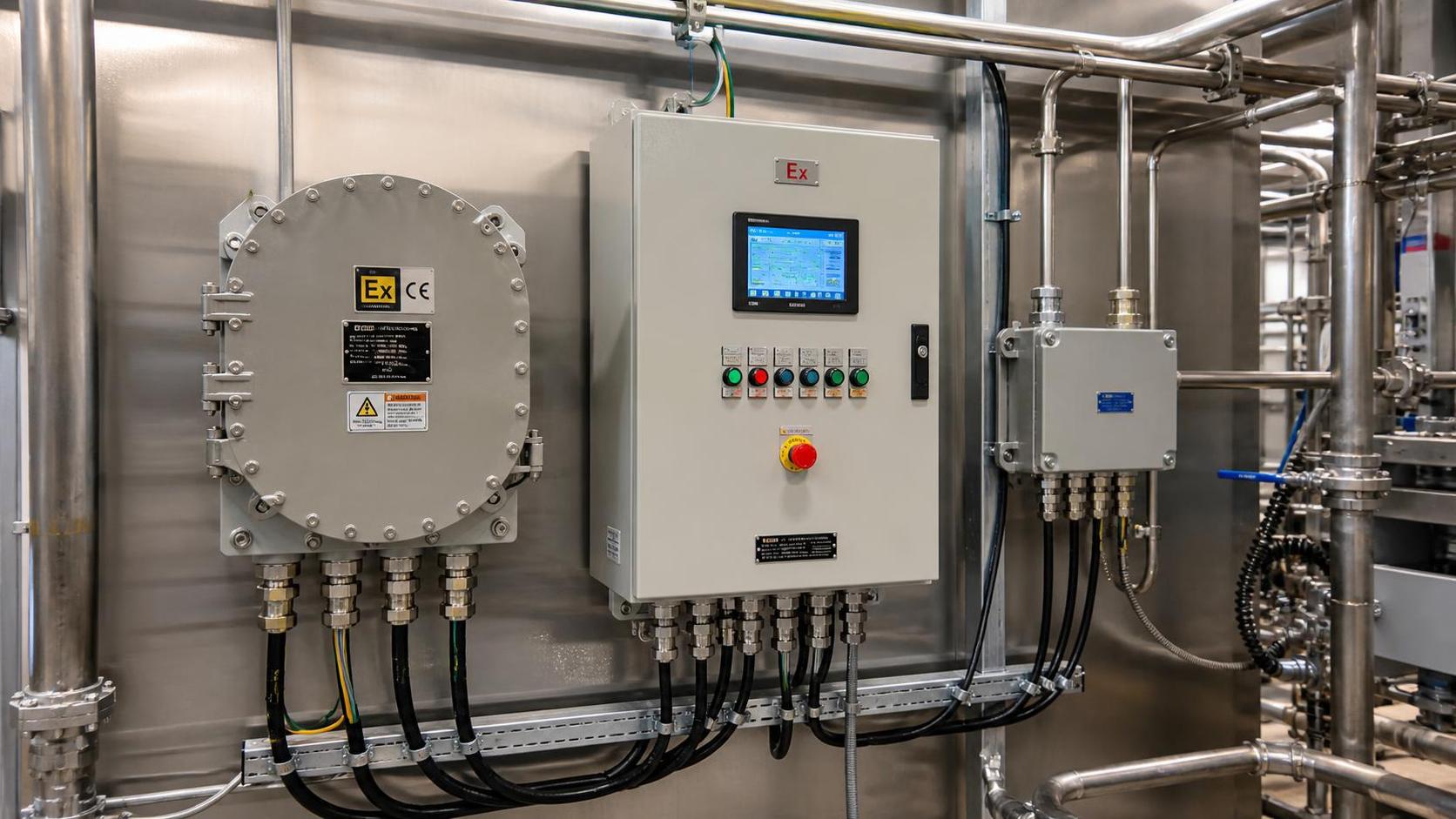
IECEx certification is widely recognized for explosive atmospheres, while ATEX applies within the European Union. North American projects may reference Class, Division, or Zone requirements under NEC-related frameworks.
A device marked for IECEx use is not automatically approved for every NEC-governed site. Likewise, a North American listed device may not satisfy an international owner’s IECEx specification.
Dual-certified equipment is valuable when its documentation explicitly demonstrates compliance with the exact standards, location classifications, temperature codes, enclosure requirements, and installation conditions in scope.
Procurement teams should avoid treating a supplier statement as proof. Request certificates, listing records, marking photographs, declarations, test reports where appropriate, and approved installation instructions.
The correct comparison is not “IEC versus NEC.” It is whether the equipment’s documented approvals match the project’s jurisdiction, facility specification, hazard classification, and operating environment.
When the Premium Produces Measurable Value
Dual certification is usually worth the premium when one equipment package must serve projects in both IEC-oriented and North American regulatory environments over its intended lifecycle.
This is common for multinational manufacturers, global oil and gas operators, renewable-energy developers, port operators, data-center investors, and industrial automation firms with distributed assets.
It also creates value when equipment is purchased centrally but deployed later across several countries. Central procurement cannot always know the final installation jurisdiction at tender stage.
For modular plants, skid packages, containerized systems, and OEM machinery, broader certification reduces the chance that a destination-country change forces enclosure, wiring, or component redesign.
Dual approvals can improve bid credibility when an EPC contractor must demonstrate that major equipment will meet both owner requirements and potential local authority expectations.
That credibility has commercial value. It can reduce technical clarifications, prevent exclusions in bids, and make a contractor’s compliance strategy more defensible during contract negotiations.
The investment is especially justified when replacement equipment would require a plant shutdown. In critical operations, a compliant spare available for multiple jurisdictions can be strategically valuable.
Consider a gas-processing skid manufactured for export. A dual-certified junction box may cost more initially, but replacing it after shipment can require engineering changes, customs handling, and recertification.
Similarly, safety sensors, emergency shutdown components, flameproof enclosures, cable glands, luminaires, and control panels can create disproportionate delays when their approvals are questioned late.
The higher unit price should be compared with avoided project risk, not merely with a lower-priced alternative. A small premium can be justified by one avoided field modification.
How to Calculate the Business Case
A disciplined business case starts with the total installed cost rather than the equipment purchase price. Certification value appears through avoided delays and reduced lifecycle friction.
Begin by identifying every jurisdiction where the equipment may be installed, maintained, resold, transferred, or included within a packaged system during its expected service life.
Next, map mandatory codes, customer specifications, authority requirements, insurance conditions, and lender standards. Distinguish legal obligations from preferred standards and commercial expectations.
Then estimate the premium for dual-certified equipment. Include not only the product price, but also any additional engineering review, lead-time impact, supplier qualification, and documentation handling.
Against that premium, quantify plausible downside costs. These may include rejected submittals, redesign hours, rush freight, local sourcing, installation rework, inspection delays, and liquidated damages exposure.
Procurement leaders should assign probability ranges instead of pretending every risk is certain. Even a moderate likelihood of rejection can justify certification costs for critical equipment.
For example, a $3,000 certification premium may appear excessive on a $12,000 enclosure. It becomes modest if replacement after mobilization could cost $40,000 or more.
Do not ignore schedule economics. A delayed energization or mechanical completion milestone can affect commissioning crews, subcontractor availability, revenue commencement, and contractual performance obligations.
Lifecycle value should also include inventory rationalization. One broadly approved stock keeping unit may reduce spare-parts complexity, warehouse duplication, training needs, and supplier-management workload.
Still, buyers should not assume dual certification always lowers total cost. Some products have longer lead times, limited supplier competition, or higher maintenance requirements because of specialized approvals.
The decision should therefore use a project-specific threshold: pay the premium when expected avoided risk and operational flexibility exceed the full incremental cost.
When a Single-Standard Solution Is the Better Choice
A single-standard solution can be entirely appropriate when the installation location, governing code, authority expectations, and future use are known and unlikely to change.
For a domestic facility expansion with stable local requirements, requiring dual certification may add cost without improving safety, legal compliance, or operational availability.
This is particularly true for non-critical components with easy replacement paths, low installation complexity, and no realistic prospect of transfer to another regulatory market.
Single-standard procurement may also be preferable when local service support matters more than global portability. A locally approved product can offer faster parts availability and technician familiarity.
In some countries, additional international certificates do not replace national approvals. Purchasing dual IEC and NEC equipment may still leave the buyer needing separate local compliance documentation.
For this reason, certification breadth should never substitute for local due diligence. The authority having jurisdiction may impose requirements related to installation methods, cable systems, labeling, or inspections.
Buyers should be cautious when suppliers market “global certification” without defining its limits. Broad language can conceal exclusions related to ambient temperatures, gas groups, zones, or mounting conditions.
A lower-cost single-certified product is a sound decision when it meets every confirmed requirement and project stakeholders accept the limited geographic flexibility in writing.
The important discipline is to document that decision. Record the governing standards, responsible approver, accepted equipment markings, and assumptions about future relocation or export use.
That record helps prevent later disputes between procurement, engineering, construction, operations, and compliance teams when equipment selections are reviewed during commissioning or audits.
Questions to Ask Suppliers Before Paying More
Before approving a premium, ask suppliers to identify the exact certification scheme, standard edition, product configuration, and marking that apply to the quoted equipment.
Certificates may apply only to specific variants. Changes to cable entries, materials, battery packs, firmware, mounting accessories, or temperature ratings can affect compliance status.
Ask whether the certificate covers the complete assembly or only individual components. A panel using listed components is not necessarily itself listed as an assembled product.
Request clarity on hazardous-area classifications. Confirm whether approvals cover Class and Division, Class and Zone, IEC Zone, gas or dust atmospheres, and required equipment protection levels.
Temperature limitations deserve equal attention. Equipment may be certified but unsuitable for the site’s ambient range, process temperature, solar load, altitude, humidity, or corrosive exposure.
Verify who maintains the certification after delivery. If the manufacturer changes a design, discontinue a component, or updates production, the buyer needs traceability and notification procedures.
Lead time is another practical question. Some dual-certified configurations are made to order, while others are stocked only in particular regions or require separate documentation packages.
Ask suppliers for installation manuals and special conditions of use before purchase. Field teams need these documents to avoid invalidating approvals through incorrect installation practices.
Finally, establish responsibility for authority questions. The purchase order should state who supplies evidence, responds to technical queries, and bears costs if quoted approvals prove inaccurate.
Build Certification Decisions Into the Procurement Process
The best time to assess dual certification is before specifications become purchasing constraints. Early engineering alignment prevents procurement from comparing unsuitable products on price alone.
Create a compliance matrix for each critical equipment category. Include the project jurisdiction, applicable codes, owner requirements, hazardous-area classification, certification evidence, and approval owner.
Classify equipment by consequence of failure. High-consequence items should receive deeper certification review because substitution after installation can create safety, schedule, and contractual exposure.
For global programs, maintain an approved-equipment database that records certifications by model, configuration, expiration status, approved markets, and known installation limitations.
This approach supports standardization without forcing every project to buy the most expensive option. Teams can select an appropriate certified configuration based on documented risk.
Engineering, procurement, quality, construction, and operations should review critical selections together. Certification is not solely a procurement issue because installation and maintenance affect actual compliance.
Include certificate verification in supplier prequalification and factory acceptance procedures. Finding a documentation mismatch before shipment is substantially cheaper than resolving it after site delivery.
For high-value packages, consider independent compliance review. A qualified electrical engineer or hazardous-area specialist can test assumptions before they become a contractual or construction problem.
These controls are particularly useful when specifications use broad terms such as “internationally certified,” “equivalent approval,” or “suitable for export,” which may invite inconsistent interpretation.
Conclusion: Pay for Flexibility When the Risk Is Real
Are dual IEC and NEC certified safety equipment worth the extra cost for overseas projects? They are worth it when broader approval prevents credible compliance, schedule, or operational risks.
The strongest cases involve global deployment, hazardous environments, modular equipment, uncertain destination markets, critical spares, strict owner requirements, and costly consequences of late replacement.
The weakest cases involve fixed local installations with confirmed requirements, readily replaceable equipment, and no meaningful expectation that the asset will cross regulatory boundaries.
Successful buyers do not choose certification based on labels alone. They verify the exact approved configuration, compare total installed risk, and document the assumptions behind the decision.
For EPC contractors and industrial procurement directors, dual certification is best viewed as a risk-management investment: valuable when it protects delivery certainty, but unnecessary when flexibility has no practical use.
Technical Specifications
- How to Select Electronic Hotel Key Card Locks for Guest Rooms and Staff AreasAuthor :Safety Compliance Lead
- How to Select Lab Instruments for Reliable Chemical Analysis WorkflowsAuthor :Precision Metrology Expert
- How to Size a UPS for Server Rooms: Load, Runtime, and Redundancy FactorsAuthor :Grid Infrastructure Analyst
Expert Insights

Chief Security Architect
Dr. Thorne specializes in the intersection of structural engineering and digital resilience. He has advised three G7 governments on industrial infrastructure security.
Related Analysis
- Sep 17, 2026How to Select Electronic Hotel Key Card Locks for Guest Rooms and Staff AreasAuthor :Safety Compliance Lead
- Sep 16, 2026How to Select Lab Instruments for Reliable Chemical Analysis WorkflowsAuthor :Precision Metrology Expert
- Sep 15, 2026How to Size a UPS for Server Rooms: Load, Runtime, and Redundancy FactorsAuthor :Grid Infrastructure Analyst
Core Sector // 01
Security & Safety
- Can One Supplier Provide Both IEC- and ATEX-Certified Safety Equipment?Author :Safety Compliance Lead

- Are Dual IEC and NEC Safety Certifications Worth the Cost?Author :Safety Compliance Lead

- What Is the Difference Between Class I and Class II PPE?Author :Safety Compliance Lead

- Which Oil and Gas Safety Standards Should Contractors Meet Before Site Mobilization?Author :Safety Compliance Lead

- EU REACH Adds PFAS Cap for PPE WorkwearAuthor :Safety Compliance Lead

- How to Evaluate a Chemical Resistant Suit Supplier for Industrial Safety ProcurementAuthor :Safety Compliance Lead

- EU REACH Sets 50 ppb PFAS Cap for PPE WorkwearAuthor :Safety Compliance Lead

- EU Tightens PFOA Limit for PPE and Industrial Filter MediaAuthor :Safety Compliance Lead