How to Evaluate a Cut Resistant Gloves Supplier for Quality, Certification, and Lead Time
Author
Date Published
Reading Time

Why does choosing a cut resistant gloves supplier deserve deeper scrutiny?
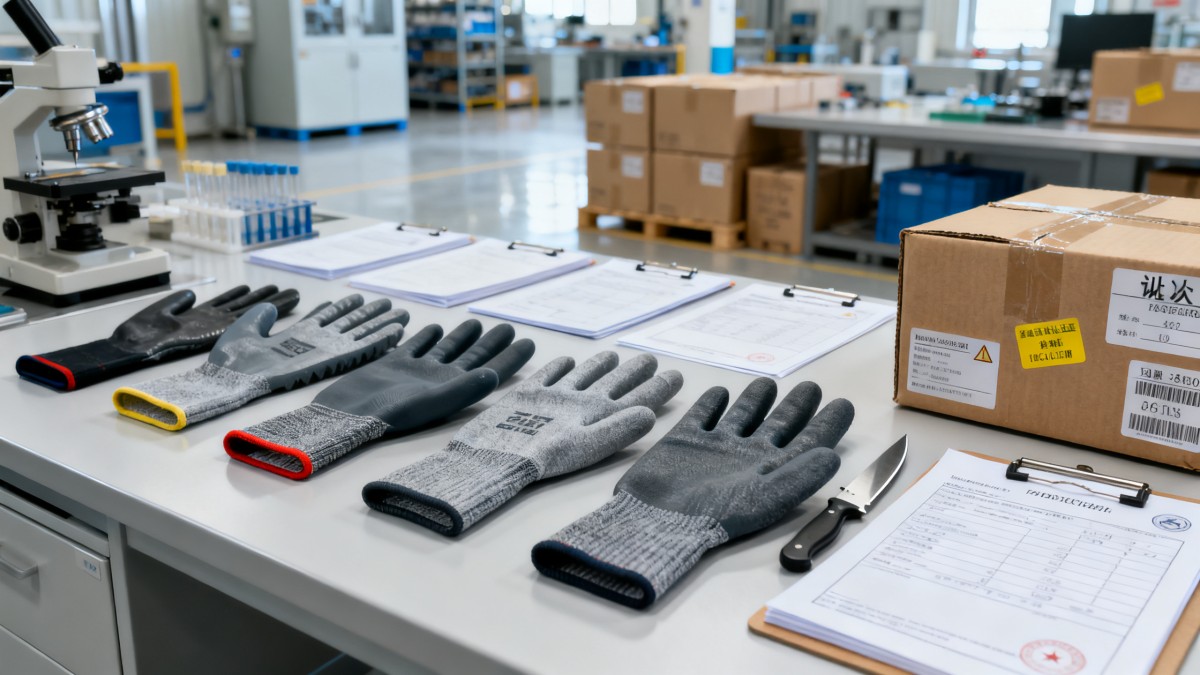
A cut resistant gloves supplier affects more than unit price. The choice shapes injury prevention, audit readiness, stock continuity, and total operating risk.
In industrial settings, gloves are not a generic consumable. They are part of the safety control system around metal handling, fabrication, maintenance, glass work, and warehousing.
That is why supplier evaluation should start with evidence. Marketing claims matter less than test reports, batch consistency, and delivery discipline.
A reliable cut resistant gloves supplier should support safe operations under real conditions. That includes abrasion, grip, dexterity, coating durability, and user acceptance.
The practical question is simple: can this supplier prove quality, certification, and lead time without gaps? If the answer is unclear, the sourcing risk is already visible.
Across heavy industry and infrastructure work, this risk-based approach aligns with how Global Industrial Core evaluates safety products: verified data first, assumptions later.
What should you verify first when comparing suppliers?
Start with product traceability and performance proof. Many sourcing problems appear early if you ask for the right documents.
A capable cut resistant gloves supplier should provide technical data sheets, material descriptions, coating details, sizing information, and test references for each glove model.
More importantly, those documents should match the product label, carton marking, and purchase specification. Mismatch usually signals weak quality control.
In real buying situations, these questions help separate serious suppliers from resellers with limited control:
- Is the cut level tested to a recognized standard, not described with generic wording?
- Can the supplier explain liner material, gauge, coating type, and intended work environment?
- Are there consistent SKUs, lot numbers, and packaging controls?
- Can samples from different batches show stable fit and finish?
If the supplier cannot answer these points clearly, price advantages may disappear later through returns, retraining, or incident exposure.
A quick evaluation table for early-stage screening
Before deep negotiations, it helps to use a simple comparison sheet. It keeps the review factual and easier to defend internally.
Which certifications actually matter, and how do you check them?
This is where many sourcing reviews become too superficial. A certificate name alone is not enough. You need the exact standard, scope, and current validity.
For cut resistant gloves, the relevant framework often includes EN 388 for mechanical risks and, depending on market access, CE-related conformity requirements.
If the gloves are used in regulated supply chains, ISO 9001 at the manufacturer level can also support confidence in process control, though it does not replace product testing.
A dependable cut resistant gloves supplier should be able to show:
- Current declarations of conformity where applicable
- Third-party or accredited lab test reports
- Clear performance ratings for cut, tear, abrasion, and puncture
- Factory quality certifications and traceable document control
Need extra caution? Verify dates, report numbers, and model references. Certificates sometimes belong to older glove versions, not the current one being quoted.
It is also worth asking whether any material substitutions have occurred. A yarn or coating change can alter performance, even when the product name stays the same.
How can you tell whether product quality is consistent, not just acceptable on paper?
The sample stage often looks good. The real challenge appears after repeated orders, especially when production scales or raw materials tighten.
A serious cut resistant gloves supplier should discuss quality control in operational terms, not only with broad statements about experience or service.
Ask how they manage yarn sourcing, coating viscosity, cuff finishing, dimensional checks, and carton-level inspection. Those details influence wear life and user acceptance.
In actual field use, quality problems usually show up as fit drift, weak grip in oily conditions, premature coating cracks, or gloves that workers stop wearing.
That is why wear trials matter. A short pilot across two or three tasks can reveal more than a polished catalog.
Try to compare gloves in realistic environments such as sheet metal handling, assembly, maintenance shutdowns, or logistics operations with sharp-edged packaging.
Useful trial questions include dexterity, sweat buildup, grip on dry and wet surfaces, touchscreen needs, and whether the glove remains comfortable over a full shift.
Common warning signs during quality review
- Test reports are shared as cropped images without model traceability
- Samples differ noticeably from production photos or previous shipments
- The supplier avoids discussing defect rate or claim history
- Sizing is inconsistent across batches or factories
Lead time looks acceptable, but is it truly dependable?
Quoted lead time and dependable lead time are not the same. The first is a promise. The second is a demonstrated planning capability.
When assessing a cut resistant gloves supplier, ask what sits behind the delivery commitment. Is the glove made to stock, made to order, or produced through shared capacity?
A stable supply setup usually includes raw material visibility, production scheduling discipline, export documentation control, and backup plans for high-demand periods.
In practice, these points deserve close attention:
- Standard lead time by SKU, not only by general product category
- Minimum order quantity and how it changes lead time
- Seasonal capacity pressure and historical on-time delivery rate
- Safety stock options for critical sites or shutdown windows
If delivery reliability is mission-critical, request a service-level discussion. A mature supplier can define response times, escalation paths, and recovery plans for late shipments.
This matters especially in infrastructure and heavy industry, where delayed PPE can interrupt permit-to-work routines or postpone maintenance execution.
Is the lowest quote ever the lowest cost?
Usually not. The cheaper offer can become expensive once replacement frequency, user rejection, stockouts, and non-compliance risk are included.
A better question is whether the cut resistant gloves supplier can support the required protection level at a sustainable total cost.
For example, a glove with a slightly higher price may still reduce annual spend if it lasts longer, fits better, and cuts down emergency replenishment.
This is one of the most common sourcing mistakes: comparing gloves only by piece price while ignoring failure cost and administrative friction.
A balanced review should consider:
- Expected wear life by application
- Training and acceptance requirements
- Claim handling speed and replacement policy
- Freight impact, especially for urgent replenishment
- Compliance exposure if documents fail an audit
Where possible, convert glove performance into cost per wear or cost per protected shift. That creates a more realistic basis for supplier comparison.
What is the smartest next step before placing a larger order?
Move from claims to controlled validation. A structured trial gives better insight than a long email chain.
Define the target applications, required cut level, environmental conditions, and expected monthly volume. Then test shortlisted models under those exact conditions.
At the same time, review documents line by line. Confirm certification scope, product identity, packaging traceability, and replenishment lead time.
A practical decision path looks like this:
- Shortlist suppliers with complete technical and certification evidence
- Run wear trials in real tasks, not only office inspection
- Score quality consistency, comfort, and delivery credibility separately
- Negotiate service terms for claims, safety stock, and delivery exceptions
The best cut resistant gloves supplier is rarely the one with the shortest brochure. It is the one that can verify performance, maintain consistency, and deliver on time when operations depend on it.
For teams using a GIC-style sourcing standard, the decision should rest on evidence, field suitability, and supply resilience together. That is the clearest route to a safer and more predictable buying outcome.
Technical Specifications
- How to Select Electronic Hotel Key Card Locks for Guest Rooms and Staff AreasAuthor :Safety Compliance Lead
- How to Select Lab Instruments for Reliable Chemical Analysis WorkflowsAuthor :Precision Metrology Expert
- How to Size a UPS for Server Rooms: Load, Runtime, and Redundancy FactorsAuthor :Grid Infrastructure Analyst
Expert Insights

Chief Security Architect
Dr. Thorne specializes in the intersection of structural engineering and digital resilience. He has advised three G7 governments on industrial infrastructure security.
Related Analysis
- Sep 17, 2026How to Select Electronic Hotel Key Card Locks for Guest Rooms and Staff AreasAuthor :Safety Compliance Lead
- Sep 16, 2026How to Select Lab Instruments for Reliable Chemical Analysis WorkflowsAuthor :Precision Metrology Expert
- Sep 15, 2026How to Size a UPS for Server Rooms: Load, Runtime, and Redundancy FactorsAuthor :Grid Infrastructure Analyst
Core Sector // 01
Security & Safety
- Can One Supplier Provide Both IEC- and ATEX-Certified Safety Equipment?Author :Safety Compliance Lead

- Are Dual IEC and NEC Safety Certifications Worth the Cost?Author :Safety Compliance Lead

- What Is the Difference Between Class I and Class II PPE?Author :Safety Compliance Lead

- Which Oil and Gas Safety Standards Should Contractors Meet Before Site Mobilization?Author :Safety Compliance Lead

- EU REACH Adds PFAS Cap for PPE WorkwearAuthor :Safety Compliance Lead

- How to Evaluate a Chemical Resistant Suit Supplier for Industrial Safety ProcurementAuthor :Safety Compliance Lead

- EU REACH Sets 50 ppb PFAS Cap for PPE WorkwearAuthor :Safety Compliance Lead

- EU Tightens PFOA Limit for PPE and Industrial Filter MediaAuthor :Safety Compliance Lead