Wholesale Emergency Blankets: Which Types Meet Rescue, First Aid, and Outdoor Use?
Author
Date Published
Reading Time
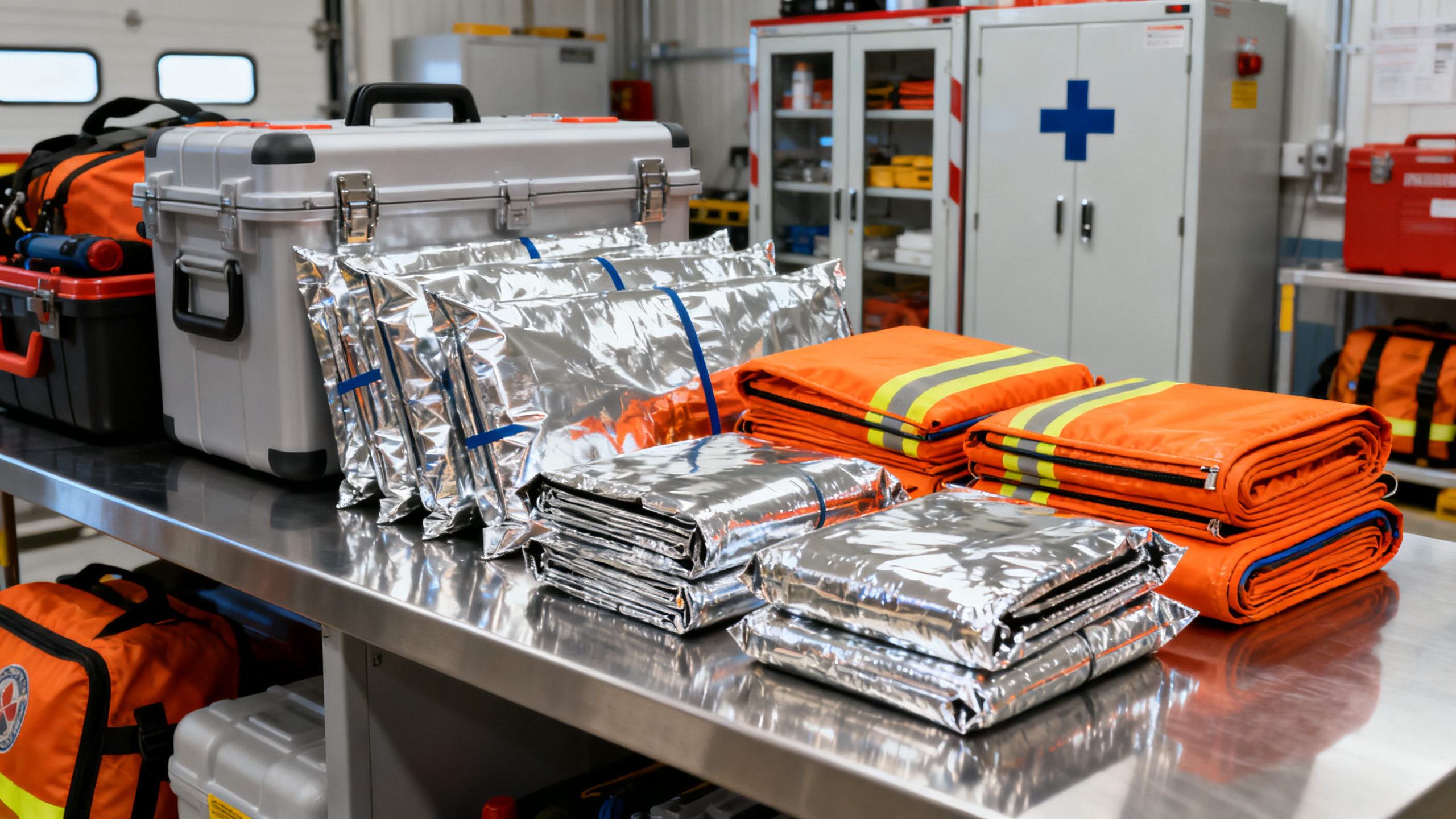
Why the right wholesale emergency blankets depend on the job site
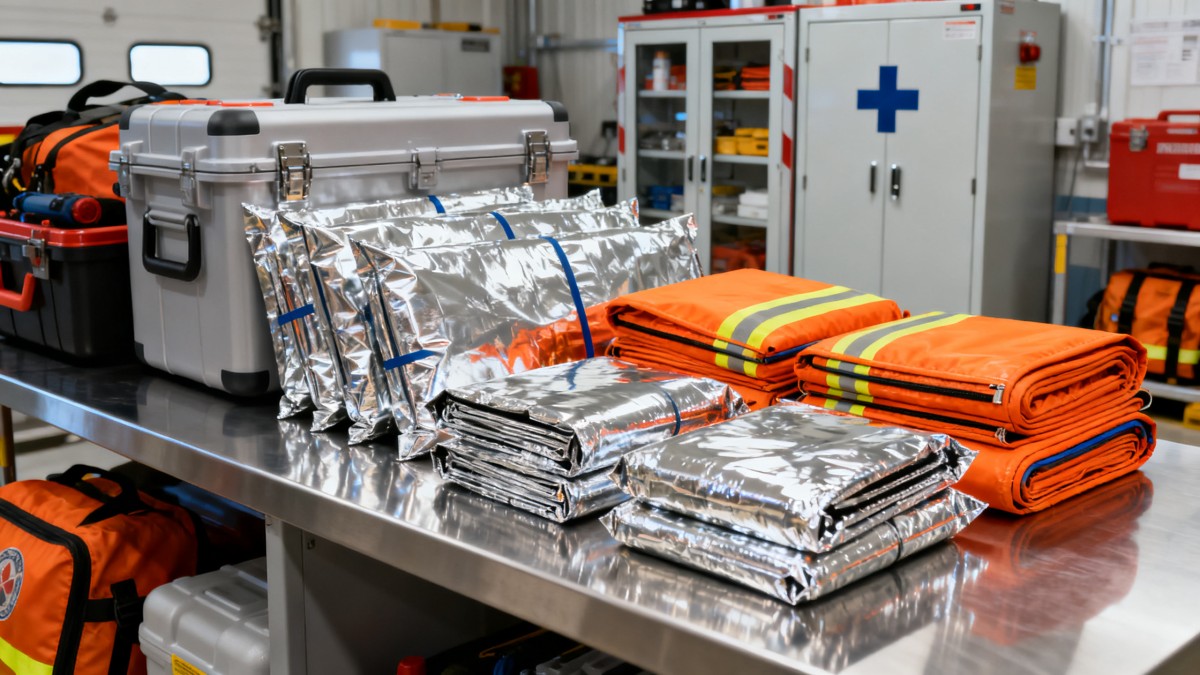
Choosing wholesale emergency blankets is rarely a simple price exercise.
In rescue, first aid, and outdoor operations, the blanket often becomes a frontline safety tool.
That changes how it should be evaluated.
A compact foil sheet may work for short-term heat retention during roadside response.
The same item may fail in wet terrain, high wind, or repeated field handling.
In industrial and infrastructure environments, reliability matters more than a headline unit cost.
That is why wholesale emergency blankets should be matched to operational conditions, not just storage shelves.
GIC’s safety-oriented view also favors practical evidence.
Material behavior, packaging integrity, visibility, and compliance all influence whether stock performs when failure is unacceptable.
Different situations create different blanket priorities
Emergency blanket demand looks similar on paper, but field conditions reshape priorities very quickly.
A first aid station usually needs clean storage, easy opening, and predictable single-use deployment.
A rescue vehicle needs faster access, better tear resistance, and strong visibility in low light.
Outdoor programs often care more about weather exposure, carry weight, and packing volume over longer duration.
Because of that, wholesale emergency blankets are best compared by scenario logic.
The key questions are straightforward.
- How long must heat retention remain effective?
- Will the blanket face rain, puncture, or repeated repositioning?
- Is high-visibility color needed for location and signaling?
- Does the pack need sterile, vacuum-sealed, or bulk carton formats?
- Are CE, ISO, or internal site standards required before deployment?
Once those questions are answered, blanket type becomes easier to narrow down.
In rescue response, strength and visibility often outrank compactness
Rescue teams rarely use emergency blankets in calm conditions.
Patients may be moved across gravel, concrete, wet ground, or damaged infrastructure.
That raises the value of reinforced foil blankets or heavier-duty laminated designs.
These versions are usually less fragile during unfolding and body repositioning.
Bright orange or reflective silver-orange combinations also matter.
They support visual detection during roadside incidents, nighttime extraction, and crowded emergency scenes.
For this setting, wholesale emergency blankets should not be judged by packed size alone.
A slightly larger pack may be preferable if it reduces tearing or improves grip with gloves.
Another frequent oversight is noise and stiffness.
Very thin foil can become difficult to control in wind, especially around stretchers or confined access points.
What usually works better in rescue kits
- Tear-resistant metallized film with stronger edge performance
- High-visibility exterior for faster spotting and signaling
- Packaging that opens quickly without tools
- Sizes that cover full-body protection, not partial torso coverage
For first aid stations, consistency and clean storage matter more
First aid environments are different.
The blanket is often stored for long periods, then used once under controlled conditions.
In this case, standard Mylar emergency blankets can be appropriate if quality is consistent.
The real issue is not whether the blanket is premium or basic.
It is whether every unit in the carton opens cleanly, unfolds intact, and remains usable after shelf storage.
That is why wholesale emergency blankets for first aid use should be checked for sealed packaging quality and batch uniformity.
Loose folds, weak sealing, or inconsistent dimensions create avoidable risk.
In industrial clinics or remote work compounds, compact storage still matters.
Yet a very low-cost blanket that fails after years in a cabinet is rarely a true saving.
Outdoor use usually exposes the limits of basic wholesale emergency blankets
Outdoor use sounds broad because it is broad.
Some situations involve day packs and temporary shelter needs.
Others involve utility field crews, remote inspections, or infrastructure work in changing weather.
Here, a basic foil sheet may retain heat but still underperform overall.
Wind resistance, water resistance, and usability after repacking become more important.
For longer outdoor exposure, thicker survival blankets or blanket-bivy hybrids often make more operational sense.
They weigh more, but they usually tolerate rough handling better.
They also reduce the common failure point where a thin blanket tears during setup and loses practical coverage.
When evaluating wholesale emergency blankets for outdoor stock, it helps to ask whether the item is intended for carry-only backup or realistic field use.
The practical gap between backup and field-use stock
The specification sheet does not tell the whole story
One common mistake is comparing wholesale emergency blankets only by thickness or claimed heat reflection.
Those figures matter, but they do not describe full field performance.
In practice, packaging failure, seam weakness, and poor unfolding behavior cause just as many problems.
Another misjudgment is treating rescue, first aid, and outdoor categories as interchangeable.
They overlap, but operational stress is different.
A blanket that works in a first aid box may not survive roadside extraction.
A blanket that performs well outdoors may be too bulky for dense cabinet stocking.
This is where compliance and validation become useful.
When wholesale emergency blankets are being stocked for serious operational settings, supplier evidence should cover materials, lot consistency, and relevant quality systems.
Claims without traceable testing are harder to trust in regulated or high-risk environments.
A workable selection method for mixed-use inventory
Mixed-use inventory is common across industrial compounds, mobile teams, and safety programs.
In those cases, one blanket type rarely covers every need well.
A layered selection method usually produces better results.
- Keep standard wholesale emergency blankets for controlled first aid stations
- Use reinforced models for rescue bags and mobile emergency units
- Reserve heavy-duty options for prolonged outdoor exposure or remote work
- Separate stock by deployment environment, not by carton convenience
This approach reduces overbuying in one category and underprotecting another.
It also supports better lifecycle control.
Bulk stock should be reviewed for shelf life, seal integrity, and replacement timing, especially in hot vehicles or humid storage areas.
What to confirm before finalizing wholesale emergency blankets
The final decision should connect real use conditions with measurable acceptance criteria.
That means moving beyond generic descriptions like lightweight, thermal, or waterproof.
A more dependable review usually includes the following checks.
- Confirm the primary scenario: rescue, first aid, outdoor standby, or remote exposure
- Compare tear resistance, handling behavior, and visibility under realistic conditions
- Review packaging durability for storage, transport, and fast deployment
- Check certification support, lot consistency, and supplier quality controls
- Estimate replacement frequency, not just initial purchase cost
Well-chosen wholesale emergency blankets fit the operating environment instead of forcing the environment to accept the product.
That is usually the difference between nominal compliance and dependable readiness.
Before expanding stock, it is worth mapping each use point, listing the real exposure conditions, and setting clear pass or fail criteria for every blanket type under review.
Technical Specifications
- How to Select Electronic Hotel Key Card Locks for Guest Rooms and Staff AreasAuthor :Safety Compliance Lead
- How to Select Lab Instruments for Reliable Chemical Analysis WorkflowsAuthor :Precision Metrology Expert
- How to Size a UPS for Server Rooms: Load, Runtime, and Redundancy FactorsAuthor :Grid Infrastructure Analyst
Expert Insights

Chief Security Architect
Dr. Thorne specializes in the intersection of structural engineering and digital resilience. He has advised three G7 governments on industrial infrastructure security.
Related Analysis
- Sep 17, 2026How to Select Electronic Hotel Key Card Locks for Guest Rooms and Staff AreasAuthor :Safety Compliance Lead
- Sep 16, 2026How to Select Lab Instruments for Reliable Chemical Analysis WorkflowsAuthor :Precision Metrology Expert
- Sep 15, 2026How to Size a UPS for Server Rooms: Load, Runtime, and Redundancy FactorsAuthor :Grid Infrastructure Analyst
Core Sector // 01
Security & Safety
- Steel Rescue Tripods Wholesale: Key Load Ratings, Standards, and Buying MistakesAuthor :Safety Compliance Lead

- India Lifts Duty on Fire Rescue Imports to 22%Author :Safety Compliance Lead

- IEC 62061 Amendment 2 Targets Fire & Rescue ControllersAuthor :Safety Compliance Lead

- IEC 62819-2:2026 Sets New Cybersecurity CheckpointAuthor :Safety Compliance Lead

- When to Use a Quick Deployment Oil Boom for Spill Control in Ports and Inland WatersAuthor :Safety Compliance Lead

- Saudi SASO Adds Cybersecurity Annex to Fire Equipment CertificationAuthor :Safety Compliance Lead

- CBP Pre-Arrival Portal Raises Import Checks for Fire EquipmentAuthor :Safety Compliance Lead

- UAE Sets Cybersecurity Gate for Fire Control PanelsAuthor :Safety Compliance Lead