IEC 62061 Amendment 2 Targets Fire & Rescue Controllers
Author
Date Published
Reading Time
On 11 July 2026, the International Electrotechnical Commission issued Amendment 2 to IEC 62061:2026, introducing a new requirement for SIL2-certified controller architecture in fire pump controllers, emergency lighting sequencers, and rescue hoist logic units. Because the amendment takes effect on 1 January 2027 and replaces national adoptions in the GCC, Australia, and South Africa, the update is immediately relevant to manufacturers, compliance teams, procurement functions, and market-entry operators working with fire and rescue equipment controls in these markets.

What the amendment formally changes
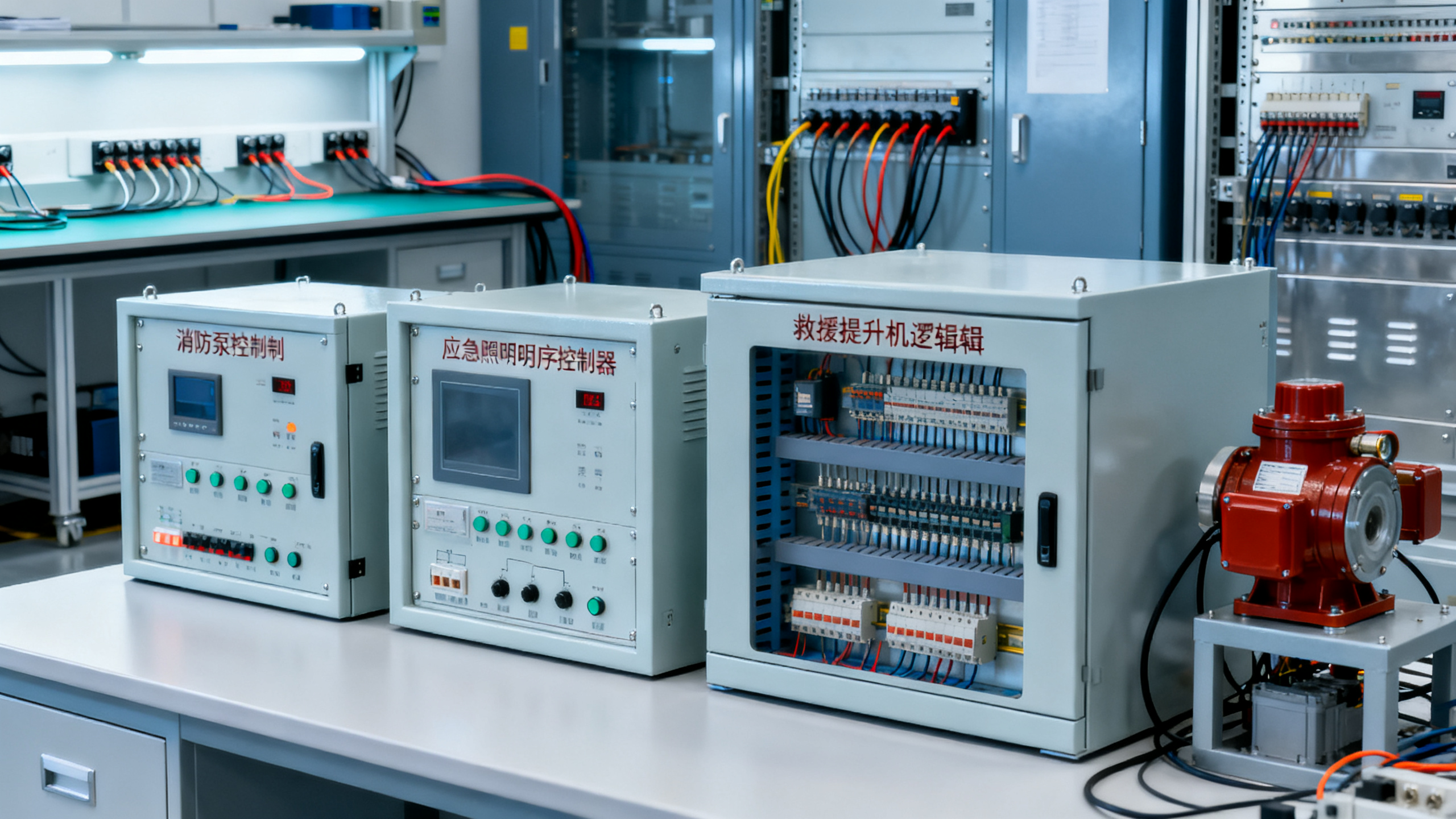
The confirmed change is narrowly defined but operationally important. Amendment 2 to IEC 62061:2026 was released by the IEC on 11 July 2026. It requires SIL2-certified controller architecture for three equipment controller categories: fire pump controllers, emergency lighting sequencers, and rescue hoist logic units.
The amendment enters into force on 1 January 2027. It also supersedes national adoptions in the GCC, Australia, and South Africa. In those markets, conformity assessment is required through Notified Bodies accredited under ISO/IEC 17065.
Where the impact is likely to be felt first
Controller design and manufacturing workflows
From an industry perspective, the most direct effect is on companies that design or manufacture the specified controller types. The reason is straightforward: the amendment addresses controller architecture itself. The practical pressure point is likely to be in product design review, technical documentation, certification preparation, and the timing of products intended for placement in the affected markets.
Market-access and conformity assessment functions
Businesses responsible for placing products into the GCC, Australia, and South Africa may also face immediate adjustments. The amendment does not merely add a technical reference; it replaces national adoptions in markets where conformity assessment by ISO/IEC 17065-accredited Notified Bodies is required. That means compliance sequencing, submission planning, and supporting evidence for market access may require closer coordination.
Procurement and supply chain coordination
Procurement teams and supply chain service providers may be affected where controllers or control assemblies are sourced across borders. Analysis shows that the relevant exposure is not limited to the finished product maker. Any business relying on upstream suppliers for control units, documentation packages, or certification support may need to check whether existing supply commitments and delivery schedules still align with the new effective date.
End-use project planning and customer delivery
For buyers, integrators, and service providers involved in fire and rescue equipment deployment, the main issue is delivery certainty. What deserves closer attention is whether product specifications, certification status, and acceptance requirements remain aligned for projects tied to the 2027 transition point, especially in the named markets.
What companies should watch now
The distinction between publication date and enforcement date
The amendment was released on 11 July 2026, but it enters into force on 1 January 2027. That gap matters in practice. Companies should distinguish between what has already been published and what will become enforceable at the start of 2027, particularly when quoting, contracting, or scheduling certification-related activities.
Products that fall within the named controller categories
Current attention should stay tightly focused on the three categories explicitly named in the amendment: fire pump controllers, emergency lighting sequencers, and rescue hoist logic units. Firms should avoid treating the update as a general statement about all fire or rescue equipment controls without confirming the exact product scope in their own portfolios.
Documentation and supplier qualification readiness
Observably, documentation readiness is likely to become a practical checkpoint. Where conformity assessment by ISO/IEC 17065-accredited Notified Bodies is required, businesses may need to review how supplier qualifications, technical files, and conformity materials are assembled and handed over across the supply chain.
Customer communication in affected markets
For commercial and account teams, the immediate task is clarity. Customers in the GCC, Australia, and South Africa may ask how the amendment affects availability, compliance timing, or acceptance conditions. The useful distinction here is between confirmed facts in the amendment and internal assumptions about implementation impact.
Why this looks like more than a short-term notice
Analysis shows that this update is more appropriate to understand as a concrete regulatory signal rather than a routine editorial revision. The amendment sets a defined technical requirement, identifies the affected controller categories, names the effective date, and specifies markets where conformity assessment by accredited Notified Bodies is part of the compliance path.
At the same time, it should not yet be overstated as a fully settled market outcome beyond those confirmed points. Observably, the practical effect on timelines, product availability, and business processes will depend on how companies map the amendment to their existing product lines, certification status, and market commitments.
How to read the development at this stage
The immediate significance of this amendment lies in its specificity. It is not simply a broad policy message; it defines a functional safety requirement for named controller architectures and ties that requirement to a clear implementation date. For industry participants, the most balanced reading is that this is a near-term compliance development with longer-term implications for product qualification and market access in the affected regions.
It is more appropriate to understand this as an actionable standards update that still requires continued monitoring in business execution, rather than as a completed market result.
Basis of this article
This article is based on the user-provided news title, event date, and event summary concerning IEC 62061:2026 Amendment 2 and its application to fire and rescue equipment controllers. Information of this kind is commonly cross-checked against sources such as official announcements, standards organization documents, industry association notices, company compliance statements, and authoritative trade media coverage.
No specific official source link was provided in the input, so the exact official publication link remains to be verified on an ongoing basis. Follow-up attention should focus on any further official wording, implementation clarifications, and market-specific conformity assessment communications related to the GCC, Australia, and South Africa.
Technical Specifications
- How to Select Electronic Hotel Key Card Locks for Guest Rooms and Staff AreasAuthor :Safety Compliance Lead
- How to Select Lab Instruments for Reliable Chemical Analysis WorkflowsAuthor :Precision Metrology Expert
- How to Size a UPS for Server Rooms: Load, Runtime, and Redundancy FactorsAuthor :Grid Infrastructure Analyst
Expert Insights

Chief Security Architect
Dr. Thorne specializes in the intersection of structural engineering and digital resilience. He has advised three G7 governments on industrial infrastructure security.
Related Analysis
- Sep 17, 2026How to Select Electronic Hotel Key Card Locks for Guest Rooms and Staff AreasAuthor :Safety Compliance Lead
- Sep 16, 2026How to Select Lab Instruments for Reliable Chemical Analysis WorkflowsAuthor :Precision Metrology Expert
- Sep 15, 2026How to Size a UPS for Server Rooms: Load, Runtime, and Redundancy FactorsAuthor :Grid Infrastructure Analyst
Core Sector // 01
Security & Safety
- Steel Rescue Tripods Wholesale: Key Load Ratings, Standards, and Buying MistakesAuthor :Safety Compliance Lead

- India Lifts Duty on Fire Rescue Imports to 22%Author :Safety Compliance Lead

- IEC 62061 Amendment 2 Targets Fire & Rescue ControllersAuthor :Safety Compliance Lead

- IEC 62819-2:2026 Sets New Cybersecurity CheckpointAuthor :Safety Compliance Lead

- When to Use a Quick Deployment Oil Boom for Spill Control in Ports and Inland WatersAuthor :Safety Compliance Lead

- Saudi SASO Adds Cybersecurity Annex to Fire Equipment CertificationAuthor :Safety Compliance Lead

- CBP Pre-Arrival Portal Raises Import Checks for Fire EquipmentAuthor :Safety Compliance Lead

- UAE Sets Cybersecurity Gate for Fire Control PanelsAuthor :Safety Compliance Lead