When to Use a Quick Deployment Oil Boom for Spill Control in Ports and Inland Waters
Author
Date Published
Reading Time
When to Use a Quick Deployment Oil Boom for Spill Control in Ports and Inland Waters
In ports and inland waters, spill response decisions must be made fast and with precision.
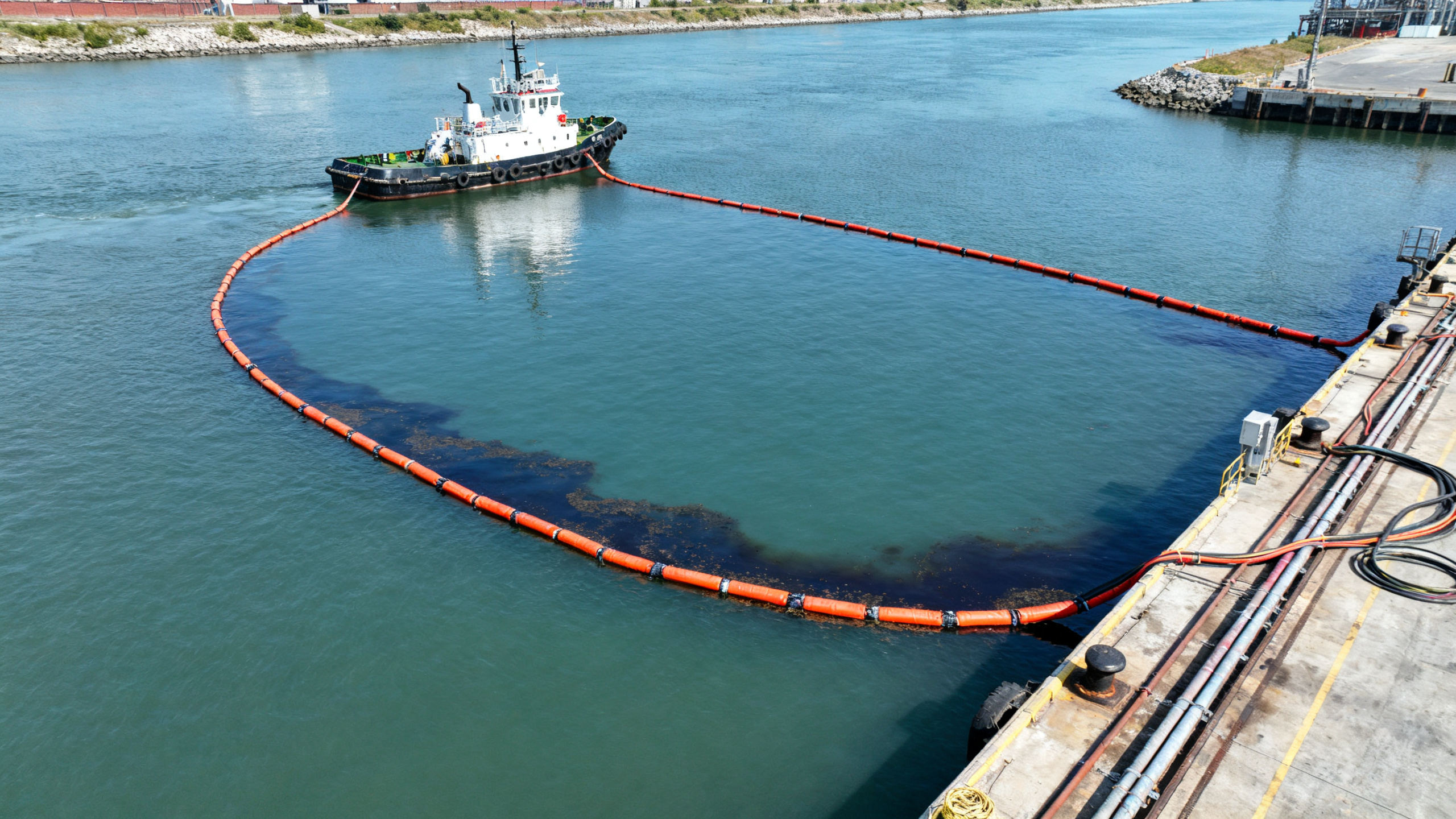
A quick deployment oil boom is often the first containment tool considered during the first minutes of an incident.
It works best when access is tight, vessel movement continues, and the spill has not yet spread beyond control.
That sounds simple, but field decisions are rarely simple.
Water velocity, berth layout, debris, weather, and response staffing all change whether this tool helps or fails.
A poor deployment wastes time and can push oil into sensitive zones.
A well-timed quick deployment oil boom can reduce shoreline impact, operational downtime, and compliance exposure.
The practical question is not whether booms matter.
The real question is when this specific boom type is the right choice in ports and inland waters.
What a Quick Deployment Oil Boom Is Designed to Do
A quick deployment oil boom is built for speed, portability, and rapid containment.
It is commonly stored on reels, trailers, docks, or response vessels for immediate use.
Compared with heavier offshore systems, it is easier to launch and recover in constrained locations.
That makes it especially useful around terminals, canals, locks, marinas, and industrial waterfronts.
Its main job is to contain, divert, or exclude floating oil before the slick expands.
In practical response planning, the quick deployment oil boom buys time for skimmers, absorbents, vacuum units, and cleanup crews.
It is not a universal fix.
It performs within defined limits, especially in current, wave action, and heavy traffic conditions.
Understanding those limits is where better spill control decisions start.
Use It When the Spill Is Still Containable
The best time to deploy a quick deployment oil boom is early.
If the spill is recent and the slick remains concentrated, rapid containment usually creates the highest value.
This is common during hose failures, transfer leaks, tank overfills, bilge discharge events, and small bunker spills.
In these cases, minutes matter more than boom length.
Early containment reduces spread area, shortens cleanup time, and simplifies waste handling.
From an operational standpoint, this also protects adjacent berths and intake structures.
A quick deployment oil boom is less effective once the slick becomes fragmented across a broad surface.
It is also less effective when emulsification, wind shear, or repeated prop wash has already broken control lines.
So the decision point is straightforward.
If the spill is local, visible, and reachable, deploy fast.
Use It in Manageable Current and Protected Water
A quick deployment oil boom performs best in calm or moderately protected water.
Ports, harbors, turning basins, river edges, and sheltered inland channels often fit this profile.
The key factor is current speed.
When current becomes too strong, oil can escape under the skirt, a failure called entrainment.
That risk rises fast when deployment angles are poor or anchoring points are unstable.
In real operations, this means a quick deployment oil boom is a strong choice for:
- Berth-side fuel handling areas
- Lock approaches and canal service zones
- Marina maintenance basins
- River terminals with predictable flow
- Industrial outfalls and pump stations
It is a weaker choice for exposed waterfronts with strong crosscurrents or persistent wake energy.
In those settings, a heavier containment strategy may be necessary from the start.
Use It When Sensitive Areas Need Immediate Protection
Sometimes the right reason to deploy is not the spill source.
It is the asset or habitat located downstream or downwind.
A quick deployment oil boom is highly effective as an exclusion barrier around vulnerable points.
These points often include stormwater outfalls, culverts, fish habitat, mangroves, wetlands, and raw water intakes.
In busy ports, it may also protect moored vessels, floating infrastructure, or work zones that cannot shut down immediately.
This approach is often more realistic than trying to surround every spill source completely.
A short, well-positioned boom can prevent a small release from becoming a reportable environmental event.
That matters for both cleanup cost and regulatory scrutiny.
In short, deploy the quick deployment oil boom where consequences escalate fastest.
Key Decision Checks Before Deployment
Good response teams do not deploy on instinct alone.
They run a short field check that aligns equipment choice with site conditions.
Before launching a quick deployment oil boom, confirm these points:
- Can the spill source be isolated or stopped quickly?
- Is the water current within the boom’s operating limit?
- Are there secure anchoring or tie-off locations nearby?
- Will vessel traffic or prop wash disrupt the boom line?
- Is the oil type floating and recoverable at the surface?
- Can responders access the area without unsafe exposure?
- Is there follow-on recovery equipment available?
This sequence keeps the decision practical.
A quick deployment oil boom should support a response plan, not replace one.
When a Quick Deployment Oil Boom Is the Wrong Choice
There are cases where rapid boom deployment creates a false sense of control.
That usually happens when site energy is too high or spill behavior is poorly understood.
Avoid relying on a quick deployment oil boom as the primary tool when:
- Current speed is high enough to force oil under the skirt
- Wave height or wake energy causes repeated overtopping
- The spill area is already too wide to contain effectively
- Debris load can snag, sink, or tear the boom
- Subsurface product or dissolved contaminants dominate the incident
- Access constraints delay deployment longer than alternative controls
In these situations, diversion tactics, source isolation, shoreline protection, or specialized containment systems may deliver better results.
The point is simple.
Fast deployment only helps when the equipment matches the water and the spill.
Operational Advantages in Port and Inland Water Projects
For industrial sites, the value of a quick deployment oil boom goes beyond environmental compliance.
It supports continuity.
Rapid containment can keep a spill from shutting down adjacent loading points, maintenance zones, or navigation lanes.
It also improves incident documentation because the affected area stays smaller and easier to assess.
In regulated environments, that can influence reporting quality, cleanup verification, and post-incident review.
Another advantage is training efficiency.
Teams can drill with a quick deployment oil boom more often than with heavier response systems.
That repeated practice improves launch speed, anchoring accuracy, and coordination under pressure.
For facilities balancing safety, uptime, and compliance, those are meaningful gains.
A Practical Selection Framework
A useful field rule is to link boom choice to three questions.
How fast is the spill moving, how exposed is the water, and what must be protected first?
If the spill is early-stage, the water is manageable, and the target zone is clear, a quick deployment oil boom is usually appropriate.
If one of those three conditions fails, pause and reassess.
That reassessment may point to a different boom type, a shorter exclusion layout, or a source-first response strategy.
The strongest response plans build this decision logic into site procedures before an incident happens.
That includes equipment staging, deployment maps, anchor points, and defined trigger thresholds.
When those pieces are already in place, the quick deployment oil boom becomes a reliable control measure instead of a rushed guess.
Final Takeaway
A quick deployment oil boom is most effective when the spill is fresh, the water is reasonably controlled, and the protected area is clearly defined.
That is why it remains a core spill control tool in ports and inland waters.
Used at the right time, it limits spread, protects infrastructure, and reduces compliance risk.
Used in the wrong conditions, it can slow response and miss the real threat path.
The operational priority is clear.
Predefine where the quick deployment oil boom should go, train teams on launch conditions, and align deployment with realistic current and access limits.
That is how rapid spill response becomes controlled action instead of reactive improvisation.
Technical Specifications
- Air Handling Unit Supplier Checklist: Performance Data, Lead Times, and SupportAuthor :Environmental Engineering Director
- Buying Fiberglass Water Tanks Wholesale: Compare Quotes and Delivery CostsAuthor :Environmental Engineering Director
- Choosing an XLPE Power Cable Supplier: Test Reports, Traceability, and Lead TimesAuthor :Grid Infrastructure Analyst
Expert Insights

Chief Security Architect
Dr. Thorne specializes in the intersection of structural engineering and digital resilience. He has advised three G7 governments on industrial infrastructure security.
Related Analysis
- Oct 19, 2026Air Handling Unit Supplier Checklist: Performance Data, Lead Times, and SupportAuthor :Environmental Engineering Director
- Oct 18, 2026Buying Fiberglass Water Tanks Wholesale: Compare Quotes and Delivery CostsAuthor :Environmental Engineering Director
- Oct 17, 2026Choosing an XLPE Power Cable Supplier: Test Reports, Traceability, and Lead TimesAuthor :Grid Infrastructure Analyst
Core Sector // 01
Security & Safety
- How to Vet a Wholesale CO2 Extinguisher Supplier for Certified Bulk OrdersAuthor :Safety Compliance Lead

- How to Select a Conventional Fire Alarm Panel by Zone Capacity and Building RiskAuthor :Safety Compliance Lead

- Steel Rescue Tripods Wholesale: Key Load Ratings, Standards, and Buying MistakesAuthor :Safety Compliance Lead

- India Lifts Duty on Fire Rescue Imports to 22%Author :Safety Compliance Lead

- IEC 62061 Amendment 2 Targets Fire & Rescue ControllersAuthor :Safety Compliance Lead

- IEC 62819-2:2026 Sets New Cybersecurity CheckpointAuthor :Safety Compliance Lead

- When to Use a Quick Deployment Oil Boom for Spill Control in Ports and Inland WatersAuthor :Safety Compliance Lead

- Saudi SASO Adds Cybersecurity Annex to Fire Equipment CertificationAuthor :Safety Compliance Lead