CBP Pre-Arrival Portal Raises Import Checks for Fire Equipment
Author
Date Published
Reading Time
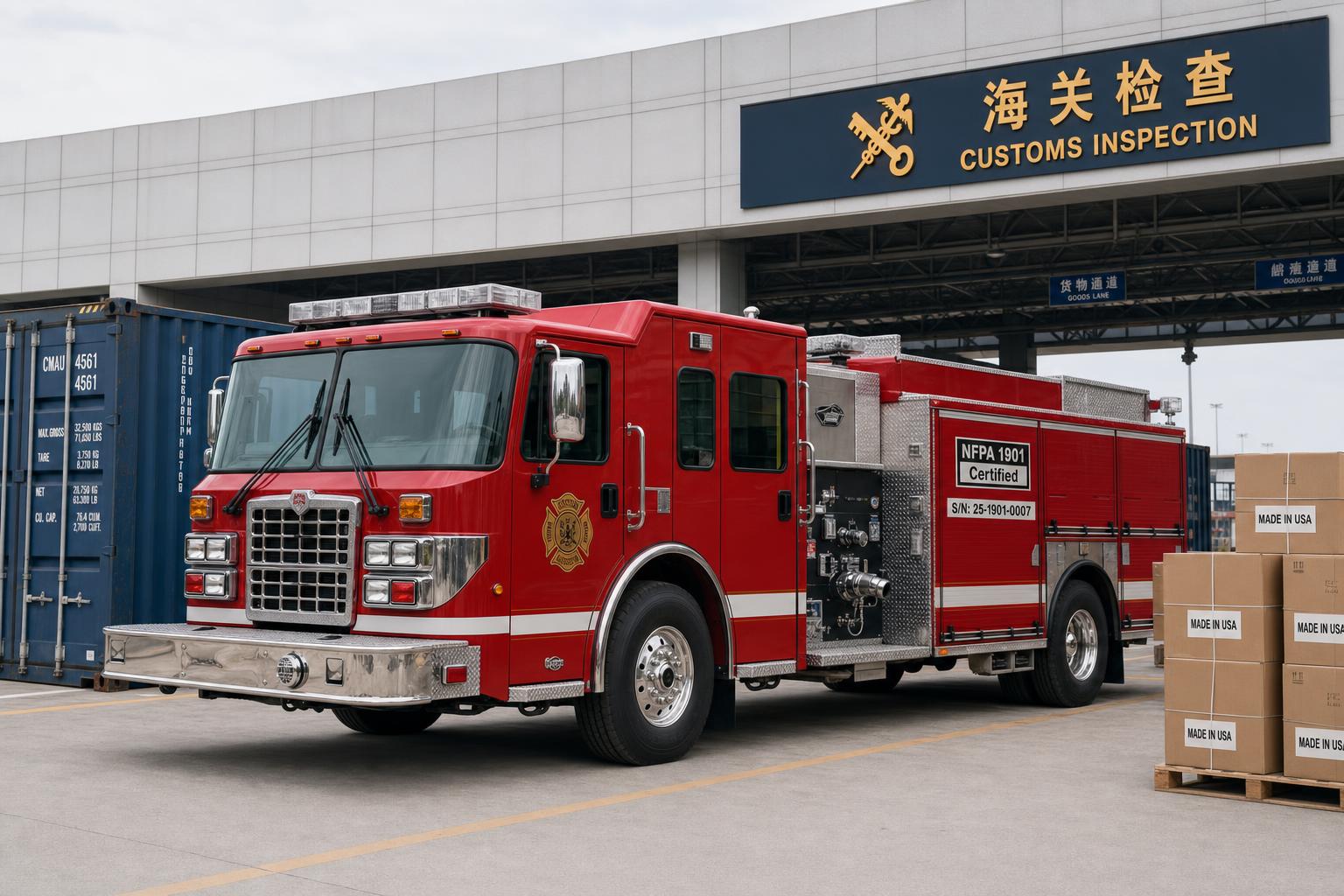
On July 1, 2026, U.S. Customs and Border Protection began enforcing a new pre-arrival filing requirement for imported fire and rescue equipment through the Fire Equipment Pre-Clearance Portal (FEPCP). The change matters not only because it adds a mandatory step before arrival at U.S. ports, but also because it directly affects certification review, serial-level traceability, end-use documentation, and the timing of customs clearance for fire trucks, SCBA, and rescue tools.
What the New Portal Now Requires
According to the provided event summary, CBP activated the mandatory FEPCP on July 1, 2026. The portal applies to fire trucks, SCBA, and rescue tools entering U.S. ports.
The filing must be completed in advance and must include NFPA 1901 or NFPA 1971 certification materials, serial traceability data, and end-use affidavits. The same summary also states that non-compliant filings may face delays of up to 72 hours.
Where the Pressure Will Be Felt First
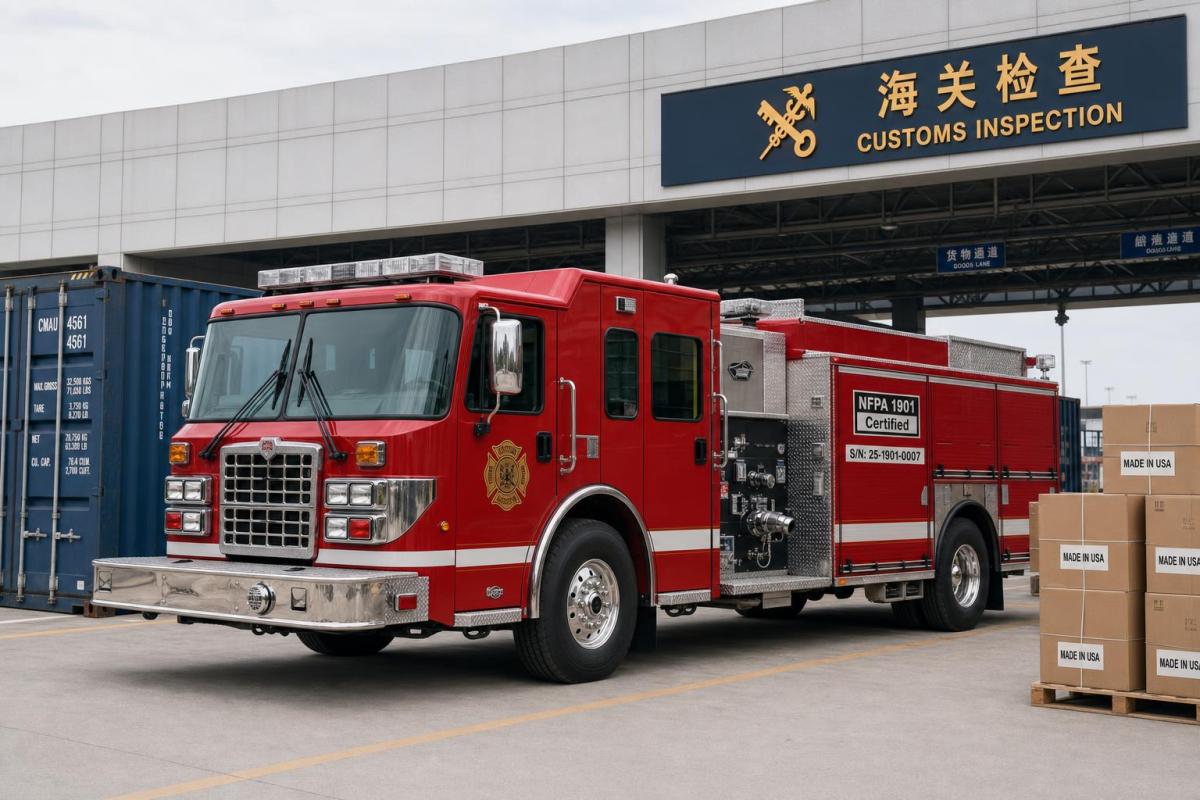
Export shipments facing a new pre-clearance checkpoint
From an industry perspective, exporters and direct trading companies are likely to feel the impact first because the rule change adds a pre-arrival documentation gate before goods can move through port entry as expected. The practical effect is not limited to customs paperwork; it also touches shipment readiness, document matching, and the ability to present certification and traceability records in a form acceptable for filing.
What deserves closer attention is whether current export files for covered products already align with the required NFPA references, serial traceability records, and end-use statements. Where those materials are incomplete or scattered across suppliers, the risk is less about the product description itself and more about clearance timing.
Manufacturers and assemblers may need tighter document control
For manufacturers, the immediate issue is not simply production compliance, but the ability to connect each shipment with usable certification documentation and serial-level traceability data. This is especially relevant for businesses shipping finished fire trucks, SCBA, or rescue tools into the U.S. market, because the new filing expectation appears to move part of the compliance burden earlier in the import process.
Analysis shows that document management, product identification, and internal release procedures may become more important operational points than before. If certification files, serial records, and shipment documents are not prepared in a coordinated way, customs delays may become a delivery issue rather than only a regulatory issue.
Importers, buyers, and supply chain service providers will need earlier coordination
Importers, procurement teams, freight coordinators, and customs-related service providers may also be affected because the portal requires advance submission rather than post-arrival problem solving. In practice, this means buyers may need earlier confirmation from suppliers on certification status, traceability data completeness, and intended end use before cargo reaches port.
Observably, this can influence purchase scheduling, shipping cutoffs, handover timing, and customer delivery commitments. Even without additional rule details, the stated possibility of up to 72 hours of delay for non-compliant filings is enough to make pre-shipment coordination a higher priority for covered product categories.
What Companies Should Review Now
Check whether certification files are filing-ready
Companies handling covered products should first review whether their NFPA 1901 or NFPA 1971 certification materials are complete, current, and organized for advance submission. The key issue is not only whether certification exists, but whether it can be provided in a usable and consistent form within the new portal process.
Match serial traceability records to shipment documents
Serial traceability is specifically named in the event summary, so businesses should pay close attention to whether product serial records can be matched cleanly to customs, shipping, and commercial documentation. Analysis shows that gaps at this step could create avoidable filing friction even when the product itself is otherwise ready for export or import.
Review end-use affidavit preparation and internal ownership
The requirement for end-use affidavits means companies should clarify who prepares, reviews, and retains that document within the transaction chain. Exporters, importers, and buyers may need to align earlier on document ownership and submission timing, especially where more than one party touches compliance records before arrival.
Watch for execution details beyond the launch notice
The provided information confirms that the portal is active and mandatory, but it does not provide detailed enforcement examples or expanded procedural guidance. For that reason, companies should continue monitoring official wording, filing interpretation, and any changes in transaction documents or procurement requirements that may emerge as the rule is applied in practice.
Why This Looks Like an Execution Signal
As an editorial observation, this development is better understood as an implemented compliance checkpoint than as a tentative policy discussion. The portal is described as mandatory and already activated, which indicates that affected market participants should treat the change as operational rather than theoretical.
At the same time, analysis also suggests that the market still needs to observe how consistently the requirement is applied in practice, how document review standards are interpreted, and whether buyers or supply chain partners begin adjusting their own submission and qualification requirements around it.
How to Read the Change at This Stage
The most reasonable reading at this stage is that CBP has moved import compliance for certain fire and rescue equipment further upstream, placing more emphasis on advance verification before port entry. The immediate significance lies in documentation readiness, traceability discipline, and the potential effect on delivery timing for non-compliant filings.
It is more appropriate to understand this as a live execution change with practical trade and compliance consequences, while still recognizing that the finer points of implementation may need continued observation through official clarification and market response.
About the Basis of This Article
This article is generated from the user-provided news title, event date, and event summary. For events of this type, commonly relevant source categories may include official notices, releases from regulatory authorities, customs or trade administration updates, industry association communications, standards organization materials, and reporting from authoritative trade media.
No specific official source link was provided in the input, so the exact official reference still requires further verification. What remains worth watching includes any later policy detail, certification interpretation, filing practice, procurement document changes, industry feedback, and how affected companies adapt their execution processes after the portal launch.
Technical Specifications
- Air Handling Unit Supplier Checklist: Performance Data, Lead Times, and SupportAuthor :Environmental Engineering Director
- Buying Fiberglass Water Tanks Wholesale: Compare Quotes and Delivery CostsAuthor :Environmental Engineering Director
- Choosing an XLPE Power Cable Supplier: Test Reports, Traceability, and Lead TimesAuthor :Grid Infrastructure Analyst
Expert Insights

Chief Security Architect
Dr. Thorne specializes in the intersection of structural engineering and digital resilience. He has advised three G7 governments on industrial infrastructure security.
Related Analysis
- Oct 19, 2026Air Handling Unit Supplier Checklist: Performance Data, Lead Times, and SupportAuthor :Environmental Engineering Director
- Oct 18, 2026Buying Fiberglass Water Tanks Wholesale: Compare Quotes and Delivery CostsAuthor :Environmental Engineering Director
- Oct 17, 2026Choosing an XLPE Power Cable Supplier: Test Reports, Traceability, and Lead TimesAuthor :Grid Infrastructure Analyst
Core Sector // 01
Security & Safety
- How to Vet a Wholesale CO2 Extinguisher Supplier for Certified Bulk OrdersAuthor :Safety Compliance Lead

- How to Select a Conventional Fire Alarm Panel by Zone Capacity and Building RiskAuthor :Safety Compliance Lead

- Steel Rescue Tripods Wholesale: Key Load Ratings, Standards, and Buying MistakesAuthor :Safety Compliance Lead

- India Lifts Duty on Fire Rescue Imports to 22%Author :Safety Compliance Lead

- IEC 62061 Amendment 2 Targets Fire & Rescue ControllersAuthor :Safety Compliance Lead

- IEC 62819-2:2026 Sets New Cybersecurity CheckpointAuthor :Safety Compliance Lead

- When to Use a Quick Deployment Oil Boom for Spill Control in Ports and Inland WatersAuthor :Safety Compliance Lead

- Saudi SASO Adds Cybersecurity Annex to Fire Equipment CertificationAuthor :Safety Compliance Lead