Confined Space Equipment Checklist: What Is Required for Safe Entry and Rescue?
Author
Date Published
Reading Time
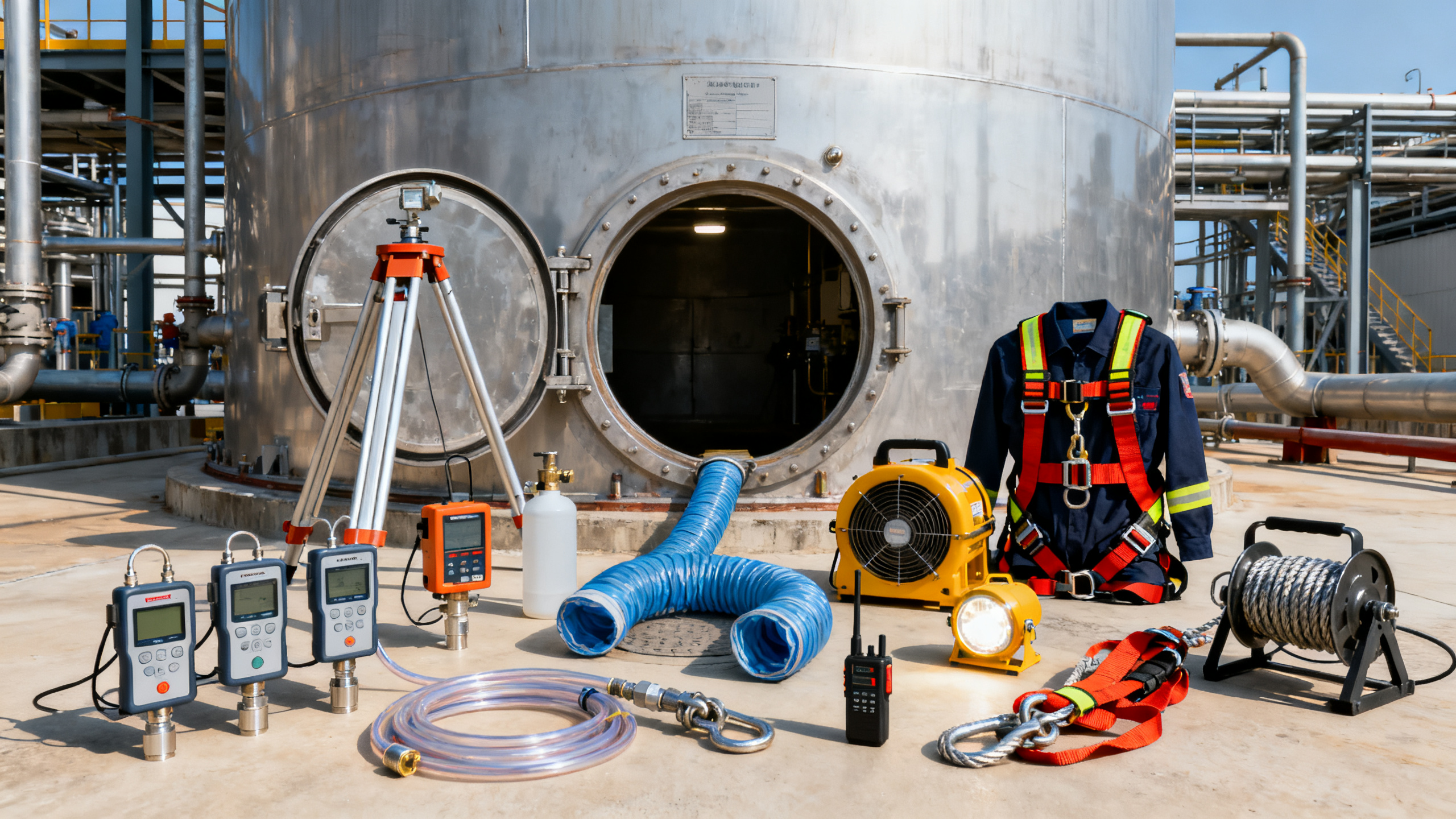
A confined space entry is never just a permit exercise. In tanks, pits, vaults, sewers, ducts, and process vessels, the right confined space equipment determines whether hazards stay controlled or escalate within seconds.
That is why a practical checklist matters. It connects atmospheric testing, worker protection, communication, isolation, and rescue planning into one system that supports compliance and real operational safety.
Across industrial sites, scrutiny is increasing. Audits now look beyond paperwork and ask whether confined space equipment is suitable, calibrated, available at the point of use, and matched to the rescue method.
What confined space equipment really covers
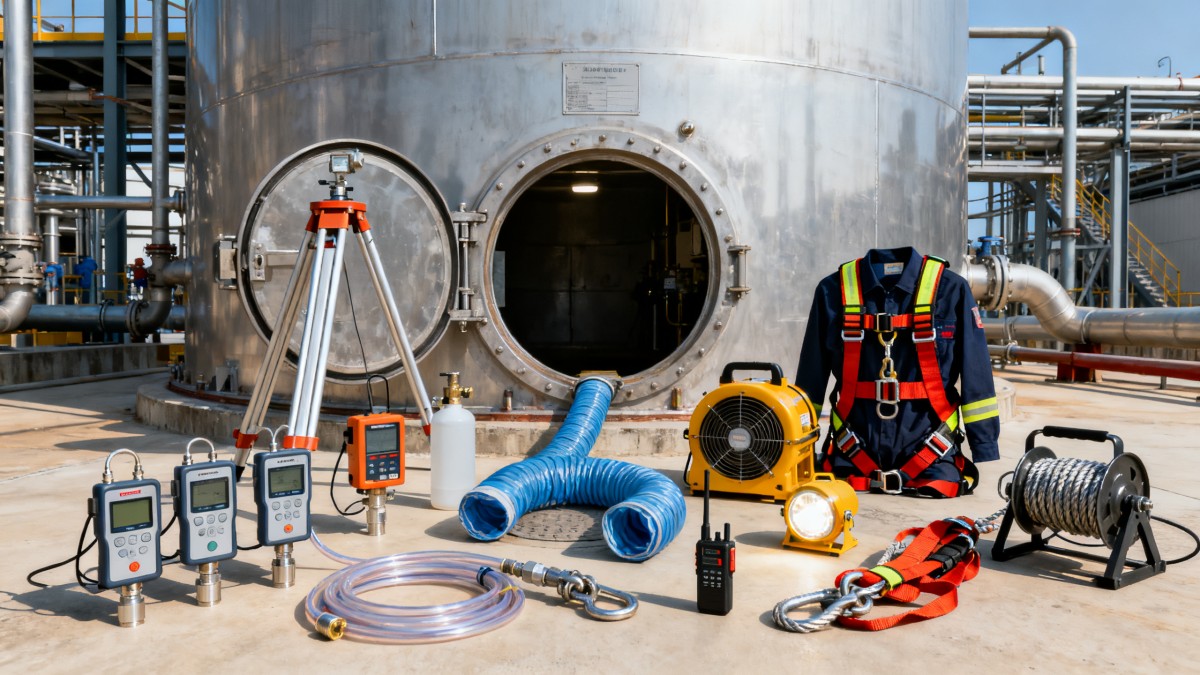
The term goes well beyond helmets and harnesses. In practice, confined space equipment includes every device needed to assess conditions, control exposure, support entry, and recover a worker without delay.
A reliable checklist usually begins with hazard recognition. Spaces may contain oxygen deficiency, toxic gases, flammable vapors, engulfment risks, mechanical energy, poor visibility, or restricted movement.
Because these hazards overlap, equipment selection should never happen in isolation. Gas monitoring without retrieval equipment is incomplete. Rescue gear without trained communication and isolation controls is equally weak.
This integrated view aligns with how safety-focused industrial platforms such as Global Industrial Core frame procurement decisions: not as item buying, but as system reliability under regulated conditions.
The core checklist for safe entry
Not every location requires the same setup, yet most confined space equipment programs share several essential categories. The checklist below helps organize what should be reviewed before entry authorization.
Atmospheric monitoring equipment
Continuous or pre-entry gas testing is the first technical gate. Portable multi-gas detectors should measure oxygen, combustible gases, and relevant toxic contaminants for the specific process environment.
- Calibrated multi-gas detector with bump-test confirmation
- Sampling pump and tubing for remote testing
- Sensor range suitable for expected contaminants
- Alarm settings aligned with site procedures and standards
Ventilation and air movement
Where atmospheric hazards can accumulate, forced-air ventilation becomes critical confined space equipment. The goal is not simply moving air, but maintaining acceptable conditions throughout the job.
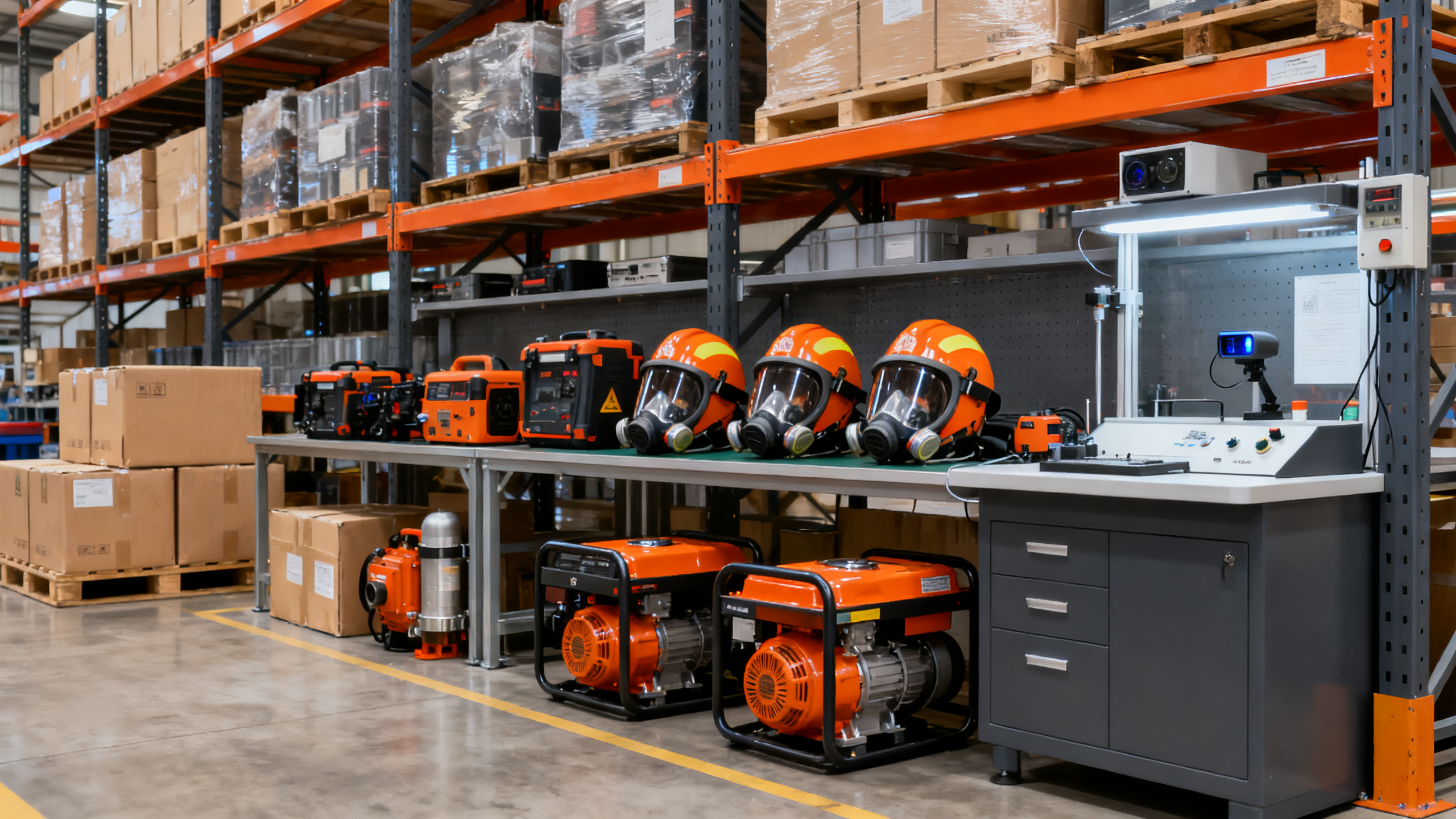
- Explosion-proof blower where flammable risk exists
- Ducting long enough to reach dead zones
- Power supply and cable management that avoid trip hazards
Personal protective equipment
PPE should reflect the actual exposure profile. Hard hats, gloves, boots, eye protection, and protective clothing are basic, but respiratory protection may be the deciding factor in higher-risk entries.
If air conditions are immediately dangerous or uncertain, supplied-air respirators or self-contained breathing apparatus may be required rather than disposable masks.
Access, retrieval, and fall protection
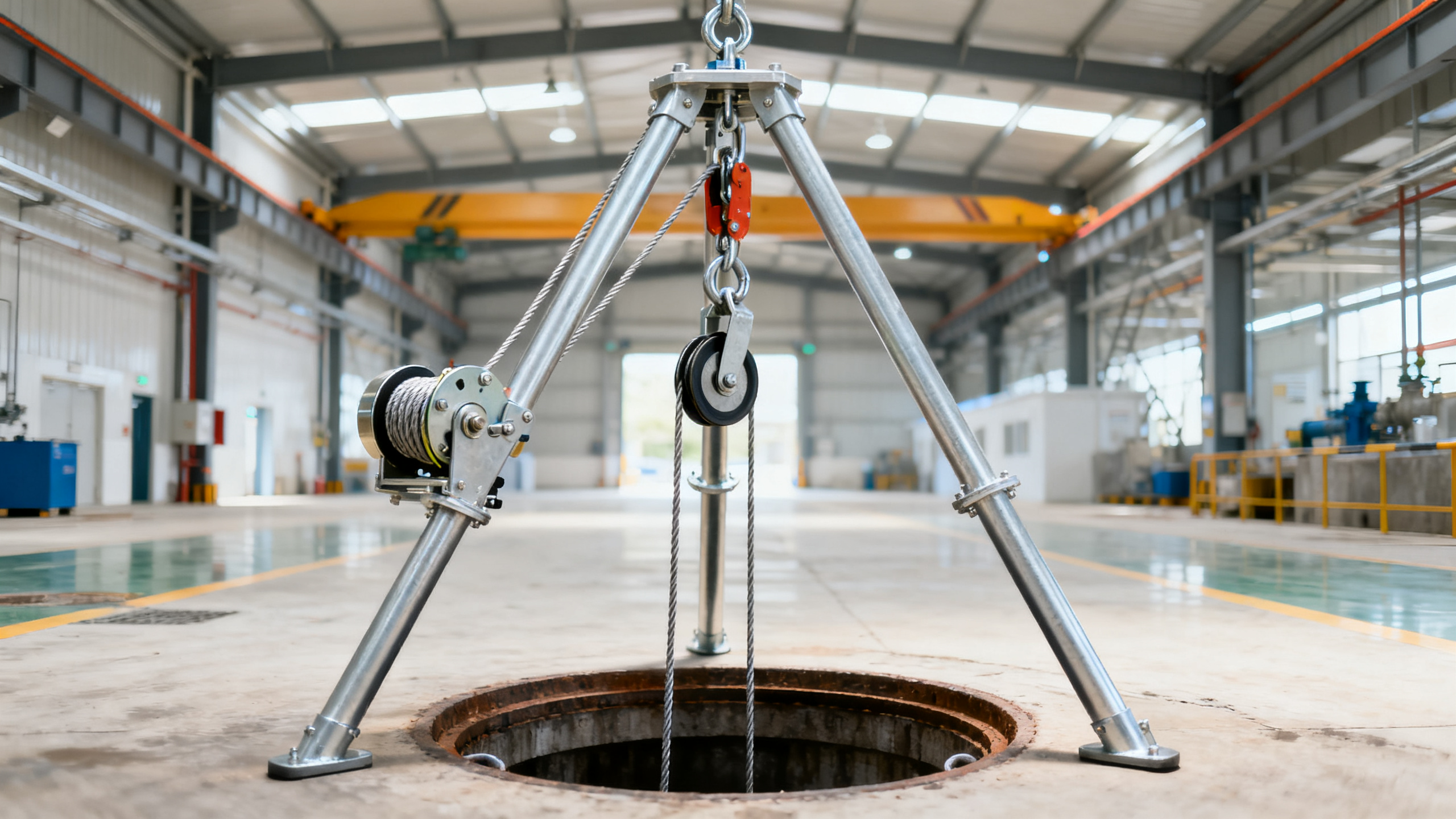
For vertical entries especially, retrieval systems are among the most important confined space equipment items. A worker should not enter without a realistic non-entry rescue method when conditions allow it.
- Full-body harness rated for retrieval
- Lifeline connected to mechanical winch or SRL-R device
- Tripod or davit arm for vertical openings
- Anchorage verified for load and positioning
Communication and lighting
Reliable communication links attendants and entrants at all times. In noisy or shielded spaces, standard voice contact often fails, so intrinsically safe radios or hard-wired systems may be necessary.
Lighting should be suitable for wet, dusty, or explosive atmospheres. Portable lighting that is not rated for the environment can introduce a new ignition risk.
What rescue readiness actually requires
Many incidents turn fatal during rescue attempts. That is why rescue equipment should be treated as operational infrastructure, not a last-minute add-on stored somewhere else on site.
A sound confined space equipment checklist should confirm not only the presence of rescue gear, but also access time, configuration, compatibility, and responder competence.
In many facilities, the weakest point is not missing equipment. It is mismatch. A tripod may be available, but the opening geometry prevents use. A detector may work, but not for the solvent present.
Where checklist gaps usually appear
Routine entries create false confidence. When the same vessel is opened often, teams may assume the same confined space equipment remains appropriate, even after process, cleaning, or maintenance changes.
Several recurring gaps deserve closer attention:
- Gas monitors are present, but calibration records are outdated
- Ventilation is provided, but airflow never reaches the lower chamber
- Harnesses are worn, but not configured for retrieval
- Lockout materials exist, but isolation points are incomplete
- Rescue plans rely on external teams with unrealistic arrival times
- Equipment certifications do not match hazardous area requirements
These issues matter in quality control as much as in frontline safety. A checklist should verify condition, traceability, and suitability, not just physical presence.
Choosing equipment for different industrial settings
Confined space equipment should reflect the environment. Utility vaults, wastewater tanks, silos, offshore compartments, and chemical reactors may all be classified as confined spaces, yet their control priorities differ.
Process and chemical plants
Focus often falls on toxic atmospheres, flammable vapors, and line isolation. Detector sensor selection, intrinsically safe electronics, and permit-linked lockout verification carry extra weight.
Water, wastewater, and utilities
Hydrogen sulfide, methane, and oxygen deficiency are common concerns. Ventilation, continuous monitoring, retrieval systems, and corrosion-resistant components often become top priorities.
Construction and shutdown maintenance
Temporary work creates complexity. Entry points change, crews rotate, and rented confined space equipment may enter the workflow, making inspection and compatibility checks especially important.
A practical review standard before signing the permit
An effective review does not need to be complicated, but it must be disciplined. Before authorization, the checklist should test whether controls still hold under actual site conditions.
- Confirm the space classification and current task scope
- Match confined space equipment to identified hazards
- Verify calibration, inspection tags, and certification status
- Check retrieval setup with the real access geometry
- Validate communication and emergency escalation routes
- Review whether rescue can occur within survivable time limits
This is also where sourcing quality becomes visible. Equipment that meets CE, UL, ISO, or relevant local requirements supports defensible safety decisions and more reliable audit performance.
That wider procurement perspective is increasingly valuable across global industrial operations, where safety hardware, monitoring instruments, and documentation quality must all align.
From checklist to continuous control
The best confined space equipment checklist is not a static form. It is a decision tool that evolves with process changes, incident lessons, new standards, and equipment performance data.
A useful next step is to review current entries by space type, then compare each one against monitoring, ventilation, retrieval, isolation, and rescue expectations. Gaps usually appear quickly when the checklist is tied to real scenarios.
From there, equipment standardization, supplier qualification, and drill-based validation become easier to prioritize. Safe entry depends on more than access permission. It depends on whether the confined space equipment on hand is truly ready for the risk.
Technical Specifications
- How to Select Electronic Hotel Key Card Locks for Guest Rooms and Staff AreasAuthor :Safety Compliance Lead
- How to Select Lab Instruments for Reliable Chemical Analysis WorkflowsAuthor :Precision Metrology Expert
- How to Size a UPS for Server Rooms: Load, Runtime, and Redundancy FactorsAuthor :Grid Infrastructure Analyst
Expert Insights

Chief Security Architect
Dr. Thorne specializes in the intersection of structural engineering and digital resilience. He has advised three G7 governments on industrial infrastructure security.
Related Analysis
- Sep 17, 2026How to Select Electronic Hotel Key Card Locks for Guest Rooms and Staff AreasAuthor :Safety Compliance Lead
- Sep 16, 2026How to Select Lab Instruments for Reliable Chemical Analysis WorkflowsAuthor :Precision Metrology Expert
- Sep 15, 2026How to Size a UPS for Server Rooms: Load, Runtime, and Redundancy FactorsAuthor :Grid Infrastructure Analyst
Core Sector // 01
Security & Safety
- Steel Rescue Tripods Wholesale: Key Load Ratings, Standards, and Buying MistakesAuthor :Safety Compliance Lead

- India Lifts Duty on Fire Rescue Imports to 22%Author :Safety Compliance Lead

- IEC 62061 Amendment 2 Targets Fire & Rescue ControllersAuthor :Safety Compliance Lead

- IEC 62819-2:2026 Sets New Cybersecurity CheckpointAuthor :Safety Compliance Lead

- When to Use a Quick Deployment Oil Boom for Spill Control in Ports and Inland WatersAuthor :Safety Compliance Lead

- Saudi SASO Adds Cybersecurity Annex to Fire Equipment CertificationAuthor :Safety Compliance Lead

- CBP Pre-Arrival Portal Raises Import Checks for Fire EquipmentAuthor :Safety Compliance Lead

- UAE Sets Cybersecurity Gate for Fire Control PanelsAuthor :Safety Compliance Lead