Process Safety Engineering Explained: Key Layers of Protection in Chemical and Industrial Plants
Author
Date Published
Reading Time

Why does process safety engineering matter beyond routine workplace safety?
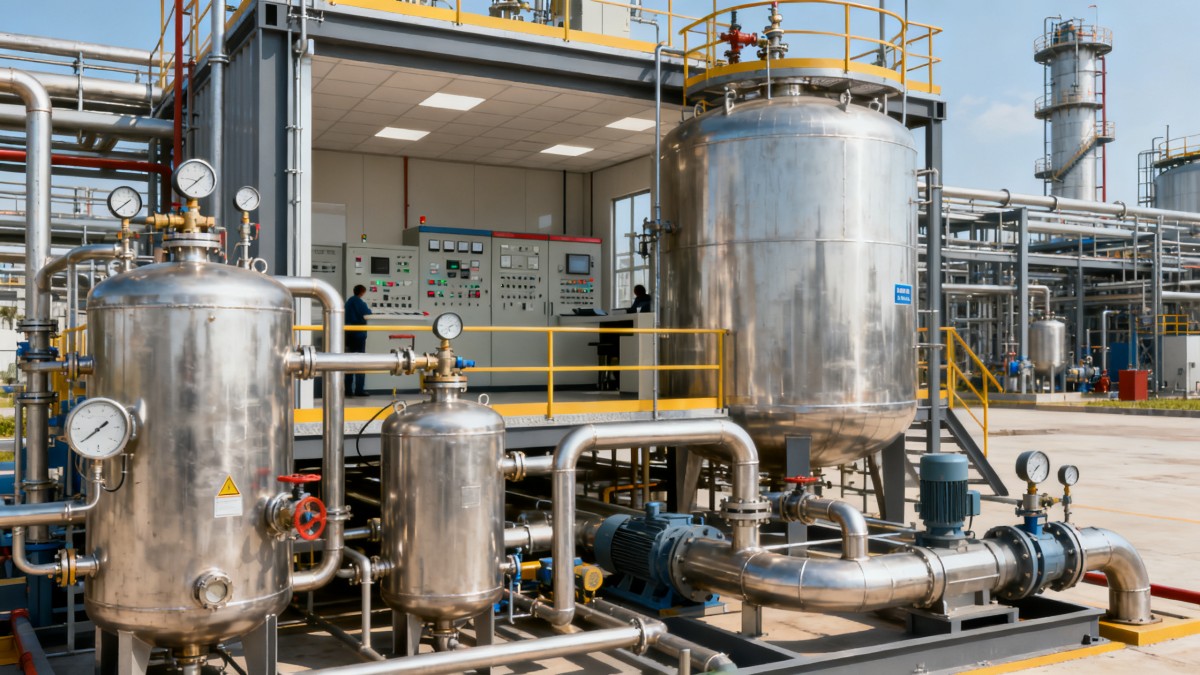
Process safety engineering focuses on preventing fires, explosions, toxic releases, and major equipment failures in industrial plants.
That sounds close to occupational safety, but the scope is different. One protects people from everyday hazards. The other controls low-frequency, high-consequence events.
In chemical processing, fuel handling, utilities, storage terminals, and mixed industrial sites, a small deviation can build into a serious incident.
A blocked line, drifting transmitter, wrong valve position, or delayed shutdown may seem minor at first.
The real problem is escalation. Pressure rises, temperature moves out of range, containment is lost, and several safeguards are tested at once.
This is why process safety engineering is treated as a system discipline, not a single device or checklist.
Across Global Industrial Core coverage, the common lesson is clear: resilience depends on how protection layers work together under stress.
Plants that perform well usually combine sound design, verified instrumentation, disciplined procedures, and tested emergency controls.
When people mention layers of protection, what are they actually talking about?
A layer of protection is any independent measure that prevents a hazardous scenario or reduces its consequences.
The key word is independent. If one layer fails, another should still work without relying on the same cause, signal, or human action.
In practice, process safety engineering often applies several layers around the same risk.
- Inherently safer design, such as lower inventories or less hazardous materials
- Basic process control systems that keep normal conditions stable
- Alarms with operator response for abnormal but manageable conditions
- Safety instrumented systems that trip automatically
- Relief devices, flare systems, and venting arrangements
- Physical containment, separation distance, and fire protection
- Emergency response and incident mitigation measures
Not every scenario needs every layer. The right combination depends on hazard severity, operating conditions, and failure likelihood.
A common mistake is counting every control as equal protection. They are not equal, and some are not independent enough to credit fully.
That is why process safety engineering uses structured methods such as HAZOP, LOPA, SIL assessment, and mechanical integrity reviews.
A quick way to read protection layers
The table below helps separate common safeguards by purpose and typical strength in a plant environment.
Which protection layers usually deserve the closest attention?
The strongest answer is the layer that stands between a credible deviation and a severe outcome.
Still, several areas repeatedly deserve close review in process safety engineering programs.
Instrumentation reliability
Sensors, transmitters, switches, and analyzers provide the plant’s view of reality. If that view is wrong, decisions are wrong.
Calibration intervals, diagnostic coverage, impulse line design, and environmental suitability matter more than many teams expect.
Shutdown logic and final elements
A trip function is only as strong as the valve, actuator, relay, and logic solver that execute it.
More common failure points include sticky valves, bypassed trips, poor setpoint management, and overdue proof tests.
Pressure relief and disposal paths
Relief valves, rupture disks, headers, flare systems, and scrubbers must match realistic upset cases, not only design basis assumptions.
Capacity shortfalls often stay hidden until expansion, feed changes, or utility disturbances expose them.
Procedural barriers
Startups, shutdowns, maintenance returns, line breaking, and temporary operations create risk peaks.
Here, process safety engineering depends heavily on clear procedures, permit discipline, and management of change.
How do you judge whether a safeguard is truly effective or only looks good on paper?
This is where many programs drift. A documented control is not automatically a reliable protection layer.
A practical review usually asks five questions.
- Is the safeguard independent from the initiating cause?
- Will it act in time for the actual process dynamics?
- Has it been tested under realistic conditions?
- Can operators clearly detect failure or bypass status?
- Does maintenance data support the assumed reliability?
In actual plants, the answer often changes after a field walkdown. Drawings may show independence that wiring, logic, or procedures do not support.
That is why robust process safety engineering connects P&IDs, test records, incident history, and operating practice.
Global Industrial Core often highlights this cross-checking approach because compliance evidence alone can miss functional weakness.
What mistakes weaken process safety engineering in otherwise well-run plants?
The most serious weaknesses are usually ordinary ones that were allowed to accumulate.
One example is treating alarm overload as a nuisance issue instead of a safety issue. Critical signals get lost when everything is urgent.
Another is assuming past stability proves future safety. Feedstock changes, debottlenecking, and digital upgrades can alter hazard behavior quickly.
Maintenance backlog is another warning sign. A layer of protection becomes weaker long before it is formally declared failed.
Some sites also rely too much on operator intervention where the response window is seconds, not minutes.
The table below summarizes frequent gaps and the more reliable response.
If you are strengthening a program, where should the first review begin?
Start with scenarios, not equipment lists. The question is not how many safeguards exist, but which event chains remain too vulnerable.
A focused first review often includes the following steps.
- Map high-consequence scenarios involving overpressure, reaction upset, toxic release, ignition, or loss of containment.
- Verify each credited layer in the field, including setpoints, bypass status, test intervals, and operator response time.
- Compare hazard studies with current operating envelopes, recent modifications, and maintenance records.
- Prioritize gaps that combine severe consequence with weak independence or poor detectability.
- Set measurable actions, then review them against incident precursors and audit findings.
This approach keeps process safety engineering grounded in plant reality. It also aligns better with compliance, reliability, and insurance expectations.
Where technical sourcing decisions are involved, verified standards, certification status, and lifecycle support should be checked early, not after selection.
That is especially relevant in environments where CE, UL, ISO, and documented performance integrity are part of procurement acceptance.
What should the next step look like after the basics are understood?
The next step is to turn process safety engineering from a concept into a review routine.
Begin by listing the plant’s highest-consequence scenarios and the exact layers of protection credited to each one.
Then test whether those layers are independent, maintained, documented, and still valid after recent changes.
In many facilities, the biggest gain comes from sharper verification rather than more hardware.
When safety, instrumentation, electrical systems, and mechanical integrity are reviewed together, weak assumptions become easier to spot early.
That broader view is also why process safety engineering remains central across heavy industry, from chemical plants to utilities and complex manufacturing sites.
A disciplined review of protection layers, supported by credible technical evidence, is usually the most practical place to begin.
Technical Specifications
- Air Handling Unit Supplier Checklist: Performance Data, Lead Times, and SupportAuthor :Environmental Engineering Director
- Buying Fiberglass Water Tanks Wholesale: Compare Quotes and Delivery CostsAuthor :Environmental Engineering Director
- Choosing an XLPE Power Cable Supplier: Test Reports, Traceability, and Lead TimesAuthor :Grid Infrastructure Analyst
Expert Insights

Chief Security Architect
Dr. Thorne specializes in the intersection of structural engineering and digital resilience. He has advised three G7 governments on industrial infrastructure security.
Related Analysis
- Oct 19, 2026Air Handling Unit Supplier Checklist: Performance Data, Lead Times, and SupportAuthor :Environmental Engineering Director
- Oct 18, 2026Buying Fiberglass Water Tanks Wholesale: Compare Quotes and Delivery CostsAuthor :Environmental Engineering Director
- Oct 17, 2026Choosing an XLPE Power Cable Supplier: Test Reports, Traceability, and Lead TimesAuthor :Grid Infrastructure Analyst
Core Sector // 01
Security & Safety
- How to Vet a Wholesale CO2 Extinguisher Supplier for Certified Bulk OrdersAuthor :Safety Compliance Lead

- How to Select a Conventional Fire Alarm Panel by Zone Capacity and Building RiskAuthor :Safety Compliance Lead

- Steel Rescue Tripods Wholesale: Key Load Ratings, Standards, and Buying MistakesAuthor :Safety Compliance Lead

- India Lifts Duty on Fire Rescue Imports to 22%Author :Safety Compliance Lead

- IEC 62061 Amendment 2 Targets Fire & Rescue ControllersAuthor :Safety Compliance Lead

- IEC 62819-2:2026 Sets New Cybersecurity CheckpointAuthor :Safety Compliance Lead

- When to Use a Quick Deployment Oil Boom for Spill Control in Ports and Inland WatersAuthor :Safety Compliance Lead

- Saudi SASO Adds Cybersecurity Annex to Fire Equipment CertificationAuthor :Safety Compliance Lead