IEC 62820-3:2026 Adds Cyber Rules for CE/UKCA
Author
Date Published
Reading Time
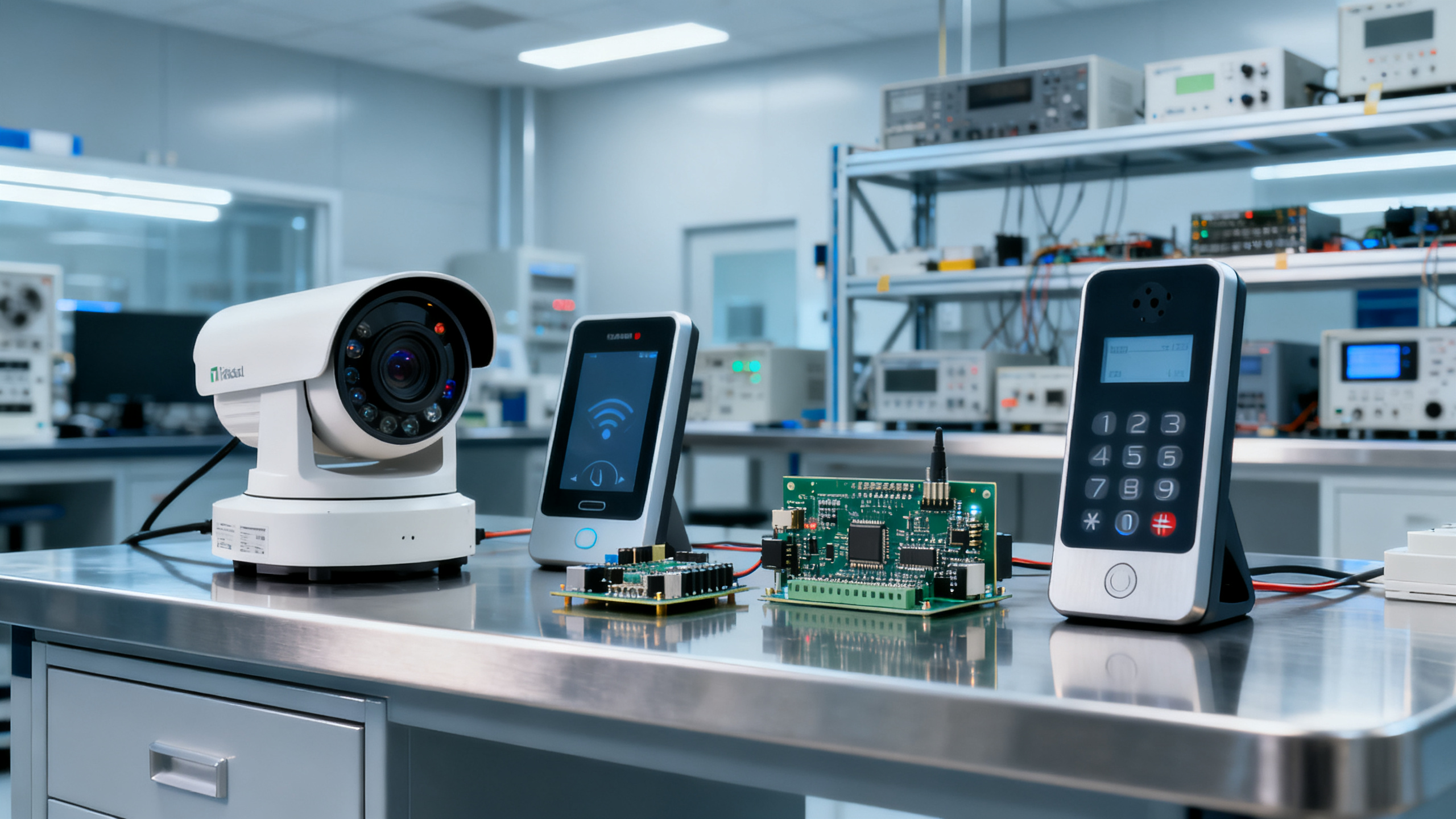
On 28 June 2026, the publication of IEC 62820-3:2026 signaled a concrete compliance shift for CCTV and access control video intercom systems: cybersecurity evidence is now moving into the marking pathway for CE and UKCA. For manufacturers, exporters, importers, certification teams, and procurement functions handling smart access products, the point worth watching is not only the new annex itself, but the fact that market access, technical documentation, testing schedules, and shipment readiness may now depend on whether security validation is completed in time.
What the new annex changes
The International Electrotechnical Commission (IEC) has released IEC 62820-3:2026 as the first globally harmonized cybersecurity annex for CCTV and access control video intercom systems.
According to the provided event summary, from 1 December 2026, CE and UKCA marking will require documented evidence covering secure boot, firmware integrity verification, and remote update authentication under this annex.
The same summary states that units failing to meet these requirements may be excluded from the EU and UK markets, while regulators in Australia and Canada that are adopting aligned frameworks may apply increased scrutiny.
It also states that Chinese manufacturers exporting smart access systems need to complete security validation through accredited laboratories, such as TÜV Rheinland or UL Solutions, before the end of Q3.
Where pressure is likely to show first
Export programs may face a documentation bottleneck
From an industry perspective, exporters of smart access systems are likely to feel the impact first because CE and UKCA marking are directly tied to market entry. The practical pressure point is the technical file: if secure boot, firmware integrity verification, and remote update authentication cannot be documented in a form accepted during certification or customs-facing compliance review, shipment planning may be affected.
Manufacturing teams may need earlier design freeze decisions
Analysis shows the new annex is not just a label issue for factories. If products need accredited security validation before export windows close, manufacturers may need to lock firmware behavior, update mechanisms, and boot-chain controls earlier than usual. That can influence internal testing, version control, and release timing for video intercom models intended for the EU and UK.
Buyers and channel partners may tighten supplier screening
For procurement teams, distributors, and project buyers, the change may shift supplier evaluation from product performance alone to proof of cybersecurity compliance readiness. What deserves closer attention is whether vendors can provide the required supporting records for CE or UKCA-related review, especially for products already in tendering, stocking, or pre-delivery stages.
Testing and certification service providers may become a scheduling constraint
Observably, accredited laboratories and certification-related service providers may become a critical link in delivery planning. Since the summary specifically points to security validation by accredited labs before the end of Q3 for relevant Chinese exporters, companies may need to watch booking lead times, report issuance timing, and the completeness of submission files.
Operational points companies should watch now
Check whether current technical files can support the new evidence requirement
Companies involved in CE and UKCA pathways should review whether existing product records already demonstrate secure boot, firmware integrity verification, and remote update authentication clearly enough for external validation. If not, the gap is likely to appear first in compliance documentation rather than in commercial paperwork.
Reassess certification timing against shipment and tender commitments
For exporters and project suppliers, a practical issue is calendar alignment. The provided information indicates both a 1 December 2026 effectiveness point for marking-related evidence and an end-Q3 security validation expectation for Chinese manufacturers exporting smart access systems. Companies should therefore watch whether current production, lab booking, and customer delivery plans leave enough time for validation and document completion.
Review supplier qualification and procurement language
Procurement and sourcing teams may need to examine whether supplier qualification forms, technical specifications, and bidding documents already ask for the relevant cybersecurity evidence. Where those documents still reflect older product assumptions, there may be a mismatch between what is purchased and what can ultimately be placed on the EU or UK market.
Prepare for broader scrutiny beyond the first target markets
The event summary indicates increased scrutiny in Australia and Canada where aligned frameworks are being adopted. It is more appropriate to understand this as a compliance signal rather than a fully described enforcement outcome. Even so, companies selling across multiple export destinations may need to track whether one market's evidence package can support reviews in other markets with similar expectations.
How this should be read at this stage
Analysis shows this development is better understood as an execution-level compliance signal rather than a distant policy discussion. The key reason is that the summary links the annex to specific evidence items and to concrete market consequences for non-compliant units in the EU and UK.
At the same time, observably, this is not yet a complete picture of every procedural detail. The provided information does not set out the full certification workflow, document format, or market-by-market enforcement practice. That means the industry still needs to watch how certification bodies, procurement documents, and import-side reviews reflect the annex in actual execution.
What the update means for the market
In practical terms, this update points to cybersecurity becoming a documented access condition for video intercom systems, not just a product feature claim. For affected businesses, the immediate significance lies in compliance preparation, validation timing, and the link between technical evidence and shipment readiness.
Current observation suggests this should be treated as a rule change with clear implementation direction, while some details of market practice still require continued monitoring. That is a more balanced reading than treating it either as a routine standards notice or as a fully settled enforcement regime across every related market.
Basis of this report and what still needs verification
This article is based on the user-provided news title, event date, and event summary. For developments of this kind, relevant source types often include official announcements, regulator publications, trade or customs authority notices, industry association updates, standards organization documents, and reporting by authoritative industry media.
No specific official source link was provided in the input, so the exact official publication path and subsequent implementing references still require ongoing verification. What remains important to monitor includes detailed certification practice, interpretation by relevant compliance bodies, changes in tender or procurement documents, market feedback from buyers and distributors, and how affected companies complete validation in practice.
Technical Specifications
- Air Handling Unit Supplier Checklist: Performance Data, Lead Times, and SupportAuthor :Environmental Engineering Director
- Buying Fiberglass Water Tanks Wholesale: Compare Quotes and Delivery CostsAuthor :Environmental Engineering Director
- Choosing an XLPE Power Cable Supplier: Test Reports, Traceability, and Lead TimesAuthor :Grid Infrastructure Analyst
Expert Insights

Chief Security Architect
Dr. Thorne specializes in the intersection of structural engineering and digital resilience. He has advised three G7 governments on industrial infrastructure security.
Related Analysis
- Oct 19, 2026Air Handling Unit Supplier Checklist: Performance Data, Lead Times, and SupportAuthor :Environmental Engineering Director
- Oct 18, 2026Buying Fiberglass Water Tanks Wholesale: Compare Quotes and Delivery CostsAuthor :Environmental Engineering Director
- Oct 17, 2026Choosing an XLPE Power Cable Supplier: Test Reports, Traceability, and Lead TimesAuthor :Grid Infrastructure Analyst
Core Sector // 01
Security & Safety
- How to Build an Equipment Budget for EPC Projects Without Underestimating Lifecycle CostsAuthor :Safety Compliance Lead

- Selecting EPC Procurement Support Tools to Reduce Vendor and Delivery DelaysAuthor :Safety Compliance Lead

- How to Select an Access Control Management System for Multi-Site FacilitiesAuthor :Safety Compliance Lead

- How to Select Electronic Hotel Key Card Locks for Guest Rooms and Staff AreasAuthor :Safety Compliance Lead

- How to Evaluate a Hotel Key Card Lock Supplier for Multi-Property RolloutsAuthor :Safety Compliance Lead

- Pre-Contract Audit Checklist for Verified Production Safety and Environmental ComplianceAuthor :Safety Compliance Lead

- How Can Distributors Build Procurement-Oriented Industrial Content That Drives RFQs?Author :Safety Compliance Lead

- EU Mandates EN 50131-1:2026 for Security SystemsAuthor :Safety Compliance Lead