How to Choose Stainless Steel Fire Extinguishers for Marine, Food, and Clean Environments
Author
Date Published
Reading Time
How to Choose Stainless Steel Fire Extinguishers for Marine, Food, and Clean Environments
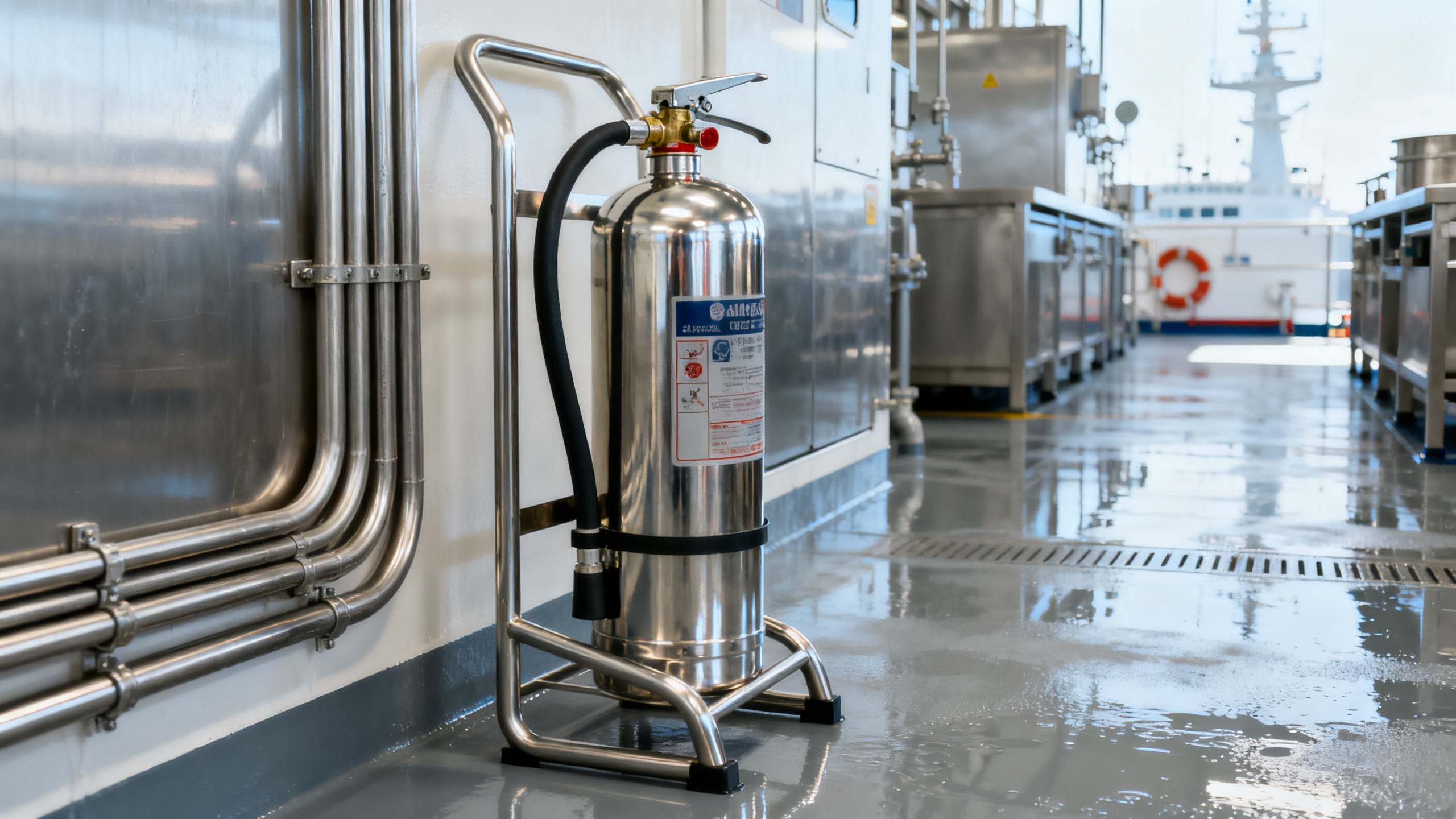
Choosing stainless steel fire extinguishers for marine vessels, food facilities, and clean environments requires more than corrosion resistance alone.
Quality and safety decisions usually sit at the intersection of hygiene, durability, compliance, and real fire risk.
That is why a smart buying process looks beyond appearance and focuses on verified performance in the target environment.
This guide explains how to evaluate stainless steel fire extinguishers for demanding sites where failure can disrupt operations, trigger contamination, or create regulatory exposure.
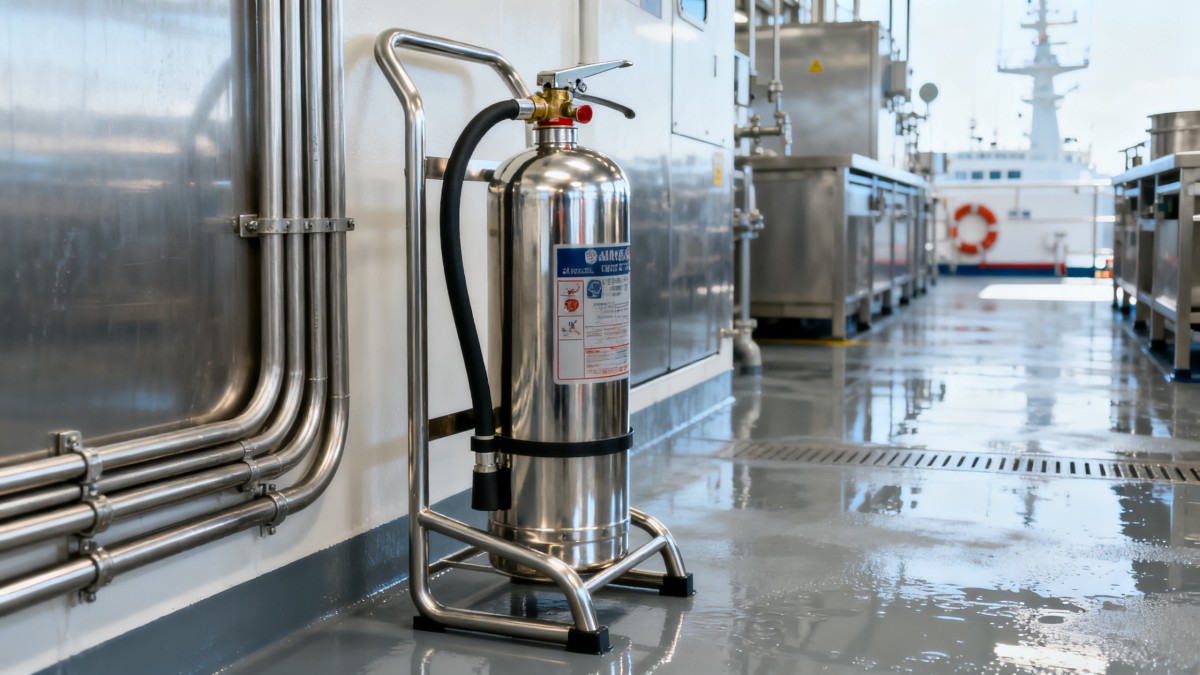
In practice, the right unit should resist corrosion, match the fire class, clean easily, and meet required certifications without creating maintenance headaches.
When these factors are balanced well, stainless steel fire extinguishers become a long-term asset rather than a cosmetic upgrade.
Why Stainless Steel Fire Extinguishers Matter in Sensitive Environments
Standard painted cylinders work in many places, but harsh or hygienic environments quickly expose their limits.
Salt spray, washdown chemicals, humidity, and strict cleaning routines can shorten service life and damage exterior coatings.
This is where stainless steel fire extinguishers stand out.
Their corrosion resistance supports better durability on offshore platforms, food processing lines, pharmaceutical areas, and clean production spaces.
They also present a cleaner surface finish, which matters where equipment must look intact, sanitary, and audit-ready.
Still, stainless steel alone does not guarantee suitability. The extinguishing agent, valve materials, mounting system, and certifications remain equally important.
Start with the Real Fire Risk, Not the Cylinder Finish
A common mistake is choosing stainless steel fire extinguishers because the environment looks harsh, then overlooking the actual fire class.
Selection should always begin with the combustible materials, ignition sources, and process layout.
Match the agent to the hazard
- Water mist suits many marine cabins, electrical-sensitive spaces, and hygiene-focused areas with minimal residue concerns.
- Foam works well for Class A and B risks, especially where flammable liquids are present.
- CO2 helps protect energized electrical equipment, but ventilation and occupancy conditions must be considered carefully.
- Dry powder offers broad fire coverage, yet residue can be a serious drawback in food and clean environments.
- Wet chemical remains the better option near cooking oils and deep-fat frying operations.
The key point is simple. Stainless steel fire extinguishers should be selected for both environment compatibility and extinguishing effectiveness.
If one side is ignored, the product may look right on paper but perform poorly in an emergency.
Material Grade and Corrosion Resistance: What to Check
Not all stainless steel fire extinguishers offer the same level of protection against corrosion.
For marine and chemical washdown conditions, the material grade matters more than marketing language.
Focus on these points
- Confirm whether the cylinder uses 304 or 316 stainless steel.
- Prefer 316 stainless steel for saltwater exposure or chloride-rich cleaning environments.
- Check valve assemblies, handles, pins, brackets, and hose fittings for matching corrosion resistance.
- Review weld quality and surface finishing, especially if the unit faces frequent washdown.
- Ask for corrosion test data, not just a generic stainless claim.
In real projects, corrosion often starts at brackets, seams, or mixed-metal contact points rather than the cylinder body itself.
That also means the best stainless steel fire extinguishers are built as complete systems, not isolated stainless shells.
Hygiene and Cleanability for Food and Clean Areas
In food plants and clean environments, exterior material choice affects both safety and operational hygiene.
Equipment with flaking paint, rough surfaces, or hard-to-clean joints can become a compliance and sanitation concern.
Evaluate hygiene-related details
- Choose smooth, polished finishes that support easy wipe-down and visual inspection.
- Avoid units with coating damage risks in aggressive cleaning cycles.
- Check whether hose retainers and brackets trap debris or moisture.
- Consider low-residue agents where contamination control is a priority.
- Verify compatibility with site cleaning chemicals and disinfection routines.
This becomes especially important in beverage production, dairy, seafood processing, and pharmaceutical packaging spaces.
Here, stainless steel fire extinguishers support not only corrosion control, but also a cleaner visual standard across audited zones.
Certification, Standards, and Traceability
For selection and procurement, certification should never be treated as a final checkbox.
It is often the fastest way to separate reliable stainless steel fire extinguishers from risky alternatives.
Documents worth requesting
- Relevant CE, UL, MED, or other market-specific approvals.
- Pressure vessel compliance and production batch traceability.
- Material certificates for stainless steel grades and critical components.
- Test reports for discharge performance, pressure retention, and corrosion resistance.
- Maintenance instructions and service interval requirements.
Marine projects may need additional approvals tied to vessel applications, while food and clean facilities may prioritize audit traceability and service documentation.
The stronger signal is not the logo on the label. It is the quality of the supporting technical file behind the product.
Practical Selection Checklist for Stainless Steel Fire Extinguishers
When comparing suppliers, a structured checklist helps reduce bias and speeds up internal approval.
This kind of review also helps when procurement teams need a documented reason for choosing higher-cost stainless steel fire extinguishers.
Over time, reduced corrosion failures, better hygiene alignment, and longer service value often justify the premium.
Common Buying Mistakes to Avoid
A few recurring mistakes can weaken an otherwise sensible fire protection plan.
- Choosing stainless steel fire extinguishers only for appearance, without checking fire class performance.
- Assuming all stainless products are marine-grade.
- Ignoring bracket and hardware corrosion risks.
- Using dry powder in highly sensitive food or clean spaces without considering residue impact.
- Buying from suppliers that cannot provide test records and service support.
Most of these issues are preventable if evaluation starts with risk, environment, and lifecycle support rather than price alone.
Final Decision: Choose for Performance Over Finish
The best stainless steel fire extinguishers are the ones that perform reliably in the exact environment where they will be installed.
That means matching the extinguishing agent to the hazard, verifying stainless grade, checking certifications, and reviewing hygiene and maintenance demands together.
For marine vessels, resistance to salt and vibration deserves close attention. For food and clean environments, surface integrity and residue control become more important.
A short technical review now can prevent expensive replacement, failed audits, or poor emergency response later.
If you are comparing options, build a side-by-side matrix and request supporting documents before approving any final model.
That approach makes stainless steel fire extinguishers easier to specify, easier to defend internally, and far more likely to deliver long-term protection where conditions are toughest.
Technical Specifications
- Air Handling Unit Supplier Checklist: Performance Data, Lead Times, and SupportAuthor :Environmental Engineering Director
- Buying Fiberglass Water Tanks Wholesale: Compare Quotes and Delivery CostsAuthor :Environmental Engineering Director
- Choosing an XLPE Power Cable Supplier: Test Reports, Traceability, and Lead TimesAuthor :Grid Infrastructure Analyst
Expert Insights

Chief Security Architect
Dr. Thorne specializes in the intersection of structural engineering and digital resilience. He has advised three G7 governments on industrial infrastructure security.
Related Analysis
- Oct 19, 2026Air Handling Unit Supplier Checklist: Performance Data, Lead Times, and SupportAuthor :Environmental Engineering Director
- Oct 18, 2026Buying Fiberglass Water Tanks Wholesale: Compare Quotes and Delivery CostsAuthor :Environmental Engineering Director
- Oct 17, 2026Choosing an XLPE Power Cable Supplier: Test Reports, Traceability, and Lead TimesAuthor :Grid Infrastructure Analyst
Core Sector // 01
Security & Safety
- How to Vet a Wholesale CO2 Extinguisher Supplier for Certified Bulk OrdersAuthor :Safety Compliance Lead

- How to Select a Conventional Fire Alarm Panel by Zone Capacity and Building RiskAuthor :Safety Compliance Lead

- Steel Rescue Tripods Wholesale: Key Load Ratings, Standards, and Buying MistakesAuthor :Safety Compliance Lead

- India Lifts Duty on Fire Rescue Imports to 22%Author :Safety Compliance Lead

- IEC 62061 Amendment 2 Targets Fire & Rescue ControllersAuthor :Safety Compliance Lead

- IEC 62819-2:2026 Sets New Cybersecurity CheckpointAuthor :Safety Compliance Lead

- When to Use a Quick Deployment Oil Boom for Spill Control in Ports and Inland WatersAuthor :Safety Compliance Lead

- Saudi SASO Adds Cybersecurity Annex to Fire Equipment CertificationAuthor :Safety Compliance Lead