ITC Expands Section 337 Case Against 16 Chinese Auto Parts Firms
Author
Date Published
Reading Time
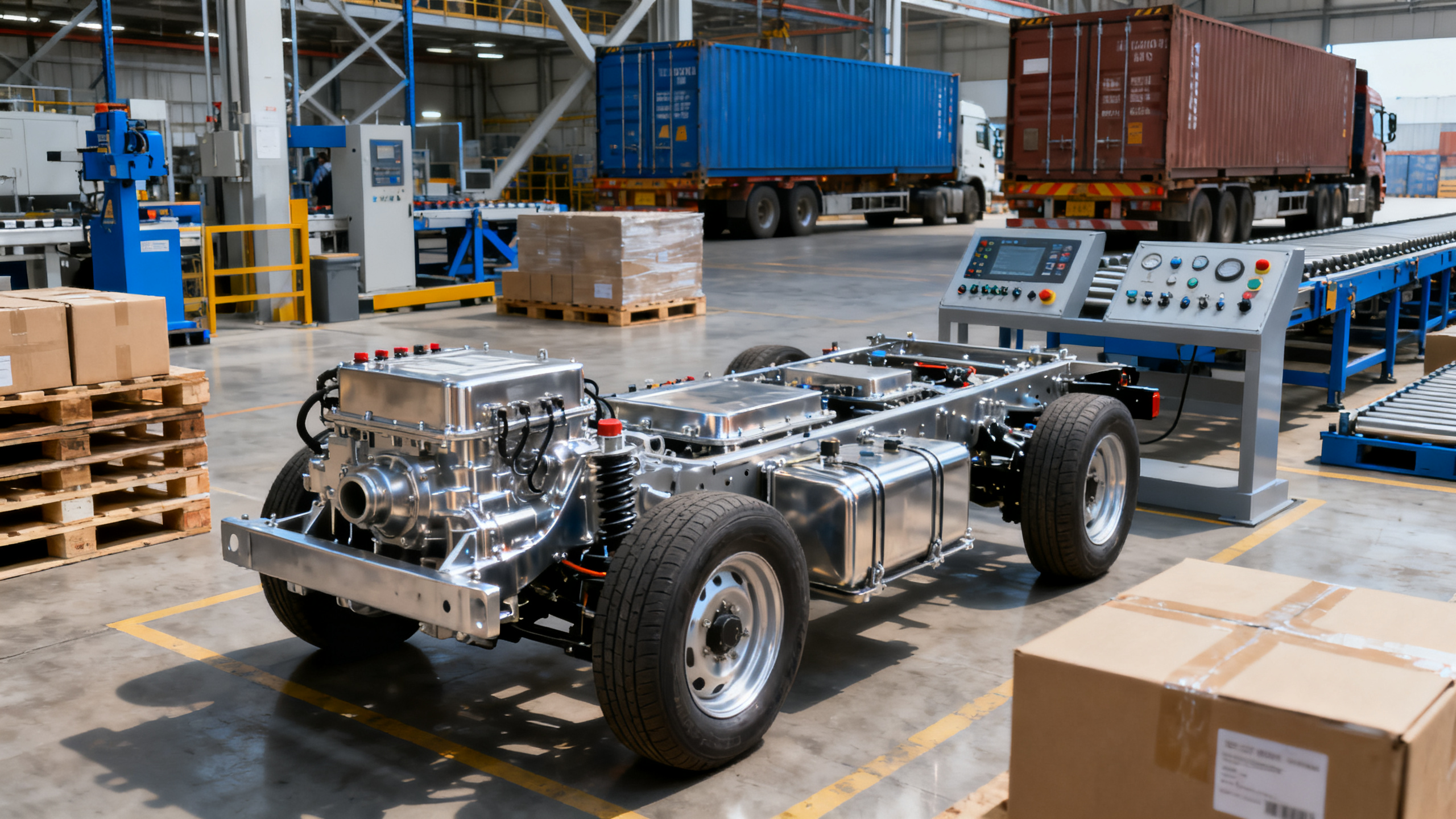
On June 22, 2026, the U.S. International Trade Commission issued a final determination in a Section 337 investigation and added 16 Chinese entities, including companies identified from Changzhou and Danyang, as respondents in a case involving certain vehicle parts and components. The matter deserves close industry attention because the accused products are used in structural parts and control modules for industrial vehicles, fire and rescue equipment, and special-purpose work platforms, with direct relevance to U.S. export compliance and customs clearance risk in Bearings & Seals, Power Transmission, and Fire & Rescue Equip trade flows.
What the ITC determination confirms
The confirmed facts are limited but commercially significant. The ITC's June 22, 2026 final determination expanded an existing Section 337 investigation by naming 16 additional Chinese entities as respondents in the case concerning certain vehicle parts and components.
According to the provided information, the allegations involve infringement of multiple U.S. design patents, including D792,816 and D826,803. The affected products are described as structural components and control modules used across industrial vehicles, fire and rescue equipment, and special work platforms.
The same information also indicates that the development directly affects export compliance and customs clearance risk for product categories linked to Bearings & Seals, Power Transmission, and Fire & Rescue Equip.
Where the immediate pressure may appear
Export-facing manufacturers may face tighter transaction review
From an industry perspective, manufacturers shipping related components to the U.S. are the first group likely to feel the impact. The reason is not that a market-wide outcome has been confirmed, but that products tied to the named case may draw more attention in export documentation, product identification, and shipment review.
What deserves closer attention is whether product descriptions, drawings, and part classifications can clearly distinguish the goods being shipped, especially where structural parts or control modules are involved.
Traders and channel partners may see higher customs uncertainty
For trading companies and distribution channels handling these product lines, the issue is less about production and more about transaction continuity. Analysis shows that once a Section 337 matter expands, counterparties may become more cautious about customs clearance timing, document completeness, and exposure linked to the accused product scope.
This means the pressure point may shift to order confirmation, shipment release expectations, and communication with U.S. customers or brokers rather than only to factory operations.
Downstream equipment users may reassess sourcing stability
Industrial vehicle, fire and rescue equipment, and special-purpose platform supply chains may also pay closer attention. Observably, when structural components and control modules are implicated, downstream buyers may focus on whether supply continuity, replacement sourcing, or delivery timing could be affected in U.S.-bound business.
That does not establish a final commercial outcome, but it does make procurement-side review more likely for products associated with the categories identified in the case summary.
Supply chain service providers may need sharper compliance screening
Logistics providers, customs support teams, and other supply chain service firms may need to watch the matter because the stated risk touches export compliance and customs clearance. In practice, the operational impact may appear in document checks, shipment screening, and communication over whether specific goods fall near the disputed product scope.
What companies should watch now
Track official wording rather than market rumor
The first practical priority is to stay close to official case language and product scope descriptions. Analysis shows that in trade-sensitive matters, business decisions can be distorted if companies rely on secondary summaries rather than the actual wording reflected in the case description and related notices.
Review exposed product lines and supporting documents
Companies involved in Bearings & Seals, Power Transmission, or Fire & Rescue Equip exports to the U.S. may need to recheck which shipments include structural parts or control modules that could attract additional scrutiny. What deserves closer attention is the consistency of product naming, technical descriptions, and other supporting trade documents used in export and clearance processes.
Prepare for customer and partner inquiries
Where U.S.-bound business is involved, commercial teams may need to prepare clearer explanations for customers, distributors, and service partners. The practical issue is not only legal exposure, but also whether counterparties require reassurance on shipment status, documentation readiness, and delivery planning.
Separate policy signal from immediate business outcome
It is more appropriate to understand this as a compliance and risk-management development rather than an automatic conclusion for every related transaction. Companies should distinguish between the existence of the ITC determination and the specific operational effect on a given shipment, order, or customer relationship.
Why this development matters beyond the named respondents
Analysis shows that this case is meaningful not only because 16 Chinese entities were added, but because the affected product use scenarios extend into industrial and emergency-response equipment supply chains. That gives the development relevance beyond a narrow auto parts label.
Observably, the stronger signal is that appearance-related intellectual property issues can intersect directly with export compliance and customs clearance risk when components are used in equipment categories that move through U.S.-bound industrial trade channels. For now, it is more appropriate to understand this as an active and continuing trade-risk signal rather than a closed industry outcome.
How the market may best read it for now
The industry significance of this development lies in its immediate compliance relevance and its broader reminder that product design disputes can affect cross-border execution, not just legal positioning. For manufacturers, traders, buyers, and service providers connected to the named product uses, the more rational reading is to treat this as a near-term operational risk that also carries a longer-term monitoring value.
At this stage, it should not be overstated as a definitive market shift. It is better understood as a development that requires continued attention to product scope, trade documentation, customer communication, and any further official updates.
Basis of this article and follow-up points
This article is generated based on the user-provided news title, event date, and event summary. The concrete facts used here come from the provided description of the ITC final determination dated June 22, 2026, the addition of 16 Chinese entities as respondents, the cited U.S. design patents, the stated product uses, and the referenced export compliance and customs clearance risks.
For this type of industry development, relevant source categories would typically include official agency notices, company statements, industry association updates, authoritative media coverage, and standards or technical documentation where applicable. However, a specific official source link was not provided in the input, so further verification remains necessary.
For continued observation, the key follow-up areas are any subsequent official wording on product scope, any additional compliance-related clarification affecting U.S.-bound shipments, and any practical changes in documentation or clearance expectations for the product categories identified in the provided summary.
Technical Specifications
- Air Handling Unit Supplier Checklist: Performance Data, Lead Times, and SupportAuthor :Environmental Engineering Director
- Buying Fiberglass Water Tanks Wholesale: Compare Quotes and Delivery CostsAuthor :Environmental Engineering Director
- Choosing an XLPE Power Cable Supplier: Test Reports, Traceability, and Lead TimesAuthor :Grid Infrastructure Analyst
Expert Insights

Chief Security Architect
Dr. Thorne specializes in the intersection of structural engineering and digital resilience. He has advised three G7 governments on industrial infrastructure security.
Related Analysis
- Oct 19, 2026Air Handling Unit Supplier Checklist: Performance Data, Lead Times, and SupportAuthor :Environmental Engineering Director
- Oct 18, 2026Buying Fiberglass Water Tanks Wholesale: Compare Quotes and Delivery CostsAuthor :Environmental Engineering Director
- Oct 17, 2026Choosing an XLPE Power Cable Supplier: Test Reports, Traceability, and Lead TimesAuthor :Grid Infrastructure Analyst
Core Sector // 01
Security & Safety
- How to Vet a Wholesale CO2 Extinguisher Supplier for Certified Bulk OrdersAuthor :Safety Compliance Lead

- How to Select a Conventional Fire Alarm Panel by Zone Capacity and Building RiskAuthor :Safety Compliance Lead

- Steel Rescue Tripods Wholesale: Key Load Ratings, Standards, and Buying MistakesAuthor :Safety Compliance Lead

- India Lifts Duty on Fire Rescue Imports to 22%Author :Safety Compliance Lead

- IEC 62061 Amendment 2 Targets Fire & Rescue ControllersAuthor :Safety Compliance Lead

- IEC 62819-2:2026 Sets New Cybersecurity CheckpointAuthor :Safety Compliance Lead

- When to Use a Quick Deployment Oil Boom for Spill Control in Ports and Inland WatersAuthor :Safety Compliance Lead

- Saudi SASO Adds Cybersecurity Annex to Fire Equipment CertificationAuthor :Safety Compliance Lead