Fire and Rescue Equipment List: What Different Emergency Response Teams Need
Author
Date Published
Reading Time
Why does a fire and rescue equipment list matter beyond basic compliance?
A reliable fire and rescue equipment list is not only a checklist for emergencies. It shapes response speed, worker protection, and the ability to keep operations stable after an incident.
In industrial settings, the wrong tool can delay entry, worsen smoke exposure, or damage critical assets. That is why equipment selection needs to match real hazards, not generic assumptions.
A useful list also supports inspection routines, training plans, and supplier qualification. It becomes easier to verify whether equipment meets CE, UL, or ISO expectations before it reaches the field.
From the perspective often emphasized by Global Industrial Core, readiness depends on three things working together: protection, measurement, and operational resilience. Fire and rescue equipment sits at that intersection.
That leads to the next practical question. Not every emergency response team needs the same kit, even when they work on the same site.
What different emergency response teams usually need
The most effective fire and rescue equipment list starts by separating team roles. A plant brigade, a municipal fire service, and a confined-space rescue unit operate under different conditions.
The table below helps organize those differences before purchasing or auditing equipment.
In practice, many facilities need overlap between these categories. The issue is not owning more equipment. The issue is owning the right combination for predictable risks.
Which items are considered essential on most fire and rescue equipment lists?
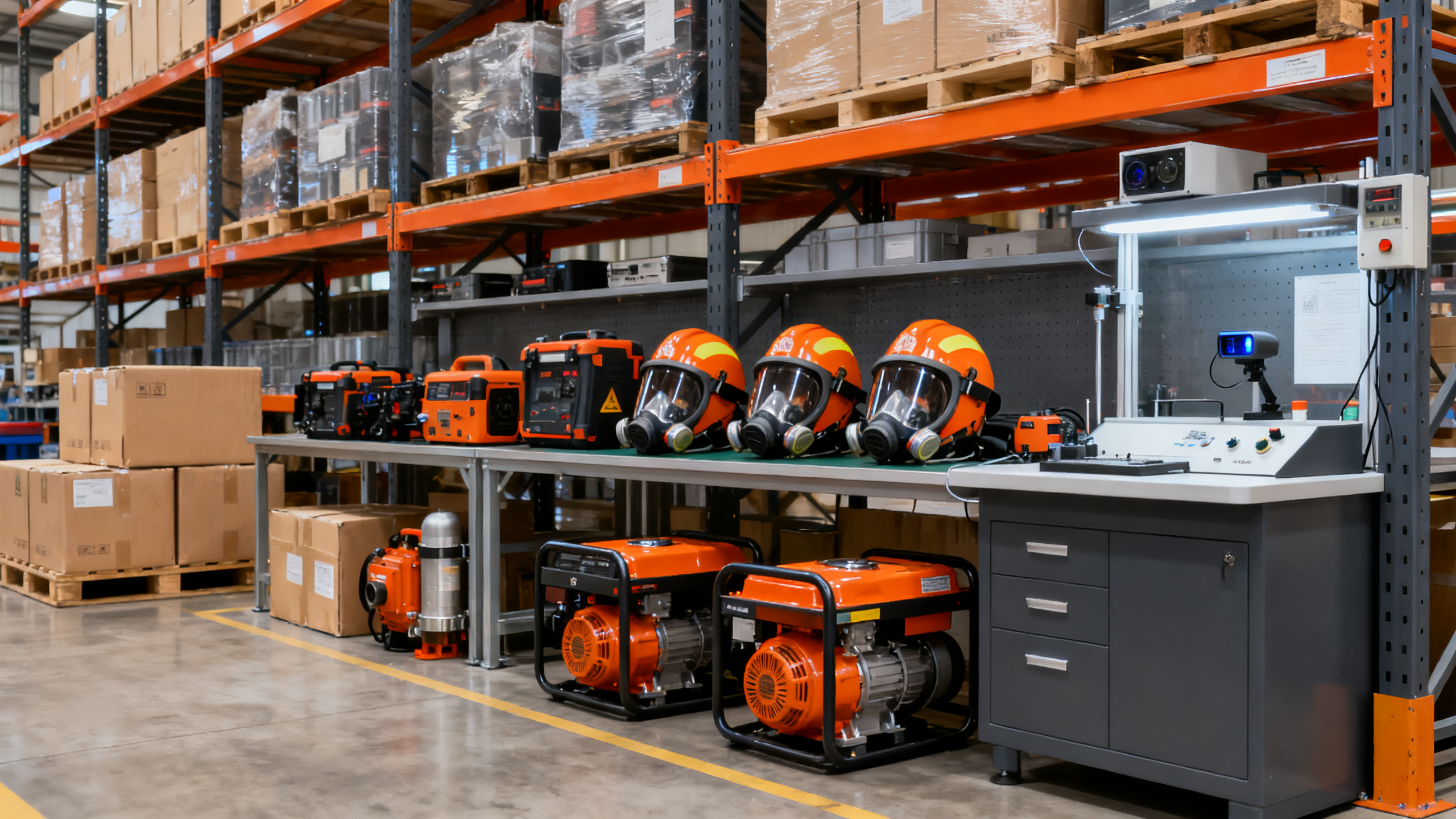
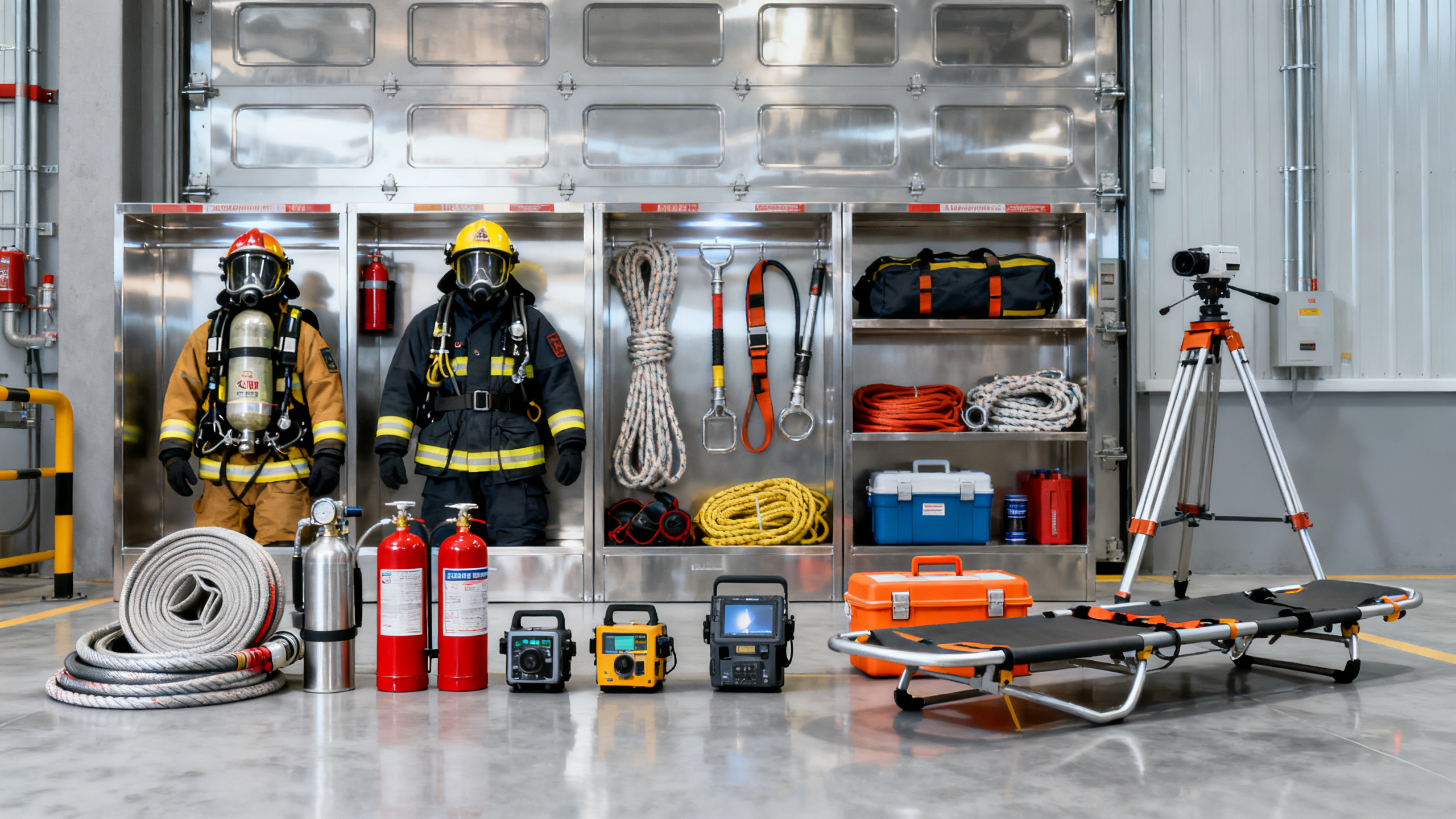
Some tools appear on almost every fire and rescue equipment list because they address universal response needs: breathing, visibility, communication, suppression, access, and casualty movement.
A balanced baseline usually includes the following categories.
- Personal protective equipment: helmets, gloves, boots, flame-resistant garments, eye protection.
- Respiratory protection: SCBA units, spare cylinders, escape hoods, fit-test records.
- Fire suppression tools: extinguishers, hose assemblies, nozzles, foam concentrate, monitors.
- Detection and assessment devices: gas detectors, thermal imaging cameras, voltage testers, portable lighting.
- Rescue gear: stretchers, rescue ropes, harnesses, lifting bags, forcible-entry tools.
- Medical and support supplies: trauma kits, AEDs, eyewash, blankets, scene-marking equipment.
What often gets missed is compatibility between these items. A breathing set may pass inspection, but poor facepiece sizing or incompatible communications can still limit real-world use.
Another common oversight is environmental fit. Heat, dust, salt air, vibration, and chemical splash all affect service life. That matters just as much as the product datasheet.
How do you decide what equipment fits your site rather than a generic standard?
This is where many fire and rescue equipment decisions go wrong. Teams copy a standard list without checking fuel types, access constraints, occupancy patterns, or mutual-aid assumptions.
A better approach is to build around site-specific questions.
- What are the main fire loads: solids, liquids, energized equipment, gases, or mixed hazards?
- How far is the nearest external response team, and what can they realistically bring?
- Are there confined spaces, elevated work zones, tunnels, or remote process areas?
- Do weather, corrosion, or contamination require hardened or sealed equipment designs?
- Which standards apply internally and across export markets?
In actual audits, response time is often the deciding variable. If outside help arrives in twenty minutes, on-site fire and rescue equipment must cover the first critical phase alone.
It also helps to compare equipment by lifecycle value. Lower purchase cost may lead to higher calibration burden, faster replacement, or more frequent false alarms.
That is why data-led sourcing models, common in industrial intelligence platforms, usually weigh certification, maintainability, and interoperability alongside price.
Where do teams usually underestimate risk when building a fire and rescue equipment list?
The biggest mistakes rarely come from missing one dramatic tool. They come from small gaps that weaken the entire response chain.
Several risk points show up repeatedly during inspections and incident reviews.
- Buying suppression equipment without checking extinguishing agent suitability for site hazards.
- Keeping gas detectors on hand but missing calibration schedules or bump-test routines.
- Storing rescue gear in inaccessible areas or in packaging that slows deployment.
- Treating training as separate from equipment selection, even when usability varies widely by model.
- Assuming certified equipment stays compliant without documentation, maintenance, and traceability.
There is also a planning mistake that receives less attention. Some sites purchase advanced gear, then fail to align it with drills, inspection records, and spare-parts planning.
In other words, fire and rescue equipment is only part of readiness. The surrounding system matters: labeling, rotation, testing, and post-incident replenishment.
What should be checked before approving suppliers or updating an equipment list?
When equipment supports life safety, approval should go beyond a catalog review. Documentation quality and long-term support are often as important as the hardware itself.
A practical review usually covers these points.
This review process also helps when updating older inventories. Some legacy items still function, but no longer align with current hazard profiles or current documentation standards.
A sensible next step is to map each item to a scenario, a standard, an inspection interval, and a replacement trigger. That turns a static list into an operational control tool.
So what is the most practical way to move from awareness to a usable plan?
Start with the hazards that could interrupt life safety or plant continuity first. Then compare current fire and rescue equipment against those scenarios, not against a generic warehouse inventory sheet.
Keep the review focused on five decisions: what risks are most credible, which teams respond first, what equipment they actually use, how it is maintained, and where proof of compliance is stored.
That process usually reveals whether the problem is missing equipment, outdated equipment, poor placement, or weak inspection discipline. Each issue needs a different fix.
A strong fire and rescue equipment list is therefore more than an inventory. It is a structured link between emergency planning, technical standards, and operational resilience.
For the next review cycle, document critical scenarios, verify certifications, test accessibility, and align training with the equipment already on site. That is usually where the best improvements begin.
Technical Specifications
- Air Handling Unit Supplier Checklist: Performance Data, Lead Times, and SupportAuthor :Environmental Engineering Director
- Buying Fiberglass Water Tanks Wholesale: Compare Quotes and Delivery CostsAuthor :Environmental Engineering Director
- Choosing an XLPE Power Cable Supplier: Test Reports, Traceability, and Lead TimesAuthor :Grid Infrastructure Analyst
Expert Insights

Chief Security Architect
Dr. Thorne specializes in the intersection of structural engineering and digital resilience. He has advised three G7 governments on industrial infrastructure security.
Related Analysis
- Oct 19, 2026Air Handling Unit Supplier Checklist: Performance Data, Lead Times, and SupportAuthor :Environmental Engineering Director
- Oct 18, 2026Buying Fiberglass Water Tanks Wholesale: Compare Quotes and Delivery CostsAuthor :Environmental Engineering Director
- Oct 17, 2026Choosing an XLPE Power Cable Supplier: Test Reports, Traceability, and Lead TimesAuthor :Grid Infrastructure Analyst
Core Sector // 01
Security & Safety
- How to Vet a Wholesale CO2 Extinguisher Supplier for Certified Bulk OrdersAuthor :Safety Compliance Lead

- How to Select a Conventional Fire Alarm Panel by Zone Capacity and Building RiskAuthor :Safety Compliance Lead

- Steel Rescue Tripods Wholesale: Key Load Ratings, Standards, and Buying MistakesAuthor :Safety Compliance Lead

- India Lifts Duty on Fire Rescue Imports to 22%Author :Safety Compliance Lead

- IEC 62061 Amendment 2 Targets Fire & Rescue ControllersAuthor :Safety Compliance Lead

- IEC 62819-2:2026 Sets New Cybersecurity CheckpointAuthor :Safety Compliance Lead

- When to Use a Quick Deployment Oil Boom for Spill Control in Ports and Inland WatersAuthor :Safety Compliance Lead

- Saudi SASO Adds Cybersecurity Annex to Fire Equipment CertificationAuthor :Safety Compliance Lead