Global Bearing Demand Up 12.4% in Q2 2026
Author
Date Published
Reading Time
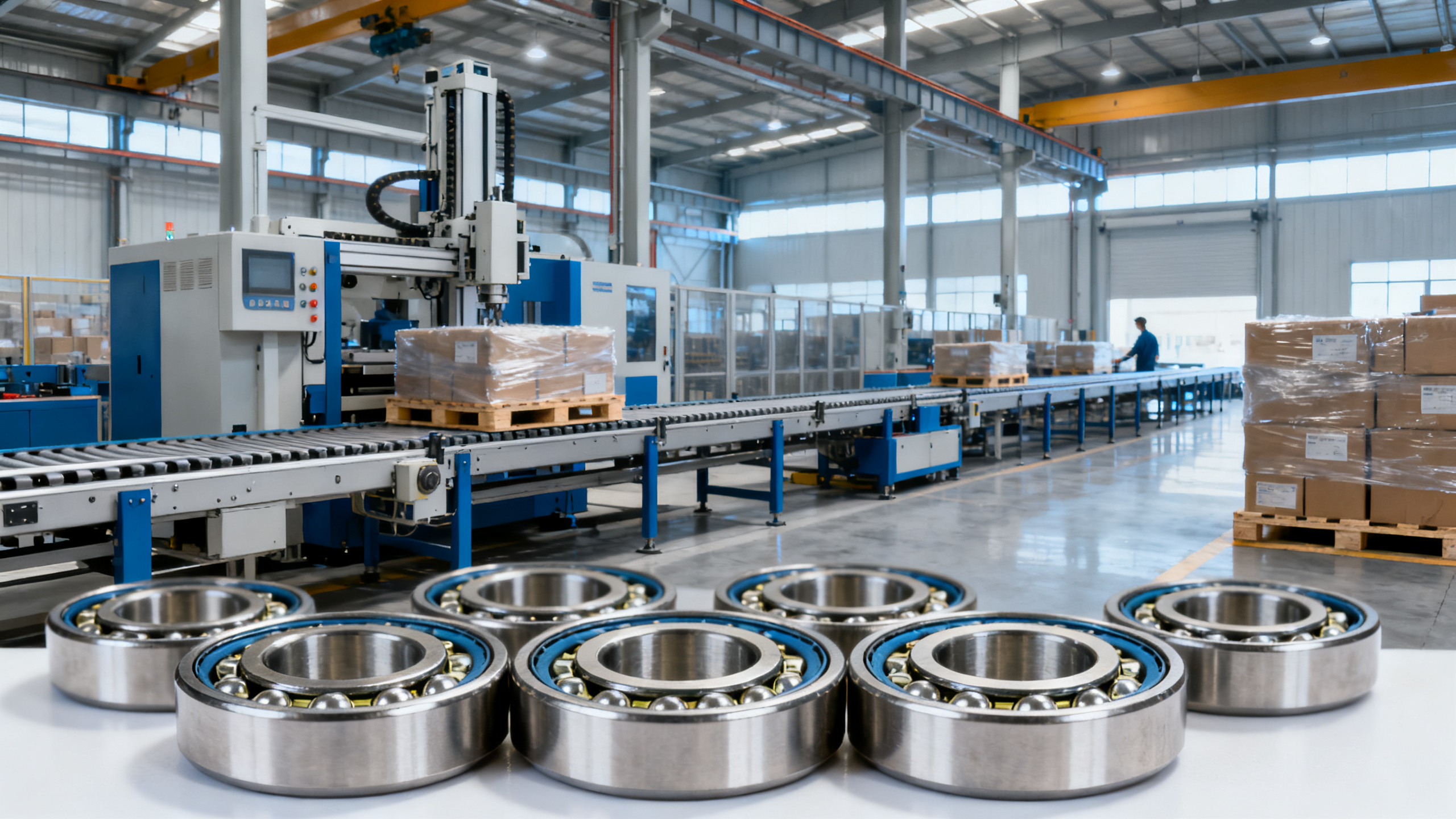
On June 28, 2026, the latest market update around bearings pointed to a notable shift in global purchasing patterns: worldwide demand in Q2 rose 12.4% year on year, with India and Mexico standing out for import growth tied to EV component manufacturing expansion and infrastructure activity. For bearing traders, procurement teams, manufacturers, and downstream industrial buyers, the development is worth tracking because it combines stronger demand in selected markets with longer lead times in a key product segment.
What the latest data confirms
According to the June 2026 Global Bearing Association (GBA) Market Pulse Report, global bearing demand increased 12.4% year on year in Q2 2026. India recorded 28% import growth, while Mexico posted 22% import growth. The report attributes both increases to domestic EV component manufacturing expansion and infrastructure projects.
In contrast, EU imports declined 3.1%. The report links that decline to inventory correction and a shift in procurement toward local Tier-2 suppliers.
The same report states that lead times for sealed deep-groove ball bearings in the 6000-6300 series from China-based factories have stretched to 14-16 weeks. As a result, buyers are moving to secure allocations earlier for H2 2026 deliveries.
Where the pressure is likely to be felt first
Trade flows are becoming less uniform
From an industry perspective, import-oriented trading companies and distributors may see demand concentrate more heavily in India and Mexico than in the EU in the near term. The main impact is likely to appear in quote activity, booking timing, and stock planning, especially for standard high-volume bearing lines tied to manufacturing programs and project schedules.
Procurement teams face timing risk on standard bearing series
Buyers sourcing sealed deep-groove ball bearings in the 6000-6300 series may be affected most directly by the longer factory lead times noted in the report. The practical issue is not only price or availability, but also whether purchase schedules still align with H2 production and delivery windows.
Manufacturers and downstream users may need earlier coordination
For component manufacturers and industrial end users, the development matters because bearing availability can affect assembly continuity and project execution. What deserves closer attention is whether procurement decisions, supplier confirmations, and delivery commitments are being made early enough to match the reported allocation pressure.
Supply chain service providers should watch route and booking rhythm
Observably, logistics and supply chain service providers may need to pay closer attention to shifting shipment timing between growth markets and softer markets. The key business effect may show up in booking patterns, customer urgency, and the need for more frequent delivery-status communication.
Practical priorities for companies in H2 2026
Check exposure to the 6000-6300 sealed range
Companies should first identify whether their current orders or customer programs depend on sealed deep-groove ball bearings in the 6000-6300 series from China-based factories. That product-level review is more actionable than responding to the demand headline alone.
Separate market growth signals by region
Analysis shows that India, Mexico, and the EU should not be treated as moving in the same direction. Businesses involved in imports, channel supply, or customer planning need to distinguish between markets showing active import expansion and markets going through inventory correction or local supplier substitution.
Bring allocation and delivery conversations forward
Because the report notes 14-16 week lead times and earlier allocation activity for H2 2026, procurement and sales teams should focus on confirmation timing, supplier commitment clarity, and customer communication around realistic delivery windows.
Track whether procurement shifts become structural
For companies exposed to the EU market, a key point is whether the move toward local Tier-2 suppliers remains a short-term sourcing adjustment or develops into a more durable procurement pattern. At this stage, that should be monitored as an open development rather than assumed as a settled outcome.
Why this matters beyond one quarter
Analysis shows this update carries two signals at once. First, demand is clearly strengthening in selected markets linked to EV component manufacturing and infrastructure work. Second, supply responsiveness in standard bearing categories is under pressure enough that lead times have become a planning issue. It is more appropriate to understand this as a meaningful industry signal with near-term operational consequences, while still keeping the regional divergence under observation rather than treating it as a fully established long-term reset.
How the market is better read for now
The most balanced reading is that the bearing market is not moving in a single global direction. Stronger imports in India and Mexico, weaker imports in the EU, and longer lead times for specific product lines together point to an uneven environment shaped by regional demand drivers and sourcing behavior. For industry participants, the immediate relevance lies in procurement timing, market prioritization, and delivery planning rather than in broad conclusions about the entire sector.
Basis of this article and what still needs verification
This article is based on the user-provided news title, event date, and event summary. For reporting of this kind, commonly relevant source types include industry association releases, official statements, company disclosures, authoritative media coverage, and standard-setting or trade organization documents.
A specific official source link was not provided in the input, so the original publication path should still be verified on an ongoing basis. What also merits continued follow-up is whether the reported lead-time extension, EU procurement shift, and import momentum in India and Mexico continue into subsequent updates.
Technical Specifications
- Air Handling Unit Supplier Checklist: Performance Data, Lead Times, and SupportAuthor :Environmental Engineering Director
- Buying Fiberglass Water Tanks Wholesale: Compare Quotes and Delivery CostsAuthor :Environmental Engineering Director
- Choosing an XLPE Power Cable Supplier: Test Reports, Traceability, and Lead TimesAuthor :Grid Infrastructure Analyst
Expert Insights

Chief Security Architect
Dr. Thorne specializes in the intersection of structural engineering and digital resilience. He has advised three G7 governments on industrial infrastructure security.
Related Analysis
- Oct 19, 2026Air Handling Unit Supplier Checklist: Performance Data, Lead Times, and SupportAuthor :Environmental Engineering Director
- Oct 18, 2026Buying Fiberglass Water Tanks Wholesale: Compare Quotes and Delivery CostsAuthor :Environmental Engineering Director
- Oct 17, 2026Choosing an XLPE Power Cable Supplier: Test Reports, Traceability, and Lead TimesAuthor :Grid Infrastructure Analyst
Core Sector // 01
Security & Safety
- How to Select Flange Gaskets for Pressure, Temperature, and Media CompatibilityAuthor :Heavy Industry Strategist

- Selecting High-Temperature Gaskets for Steam, Flanges, and Thermal CyclingAuthor :Heavy Industry Strategist

- Selecting Low-Friction Pneumatic Seals for High-Cycle, Low-Pressure CylindersAuthor :Heavy Industry Strategist

- Selecting Spherical Roller Bearings for Mining: Load, Contamination, and Service LifeAuthor :Heavy Industry Strategist

- Do Deep Groove Ball Bearings Need Special Seals in Coastal Humidity?Author :Heavy Industry Strategist

- How to Select Anti Vibration Rubber Shock Absorbers for Machinery and EquipmentAuthor :Heavy Industry Strategist

- When to Specify Induction Hardened Slewing Ring Bearings for Heavy-Duty EquipmentAuthor :Heavy Industry Strategist

- How to Evaluate Weather Resistant EPDM Extrusion for Outdoor Sealing ApplicationsAuthor :Heavy Industry Strategist