Maersk to Add CFA on High-Risk Industrial Goods From July
Author
Date Published
Reading Time
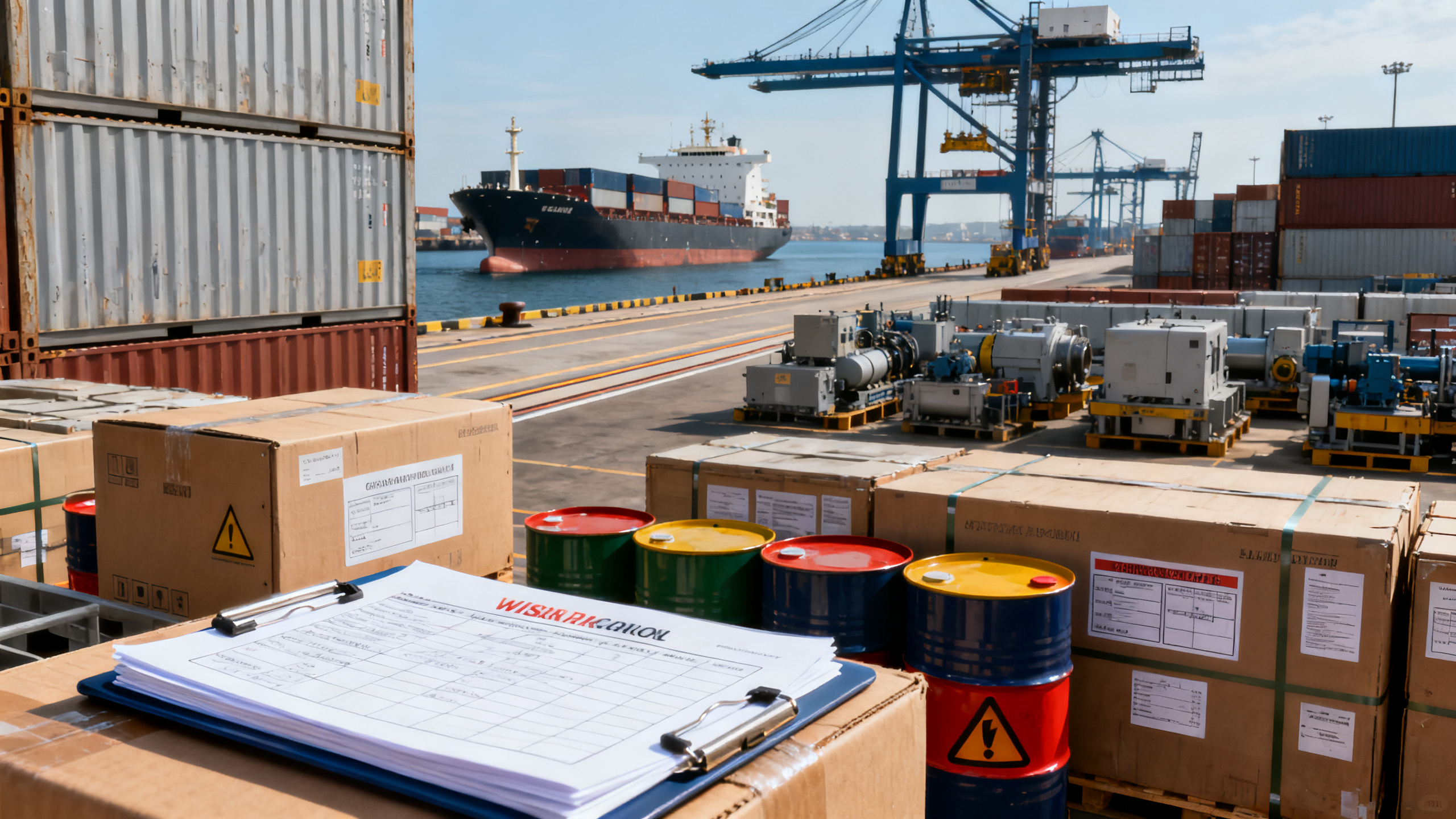
On July 1, 2026, Maersk’s new carbon compliance surcharge for certain high-risk industrial goods moves from notice to execution, making this more than a pricing update for exporters. Because the charge applies to containers involving UN 3171, UN 1263, and UN 1950 cargo categories across Asia-Europe and trans-Pacific routes, manufacturers, exporters, procurement teams, and supply chain service providers connected to Fire & Rescue Equip, PPE & Workwear, and Industrial Water Treatment now need to pay closer attention to cargo classification, LCA-related data readiness, shipping documents, and delivery cost assumptions.
What Maersk Has Confirmed for the July Start
Maersk issued a notice on June 24, 2026 stating that, from July 1, 2026, it will apply an initial Carbon Compliance Fee (CFA) of $85/TEU to containers carrying high-risk industrial goods classified under categories including UN 3171, UN 1263, and UN 1950.
The notice states that the fee will be dynamically determined based on product LCA data and the carbon monitoring level of the loading port.
The policy covers all Asia-Europe and trans-Pacific routes referenced in the notice.
According to the event summary, the scope includes exports of complete equipment or components in segments such as Fire & Rescue Equip, PPE & Workwear, and Industrial Water Treatment where the relevant substances are involved.
Where the Rule Change May Be Felt First
Export quoting and shipment planning are likely to tighten
From an industry perspective, exporters handling affected goods may be the first to feel the operational impact because freight quotations, landed-cost estimates, and shipment timing may all need adjustment once a surcharge is attached to specific cargo classes. What deserves closer attention is whether internal shipping teams and forwarders are aligned on UN classification and whether commercial offers already reflect the additional cost exposure.
Manufacturing and assembly businesses may need closer product-content review
For manufacturers of finished equipment or components used in Fire & Rescue Equip, PPE & Workwear, and Industrial Water Treatment, the relevant issue is not only the final product category but also whether embedded substances bring the shipment into one of the listed UN classifications. Analysis shows that product-level substance review, bill-of-material checks, and shipment declaration consistency may become more important in order to avoid mismatch between cargo description and freight charging.
Procurement and supply chain service providers may face document pressure
Procurement teams and logistics service providers may need to pay closer attention to the documentation behind LCA-related submissions and loading-port conditions because the notice links the surcharge to both product LCA data and port carbon monitoring level. Observably, even without further published detail in the input, this creates a practical need to review what technical files, shipment records, or supporting declarations are available before booking cargo.
Practical Issues Companies Should Watch Now
Check cargo classification before cost assumptions are locked
Analysis shows that companies should first verify whether exported goods, components, or packaged shipments fall within the UN 3171, UN 1263, or UN 1950 scope described in the notice. This matters because the surcharge is tied to cargo classification rather than broad sector labels alone.
Review whether LCA-related records are shipment-ready
What deserves closer attention is the operational meaning of the reference to product LCA data. The input does not provide Maersk’s full execution criteria, so it is more appropriate to treat this as a signal to review existing technical records, declarations, and internal data trails rather than assume a settled documentation checklist already exists.
Revisit route budgeting and delivery commitments
Because the measure covers Asia-Europe and trans-Pacific routes, exporters using those lanes may need to reassess freight budgeting, contract assumptions, and delivery schedules for affected goods. This is especially relevant where quotations, tenders, or customer commitments were prepared before the surcharge effective date.
Monitor whether customer and tender documents start reflecting the change
Observably, companies involved in export bids, procurement frameworks, or long-cycle supply agreements should watch for changes in customer documentation, freight clauses, or supporting compliance requests. The current input does not confirm any downstream contractual revisions, so this remains an area for active follow-up rather than a confirmed market-wide shift.
Why This Looks Like an Execution Signal, Not Just a Notice
Analysis shows that this development is best understood as an execution-stage signal in shipping compliance rather than a general discussion about decarbonization. The reason is that the notice sets a start date, identifies affected UN cargo categories, assigns an initial charge, and ties the mechanism to LCA data and loading-port carbon monitoring. At the same time, the event summary does not provide the full operating criteria, document format, or dispute process, so part of the market impact still depends on how the rule is applied in day-to-day bookings.
How to Read the Development at This Stage
At this stage, it is more appropriate to understand Maersk’s CFA move as a concrete compliance-cost change for specified high-risk industrial cargo on named trade lanes, while also recognizing that some execution details still require observation. The immediate significance lies in cost allocation, cargo classification discipline, and documentation readiness, rather than in any confirmed broad restructuring of trade flows or sector demand.
Basis and Follow-Up
This article is generated based on the user-provided news title, event date, and event summary. For events of this type, relevant source categories usually include official carrier notices, regulator releases, customs or trade authority information, industry association updates, standards-related documents, and reporting by established trade media. A specific official source link was not provided in the input, so continued verification is still needed. Areas that remain worth monitoring include detailed execution criteria, documentation expectations related to LCA data, any change in customer or tender requirements, market feedback, and how companies implement the surcharge in actual export operations.
Technical Specifications
- Air Handling Unit Supplier Checklist: Performance Data, Lead Times, and SupportAuthor :Environmental Engineering Director
- Buying Fiberglass Water Tanks Wholesale: Compare Quotes and Delivery CostsAuthor :Environmental Engineering Director
- Choosing an XLPE Power Cable Supplier: Test Reports, Traceability, and Lead TimesAuthor :Grid Infrastructure Analyst
Expert Insights

Chief Security Architect
Dr. Thorne specializes in the intersection of structural engineering and digital resilience. He has advised three G7 governments on industrial infrastructure security.
Related Analysis
- Oct 19, 2026Air Handling Unit Supplier Checklist: Performance Data, Lead Times, and SupportAuthor :Environmental Engineering Director
- Oct 18, 2026Buying Fiberglass Water Tanks Wholesale: Compare Quotes and Delivery CostsAuthor :Environmental Engineering Director
- Oct 17, 2026Choosing an XLPE Power Cable Supplier: Test Reports, Traceability, and Lead TimesAuthor :Grid Infrastructure Analyst
Core Sector // 01
Security & Safety
- How to Vet a Wholesale CO2 Extinguisher Supplier for Certified Bulk OrdersAuthor :Safety Compliance Lead

- How to Select a Conventional Fire Alarm Panel by Zone Capacity and Building RiskAuthor :Safety Compliance Lead

- Steel Rescue Tripods Wholesale: Key Load Ratings, Standards, and Buying MistakesAuthor :Safety Compliance Lead

- India Lifts Duty on Fire Rescue Imports to 22%Author :Safety Compliance Lead

- IEC 62061 Amendment 2 Targets Fire & Rescue ControllersAuthor :Safety Compliance Lead

- IEC 62819-2:2026 Sets New Cybersecurity CheckpointAuthor :Safety Compliance Lead

- When to Use a Quick Deployment Oil Boom for Spill Control in Ports and Inland WatersAuthor :Safety Compliance Lead

- Saudi SASO Adds Cybersecurity Annex to Fire Equipment CertificationAuthor :Safety Compliance Lead