Smoke Detectors Bulk Buying Guide: Certifications, Battery Types, and Cost Factors
Author
Date Published
Reading Time
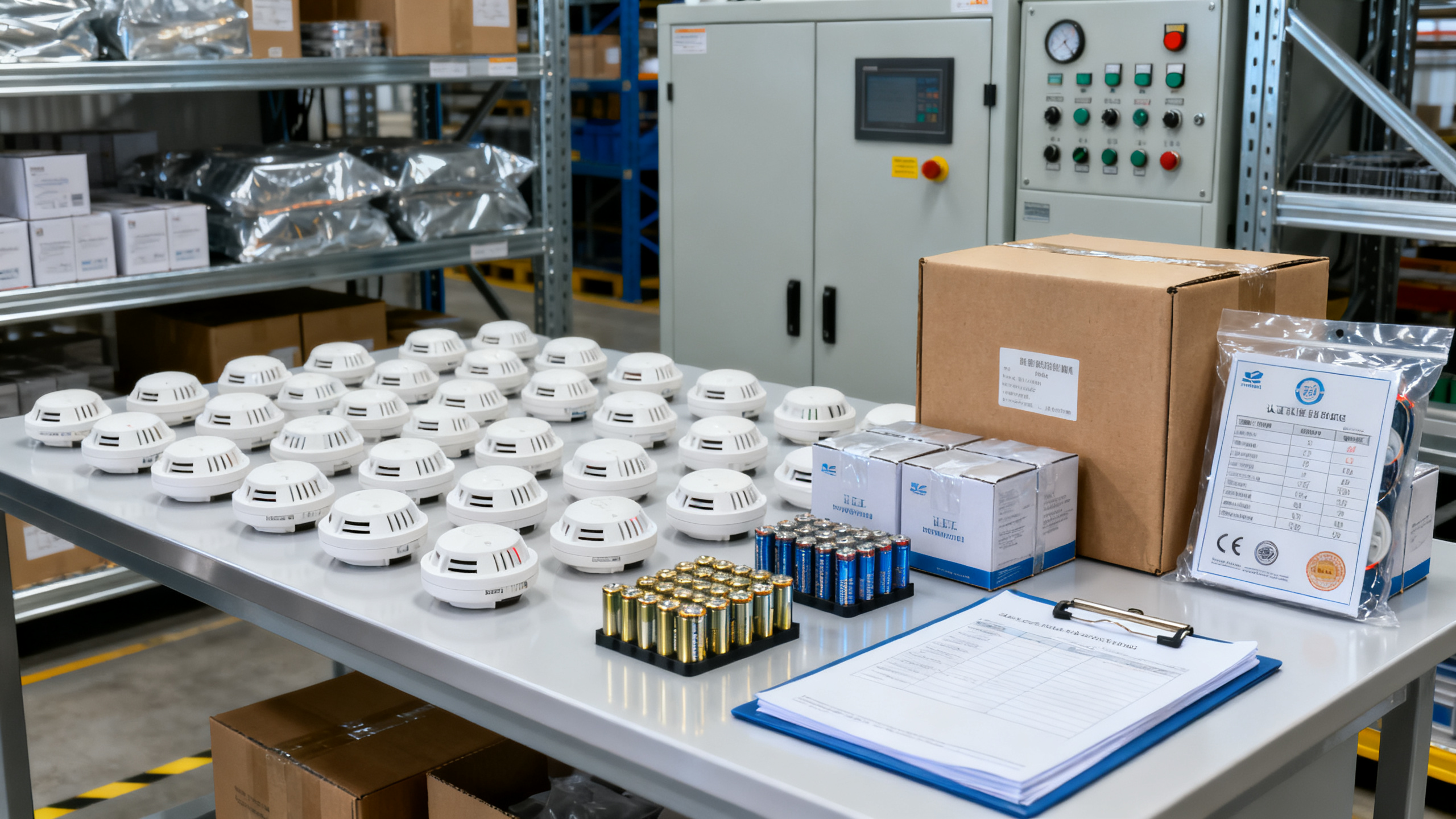
Smoke detectors bulk purchasing usually starts with price sheets, but the better decision starts earlier. In industrial, commercial, and multi-site environments, the real question is whether each unit can meet certification rules, perform reliably over time, and fit maintenance routines without creating hidden costs.
That is why large-volume buying is rarely a simple catalog exercise. A low unit price can become expensive if approvals fail, batteries drain too quickly, or replacement cycles disrupt operations. The stronger approach is to compare smoke detectors bulk options through compliance, battery type, lifecycle risk, and total cost.
Across infrastructure-focused platforms such as Global Industrial Core, this kind of evaluation matters because safety equipment supports broader operational resilience. Smoke detection sits inside the same risk logic as power continuity, environmental control, and facility protection.
Why does smoke detectors bulk buying need a different evaluation standard?
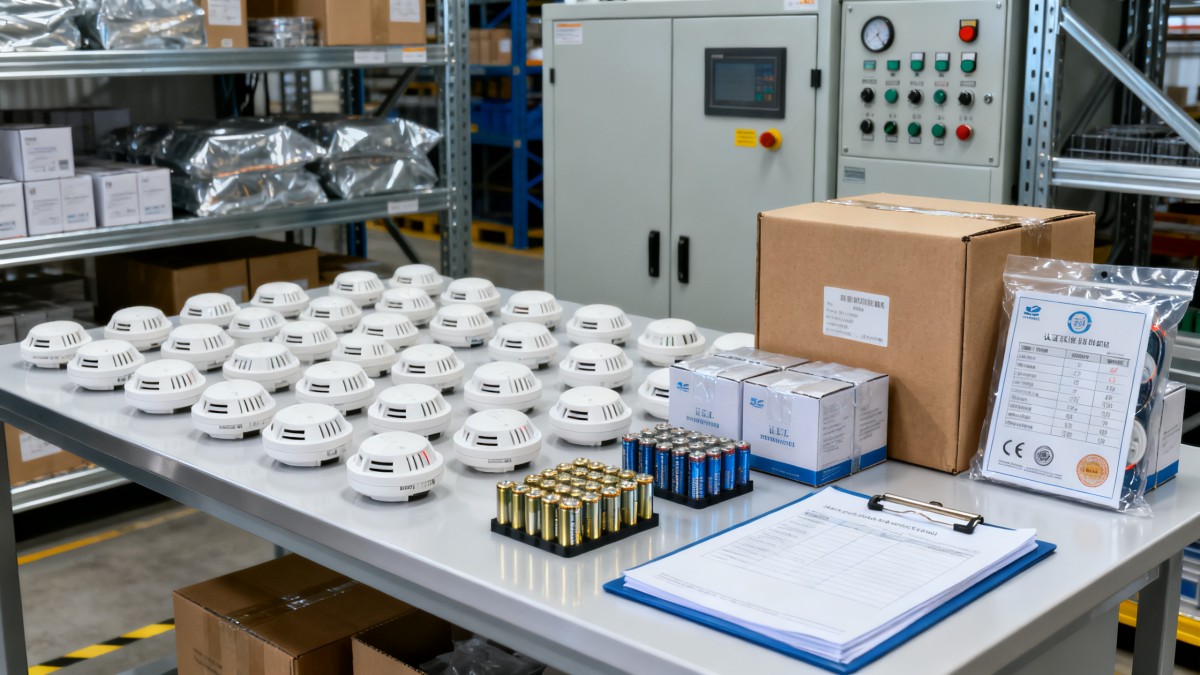
A single residential replacement and a multi-site order are not the same purchase. When quantities rise, the impact of one wrong assumption spreads across installation, inspection, maintenance, and future replacements.
In practice, smoke detectors bulk orders often serve warehouses, dormitories, hotels, campuses, utility buildings, and EPC projects. These settings need consistent model matching, predictable battery life, and documentation that can survive audits or client handover reviews.
Another difference is standardization. Bulk buyers usually want fewer SKUs, simpler training, and easier spare planning. If one detector type fits the application and local code, consolidation can reduce long-term complexity more than it reduces the initial invoice.
So the core issue is not only “Which detector is cheapest?” A better search question is, “Which smoke detectors bulk option lowers operational friction while staying compliant?”
Which certifications should be checked before comparing battery types or pricing?
Certification comes first because it removes unsuitable options before technical comparison begins. If a model fails the required standard for the target market, every later cost discussion becomes irrelevant.
For smoke detectors bulk sourcing, the most common starting points are UL, CE, and relevant EN or local fire safety requirements. Some projects also require ISO-aligned manufacturing quality systems, especially when tender documents emphasize traceability and process control.
It also helps to separate product certification from factory claims. A supplier may mention testing capability or internal quality checks, but that is not the same as third-party listing, approval marks, or regional compliance evidence.
The more practical review method is to ask for the exact certificate number, issuing body, validity status, and model mapping. A certificate that covers one variant does not always cover every housing, battery configuration, or communication feature.
This quick comparison table helps narrow options before negotiation moves forward.
When smoke detectors bulk decisions are tied to public works, utilities, or large managed properties, incomplete certification documents can delay approval more than lead time itself. That is usually a cost no spreadsheet shows at the beginning.
How should battery type be judged in real operating conditions?
Battery type is one of the most misunderstood parts of smoke detectors bulk purchasing. People often compare advertised lifespan only, but field performance depends on temperature range, standby profile, alarm frequency, and maintenance discipline.
The main choices are usually replaceable alkaline batteries, lithium batteries with longer service life, and hardwired units with battery backup. Each option makes sense in different operating models.
When do alkaline models make sense?
Alkaline battery detectors can work when budgets are tight and sites already have scheduled maintenance access. They often reduce purchase cost, but they increase labor frequency and replacement planning.
Why are lithium units common in smoke detectors bulk orders?
Lithium units usually cost more upfront, but they reduce service interruptions and manual battery replacement. In dispersed facilities or difficult-access areas, that trade-off can be favorable very quickly.
What about hardwired detectors?
Hardwired detectors are often preferred in new builds or major retrofits where electrical integration is already planned. They can support more stable power supply logic, but installation cost and wiring coordination are higher.
A useful way to judge battery strategy is to ask three operational questions:
- How easy is physical access for periodic battery replacement?
- What is the cost of missed maintenance across all installed units?
- Will local conditions shorten the advertised battery lifespan?
In smoke detectors bulk projects, battery choice is really a maintenance model decision. The cheapest battery format is not always the lowest-cost system.
What cost factors matter beyond the quoted unit price?
This is where many buying decisions improve. Unit cost matters, but total cost is shaped by service life, false alarm exposure, documentation support, packaging efficiency, replacement cycles, and failure rates.
For example, smoke detectors bulk quotations may look similar at first glance. Yet one offer may include certified documentation, tamper features, installation hardware, and stronger batch consistency, while another leaves those items uncertain.
More hidden cost drivers often include:
- Battery replacement labor across all sites
- Reinspection or rejection caused by weak certification files
- False alarms that disrupt occupants or operations
- Early failures that force partial replacement orders
- Lead time variability that affects project handover
Need a simple rule of thumb? If the project lasts years, lifecycle cost usually deserves more weight than first invoice cost. That is especially true when smoke detectors bulk orders are installed in phases and maintained by different teams over time.
In environments where GIC-style sourcing discipline is valued, cost review is tied to resilience. The better question is whether the chosen detector reduces avoidable service events while meeting compliance requirements from day one.
Where do buyers make mistakes when comparing smoke detectors bulk options?
Most mistakes happen when comparison criteria are too narrow. A spec sheet can look acceptable while important field variables remain unchecked.
One common error is assuming all certified detectors perform equally in every setting. In reality, application conditions matter. Storage zones, accommodation buildings, utility rooms, and light industrial spaces may not share the same risk profile.
Another issue is mixing different battery platforms in the same site group without a maintenance reason. That usually complicates stock control, technician training, and replacement planning.
It is also risky to ignore packaging and traceability details. Bulk orders should arrive with clear labeling, manufacturing batch visibility, and installation documentation. Otherwise, troubleshooting later becomes slower and more expensive.
The most avoidable mistakes usually look like this:
- Choosing by unit price before checking approval scope
- Accepting battery life claims without use-condition review
- Overlooking replacement labor in multi-site deployments
- Buying too many model variants without operational need
- Treating sample performance as proof of batch consistency
How can a smoke detectors bulk shortlist be built with more confidence?
A practical shortlist is usually built in layers. Start with mandatory compliance. Then compare battery architecture, expected maintenance burden, project lead time, and document quality. Price becomes more meaningful after those filters are applied.
If several models still look similar, use a weighted review rather than a simple lowest-bid ranking. That approach is especially useful when the order will support critical occupancy or infrastructure operations.
Before final approval, it is worth requesting samples, documentation sets, and a realistic delivery schedule. For smoke detectors bulk orders, disciplined prequalification often saves more money than aggressive late-stage negotiation.
A sound next step is to document site conditions, target standards, battery preference, and acceptable maintenance intervals in one comparison sheet. That makes supplier responses easier to judge and reduces the risk of buying the wrong detector at the right price.
Technical Specifications
- How to Select an Emissions Monitoring System Analyzer for Compliance ReportingAuthor :Precision Metrology Expert
- How to Select an Access Control Management System for Multi-Site FacilitiesAuthor :Safety Compliance Lead
- Portable Gas Monitor Calibration: How Often Is It Needed for Safe Confined-Space Work?Author :Precision Metrology Expert
Expert Insights

Chief Security Architect
Dr. Thorne specializes in the intersection of structural engineering and digital resilience. He has advised three G7 governments on industrial infrastructure security.
Related Analysis
- Sep 21, 2026How to Select an Emissions Monitoring System Analyzer for Compliance ReportingAuthor :Precision Metrology Expert
- Sep 20, 2026How to Select an Access Control Management System for Multi-Site FacilitiesAuthor :Safety Compliance Lead
- Sep 19, 2026Portable Gas Monitor Calibration: How Often Is It Needed for Safe Confined-Space Work?Author :Precision Metrology Expert
Core Sector // 01
Security & Safety
- Steel Rescue Tripods Wholesale: Key Load Ratings, Standards, and Buying MistakesAuthor :Safety Compliance Lead

- India Lifts Duty on Fire Rescue Imports to 22%Author :Safety Compliance Lead

- IEC 62061 Amendment 2 Targets Fire & Rescue ControllersAuthor :Safety Compliance Lead

- IEC 62819-2:2026 Sets New Cybersecurity CheckpointAuthor :Safety Compliance Lead

- When to Use a Quick Deployment Oil Boom for Spill Control in Ports and Inland WatersAuthor :Safety Compliance Lead

- Saudi SASO Adds Cybersecurity Annex to Fire Equipment CertificationAuthor :Safety Compliance Lead

- CBP Pre-Arrival Portal Raises Import Checks for Fire EquipmentAuthor :Safety Compliance Lead

- UAE Sets Cybersecurity Gate for Fire Control PanelsAuthor :Safety Compliance Lead