Defibrillator AED Wholesale: How to Compare MOQ, Certifications, and After-Sales Support
Author
Date Published
Reading Time
Defibrillator AED Wholesale: How to Compare MOQ, Certifications, and After-Sales Support
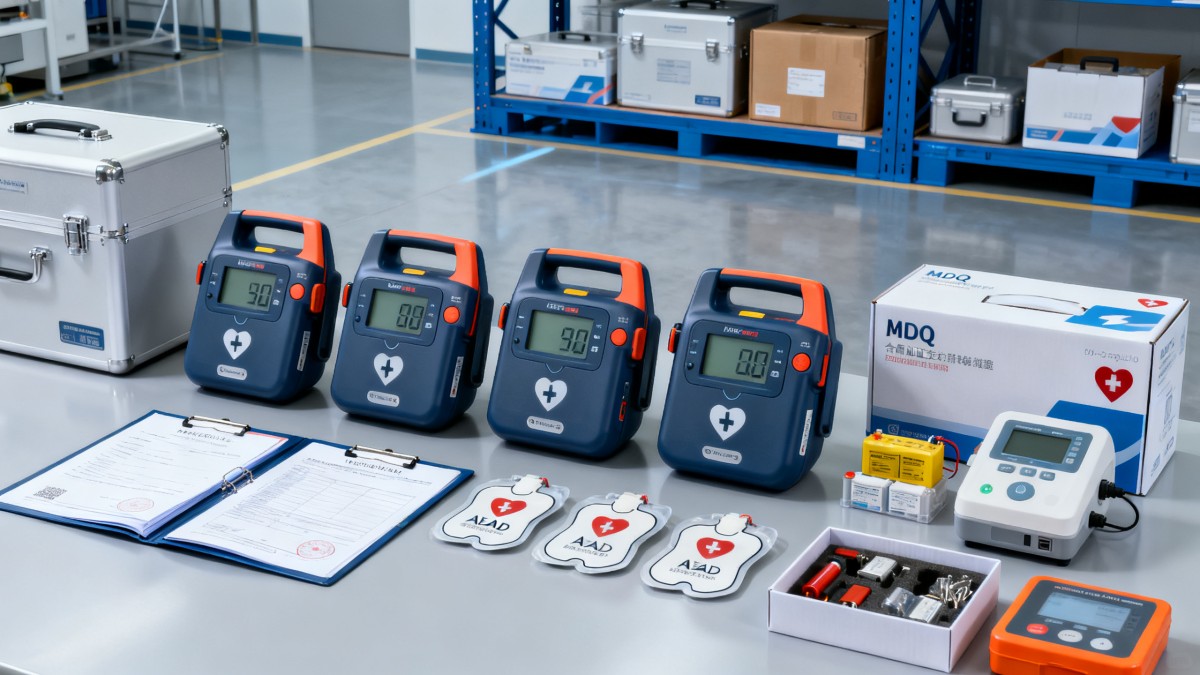
When evaluating defibrillator AED wholesale options, pricing is only one part of the decision.
Buyers also need to check MOQ, certifications, and after-sales support before signing any supply agreement.
These three factors shape landed cost, compliance exposure, and service continuity over the product lifecycle.
In real procurement work, a low quote can become expensive if the supplier cannot support training, parts, or documentation.
That is why defibrillator AED wholesale comparisons should follow a structured, risk-aware process.
This guide breaks down what to compare, what to ask, and how to avoid common sourcing mistakes.
Why MOQ Matters in Defibrillator AED Wholesale
MOQ affects more than order size.
It influences cash flow, storage planning, import timing, and supplier flexibility.
For defibrillator AED wholesale purchases, MOQ can vary widely by model, branding option, and destination market.
Some factories offer low MOQ for standard units.
Others raise the threshold for private label packaging, multilingual manuals, or custom accessory kits.
From a cost perspective, higher MOQ often improves unit pricing.
Still, that discount may not offset carrying cost or slow-moving inventory risk.
This is especially true when electrode pads or batteries have replacement cycles and shelf-life constraints.
Questions to Ask About MOQ
- Is the MOQ based on one AED model or mixed models?
- Does the MOQ change for OEM or private label orders?
- Can the supplier support trial orders before a larger annual contract?
- Are spare pads, batteries, cabinets, and signage included in the MOQ calculation?
- What happens if forecast volume changes after the first shipment?
A practical approach is to compare MOQ against your actual deployment plan, not just your annual budget target.
If AEDs will be rolled out in phases, flexible batch scheduling may matter more than the headline unit price.
MOQ Comparison Table
How to Verify Certifications Without Guesswork
In defibrillator AED wholesale sourcing, certifications are not a paperwork formality.
They are central to market access, liability control, and end-user safety.
A supplier may say a device is certified.
You still need to verify which certificate applies, who issued it, and whether it matches the exact product offered.
This matters even more when sourcing for hospitals, schools, factories, transport hubs, or public safety projects.
Core Certification Areas to Review
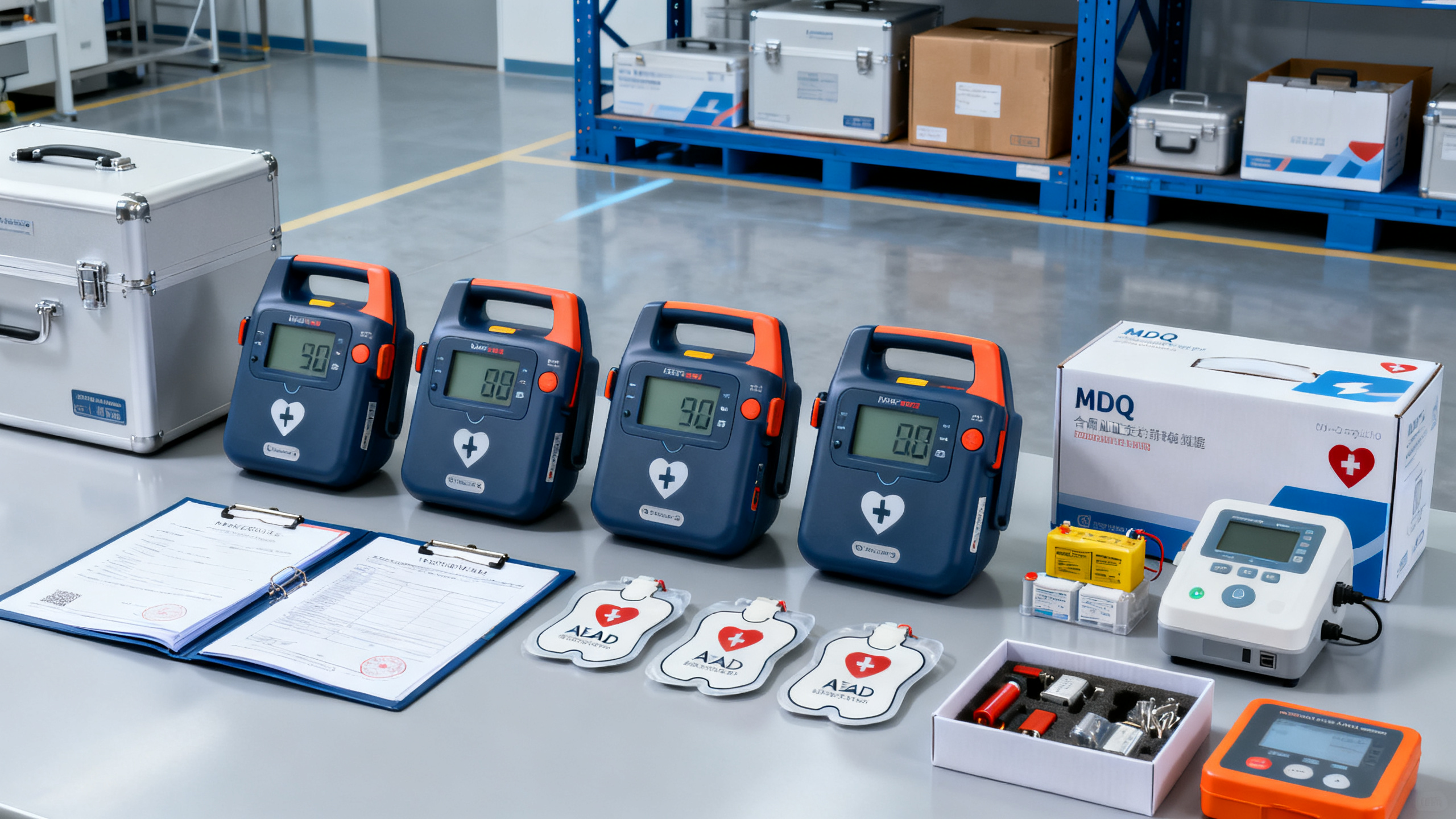
- Product compliance for the destination market, such as CE or FDA-related pathways where relevant.
- Quality management documentation, including ISO 13485 for medical device manufacturing.
- Electrical safety and performance testing records tied to the AED model.
- Battery and transport compliance for international shipping.
- Labeling, user manual, and language compliance for local distribution.
Ask for certificates, test reports, declarations, and issuing body details in one package.
Then cross-check model numbers, manufacturer names, and validity dates carefully.
A common sourcing risk is assuming one certificate covers all versions of the product family.
In practice, accessory changes, labeling changes, or software changes can affect compliance scope.
Red Flags in Certification Review
- The supplier shares blurred files or partial pages only.
- The manufacturer name differs across documents.
- The certificate covers a different device category.
- The validity date has expired or renewal status is unclear.
- No one can explain post-market complaint handling.
A reliable defibrillator AED wholesale supplier should answer certification questions quickly and consistently.
If responses feel evasive, that is already useful procurement data.
After-Sales Support Often Decides the Real Value
This is where many defibrillator AED wholesale evaluations become too narrow.
Teams compare pricing and delivery lead time, then treat service support as a minor detail.
That usually backfires later.
AEDs require ongoing readiness.
Pads expire, batteries need replacement, and end users may require training or troubleshooting support.
Without dependable after-sales coverage, a low-cost purchase can create service gaps and compliance issues.
What Strong After-Sales Support Looks Like
- Clear warranty terms for the AED unit and accessories.
- Defined response times for technical questions and claims.
- Access to spare pads, batteries, and replacement parts.
- User manuals, service guides, and training resources in the required language.
- Documented process for repairs, recalls, and nonconformance reporting.
It also helps to ask whether support is factory-direct or handled by a regional distributor.
That detail affects communication speed, parts availability, and warranty execution.
In large projects, ask for a lifecycle support schedule.
This should cover battery replacement planning, pad replenishment, and service escalation contacts.
Useful After-Sales Questions
- What is the average claim resolution time?
- Which parts are stocked locally?
- Are software updates included, if applicable?
- Can the supplier provide onboarding materials for first deployment?
- How are defective units handled across borders?
How to Compare Total Cost Instead of Unit Price
A smart defibrillator AED wholesale decision looks at total cost of ownership.
That means combining unit price with certification risk, inventory burden, service cost, and replenishment planning.
This is where seemingly similar suppliers begin to separate.
Build a Simple Comparison Scorecard
This scorecard keeps the defibrillator AED wholesale conversation grounded in measurable criteria.
It also makes internal approval easier because decisions can be linked to risk and lifecycle value.
A Practical Supplier Shortlisting Process
If you need a workable process, keep it simple and consistent.
- Define destination markets and compliance requirements first.
- Request quotations with MOQ, lead time, and accessory pricing separated clearly.
- Collect certification files and verify product-model matching.
- Review warranty, spare parts access, and support workflow.
- Run a landed-cost and lifecycle-cost comparison before final negotiation.
This approach helps you compare defibrillator AED wholesale suppliers on facts, not sales promises.
More importantly, it reduces the chance of discovering hidden costs after deployment has already started.
Final Takeaway
The best defibrillator AED wholesale decision is rarely the cheapest quote on the spreadsheet.
It is the supplier that balances practical MOQ, verified certifications, and dependable after-sales support.
When those three areas are reviewed together, buyers can protect compliance, control cost, and maintain long-term readiness.
If you are comparing defibrillator AED wholesale options now, build your shortlist around risk visibility, not just price pressure.
That makes negotiation stronger and the final purchase decision much easier to defend.
Technical Specifications
- How to Select Electronic Hotel Key Card Locks for Guest Rooms and Staff AreasAuthor :Safety Compliance Lead
- How to Select Lab Instruments for Reliable Chemical Analysis WorkflowsAuthor :Precision Metrology Expert
- How to Size a UPS for Server Rooms: Load, Runtime, and Redundancy FactorsAuthor :Grid Infrastructure Analyst
Expert Insights

Chief Security Architect
Dr. Thorne specializes in the intersection of structural engineering and digital resilience. He has advised three G7 governments on industrial infrastructure security.
Related Analysis
- Sep 17, 2026How to Select Electronic Hotel Key Card Locks for Guest Rooms and Staff AreasAuthor :Safety Compliance Lead
- Sep 16, 2026How to Select Lab Instruments for Reliable Chemical Analysis WorkflowsAuthor :Precision Metrology Expert
- Sep 15, 2026How to Size a UPS for Server Rooms: Load, Runtime, and Redundancy FactorsAuthor :Grid Infrastructure Analyst
Core Sector // 01
Security & Safety
- Steel Rescue Tripods Wholesale: Key Load Ratings, Standards, and Buying MistakesAuthor :Safety Compliance Lead

- India Lifts Duty on Fire Rescue Imports to 22%Author :Safety Compliance Lead

- IEC 62061 Amendment 2 Targets Fire & Rescue ControllersAuthor :Safety Compliance Lead

- IEC 62819-2:2026 Sets New Cybersecurity CheckpointAuthor :Safety Compliance Lead

- When to Use a Quick Deployment Oil Boom for Spill Control in Ports and Inland WatersAuthor :Safety Compliance Lead

- Saudi SASO Adds Cybersecurity Annex to Fire Equipment CertificationAuthor :Safety Compliance Lead

- CBP Pre-Arrival Portal Raises Import Checks for Fire EquipmentAuthor :Safety Compliance Lead

- UAE Sets Cybersecurity Gate for Fire Control PanelsAuthor :Safety Compliance Lead