X Ray Baggage Scanners: How to Choose One
Author
Date Published
Reading Time

Choosing the right x ray baggage scanners is critical for balancing detection accuracy, passenger throughput, compliance, and long-term operating cost. Whether you are a security operator, procurement manager, or enterprise decision-maker, this guide explains the key specifications, application scenarios, and supplier evaluation points that matter most when selecting systems that protect facilities while supporting reliable, efficient screening.
In practice, selecting an x ray baggage scanner is rarely just about buying a machine with a tunnel and monitor. The right system must fit the site layout, the threat profile, the daily bag volume, the staffing model, and the regulatory environment. A scanner that works well at a small office lobby may fail in a logistics hub, airport service entrance, courthouse, or industrial plant gate where screening loads, object density, and duty cycles are far higher.
For B2B buyers, the most expensive mistake is choosing only on purchase price. A lower-cost system can create hidden losses through false alarms, slow operator workflow, repeated rescans, higher maintenance frequency, and premature replacement after 3–5 years. By contrast, a well-matched solution can improve throughput, reduce inspection bottlenecks, and support more consistent security outcomes over a 7–10 year operating window.
The sections below break down what matters most: application fit, image quality, tunnel size, radiation safety, software capabilities, service support, and procurement criteria. The goal is to help research teams, end users, purchasing managers, and business leaders make a sound, defensible selection.
Start with the screening environment and operational demand
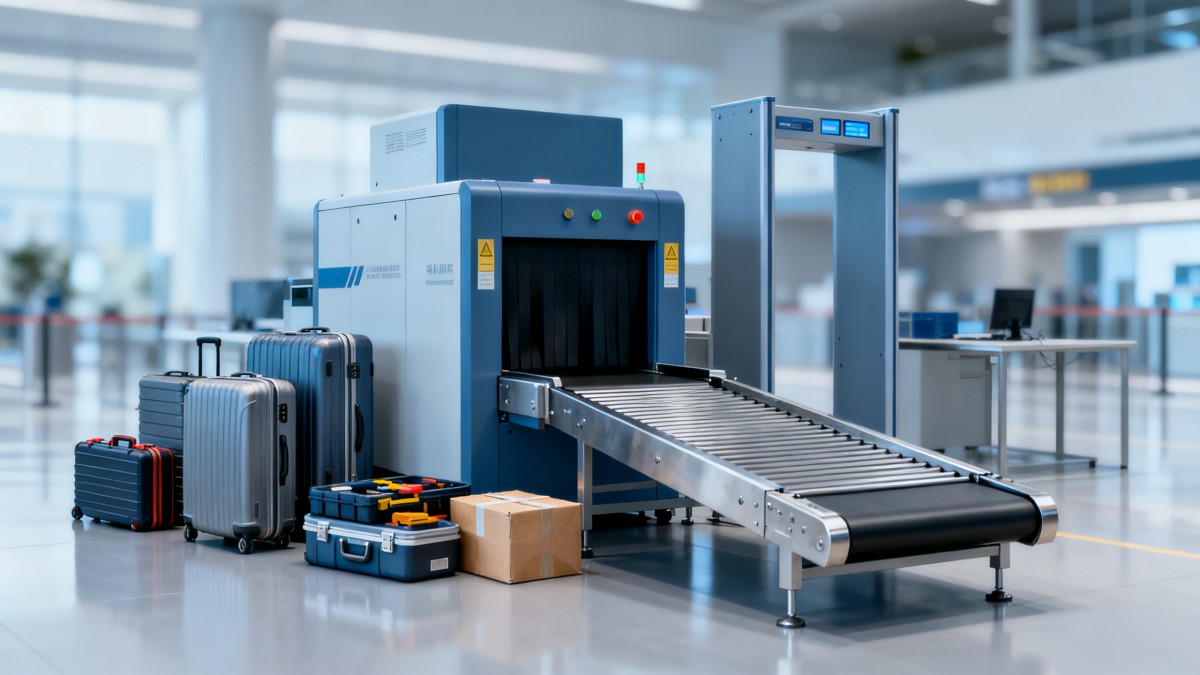
The first step in choosing x ray baggage scanners is defining where and how the system will operate. A front-office visitor checkpoint, a metro station side entrance, a distribution center, and a government facility all require different performance levels. Before comparing brands or features, identify the expected bag type, average dimensions, peak-hour traffic, and whether the system will run for 4 hours, 8 hours, or continuous multi-shift duty.
Throughput is one of the most important planning numbers. A small facility may only process 80–150 bags per hour, while a busy transport node or event venue can exceed 300–500 bags per hour during surge periods. If the scanner speed, conveyor design, or operator console arrangement does not support that load, queues will form quickly and manual intervention will increase.
Tunnel size must also align with the real object mix. Many buyers underestimate the volume of oversized bags, equipment cases, toolboxes, parcels, or maintenance kits. A unit with an undersized tunnel may force manual inspection of 10%–20% of items, reducing both security consistency and operational efficiency. In industrial and infrastructure sites, this is especially relevant because bags may contain denser metal tools and irregular components.
Duty cycle is another decisive factor. A scanner intended for occasional lobby use may not tolerate 24/7 operation at a cargo or high-security gate. Conveyor motor life, generator stability, cooling design, and detector durability should be considered in line with the actual workload. Procurement teams should ask not only “Can it scan?” but also “Can it maintain performance after 12 months of daily use?”
Typical application differences
The table below shows how application scenarios affect selection priorities. It can help narrow the shortlist before moving into technical comparison.
The main takeaway is that application fit should come before feature comparison. A feature-rich scanner is not automatically the best choice if its tunnel size, duty cycle, or layout integration does not match the site’s screening reality.
Basic site questions to answer before requesting quotations
- How many bags must be screened per hour during normal and peak periods?
- What are the largest typical bag dimensions and approximate weight range?
- Will the scanner run in 1 shift, 2 shifts, or near 24/7 operation?
- Is floor space limited, and are infeed or outfeed tables required?
- Will the site need image storage, network connection, or remote diagnostics?
Understand the technical specifications that affect detection quality
Once the use case is defined, the next step is evaluating the technical specifications that actually influence screening performance. For x ray baggage scanners, buyers should focus on penetration capability, wire resolution, detector quality, image processing, and material discrimination. These factors directly affect whether operators can distinguish dense objects, cluttered items, and suspicious shapes inside bags.
Penetration is especially important where bags contain dense materials such as tools, electronics, batteries, or metal accessories. In general terms, higher penetration helps the scanner see through thicker or denser contents, but it should always be considered together with image clarity. A scanner that penetrates well but produces poor image detail may still create operator uncertainty and increase secondary inspections.
Wire resolution is another useful comparison point because it reflects the system’s ability to display small, thin objects. While exact specification formats vary by manufacturer, comparing units on the same test basis helps buyers understand whether the machine is suitable for higher-security environments. Image enhancement tools such as zoom, pseudo color, organic/inorganic highlighting, and edge sharpening can further improve practical usability when used by trained staff.
Do not overlook monitor quality and operator interface. Even when the x ray baggage scanner has solid core hardware, poor display performance or unintuitive controls can slow image interpretation. In many facilities, operator fatigue becomes visible after 2–3 hours of continuous screening. Clear images, configurable presets, and responsive software help reduce that burden.
Core specification areas to compare
The following table outlines common technical categories that should appear in supplier quotations or datasheets. It is a practical checklist for cross-comparison.
A reliable comparison should never be based on one headline number alone. Tunnel size, image usability, software support, and conveyor performance must be considered as a package because operational screening quality depends on all of them working together.
Common technical buying mistakes
- Choosing the smallest tunnel to save cost, then facing oversized bag exceptions every day.
- Comparing only generator power without reviewing actual image quality on dense bags.
- Ignoring monitor ergonomics and operator workflow in high-volume checkpoints.
- Assuming all image enhancement functions are standard, when some may be optional.
Check compliance, radiation safety, and installation requirements
An x ray baggage scanner must not only perform well but also operate safely and legally within the local compliance framework. Buyers should verify which international or regional standards are relevant to their project, including electrical safety, radiation leakage limits, and documentation for import, commissioning, and inspection. For many industrial and institutional buyers, CE, ISO-aligned manufacturing controls, and local radiation safety conformity are baseline expectations rather than added value.
Radiation leakage is a frequent concern for operators and facility managers. Modern baggage scanners are designed for controlled leakage levels within accepted regulatory limits, but documentation matters. Procurement teams should request test reports, installation guidance, and operating manuals that clearly define shielding design, inspection procedures, and routine safety checks. This is especially important for sites with adjacent public circulation, narrow checkpoints, or shared working areas.
Power supply and environmental conditions should also be reviewed before installation. Many sites assume the machine can be placed anywhere, but stable power, grounding quality, ambient temperature, humidity, and dust exposure all affect reliability. Typical indoor operating environments may fall in ranges such as 0°C to 40°C, but harsh-entry industrial sites can exceed that unless the screening zone is controlled.
Space planning deserves more attention than it usually gets. Beyond the scanner footprint, the site may need 1–2 meters of infeed and outfeed handling space, operator seating, monitor visibility control, and access room for service technicians. If the checkpoint becomes congested, even a technically capable scanner can become an operational bottleneck.
Installation and compliance review points
Use the following checklist during site survey and pre-purchase review. It helps reduce commissioning delays and unplanned retrofit cost.
- Confirm site voltage, grounding conditions, and backup power expectations.
- Measure entry, corridor, and doorway clearances for equipment delivery and placement.
- Review local requirements for radiation equipment registration or inspection, if applicable.
- Plan operator sightlines, queue organization, and secondary inspection space.
- Verify temperature, humidity, and dust conditions for long-shift reliability.
A practical project timeline often includes 1–2 weeks for technical review, 2–6 weeks for supply depending on configuration and region, and several days for installation and operator familiarization. The more complete the site survey, the lower the risk of delay at handover.
Why compliance affects total cost
Compliance gaps create costs that are easy to miss during procurement. Additional shielding review, rejected imports, delayed approval, or non-standard electrical adaptation can add both expense and downtime. A scanner with complete documentation and clear installation requirements often provides better project certainty, even if the initial unit price is not the lowest in the tender list.
Evaluate service support, uptime risk, and total cost of ownership
For most organizations, the real value of x ray baggage scanners is measured over years of operation, not at the moment of purchase. This is why service support, spare parts availability, software updates, and response time should be evaluated with the same discipline as image quality. A scanner that sits idle for 48–72 hours due to delayed parts can disrupt visitor processing, site access control, and security continuity.
Total cost of ownership usually includes at least five elements: acquisition cost, installation cost, operator training, annual maintenance, and unplanned downtime risk. In high-use checkpoints, even a small increase in downtime frequency can outweigh an apparent 10%–15% purchase saving. Buyers should request a service structure that explains preventive maintenance intervals, warranty scope, remote diagnostics capability, and parts lead times.
Preventive maintenance is often recommended on a scheduled basis such as every 6 or 12 months, depending on usage intensity and local service policy. Ask what is actually included during maintenance: belt inspection, detector checks, image calibration, safety verification, software review, and cleaning of critical components. A vague maintenance contract can produce budget uncertainty later.
Training is equally important. Even a capable scanner may underperform if operators do not understand image interpretation, alarm handling, or system settings. Buyers should ask whether the supplier provides initial training, refresher sessions after 3–6 months, and materials for new staff onboarding. Operator consistency is a major factor in practical detection performance.
Cost and support comparison framework
The table below can be used during supplier evaluation to compare long-term commercial value instead of focusing only on purchase price.
A supplier with transparent service terms is usually a safer long-term partner than one offering only a low headline price. In procurement reviews, uptime assurance often matters more than small upfront savings.
Practical signs of a stronger service model
- Documented maintenance scope rather than general promises.
- Clear parts replacement process and identified support contacts.
- Operator training materials suitable for shift-based environments.
- Ability to support commissioning, recalibration, and troubleshooting over the equipment life cycle.
Build a procurement checklist and avoid common selection errors
The final selection process should combine security performance, facility fit, operator usability, compliance readiness, and commercial support into a single decision framework. For multi-stakeholder buying teams, it is useful to score proposals across 4–6 weighted categories rather than letting price dominate the outcome. This makes the decision easier to explain internally and more defensible during audits or project reviews.
A practical procurement model may weight technical fit at 30%–35%, service and support at 20%–25%, compliance and documentation at 15%–20%, usability and training at 10%–15%, and price at 20%–25%. The exact ratio depends on the risk profile of the site. Critical infrastructure and high-traffic locations usually benefit from giving higher weight to reliability and service continuity.
Whenever possible, request a live demonstration, recorded image samples, or a structured evaluation session based on your actual bag types. A scanner can look strong on paper but reveal weaknesses when screening dense mixed-content bags, maintenance tool kits, or electronics-heavy cases. End-user feedback from operators should be part of the evaluation because they often spot workflow issues that procurement teams miss.
It is also smart to think beyond the first installation. If your organization may expand from 1 lane to 3 lanes in the next 12–24 months, ask whether the supplier can support standardized consoles, shared training, and consistent maintenance planning across sites. Standardization can reduce spares complexity and simplify operator rotation.
Recommended final buying checklist
- Match tunnel size and conveyor rating to the real bag profile, not only average luggage size.
- Verify image quality with dense and mixed-content screening samples.
- Confirm electrical, space, and compliance requirements before purchase order approval.
- Review warranty, maintenance frequency, parts lead time, and support response in writing.
- Include operator training, refresher support, and handover documentation in the project scope.
FAQ: questions buyers frequently ask
How do I know what tunnel size I need? Start by measuring the largest 20–30 bags or cases commonly screened at your site. If oversized items appear daily, choose a tunnel that handles them without routine manual bypass. This reduces queue disruption and improves consistency.
Is a higher specification scanner always the better choice? Not necessarily. A higher-end system may be unnecessary for low-volume sites with standard backpack screening. The best choice is the one that matches threat profile, throughput, and operating hours without adding avoidable complexity.
What is a reasonable delivery and commissioning timeline? Many projects work within a 2–6 week supply window for standard configurations, followed by several days for installation, testing, and training. Custom integration or import procedures may extend that timeline.
What should procurement teams compare besides price? Compare image quality, tunnel usability, maintenance scope, warranty detail, parts availability, operator training, and compliance documentation. These factors often determine long-term value more than initial cost alone.
Choosing x ray baggage scanners well means aligning technical performance with real operating conditions, compliance needs, and support capacity. Buyers who define throughput, bag profile, site constraints, and lifecycle expectations early are far more likely to select a system that delivers stable screening performance and better long-term cost control.
If you are comparing options for an office complex, industrial facility, transport checkpoint, or institutional site, Global Industrial Core can help you evaluate specifications, procurement criteria, and sourcing priorities with a practical B2B lens. Contact us today to discuss your screening scenario, request a tailored solution path, or explore more security and safety sourcing insights.
Expert Insights

Chief Security Architect
Dr. Thorne specializes in the intersection of structural engineering and digital resilience. He has advised three G7 governments on industrial infrastructure security.
Related Analysis
Core Sector // 01
Security & Safety
- Choosing a Bluetooth Total Station: Software Compatibility and Connection RangeAuthor :Precision Metrology Expert

- Material Testing Standards: ASTM E8 vs. ISO 6892-1 for Metal Tensile TestsAuthor :Precision Metrology Expert

- How to Verify Accuracy in Industrial Measurement Data and Test ReportsAuthor :Precision Metrology Expert

- Selecting a Steam Vortex Flow Meter: Sizing, Pressure, and Temperature LimitsAuthor :Precision Metrology Expert

- How to Select an Industrial Infrared Thermometer for Hot, Moving EquipmentAuthor :Precision Metrology Expert

- How to Evaluate a Precision Measurement Equipment Manufacturer for Critical TolerancesAuthor :Precision Metrology Expert

- How to Select an Emissions Monitoring System Analyzer for Compliance ReportingAuthor :Precision Metrology Expert

- Portable Gas Monitor Calibration: How Often Is It Needed for Safe Confined-Space Work?Author :Precision Metrology Expert