How to Select an Emissions Monitoring System Analyzer for Compliance Reporting
Author
Date Published
Reading Time
Compliance reporting succeeds or fails at the measurement point. An emissions monitoring systems analyzer can have impressive laboratory specifications and still produce reporting data that is difficult to defend if the sampling arrangement, measurement range, calibration approach, or data handling does not match the source being monitored.
For technical evaluators, the practical selection question is not simply which analyzer is most accurate. It is whether the complete monitoring arrangement can continuously generate valid, traceable, and reportable data under the operating conditions of a particular stack, duct, process vent, or combustion unit. The strongest choice is usually the one that aligns measurement technology with the regulated pollutants, gas matrix, reporting rule, maintenance capability, and plant control architecture.
Start With the Reporting Obligation, Not the Analyzer Catalog
Before comparing technologies, define exactly what the reporting program requires. A system selected for internal process optimization may be unsuitable for formal emissions reporting, even when it measures the same compound. Regulatory permits, environmental approvals, monitoring plans, and jurisdictional reporting rules can specify pollutants, averaging periods, approved methods, calibration procedures, availability targets, quality-assurance routines, and data retention expectations.
The first technical task is to translate those obligations into an analyzer duty statement. That statement should identify:
- Required components, such as oxygen, carbon monoxide, carbon dioxide, sulfur dioxide, nitrogen oxides, hydrogen chloride, ammonia, hydrocarbons, particulate matter, or moisture.
- The measurement basis required for reporting, including dry or wet gas basis, reference oxygen correction, temperature and pressure correction, and standard or actual volumetric conditions.
- Expected concentration ranges during normal operation, start-up, shutdown, fuel changes, upset conditions, and emissions-control failures.
- Required averaging and reporting intervals.
- Applicable performance requirements for accuracy, drift, response time, calibration, audit testing, and data availability.
- Whether the system must serve as a continuous emissions monitoring system, a continuous process monitor, an alarm instrument, or a combination of these functions.
This exercise prevents a common procurement error: specifying an analyzer only by compounds and nominal ranges. A monitor can detect a gas concentration yet remain unable to deliver a compliant reported value because it lacks the required correction inputs, quality flags, calibration records, or validated data workflow.
Where multiple regulations or permits apply, evaluators should identify the strictest operational requirement rather than assume that one standard instrument configuration covers every obligation. For example, a unit may need one set of data for combustion control and another reporting basis for environmental compliance. Combining both objectives in a single analyzer train can be efficient, but only when the design preserves the required measurement integrity for both uses.
Choose the Measurement Architecture for the Gas Stream
Analyzer technology should follow the properties of the gas stream. The most important architecture decision is often between extractive monitoring and in-situ measurement, with hybrid arrangements used where the source conditions justify them.
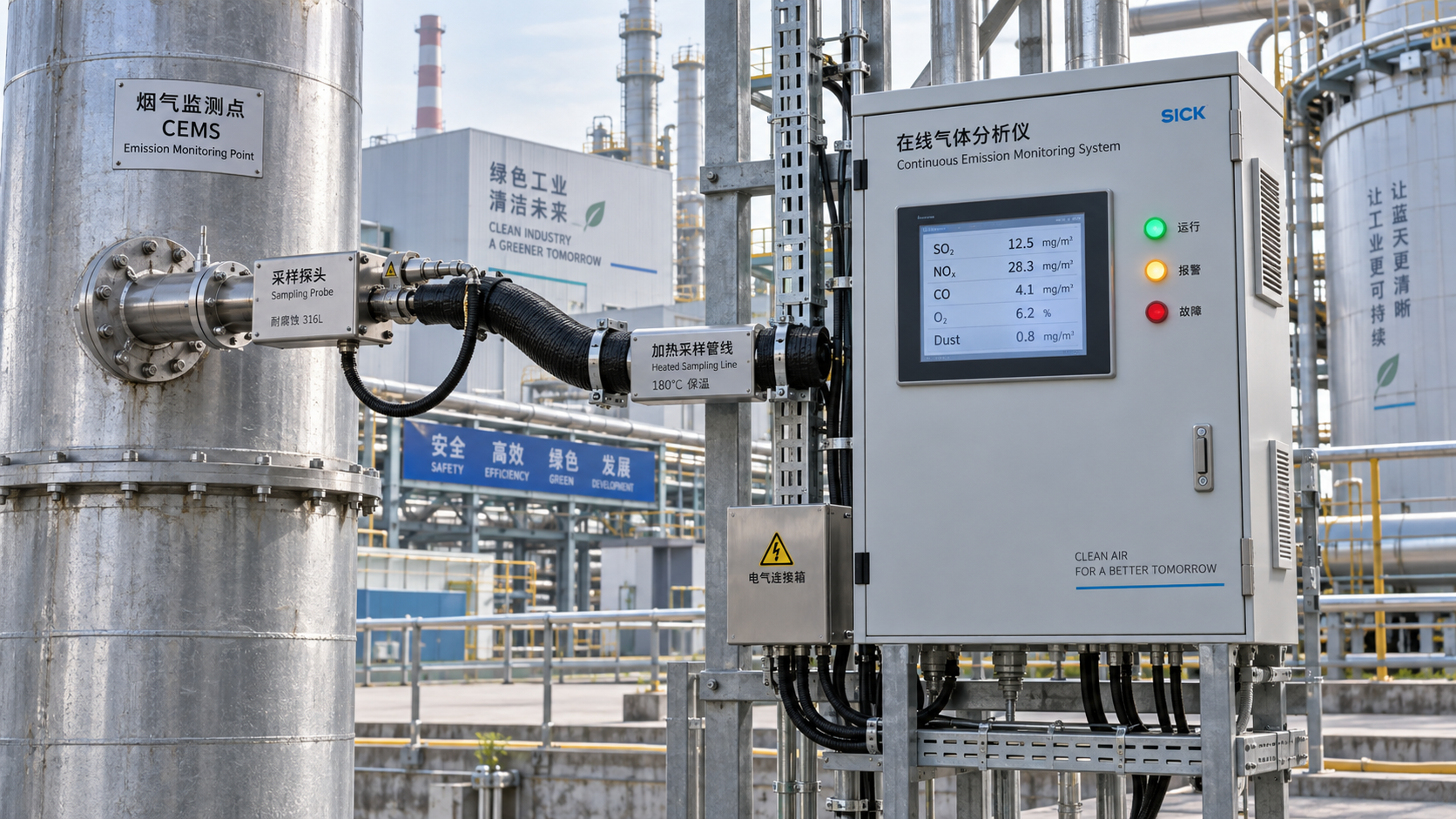
Extractive systems withdraw a sample from the process, transport it through a conditioned sampling system, remove or control moisture and contaminants as needed, and present a stable sample to analyzers installed in a sheltered cabinet or analyzer room. This approach can support multi-component measurement and detailed conditioning, but it introduces potential failure points: probe plugging, leaks, condensate formation, sample-line temperature loss, pump degradation, and changes in soluble gas concentration.
In-situ systems measure directly in the duct or stack, frequently using optical techniques or probes inserted into the gas stream. They avoid long sample lines and may respond quickly to changing process conditions. Their limitations arise from optical path contamination, stack vibration, variable particulate loading, misalignment, temperature extremes, stratification, and cross-interference from changing gas composition. Direct installation does not eliminate maintenance; it changes where the maintenance burden sits.
For many applications, the choice should be based on whether the pollutant is stable through sample transport and whether representative sampling can be achieved. Hot, wet, corrosive, dusty, or chemically reactive streams require particular attention. Gases that dissolve readily in condensate or react on cold surfaces can be under-reported by a poorly designed extractive system. Conversely, a dirty optical path may make an in-situ system difficult to sustain on a source with severe particulate deposition.
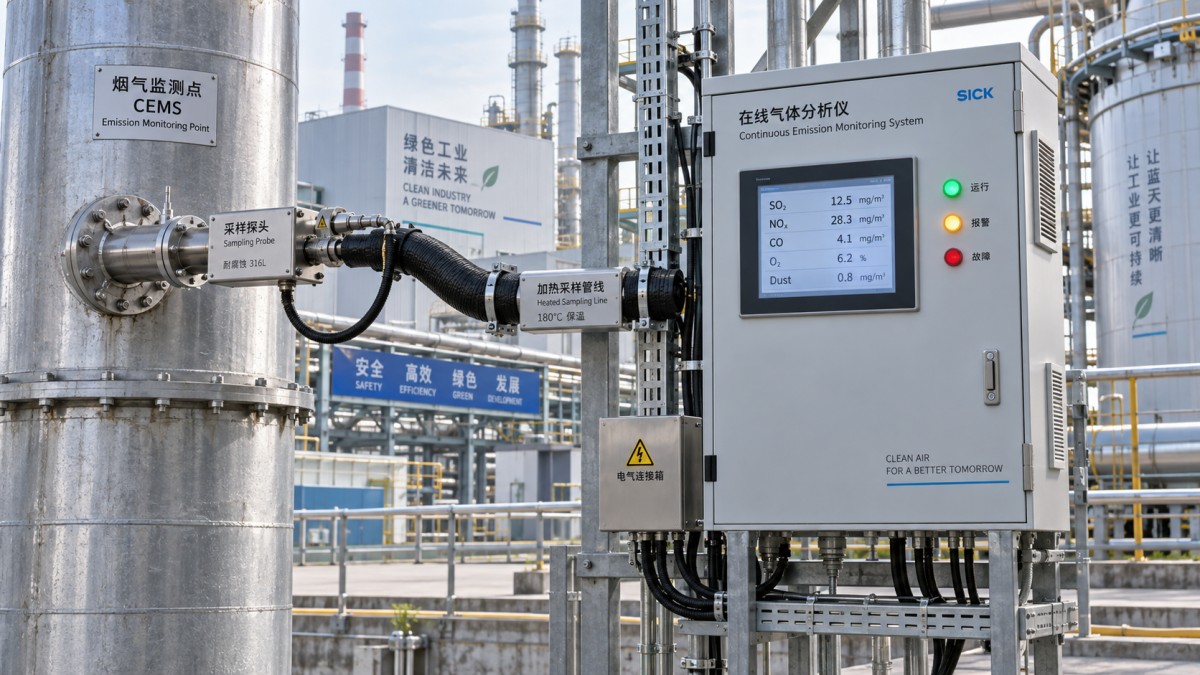
A useful evaluation sequence is to examine the source before reviewing vendor proposals: gas temperature, pressure, moisture, particulate burden, acid gases, condensable materials, velocity profile, access constraints, ambient conditions around the stack, and likely process variability. These conditions determine probe material, filtration, heated-line requirements, sample conditioning, enclosure ratings, purge arrangements, and access-platform design. They should not be treated as later installation details.
Do not separate the analyzer from the sample system
For extractive emissions monitoring systems, the sample system is part of the measurement instrument. A high-quality analyzer cannot recover information lost through condensation, adsorption, dilution, leaks, or delayed transport. Procurement specifications should therefore cover the full chain: probe, filter, heated sample line, pump, cooler or hot-wet path, moisture treatment, flow control, calibration gas introduction points, drain management, and fault monitoring.
Review where calibration gas enters the system. Calibration introduced only at the analyzer validates the analyzer response, but it may not reveal a plugged probe, degraded heated line, sample leak, or transport problem upstream. The appropriate arrangement depends on the applicable method and system design, but the distinction matters when the reported value must represent the emissions source rather than only the analyzer cabinet.
Assess Accuracy in the Context of Range, Interference, and Drift
Accuracy claims are meaningful only when read alongside the expected operating range. Selecting an excessively wide range may reduce useful resolution at the concentrations that matter for compliance. Selecting a narrow range may create over-range conditions during start-up or control failures, precisely when the monitoring system needs to show what occurred.
Specify both the expected normal range and credible high-range excursions. Where appropriate, consider separate ranges, automatic range switching, or a measurement design that maintains adequate performance across the full operating envelope. The preferred approach depends on the reporting rules and whether changes in range affect data treatment or quality assurance.
Cross-sensitivity deserves equal attention. Many analytical principles respond to more than one gas, and the magnitude of interference can change with process conditions. Infrared measurement, ultraviolet techniques, electrochemical cells, paramagnetic oxygen measurement, chemiluminescence, and tunable diode laser methods each have operating strengths and limitations. A technology that performs well in a clean, stable combustion exhaust may behave differently in a process stream containing variable water vapor, hydrocarbons, sulfur compounds, ammonia slip, solvents, or high carbon dioxide concentrations.
Technical evaluation should request a documented interference assessment tied to the actual gas matrix. Generic statements that an analyzer is “interference compensated” are insufficient without clarity on the gases covered, expected concentration levels, compensation method, residual uncertainty, and any operating restrictions. Moisture is especially important because it can affect both physical sample handling and the reported concentration basis.
Drift is another area where datasheet comparisons can mislead. Low stated drift is valuable, but compliance confidence depends on the entire calibration and verification regime: zero and span checks, calibration frequency, automatic calibration capability, gas quality and traceability, alarm handling, and the process used when an audit or calibration reveals a failure. A system that drifts slowly but is difficult to calibrate correctly may create more reporting risk than a design with routine, well-controlled automated checks.
Make Calibration and Maintenance Part of the Selection Decision
An emissions analyzer should be selected for the maintenance program the facility can actually execute. This includes skilled personnel, safe physical access, spare-parts availability, calibration gas logistics, shutdown windows, and the ability to troubleshoot instrument faults without creating long reporting gaps.
Assess routine work by asking operational questions rather than accepting a generic maintenance interval:
- How often will filters, probes, optical windows, sample pumps, dryers, valves, or sensors require inspection or replacement under the expected gas conditions?
- Can calibration and functional checks occur automatically, or do they require personnel at the stack or analyzer shelter?
- What diagnostic signals distinguish an analyzer fault from a sample-system fault or a genuine process excursion?
- Are consumables proprietary, shelf-life limited, or sensitive to storage conditions?
- Can critical components be replaced without a lengthy recommissioning or revalidation process?
- What happens to reported data during calibration, maintenance, loss of sample flow, low purge pressure, invalid reference measurements, or communication loss?
Maintenance burden is often underestimated when a monitoring system is evaluated from a clean-room perspective. A stack installation may require elevated access, confined-space controls, hot-work planning, weather protection, and coordination with production. A modest reduction in routine field intervention can have more operational value than a small improvement in nominal analyzer precision.
Redundancy should also be considered carefully. Duplicate analyzers can improve resilience, but redundancy only helps when the supporting components are also addressed. Two analyzers dependent on one failing sample probe, common heated line, or shared conditioned power supply may still leave the facility without valid data. In other cases, a well-designed spare module, bypass arrangement, or rapid service plan provides a more proportionate response than full duplication.
Evaluate Data Integrity as a Compliance Function
For compliance reporting, the analyzer is only one part of the evidence chain. The monitoring system must create data that can be traced from the measured signal through correction calculations, quality status, averaging, storage, review, and final report generation. Weakness in this chain can undermine otherwise sound measurements.
Technical evaluators should establish what the data acquisition and handling system must do before selecting the analyzer package. At a minimum, the system should distinguish normal measured values from calibration periods, maintenance periods, invalid readings, substituted values where permitted, communication failures, and calculated results outside defined plausibility limits. Raw and processed data should be retained in a way that supports review of how a reported number was produced.
The integration review should cover time synchronization, signal type, communications protocol, tag naming, cybersecurity boundaries, historian connection, alarm routing, and control-system interaction. If emissions data are used to influence process control, the design should maintain a clear distinction between compliance records and control signals. A control-system outage, logic change, or operator override should not silently alter reporting calculations or erase the audit trail.
Configuration management deserves formal treatment. Analyzer ranges, correction factors, calibration values, alarm limits, and calculation formulas can change during normal plant life. The selected platform should support controlled changes, user access management, event logging, backup and restoration, and reviewable configuration records. These features may appear administrative, yet they often determine whether an organization can explain data anomalies months later.
Test Vendor Proposals Against Failure Modes
Vendor submittals often emphasize nominal performance under defined conditions. The more useful review asks how the proposed system responds when those conditions deteriorate. A robust technical bid should describe fault detection and recovery, not only normal operation.
Ask suppliers to explain the response to sample flow loss, plugged filters, low heated-line temperature, condensate carryover, analyzer over-range, calibration gas depletion, probe fouling, power interruption, loss of communications, ambient temperature excursions, and invalid oxygen or moisture readings. The aim is not to demand a system that never fails. It is to understand how quickly failures become visible, whether invalid data are correctly identified, and how long restoration takes.
Installation responsibilities should be equally clear. Many monitoring problems originate in interfaces between instrument supplier, mechanical contractor, electrical contractor, control-system integrator, and site operations team. The technical package should define stack connection requirements, sample line routing, analyzer shelter utilities, instrument air quality, power quality, grounding, drainage, access platforms, lifting needs, environmental protection, and commissioning responsibilities.
Factory testing can establish that equipment operates before shipment, but site acceptance should confirm the installed system as a complete measurement chain. Commissioning plans should include verification of sample transport or optical alignment, calibration functions, alarm handling, data communications, calculation logic, quality flags, and reporting outputs. Where applicable, plan the required performance demonstrations and independent testing early enough that corrective work does not disrupt permit deadlines.
Select for Defensibility Over Feature Count
The best emissions monitoring systems analyzer for compliance reporting is rarely the one with the longest feature list. It is the system whose measurement principle, sample handling, calibration process, data controls, and service model fit the source and reporting obligation closely enough to produce defensible data over time.
A disciplined selection process narrows the decision quickly: define the reportable parameters and rules, characterize the source conditions, choose a viable measurement architecture, test the proposed system against interferences and failure modes, then verify that the facility can maintain and document it. When those five elements align, the analyzer becomes a compliance asset rather than a recurring source of unexplained data gaps and reporting exposure.
Technical Specifications
- How to Select an Emissions Monitoring System Analyzer for Compliance ReportingAuthor :Precision Metrology Expert
- How to Select an Access Control Management System for Multi-Site FacilitiesAuthor :Safety Compliance Lead
- Portable Gas Monitor Calibration: How Often Is It Needed for Safe Confined-Space Work?Author :Precision Metrology Expert
Expert Insights

Chief Security Architect
Dr. Thorne specializes in the intersection of structural engineering and digital resilience. He has advised three G7 governments on industrial infrastructure security.
Related Analysis
- Sep 21, 2026How to Select an Emissions Monitoring System Analyzer for Compliance ReportingAuthor :Precision Metrology Expert
- Sep 20, 2026How to Select an Access Control Management System for Multi-Site FacilitiesAuthor :Safety Compliance Lead
- Sep 19, 2026Portable Gas Monitor Calibration: How Often Is It Needed for Safe Confined-Space Work?Author :Precision Metrology Expert
Core Sector // 01
Security & Safety
- How to Select an Emissions Monitoring System Analyzer for Compliance ReportingAuthor :Precision Metrology Expert

- Portable Gas Monitor Calibration: How Often Is It Needed for Safe Confined-Space Work?Author :Precision Metrology Expert

- What to Check When Sourcing Vibration Meters Wholesale for Industrial MaintenanceAuthor :Precision Metrology Expert

- How to Select Process Control Instruments for Accuracy, Safety, and UptimeAuthor :Precision Metrology Expert

- What Should Standards Compliance Analysis Training Cover Before an Audit?Author :Precision Metrology Expert

- Why Do Pressure Instruments Fail in High-Vibration Sites?Author :Precision Metrology Expert

- Is FM Software Integration Needed for Overseas Instrument Maintenance?Author :Precision Metrology Expert

- What Are the Differences Between Lab and Field Testing Equipment?Author :Precision Metrology Expert