What to Check When Sourcing Vibration Meters Wholesale for Industrial Maintenance
Author
Date Published
Reading Time
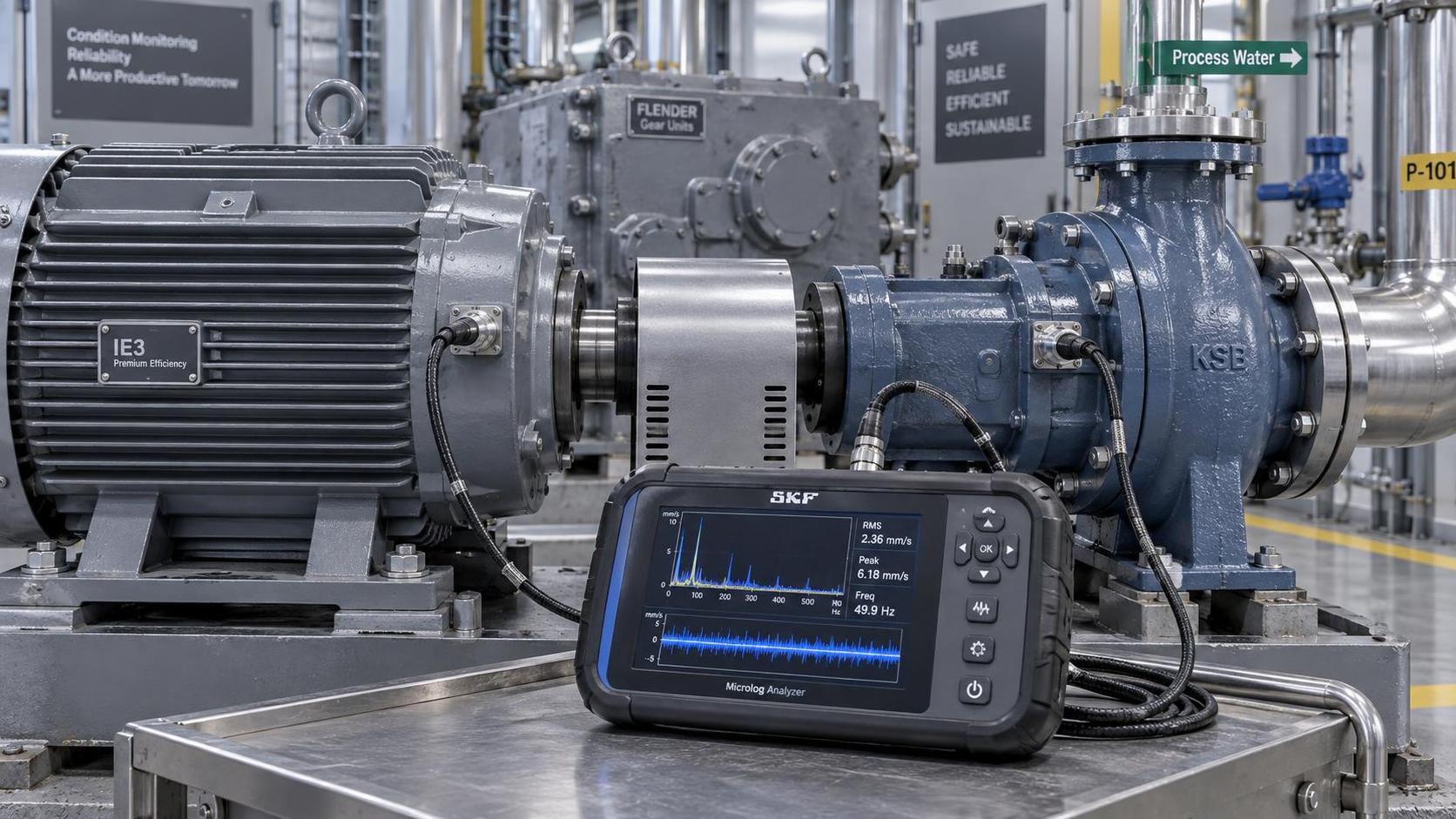
Wholesale vibration meter sourcing for industrial maintenance fails when the purchase is treated as a comparison of display range, advertised accuracy, and unit price. A meter can be inexpensive yet unsuitable for the machine speeds, bearing frequencies, sensor interfaces, electrical environment, or reporting requirements at the site. The result is not merely a replacement purchase: it can be false alarms, missed deterioration, inconsistent readings between shifts, unusable trend data, and maintenance work triggered on weak evidence.
The central buying question is therefore not “Which meter is cheapest in volume?” but “What measurement decision must this instrument support, under what conditions, and how reliably can that decision be repeated over its service life?” That distinction separates a basic screening tool from a device intended to support condition-based maintenance, acceptance checks, route monitoring, or fault diagnosis.
Start with the maintenance decision, not the instrument specification sheet
“Vibration meter” covers equipment with very different capabilities. A simple handheld meter may report overall vibration velocity or acceleration. A more capable portable instrument may collect time waveforms, spectra, bearing-condition indicators, tachometer data, and route-based histories. Neither category is inherently better; the correct choice depends on the consequence of the measurement.
For routine screening of general-purpose motors, fans, pumps, and gearboxes, an overall vibration reading can be useful when readings are taken at repeatable locations and compared over time. For root-cause analysis of bearing damage, imbalance, looseness, misalignment, gear mesh issues, or electrical-frequency-related vibration, a meter that only provides a single overall value is often inadequate. It may detect that a condition has changed without identifying why.
Before requesting quotations, define the actual use cases in operational terms:
- machine types, speed ranges, power ratings, and criticality;
- whether readings are for screening, trending, acceptance, or diagnosis;
- required measurement points and whether access is limited or hazardous;
- the parameters needed: acceleration, velocity, displacement, frequency spectrum, envelope/demodulation, phase, or temperature;
- the expected reporting path, including manual records, onboard storage, USB export, proprietary software, or integration with a maintenance system;
- whether the instrument must match an existing monitoring program or sensor population.
This definition prevents a common wholesale error: ordering a large quantity of general vibration meters for an asset program that actually requires a smaller number of analyzers and a separate fleet of screening instruments. Conversely, purchasing advanced analyzers for simple periodic checks can lock the organization into higher training, software, calibration, and support costs without improving maintenance decisions.
Check what “accuracy” actually means
An advertised accuracy figure is not enough unless the quotation and technical documentation state the measured quantity, operating range, frequency range, reference conditions, and sensor used. A claim such as “±5% accuracy” is incomplete if it does not specify whether it applies to acceleration, velocity, or displacement; whether it applies across the full frequency band; and whether it includes the sensor, cable, and signal conditioning chain.
Industrial vibration is commonly expressed in:
- Acceleration, typically in m/s² or g, which is responsive to higher-frequency content and is frequently used for bearing and impact-related indications.
- Velocity, typically mm/s RMS, which is widely used for assessing general machine vibration severity in many rotating-equipment applications.
- Displacement, typically µm or mils, which can be relevant at low frequencies and in shaft-relative measurement arrangements.
These values cannot be treated as interchangeable. A meter may derive velocity from an acceleration signal through integration, but the validity of that calculation depends on the sensor response, filtering, low-frequency stability, and instrument processing. A wide-looking frequency range on a catalogue page does not prove that each reported parameter remains accurate and stable across that range.
Frequency response deserves particular attention. A low-cost handheld unit may be appropriate for broad overall-velocity checks on standard rotating equipment but may have insufficient low-frequency performance for slow-speed machinery or insufficient high-frequency response for meaningful bearing-envelope work. If critical assets include slow-turning conveyors, large mixers, cooling-tower drives, reciprocating equipment, high-speed spindles, or precision gearboxes, request the full frequency specifications for each measurement mode rather than accepting one headline range.
Ask whether the meter reports RMS, peak, peak-to-peak, or crest factor, and whether the chosen value is fixed or selectable. Trending only works when the same parameter, bandwidth, mounting method, and measurement point are maintained. A low reading obtained with one filter setting cannot be directly compared with a historical reading generated through a different signal path.
Sensor compatibility is part of the instrument purchase
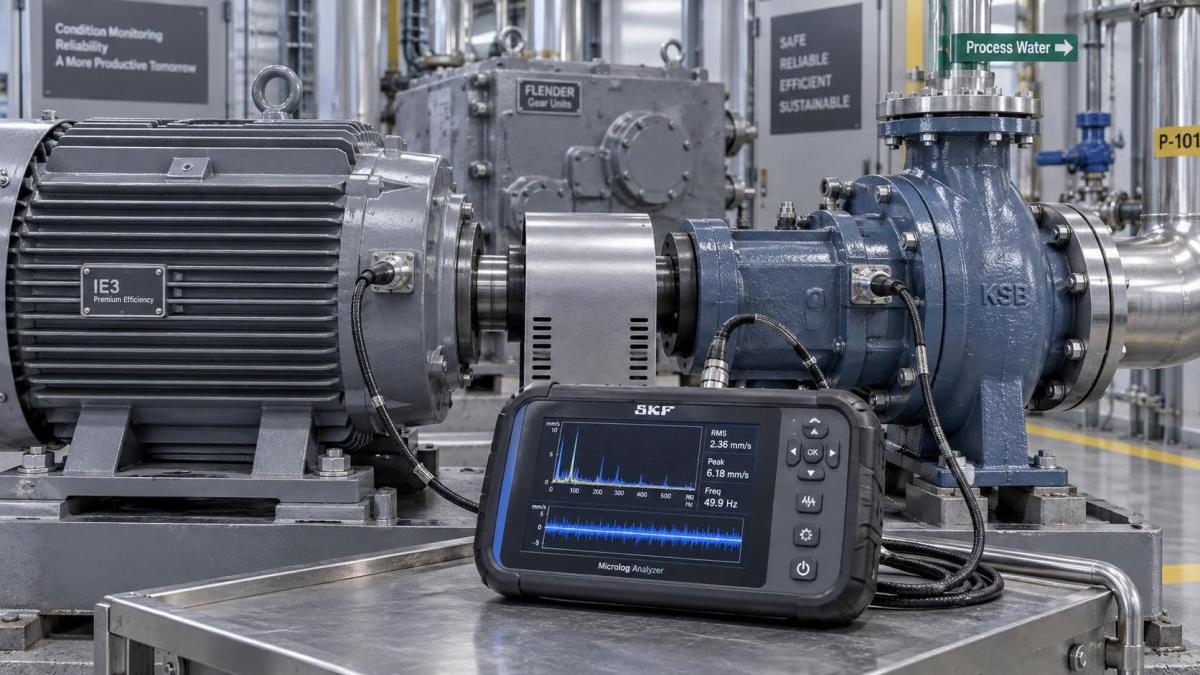
The handheld display unit is only one element of the measurement system. The accelerometer, mounting method, cable, connector, and power arrangement determine whether the signal reaching the meter is usable. Wholesale packages should be evaluated as complete measurement configurations, not as a meter plus an assumed universal probe.
Many industrial portable systems use IEPE/ICP-type accelerometers, which require constant-current excitation. Other systems use low-impedance voltage-output sensors, charge-output accelerometers, or integrated probes designed only for a specific instrument. A meter that accepts a sensor connector mechanically may still be electrically incompatible. Verify excitation current and voltage, acceptable sensor sensitivity, input type, maximum input level, connector standard, cable length limitations, and whether the included probe has a traceable sensitivity value.
Mounting has an equally large effect on data quality. A magnet-mounted accelerometer is convenient for route inspections, but the mounting surface, magnet strength, curvature, cleanliness, and high-frequency requirement affect the result. A hand-held probe is useful for rapid checks but is less repeatable than a properly mounted sensor. Stud mounting generally provides better high-frequency coupling when permanent or semi-permanent points are justified. A wholesale order that includes only generic probes may create inconsistent results even when the meter electronics are adequate.
For repeatable routes, confirm the availability of compatible magnets, extension cables, right-angle connectors, sensor mounting pads, protective caps, and replacement probes. These accessories are not minor line items. If they cannot be replenished under stable part numbers, an apparently economical bulk purchase can become difficult to sustain.
Do not confuse machine evaluation guidance with meter compliance
Vibration severity guidance for machinery is often associated with the ISO 20816 series, which superseded much of the earlier ISO 10816 series. These documents concern evaluation of machine vibration in specified contexts; they do not make a handheld meter “ISO 20816 certified.” A supplier statement that uses this wording should be clarified. The relevant question is whether the meter can collect the required measurement quantity, bandwidth, and mounting-condition data needed for the maintenance program’s chosen evaluation method.
Instrument compliance should be assessed separately. Depending on the destination market and intended use, relevant documentation may include:
- CE documentation for equipment placed on the European Economic Area market, where applicable;
- electrical safety evidence aligned with standards such as IEC 61010-1, where the product design falls within its scope;
- electromagnetic compatibility evidence, often considered against applicable parts of IEC 61326 for measurement, control, and laboratory equipment;
- RoHS declarations where required for the relevant market and product category;
- ATEX and/or IECEx certification for equipment intended for use in potentially explosive atmospheres.
CE is a conformity-marking framework, not a single third-party certificate that automatically proves field suitability. Likewise, a supplier’s general ISO 9001 certificate may indicate that a quality management system has been certified, but it does not validate the accuracy of a specific model or shipment. Documentation should identify the exact manufacturer, model, applicable standards, issuing body where relevant, and scope. Generic certificates, edited logos, or reports referring to another model should be treated as unresolved compliance risk.
Hazardous-area use requires particular discipline. A standard portable vibration meter should not be assumed suitable near flammable gas, vapor, or combustible dust simply because it is rugged or battery powered. The protection concept, equipment marking, temperature class, gas or dust group, zone classification, and permitted ambient temperature must match the installation’s hazardous-area requirements. If the operational procedure requires measurements in such locations, certification needs to be confirmed before commercial terms are finalized.
Durability claims need to be converted into testable conditions
Industrial maintenance instruments are exposed to oil mist, dust, dropped tools, vibration, outdoor temperature swings, electrical noise, and imperfect handling. “Rugged” is not a purchasing specification. Require the supplier to state enclosure rating, operating and storage temperature ranges, humidity limits, drop or shock test basis if claimed, battery type, charging arrangement, screen protection, and expected availability of consumable components.
An IP rating can be helpful, but only when tied to the exact device configuration. It does not prove resistance to solvents, conductive dust, salt-laden air, high-pressure washdown, or repeated mechanical shock. For outdoor and process-plant work, connector protection and cable strain relief can be more consequential than the handheld unit’s enclosure rating. For workshop use, replaceable batteries and a readable display under varied lighting may matter more than a high IP rating.
Battery decisions should also be made at fleet level. Rechargeable proprietary packs can simplify charging but create dependency on a specific supplier. Standard replaceable cells can be easier to support at dispersed sites but may have limitations for runtime, transport policy, or low-temperature performance. Confirm whether batteries are included, whether spares can be shipped internationally, and whether charging plugs and power supplies match the destination country.
Calibration support determines whether readings remain defensible
A calibration certificate supplied at shipment is not the same as a practical calibration program. The certificate should identify the instrument and sensor by serial number, list measured points or results, state the date, and identify the calibration method or reference. Where traceability is important, determine whether calibration is performed by a laboratory accredited to ISO/IEC 17025 for the relevant scope. Accreditation must cover the measurement concerned; a laboratory’s general accreditation status alone is not enough.
Calibration intervals should follow internal quality requirements, instrument criticality, manufacturer recommendations, operating conditions, and any contractual or regulated obligations. A single fixed annual interval is not automatically correct for every application. More importantly, the supplier should be able to explain turnaround time, repair handling, out-of-tolerance reporting, replacement-unit availability, and whether calibration can be arranged near the operating region.
For a distributed asset base, shipping every meter and sensor back to the country of manufacture can create long periods without equipment. That exposure may justify buying spare units, using regional service providers, or choosing instruments compatible with locally supported calibration channels. Calibration cost, freight, customs processing, and downtime should be included in the sourcing comparison.
Evaluate software, data ownership, and continuity before placing a volume order
A meter that produces sound readings but cannot export usable data may be a poor long-term maintenance tool. Confirm whether the device stores only a displayed overall value or also retains spectra, waveforms, photographs, route identifiers, timestamps, and measurement settings. For diagnostic work, the ability to retrieve raw or near-raw data matters when an alarm needs independent review.
Software licensing can alter the economics of vibration meter wholesale substantially. Ask whether desktop software, mobile applications, cloud storage, firmware updates, reporting modules, and additional user accounts are included, subscription-based, region-limited, or tied to each device. Check whether historical data remains accessible if a subscription expires or a product line is discontinued.
Data export should be demonstrated rather than assumed. CSV export may be sufficient for overall readings; diagnostic programs may require a format that preserves spectra and acquisition settings. If integration with a computerized maintenance management system is required, establish whether the supplier provides a documented API, supported import/export method, or only manual report generation. Avoid accepting a statement that the system is “compatible” without defining the actual workflow.
Compare landed lifecycle cost rather than quoted unit price
The wholesale price is only one component of cost. A useful comparison includes the meter, sensor package, probes, mounting accessories, hard case, software license, calibration certificate, spare batteries, charging equipment, freight, insurance, duties, taxes, commissioning, training materials, warranty terms, and expected repair path. In cross-border purchases, documentation errors and battery transport restrictions can also affect delivery cost and timing.
Price breaks can be misleading where the quoted package excludes necessary sensors or where one meter is supplied with a low-cost probe that cannot meet the required frequency response. The correct basis is a comparable deployed kit: instrument, specified sensor, cable, mounting hardware, required software, calibration evidence, and service obligations.
Consider the cost of measurement inconsistency as well. If instruments from different batches use different sensors, firmware, bandwidth settings, or reporting definitions, trend data can become fragmented. A lower purchase price does not compensate for a monitoring program that cannot reliably compare this month’s reading with last month’s baseline.
Supplier evaluation should include production control, not just catalogue breadth
For larger orders, request evidence of model-level quality control: incoming inspection of sensors, functional testing, serial-number traceability, final inspection records, firmware version control, and procedures for nonconforming units. The depth of evidence should reflect the importance of the application. A basic screening-meter order may require a simpler review than instruments used to support decisions on critical rotating assets.
A pre-shipment sample or pilot batch is often more informative than catalogue claims. It should be checked against the intended application: display stability, sensor fit, cable quality, mounting repeatability, data export, charging, language settings, supplied documentation, and consistency with the approved sample. For multi-unit orders, define acceptance criteria before production. This reduces disputes over what constitutes a functional meter.
Warranty language needs practical interpretation. Confirm the warranty start date, exclusions for sensors and cables, responsibility for return freight, repair location, average service path, and availability of replacement parts. A warranty that requires expensive international return shipping or provides no repair route after the coverage period has limited operational value.
A sound sourcing decision for vibration meters is built around measurement integrity and supportability. The right wholesale package is the one that produces repeatable data for the intended machinery, meets the applicable safety and compliance conditions, can be calibrated and repaired without excessive interruption, and remains technically consistent as the maintenance program develops. Unit price matters, but it should be assessed only after those conditions are secured.
Technical Specifications
- How to Select Electronic Hotel Key Card Locks for Guest Rooms and Staff AreasAuthor :Safety Compliance Lead
- How to Select Lab Instruments for Reliable Chemical Analysis WorkflowsAuthor :Precision Metrology Expert
- How to Size a UPS for Server Rooms: Load, Runtime, and Redundancy FactorsAuthor :Grid Infrastructure Analyst
Expert Insights

Chief Security Architect
Dr. Thorne specializes in the intersection of structural engineering and digital resilience. He has advised three G7 governments on industrial infrastructure security.
Related Analysis
- Sep 17, 2026How to Select Electronic Hotel Key Card Locks for Guest Rooms and Staff AreasAuthor :Safety Compliance Lead
- Sep 16, 2026How to Select Lab Instruments for Reliable Chemical Analysis WorkflowsAuthor :Precision Metrology Expert
- Sep 15, 2026How to Size a UPS for Server Rooms: Load, Runtime, and Redundancy FactorsAuthor :Grid Infrastructure Analyst
Core Sector // 01
Security & Safety
- What to Check When Sourcing Vibration Meters Wholesale for Industrial MaintenanceAuthor :Precision Metrology Expert

- How to Select Process Control Instruments for Accuracy, Safety, and UptimeAuthor :Precision Metrology Expert

- What Should Standards Compliance Analysis Training Cover Before an Audit?Author :Precision Metrology Expert

- Why Do Pressure Instruments Fail in High-Vibration Sites?Author :Precision Metrology Expert

- Is FM Software Integration Needed for Overseas Instrument Maintenance?Author :Precision Metrology Expert

- What Are the Differences Between Lab and Field Testing Equipment?Author :Precision Metrology Expert

- Is Independent Testing Necessary for Critical Safety Components?Author :Precision Metrology Expert

- How to Validate Industrial Application Scenarios Before ProcurementAuthor :Precision Metrology Expert