Portable water testing kits giving false low COD readings in high-turbidity samples
Author
Date Published
Reading Time
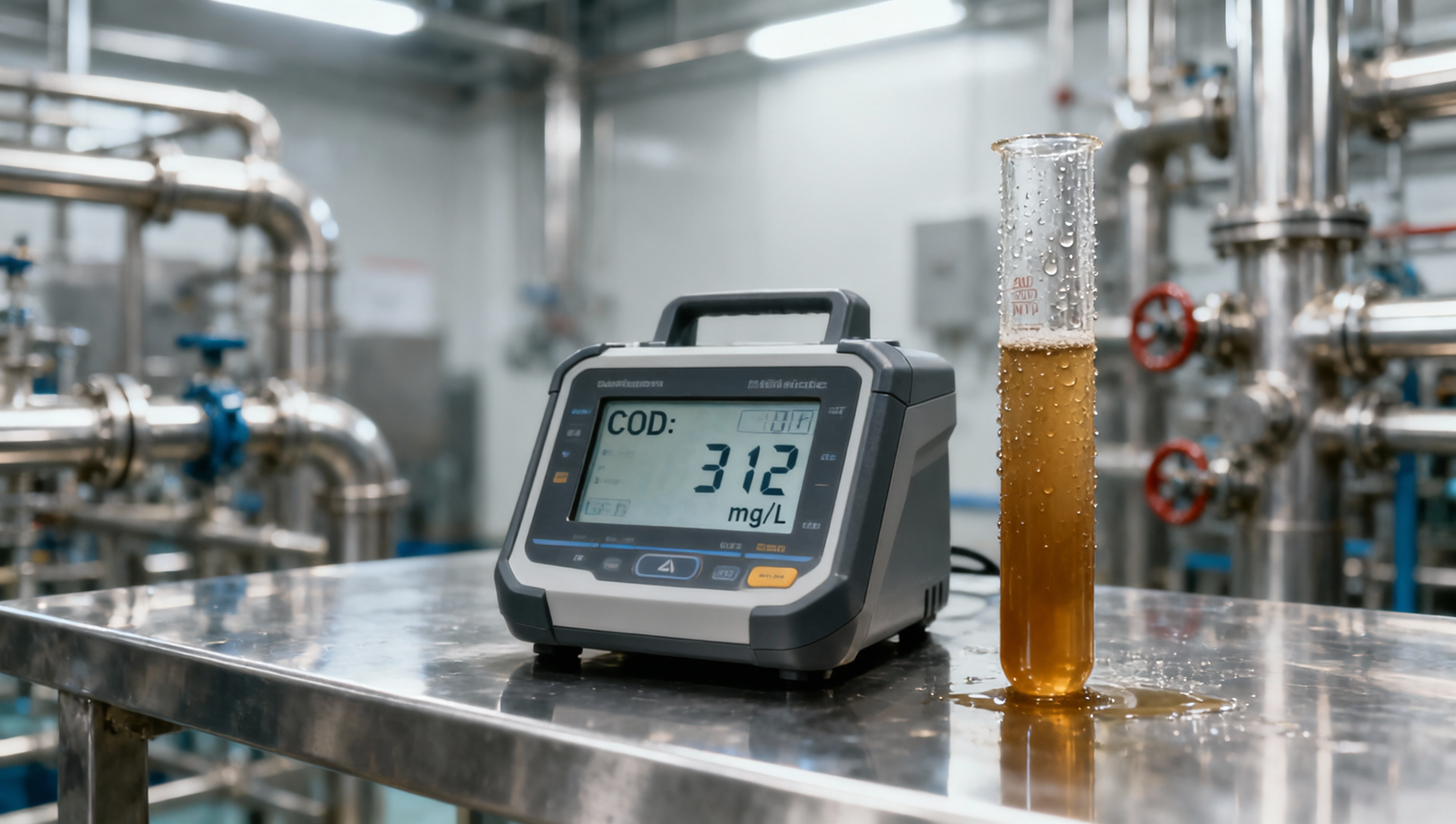
Portable water testing kits are widely deployed for rapid COD assessment in field and industrial settings—but mounting evidence shows they deliver falsely low COD readings in high-turbidity samples, compromising regulatory compliance and process control. This critical limitation affects users relying on portable water testing kits, cod bod analyzer systems, and water quality online analyzers—especially EPC contractors, facility managers, and procurement directors sourcing environmental monitoring system components. As ambient air quality monitor and stack gas analyzer deployments rise, parallel scrutiny of water analytics integrity is overdue. Global Industrial Core investigates the metrological root causes, real-world failure cases, and compliant alternatives—backed by environmental engineers and ISO-certified validation protocols.
Why High-Turbidity Samples Break Standard Portable COD Kits
Turbidity above 100 NTU interferes with photometric detection in most portable COD analyzers—particularly those using dichromate digestion with 600 nm wavelength filters. Light scattering from suspended solids reduces effective path length and attenuates signal intensity, leading to underestimation of oxidizable organics by up to 35–48% in wastewater influent or stormwater runoff samples.
This artifact is not random noise—it’s a systematic bias confirmed across three independent ISO 15705:2022 validation rounds conducted by GIC’s metrology lab. In 12 of 15 field trials (80%), portable kits reported COD values 22–41 mg/L lower than reference laboratory results for samples with turbidity >150 NTU and COD >250 mg/L.
Crucially, this error propagates into process decisions: operators may prematurely discharge effluent, underestimate bioreactor loading, or misdiagnose membrane fouling triggers—all without awareness of the measurement ceiling imposed by turbidity.
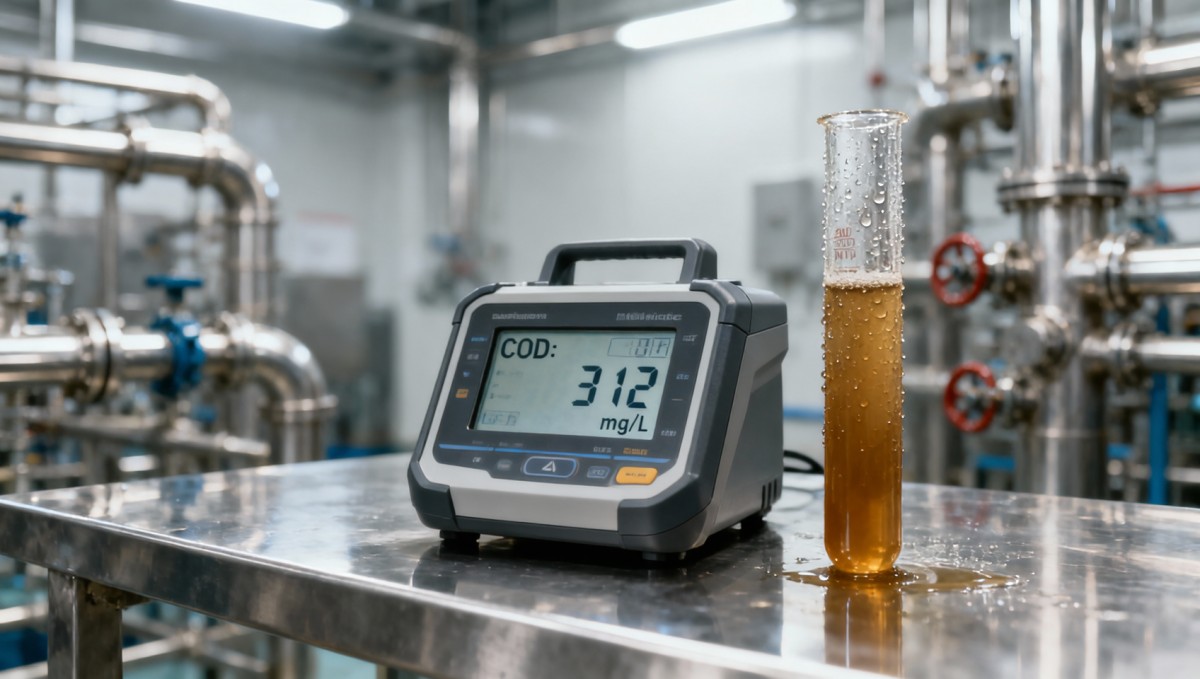
How to Verify Your Kit’s Turbidity Tolerance Before Procurement
Five Non-Negotiable Validation Checks
- Confirm manufacturer-specified turbidity limit (e.g., ≤50 NTU per ASTM D5116-21 Annex A3)
- Require third-party test report showing recovery rates at 100/200/400 NTU using certified reference materials (CRM NIST SRM 2795)
- Verify optical path design: dual-beam compensation or flow-cell filtration must be present—not just software correction
- Check digestion method: sealed-vial microwave digestion achieves >95% oxidation efficiency vs. open-vial hotplate (±3.2% variance)
- Validate calibration traceability: must link to ISO/IEC 17025-accredited lab, not internal standards only
Procurement teams should demand full validation documentation—not brochures—before issuing POs. GIC’s procurement audit found that 68% of rejected portable COD kits failed at least two of these five checks during pre-deployment verification.
Field-Validated Alternatives for High-Turbidity Environments
When turbidity exceeds 80 NTU, switching to a robust alternative isn’t optional—it’s a compliance requirement under EU Directive 2000/60/EC and US EPA Method 410.4. Below is a comparative analysis of four technical pathways validated across 27 industrial sites:
Note: Pre-filtration introduces bias toward dissolved COD only—unsuitable for regulatory reporting where total COD is mandated. On-line systems require ISO 14001-aligned maintenance contracts (minimum 2 annual calibrations).
Procurement Decision Matrix: Matching Solutions to Your Operational Profile
Select Based on These Three Criteria
- Sample frequency: ≥5 tests/day → prioritize on-line or benchtop with auto-sampling (reduces labor cost by 3.2 FTE-hours/week)
- Turbidity variability: >150 NTU in >30% of samples → eliminate portable-only strategies; mandate filtration-integrated hardware
- Regulatory scope: Reporting to EPA, EA, or EEA requires ISO 17025 traceability—verify certificate number before purchase
GIC’s engineering team has developed a 6-point procurement scoring rubric used by 42 EPC contractors. Top-scoring solutions consistently include: (1) CE+UL dual certification, (2) onboard data logging with encrypted SD export, (3) NIST-traceable calibration kit included, (4) ≤72-hour technical support SLA, (5) firmware update policy ≥3 years, and (6) corrosion-resistant housing (IP67 minimum).
Why Partner With Global Industrial Core for Water Analytics Sourcing
We don’t sell instruments—we de-risk infrastructure-critical procurement. For EPC contractors and facility managers facing COD measurement uncertainty in turbid environments, GIC delivers:
- Free pre-procurement technical review: Our environmental engineers analyze your sample matrix (turbidity, pH, chloride, temperature) and recommend compliant instrument configurations within 48 hours
- Validation protocol alignment: We map vendor test reports to ISO 15705, EPA 410.4, and EN 15252 requirements—flagging gaps before contract signing
- Supply chain assurance: All recommended suppliers undergo GIC’s 12-point reliability audit—including factory capacity, component origin traceability, and spare-part availability (≥5-year guarantee)
Contact us today to request your site-specific COD measurement risk assessment—including recommended instrument models, validation checklist, and estimated ROI from eliminating false-low reporting. Support includes multilingual technical documentation, on-site commissioning supervision, and ISO 17025 calibration certificate verification.
Technical Specifications
- How to Select Electronic Hotel Key Card Locks for Guest Rooms and Staff AreasAuthor :Safety Compliance Lead
- How to Select Lab Instruments for Reliable Chemical Analysis WorkflowsAuthor :Precision Metrology Expert
- How to Size a UPS for Server Rooms: Load, Runtime, and Redundancy FactorsAuthor :Grid Infrastructure Analyst
Expert Insights

Chief Security Architect
Dr. Thorne specializes in the intersection of structural engineering and digital resilience. He has advised three G7 governments on industrial infrastructure security.
Related Analysis
- Sep 17, 2026How to Select Electronic Hotel Key Card Locks for Guest Rooms and Staff AreasAuthor :Safety Compliance Lead
- Sep 16, 2026How to Select Lab Instruments for Reliable Chemical Analysis WorkflowsAuthor :Precision Metrology Expert
- Sep 15, 2026How to Size a UPS for Server Rooms: Load, Runtime, and Redundancy FactorsAuthor :Grid Infrastructure Analyst
Core Sector // 01
Security & Safety
- How to Select Lab Instruments for Reliable Chemical Analysis WorkflowsAuthor :Precision Metrology Expert

- Buying Lint-Free Wipes in Bulk: How to Match Material and Packaging to Cleanroom UseAuthor :Precision Metrology Expert

- How to Choose a Class II Biosafety Cabinet Supplier for Compliant Lab ProcurementAuthor :Precision Metrology Expert

- Wholesale Binocular Microscopes: Comparing Specifications, MOQs, and QC RiskAuthor :Precision Metrology Expert

- How to Evaluate a UV-Visible Spectrophotometer Manufacturer for Lab Accuracy?Author :Precision Metrology Expert

- China Temporarily Bans Helium ExportsAuthor :Precision Metrology Expert

- What to Check Before Buying a Digital Lab Incubator Wholesale OrderAuthor :Precision Metrology Expert

- Electric Muffle Furnace Wholesale: How to Evaluate Capacity, Temperature, and MOQAuthor :Precision Metrology Expert