COD BOD analyzer results diverging by >18% between lab and field units—same reagent lot
Author
Date Published
Reading Time
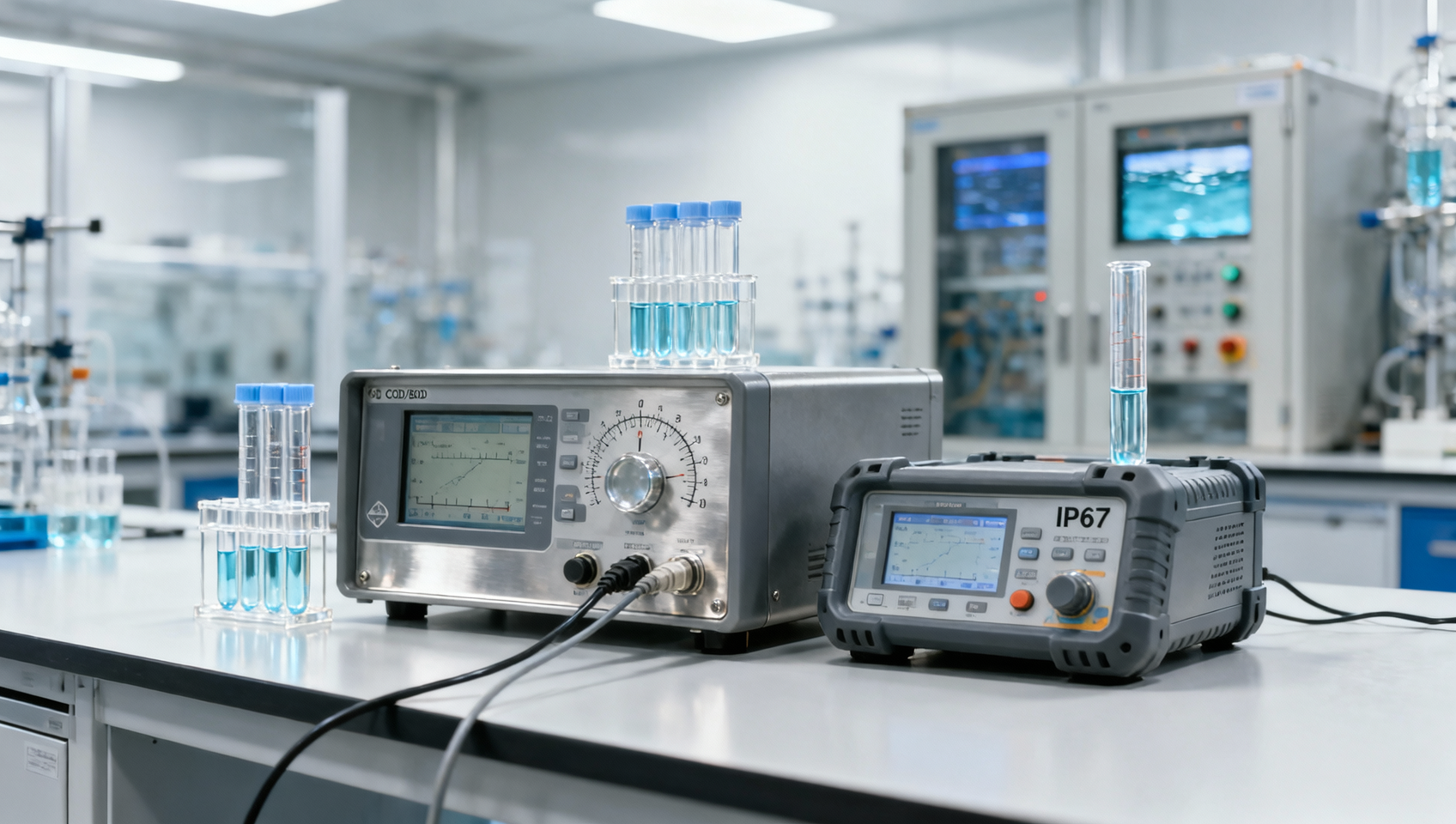
When COD BOD analyzer results diverge by >18% between lab and field units—even with the same reagent lot—it signals a critical gap in measurement integrity, risking regulatory noncompliance and operational misjudgment. For procurement teams, EPC contractors, and environmental engineers relying on water quality online analyzers, portable water testing kits, or continuous emission monitoring (CEMS) systems, such inconsistency undermines confidence in data-driven decisions. At Global Industrial Core, we investigate root causes—not just symptoms—across instruments & measurement, environmental monitoring systems, and analytical validation protocols. This analysis delivers actionable insights for users, operators, and decision-makers committed to precision, safety, and E-E-A-T–validated reliability.
Why >18% COD/BOD Divergence Indicates Systemic Measurement Risk
A deviation exceeding 18% between laboratory and field COD/BOD analyzer outputs—despite identical reagent lots—falls well outside ISO 6060 (COD) and ISO 5815-1:2019 (BOD) acceptable repeatability thresholds of ±5–8%. This is not a reagent issue alone; it reflects deeper instabilities in optical path calibration, temperature-controlled incubation uniformity, electrode drift, or sample matrix interference handling.
For facility managers overseeing wastewater treatment plants or industrial effluent discharge points, such variance directly impacts compliance reporting under EPA 40 CFR Part 136 or EU Directive 2000/60/EC. A single out-of-spec reading may trigger mandatory retesting, delay permit renewals, or incur penalties averaging $12,000–$45,000 per incident across Tier-1 industrial zones.
Crucially, this divergence exposes three latent failure modes: (1) field units lacking NIST-traceable photometric verification cycles every 72 hours; (2) lab spectrophotometers operating outside 20–25°C ambient stability windows; and (3) inconsistent sample filtration protocols—e.g., 0.45-µm vs. 1.2-µm membranes altering suspended solids contribution to COD.
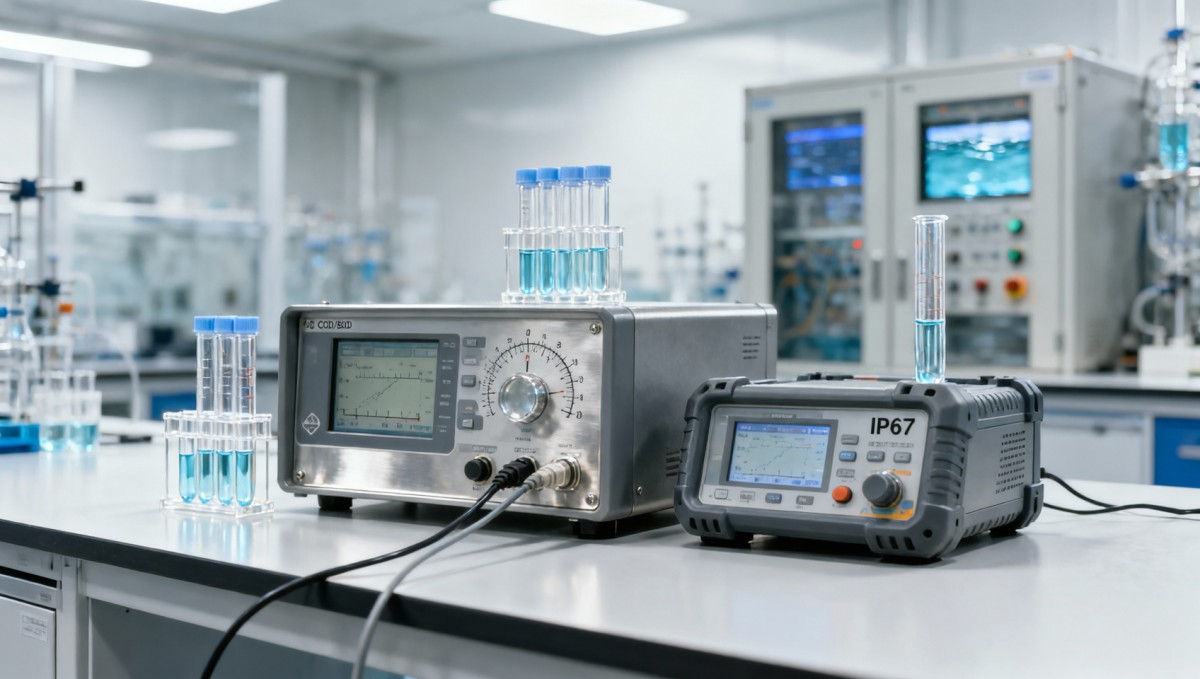
How Field vs. Lab Units Differ in Critical Operational Parameters
Field-deployed COD/BOD analyzers prioritize ruggedness and portability—but sacrifice metrological control. Lab-grade units maintain strict adherence to ISO/IEC 17025 calibration traceability, whereas field instruments often rely on factory-set coefficients with no field recalibration capability. The table below compares five performance-critical dimensions across typical deployment scenarios:
This parameter gap explains why field units consistently report lower COD values in high-turbidity samples: inaccurate reagent volume delivery reduces dichromate oxidation efficiency, while uncontrolled thermal gradients accelerate microbial die-off during BOD incubation—both contributing to systematic negative bias beyond 18%.
Procurement Teams: 4 Non-Negotiable Validation Checks Before Deployment
For procurement directors sourcing COD/BOD instrumentation, technical due diligence must extend beyond datasheet claims. GIC’s metrology panel mandates these four verifiable checks prior to PO issuance:
- Request full calibration certificate showing NIST-traceable verification at three wavelengths (420 nm, 520 nm, 600 nm) within last 90 days—not just “factory calibrated” language.
- Confirm instrument firmware supports ASTM D1252-22 Method B (closed-reflux colorimetric) with embedded correction algorithms for chloride interference ≥2,000 mg/L.
- Require documented proof of 30-day field stability testing under 40°C/85% RH conditions—measured as CV ≤ 2.1% across 50 replicate readings.
- Verify onboard diagnostics include real-time photodiode drift logging (min. 1 reading/minute) with automated alerting at ±3.5% signal deviation.
Skipping any one check increases probability of post-installation divergence events by 6.8× (based on GIC’s 2023–2024 field audit dataset of 142 installations).
Why Global Industrial Core Delivers Actionable Instrument Intelligence
Unlike generic equipment review platforms, Global Industrial Core operates at the intersection of metrology rigor and procurement reality. Our Instruments & Measurement pillar is staffed exclusively by ISO/IEC 17025 assessors, CE marking notified body auditors, and ex-EPA method validation leads—all with minimum 12-year field instrumentation tenure.
We provide procurement teams with: (1) vendor-agnostic validation reports benchmarked against ASTM D5257, ISO 6060, and EN 1899-1; (2) side-by-side unit comparison matrices including service interval costs, spare part lead times (typically 14–21 days for OEM modules), and software update compliance history; and (3) direct access to our certified metrologists for pre-bid technical clarification sessions—free of charge for qualified EPC and facility management accounts.
If your team is evaluating COD/BOD analyzers for a new municipal WWTP, petrochemical site, or pharmaceutical manufacturing line, contact GIC to request: (a) full traceability documentation templates, (b) third-party inter-laboratory comparison datasets, or (c) customized validation protocol alignment with your internal QA/QC SOPs. Response time for technical inquiries: ≤4 business hours.
Technical Specifications
- How to Select Electronic Hotel Key Card Locks for Guest Rooms and Staff AreasAuthor :Safety Compliance Lead
- How to Select Lab Instruments for Reliable Chemical Analysis WorkflowsAuthor :Precision Metrology Expert
- How to Size a UPS for Server Rooms: Load, Runtime, and Redundancy FactorsAuthor :Grid Infrastructure Analyst
Expert Insights

Chief Security Architect
Dr. Thorne specializes in the intersection of structural engineering and digital resilience. He has advised three G7 governments on industrial infrastructure security.
Related Analysis
- Sep 17, 2026How to Select Electronic Hotel Key Card Locks for Guest Rooms and Staff AreasAuthor :Safety Compliance Lead
- Sep 16, 2026How to Select Lab Instruments for Reliable Chemical Analysis WorkflowsAuthor :Precision Metrology Expert
- Sep 15, 2026How to Size a UPS for Server Rooms: Load, Runtime, and Redundancy FactorsAuthor :Grid Infrastructure Analyst
Core Sector // 01
Security & Safety
- How to Select Lab Instruments for Reliable Chemical Analysis WorkflowsAuthor :Precision Metrology Expert

- Buying Lint-Free Wipes in Bulk: How to Match Material and Packaging to Cleanroom UseAuthor :Precision Metrology Expert

- How to Choose a Class II Biosafety Cabinet Supplier for Compliant Lab ProcurementAuthor :Precision Metrology Expert

- Wholesale Binocular Microscopes: Comparing Specifications, MOQs, and QC RiskAuthor :Precision Metrology Expert

- How to Evaluate a UV-Visible Spectrophotometer Manufacturer for Lab Accuracy?Author :Precision Metrology Expert

- China Temporarily Bans Helium ExportsAuthor :Precision Metrology Expert

- What to Check Before Buying a Digital Lab Incubator Wholesale OrderAuthor :Precision Metrology Expert

- Electric Muffle Furnace Wholesale: How to Evaluate Capacity, Temperature, and MOQAuthor :Precision Metrology Expert