China Customs Opens Fast Lane for Lab Exports
Author
Date Published
Reading Time

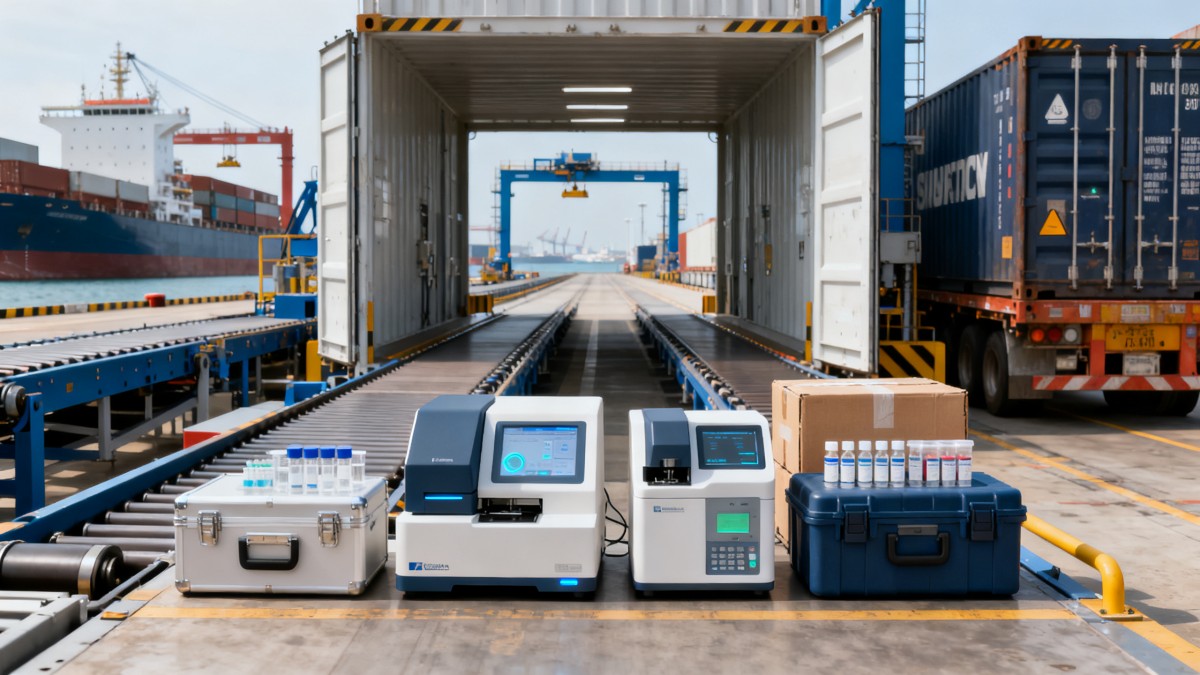
On July 10, 2026, China Customs put a priority clearance channel into effect for certain laboratory and analytical equipment shipped to RCEP member markets. The measure covers laboratory analyzers, spectrometers, and calibration standards under HS codes 9027 and 9031, and it is drawing attention from exporters, procurement teams, compliance staff, and logistics providers because it links much faster customs handling with stricter document readiness before shipment.
What Has Taken Effect at the Border
According to the information provided, the new arrangement became effective on July 10, 2026. It applies to exports to RCEP members involving laboratory analyzers, spectrometers, and calibration standards classified under HS codes 9027 and 9031.
The core operational change is the activation of a priority customs clearance lane. The stated result is a reduction in average port dwell time from 72 hours to less than 12 hours.
The arrangement also includes documentation conditions. To use the channel, exporters must submit ISO/IEC 17025 accreditation evidence in advance and provide validated end-use declarations.
Where the Immediate Impact May Be Felt
Exporters of analytical and testing equipment
From an industry perspective, these companies are the most directly affected because the measure applies to the products they ship. The potential impact is concentrated in shipment planning, customs filing preparation, and customer delivery timing. What deserves closer attention is whether product classification, accreditation evidence, and end-use documentation are all aligned before cargo reaches port.
Compliance and documentation teams
Analysis shows that the faster clearance window does not remove procedural discipline; it raises the value of getting documents right earlier. For teams handling export compliance, the practical effect is likely to show up in pre-submission workflows, document verification, and internal coordination between quality, regulatory, and trade functions.
Freight forwarders and customs service providers
Observably, supply chain service providers may see a shift in how shipments are scheduled and handed off. If average dwell time falls from 72 hours to under 12 hours, the business impact may appear in booking cadence, port-side timing, and communication with exporters and overseas buyers. What they need to watch is whether clients are fully prepared to meet the pre-submission requirements.
Overseas buyers and end-use organizations in RCEP markets
For buyers receiving laboratory analyzers, spectrometers, and calibration standards, the change may affect expected lead times and delivery planning. The relevant business link is not only transit speed, but also whether suppliers can consistently qualify for the priority lane by preparing the required accreditation and end-use materials in advance.
What Companies Should Watch Now
Check whether shipments clearly fall under the stated HS scope
The measure is described with specific HS codes, 9027 and 9031. Companies should pay close attention to how their products are classified in actual export documentation, because the operational benefit depends on whether a shipment falls within the stated scope.
Prepare accreditation evidence before cargo moves
The requirement to pre-submit ISO/IEC 17025 accreditation evidence makes document timing a practical issue, not a background formality. Companies involved in shipping the covered products should review whether the relevant evidence is complete, current, and ready early enough to support customs handling.
Validate end-use declarations with greater discipline
The need for validated end-use declarations means exporters and buyers may need tighter coordination before dispatch. In practical terms, this is likely to affect customer communication, internal approval steps, and shipment release readiness.
Separate policy signal from day-to-day execution
Analysis shows that a faster lane at customs does not automatically guarantee smoother delivery in every case. Companies should distinguish between the policy change itself and the operational ability to use it consistently, especially where documentation, classification, or buyer-side confirmation may slow execution.
Why This Looks Like More Than a Routine Clearance Update
Observably, this development can be read as both an immediate operational change and a broader trade-facilitation signal for a specific equipment category. The confirmed fact is the reduction in stated average dwell time and the use of a priority channel; the open question is how broadly and consistently market participants will be able to convert that into shorter delivery cycles.
It is more appropriate to understand this as a concrete short-term customs change with longer-term significance still requiring observation. The speed benefit is explicit, but the actual commercial effect will depend on document readiness, shipment eligibility, and execution across exporters and service providers.
How the Market May Best Read This Development
At this stage, the news matters because it connects trade facilitation with technical and documentary discipline in the lab and analytics equipment segment. For companies active in covered exports, the issue is not just that customs clearance may become faster, but that access to that speed appears tied to stronger pre-shipment preparation.
A neutral reading is that this is a meaningful operational update for affected shipments, and also a policy signal worth tracking over time. It should not yet be treated as a blanket change for all related trade flows, but it clearly deserves attention from exporters, compliance teams, logistics partners, and buyers working within the covered product scope.
Basis of This Article and What Still Needs Verification
This article is based on the user-provided news title, event date, and event summary concerning the launch of a China Customs green channel for laboratory and analytical equipment under an RCEP tariff concession framework.
For this type of industry update, source verification would typically involve checking official customs notices, company disclosures, industry association releases, authoritative media reporting, and relevant standards or accreditation-related documents. A specific official source link was not provided in the input, so the underlying official text and any later implementation details still require ongoing verification.
Further attention should remain on any subsequent official wording, clarifications on eligible product handling under HS codes 9027 and 9031, and any additional detail on how pre-submission and end-use validation are applied in practice.
Technical Specifications
- Air Handling Unit Supplier Checklist: Performance Data, Lead Times, and SupportAuthor :Environmental Engineering Director
- Buying Fiberglass Water Tanks Wholesale: Compare Quotes and Delivery CostsAuthor :Environmental Engineering Director
- Choosing an XLPE Power Cable Supplier: Test Reports, Traceability, and Lead TimesAuthor :Grid Infrastructure Analyst
Expert Insights

Chief Security Architect
Dr. Thorne specializes in the intersection of structural engineering and digital resilience. He has advised three G7 governments on industrial infrastructure security.
Related Analysis
- Oct 19, 2026Air Handling Unit Supplier Checklist: Performance Data, Lead Times, and SupportAuthor :Environmental Engineering Director
- Oct 18, 2026Buying Fiberglass Water Tanks Wholesale: Compare Quotes and Delivery CostsAuthor :Environmental Engineering Director
- Oct 17, 2026Choosing an XLPE Power Cable Supplier: Test Reports, Traceability, and Lead TimesAuthor :Grid Infrastructure Analyst
Core Sector // 01
Security & Safety
- Choosing a 5-Part Hematology Analyzer: Throughput, Sample Volume, and QCAuthor :Precision Metrology Expert

- Wholesale Borosilicate Lab Glassware: How Buyers Verify Quality, Specs, and Supply ReliabilityAuthor :Precision Metrology Expert

- How to Select Lab Instruments for Reliable Chemical Analysis WorkflowsAuthor :Precision Metrology Expert

- Buying Lint-Free Wipes in Bulk: How to Match Material and Packaging to Cleanroom UseAuthor :Precision Metrology Expert

- How to Choose a Class II Biosafety Cabinet Supplier for Compliant Lab ProcurementAuthor :Precision Metrology Expert

- Wholesale Binocular Microscopes: Comparing Specifications, MOQs, and QC RiskAuthor :Precision Metrology Expert

- How to Evaluate a UV-Visible Spectrophotometer Manufacturer for Lab Accuracy?Author :Precision Metrology Expert

- China Temporarily Bans Helium ExportsAuthor :Precision Metrology Expert