What Is a Dual Block PCR Cycler and When Is It Better Than a Single Block System?
Author
Date Published
Reading Time
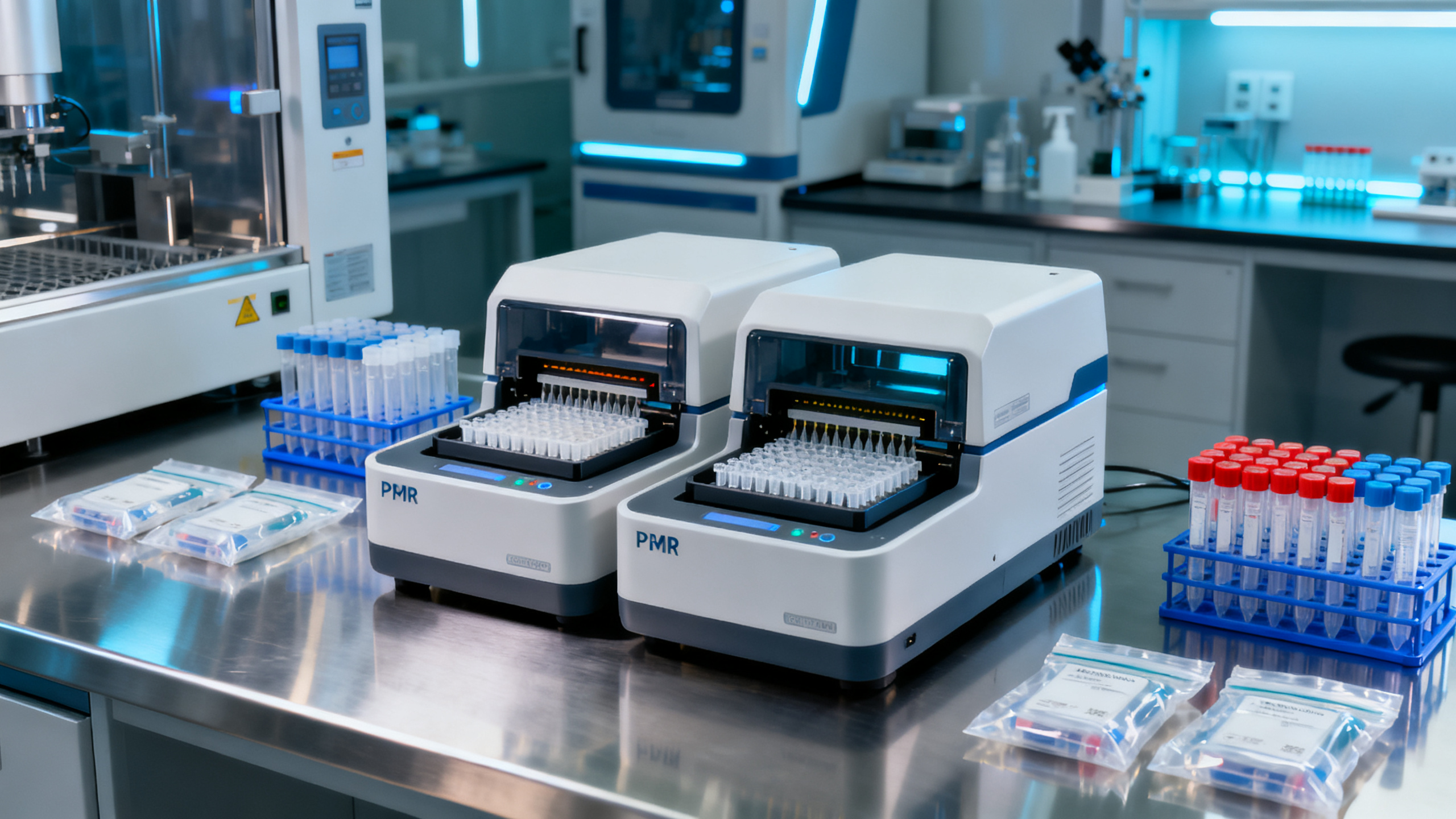
A dual block PCR cycler can run two separate thermal profiles in one instrument, which sounds simple but changes how a lab schedules work. It matters when testing needs are mixed, turnaround pressure is real, and one device must support more than one assay path.
That is why the topic reaches beyond molecular biology alone. In quality-driven industrial environments, instrument choice is tied to throughput, traceability, validation effort, and operational resilience, not just technical curiosity.
What a dual block PCR cycler actually does
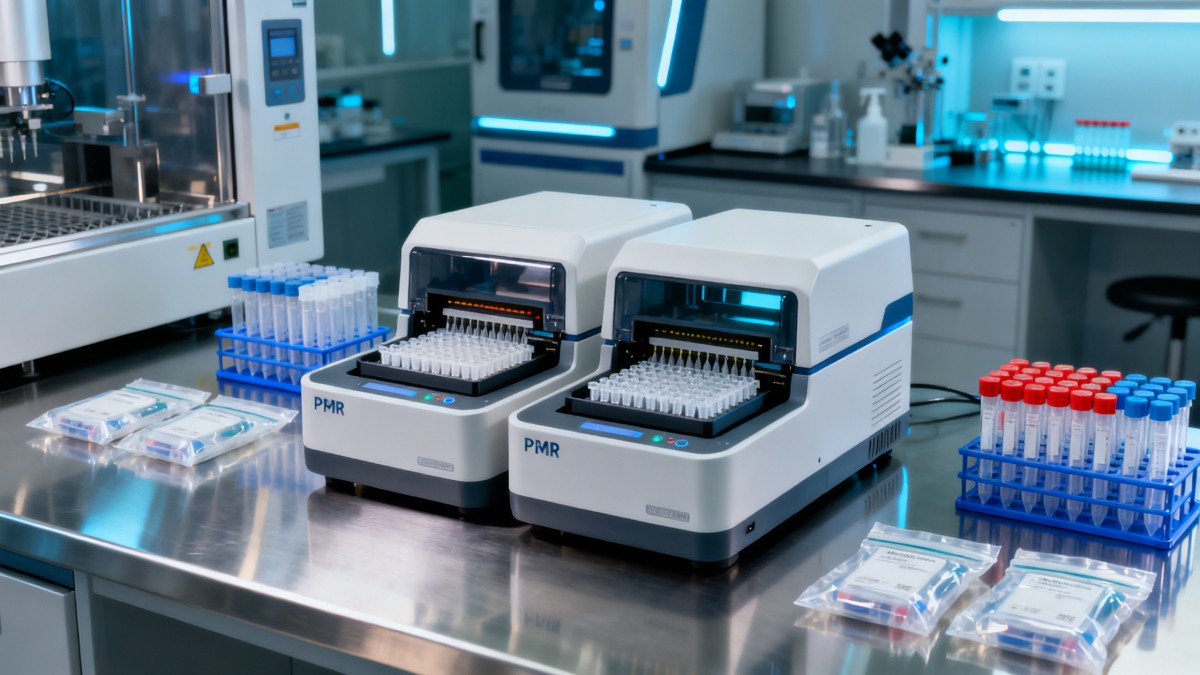
At the core, a dual block PCR cycler contains two independently controlled sample blocks. Each block can follow its own temperature program, timing sequence, and assay workflow during the same run window.
A single block system, by contrast, runs one thermal protocol across all loaded wells. If two assays need different annealing temperatures or cycle structures, they usually cannot run together.
This distinction becomes important during assay development, routine multi-panel testing, or environments where urgent samples interrupt planned batches. In those cases, flexibility has direct operational value.
The keyword is not simply capacity. It is independence. A dual block PCR cycler does more than split samples; it separates thermal logic inside one platform.
Why the market is paying closer attention
PCR equipment sits inside a broader instruments and measurement ecosystem, where uptime, repeatability, and documented performance matter. That perspective aligns with how Global Industrial Core evaluates technical assets.
For GIC, procurement decisions are rarely isolated. They connect to compliance expectations, method control, service continuity, and whether an instrument can support stable operations under demanding workflows.
The growing interest in dual block systems reflects several pressures. Labs are handling a wider mix of assays, validation timelines are tighter, and equipment budgets often favor multifunctional platforms over additional standalone units.
There is also a practical sourcing issue. Adding another single block machine may increase footprint, maintenance points, software variation, and calibration burden. One dual block PCR cycler can sometimes absorb that complexity.
Where it outperforms a single block system
A dual block PCR cycler is not automatically better. It is better when protocol diversity creates bottlenecks that a single program cannot handle efficiently.
Mixed assay environments
Different primer sets often require different annealing temperatures or cycle conditions. Running them together on a single block can force compromises that reduce assay performance or waste time.
With a dual block PCR cycler, one side can process a validated routine assay while the other handles a different target panel. That reduces queue time without requiring a second instrument.
Urgent or interrupt-driven testing
In many facilities, not every sample arrives on schedule. Some need same-day attention because they affect release decisions, contamination checks, or time-sensitive verification steps.
A single block machine often forces a choice between delaying the urgent work or stopping batch efficiency. A dual block PCR cycler keeps both priorities moving.
Method optimization and pilot work
Development work is where the architecture really earns attention. One block can run the reference protocol while the other tests adjusted conditions, shortening comparison cycles and simplifying side-by-side evaluation.
Space-constrained expansion
When bench space, power access, or service coverage is limited, replacing one unit with two separate systems may be harder than deploying one dual block PCR cycler with broader scheduling flexibility.
When a single block system still makes more sense
There are many cases where a single block remains the more rational choice. If nearly all samples follow one validated protocol, the extra flexibility may sit unused.
The same applies to low-volume settings with predictable batch planning. In that situation, simple workflow control can be more valuable than additional scheduling options.
Budget structure also matters. A dual block PCR cycler may reduce the need for an extra instrument, but it can still carry higher upfront cost, qualification effort, or software integration work.
The operational value behind the specification sheet
Specification tables usually focus on ramp rates, block formats, gradient range, and interface features. Those details matter, but they do not explain business impact by themselves.
In practice, the value of a dual block PCR cycler appears in reduced idle time, fewer run conflicts, and better use of instrument hours across uneven sample demand.
That can improve more than speed. It may also support cleaner workflow separation, especially when different assays carry different validation status, contamination controls, or documentation requirements.
For sourcing and technical evaluation, this is an important distinction. A cheaper device can become expensive if it creates hidden delays, extra reruns, or repeated schedule disruptions.
What to assess before choosing one
Selecting a dual block PCR cycler should start with workflow mapping rather than brand comparison. The first question is how often two genuinely different thermal programs are needed in the same working day.
The second question is whether separate runs create a measurable bottleneck. If waiting time is minor, dual block capability may be attractive but unnecessary.
- Review assay diversity over a typical month, not just a peak week.
- Check whether urgent samples regularly disrupt planned PCR runs.
- Compare total ownership costs, including qualification, service, and software support.
- Confirm temperature uniformity and reproducibility for both blocks.
- Look at data export, audit trail, and compliance fit if records are regulated.
- Assess recovery plans in case one instrument becomes a single point of failure.
Those checkpoints reflect the same discipline used in industrial instrumentation procurement. Performance claims are useful, but decision quality improves when the instrument is judged inside the operating system around it.
How to interpret the choice in a broader industrial context
Although PCR cyclers are laboratory instruments, the buying logic mirrors larger industrial equipment decisions. Flexibility is valuable only when it improves continuity, reduces process friction, or protects result quality.
This is where GIC’s editorial lens is useful. A solid procurement decision balances technical capability with compliance expectations, maintenance realities, and the credibility of validation data.
For that reason, a dual block PCR cycler should be viewed less as a premium feature and more as a scheduling and control tool. Its strongest case appears when workflow variability is persistent rather than occasional.
A practical next step
The most useful next move is to compare recent run logs, sample arrival patterns, and assay temperature requirements. That quickly shows whether a dual block PCR cycler would remove a real constraint or simply add optionality.
If the evidence shows frequent protocol overlap, urgent sample insertion, or active method optimization, the case becomes strong. If workflows are stable and uniform, a single block system may remain the cleaner investment.
Either way, the right choice comes from matching thermal flexibility to operational reality. That is the standard worth applying before comparing models, vendors, or price alone.
Technical Specifications
- How to Select Electronic Hotel Key Card Locks for Guest Rooms and Staff AreasAuthor :Safety Compliance Lead
- How to Select Lab Instruments for Reliable Chemical Analysis WorkflowsAuthor :Precision Metrology Expert
- How to Size a UPS for Server Rooms: Load, Runtime, and Redundancy FactorsAuthor :Grid Infrastructure Analyst
Expert Insights

Chief Security Architect
Dr. Thorne specializes in the intersection of structural engineering and digital resilience. He has advised three G7 governments on industrial infrastructure security.
Related Analysis
- Sep 17, 2026How to Select Electronic Hotel Key Card Locks for Guest Rooms and Staff AreasAuthor :Safety Compliance Lead
- Sep 16, 2026How to Select Lab Instruments for Reliable Chemical Analysis WorkflowsAuthor :Precision Metrology Expert
- Sep 15, 2026How to Size a UPS for Server Rooms: Load, Runtime, and Redundancy FactorsAuthor :Grid Infrastructure Analyst
Core Sector // 01
Security & Safety
- How to Select Lab Instruments for Reliable Chemical Analysis WorkflowsAuthor :Precision Metrology Expert

- Buying Lint-Free Wipes in Bulk: How to Match Material and Packaging to Cleanroom UseAuthor :Precision Metrology Expert

- How to Choose a Class II Biosafety Cabinet Supplier for Compliant Lab ProcurementAuthor :Precision Metrology Expert

- Wholesale Binocular Microscopes: Comparing Specifications, MOQs, and QC RiskAuthor :Precision Metrology Expert

- How to Evaluate a UV-Visible Spectrophotometer Manufacturer for Lab Accuracy?Author :Precision Metrology Expert

- China Temporarily Bans Helium ExportsAuthor :Precision Metrology Expert

- What to Check Before Buying a Digital Lab Incubator Wholesale OrderAuthor :Precision Metrology Expert

- Electric Muffle Furnace Wholesale: How to Evaluate Capacity, Temperature, and MOQAuthor :Precision Metrology Expert