How to Evaluate a Stack Gas Analyzer Manufacturer for Compliance and Service
Author
Date Published
Reading Time

How to Evaluate a Stack Gas Analyzer Manufacturer for Compliance and Service
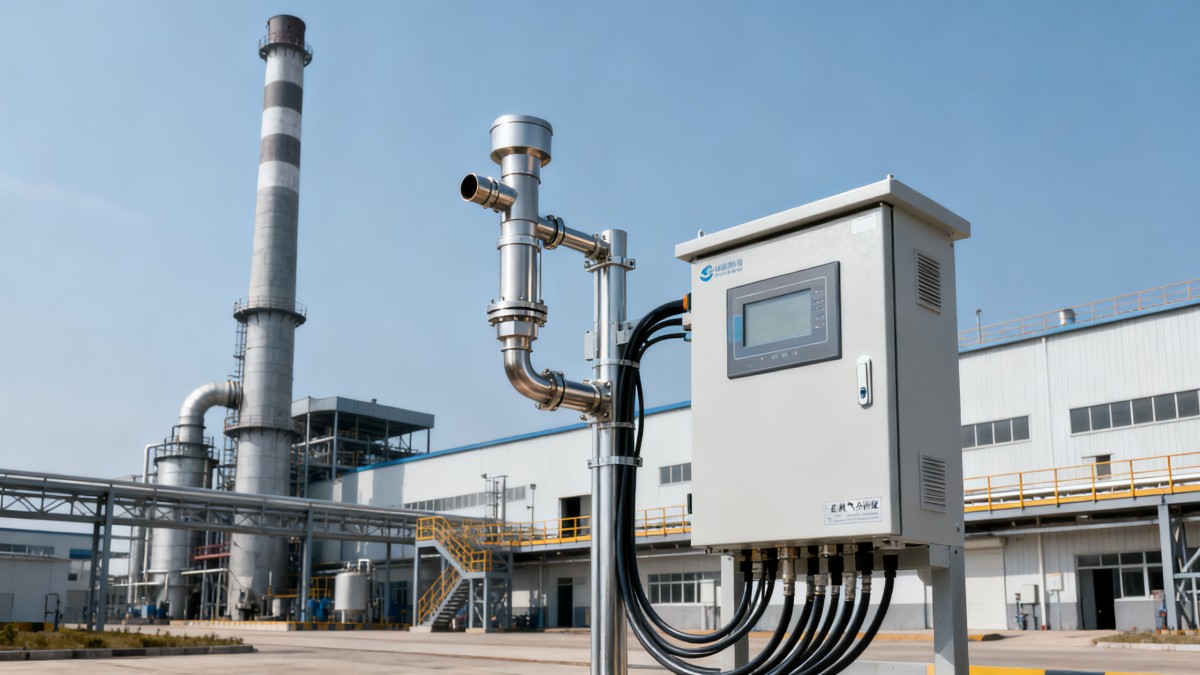
Choosing the right stack gas analyzer manufacturer can shape compliance results, maintenance workload, and plant continuity for years.
A low bid may look attractive early, yet weak certification support or slow field service often becomes the bigger cost.
That is why a procurement review should examine more than analyzer range, detection limits, or enclosure design.
In practice, the best stack gas analyzer manufacturer proves technical fitness, regulatory credibility, and lifecycle support at the same time.
This matters even more when emissions reporting links directly to permits, audits, ESG commitments, or plant expansion approvals.
A disciplined evaluation process reduces supplier risk and gives internal stakeholders a stronger basis for approval.
Start With Compliance, Not Marketing Claims
Any stack gas analyzer manufacturer should first be screened through the standards that govern your site and jurisdiction.
This includes product safety certifications, emissions measurement approvals, and documented quality systems.
Ask for evidence, not summaries from brochures.
- CE, UL, or equivalent electrical safety certifications.
- ISO 9001 and, where relevant, ISO 17025 related calibration capabilities.
- MCERTS, TÜV, EPA, or local emissions compliance approvals.
- Hazardous area certifications if the installation requires them.
From recent market shifts, a clearer signal is that regulators increasingly expect traceable documentation, not generic declarations.
That also means your chosen stack gas analyzer manufacturer must provide document control that survives audits and ownership changes.
If certification status seems vague, assume the service experience will be vague too.
Check Application Fit for Real Operating Conditions
A qualified stack gas analyzer manufacturer should discuss process reality before quoting hardware.
Different stacks present different gas compositions, temperature ranges, dust loads, moisture content, and corrosive exposure.
If those variables are ignored, measurement drift and unplanned cleaning cycles usually follow.
During evaluation, ask how the manufacturer handles these field conditions:
- High particulate streams from cement, steel, or waste incineration.
- Wet gas and condensation risks in low-temperature exhaust lines.
- Cross-sensitivity between SO2, NOx, CO, CO2, O2, and HCl.
- Fast response needs for process control and alarms.
- Continuous emissions monitoring versus spot verification use.
A strong stack gas analyzer manufacturer will explain why it recommends NDIR, UV, zirconia, FTIR, or extractive systems for your case.
That conversation is often more revealing than a data sheet.
Evaluate Calibration, Accuracy, and Data Integrity
Compliance depends on measurement credibility, so calibration support deserves direct scrutiny.
An experienced stack gas analyzer manufacturer should define calibration intervals, traceable gases, zero and span methods, and expected drift behavior.
It should also clarify who owns calibration responsibility after commissioning.
This is where many sourcing decisions go off track.
Some vendors supply analyzers, but leave the plant to solve accuracy drift, gas sourcing, and reporting issues alone.
Ask these practical questions before approval:
- What is the documented accuracy under actual process conditions?
- How is drift compensated and recorded?
- Can the system integrate with plant historians, DCS, or compliance software?
- Are audit trails protected from manual overwrite?
- What happens to data during power loss or communication failure?
For enterprise buyers, data integrity is no longer optional support material.
It is part of the compliance case surrounding the stack gas analyzer manufacturer itself.
Look Closely at Service Depth and Response Commitments
Service quality often separates a workable supplier from a risky one.
A stack gas analyzer manufacturer may have capable instruments, yet still fail your operation through weak support coverage.
Review the service model in detail before issuing a purchase order.
Key points include spare parts availability, commissioning support, remote diagnostics, and escalation paths.
More importantly, ask for measurable commitments.
In real operations, downtime rarely waits for business hours.
A dependable stack gas analyzer manufacturer should show how service continuity is maintained during holidays, shutdowns, and cross-border logistics delays.
Review Industry Track Record and Reference Quality
Past deployment history gives context that specifications cannot.
A stack gas analyzer manufacturer with strong references in your sector usually understands maintenance realities better.
Look for documented projects in power generation, chemicals, cement, metallurgy, waste-to-energy, or marine exhaust monitoring, depending on your use case.
Case studies should answer concrete questions.
- What gases were measured?
- What stack conditions were present?
- How long did commissioning take?
- What maintenance frequency was achieved?
- Were compliance audits passed without corrective action?
References should ideally include both engineering teams and plant operators.
That combination helps verify whether the stack gas analyzer manufacturer performs well after the handover phase.
Compare Total Cost of Ownership, Not Just Purchase Price
Initial equipment cost is only one layer of the decision.
The smarter comparison looks at total lifecycle cost across compliance, service, maintenance, and replacement planning.
When assessing a stack gas analyzer manufacturer, include these cost items in the model:
- Installation and commissioning labor.
- Calibration gases and periodic validation.
- Consumables, filters, sample conditioning parts, and probes.
- Software licensing or remote service fees.
- Downtime exposure during failures or delayed repairs.
- End-of-life replacement and upgrade compatibility.
A cheaper system can quickly become expensive when it needs frequent intervention or fails a reporting audit.
This is why the most suitable stack gas analyzer manufacturer is often the one with the clearest lifecycle cost logic.
Use a Structured Procurement Checklist Before Final Selection
A formal scorecard keeps internal reviews consistent and easier to defend.
It also helps separate polished presentations from verifiable capability.
A practical stack gas analyzer manufacturer assessment can include:
- Compliance documentation completeness.
- Application fit for your process stream.
- Calibration method and traceability strength.
- Local and remote service responsiveness.
- Reference quality in comparable plants.
- Five-year total cost projection.
- Contract clarity on warranty, parts, and training.
Before awarding the project, request a final technical clarification meeting.
Use that session to test how the stack gas analyzer manufacturer answers difficult, site-specific questions under pressure.
That last discussion often reveals the difference between a catalog supplier and a long-term operating partner.
The best decision usually comes from disciplined verification, clear service expectations, and a realistic view of compliance risk over time.
Technical Specifications
- Air Handling Unit Supplier Checklist: Performance Data, Lead Times, and SupportAuthor :Environmental Engineering Director
- Buying Fiberglass Water Tanks Wholesale: Compare Quotes and Delivery CostsAuthor :Environmental Engineering Director
- Choosing an XLPE Power Cable Supplier: Test Reports, Traceability, and Lead TimesAuthor :Grid Infrastructure Analyst
Expert Insights

Chief Security Architect
Dr. Thorne specializes in the intersection of structural engineering and digital resilience. He has advised three G7 governments on industrial infrastructure security.
Related Analysis
- Oct 19, 2026Air Handling Unit Supplier Checklist: Performance Data, Lead Times, and SupportAuthor :Environmental Engineering Director
- Oct 18, 2026Buying Fiberglass Water Tanks Wholesale: Compare Quotes and Delivery CostsAuthor :Environmental Engineering Director
- Oct 17, 2026Choosing an XLPE Power Cable Supplier: Test Reports, Traceability, and Lead TimesAuthor :Grid Infrastructure Analyst
Core Sector // 01
Security & Safety
- Choosing a 5-Part Hematology Analyzer: Throughput, Sample Volume, and QCAuthor :Precision Metrology Expert

- Wholesale Borosilicate Lab Glassware: How Buyers Verify Quality, Specs, and Supply ReliabilityAuthor :Precision Metrology Expert

- How to Select Lab Instruments for Reliable Chemical Analysis WorkflowsAuthor :Precision Metrology Expert

- Buying Lint-Free Wipes in Bulk: How to Match Material and Packaging to Cleanroom UseAuthor :Precision Metrology Expert

- How to Choose a Class II Biosafety Cabinet Supplier for Compliant Lab ProcurementAuthor :Precision Metrology Expert

- Wholesale Binocular Microscopes: Comparing Specifications, MOQs, and QC RiskAuthor :Precision Metrology Expert

- How to Evaluate a UV-Visible Spectrophotometer Manufacturer for Lab Accuracy?Author :Precision Metrology Expert

- China Temporarily Bans Helium ExportsAuthor :Precision Metrology Expert