How to Choose a Chemistry Lab Glassware Wholesale Supplier for Quality and Compliance
Author
Date Published
Reading Time
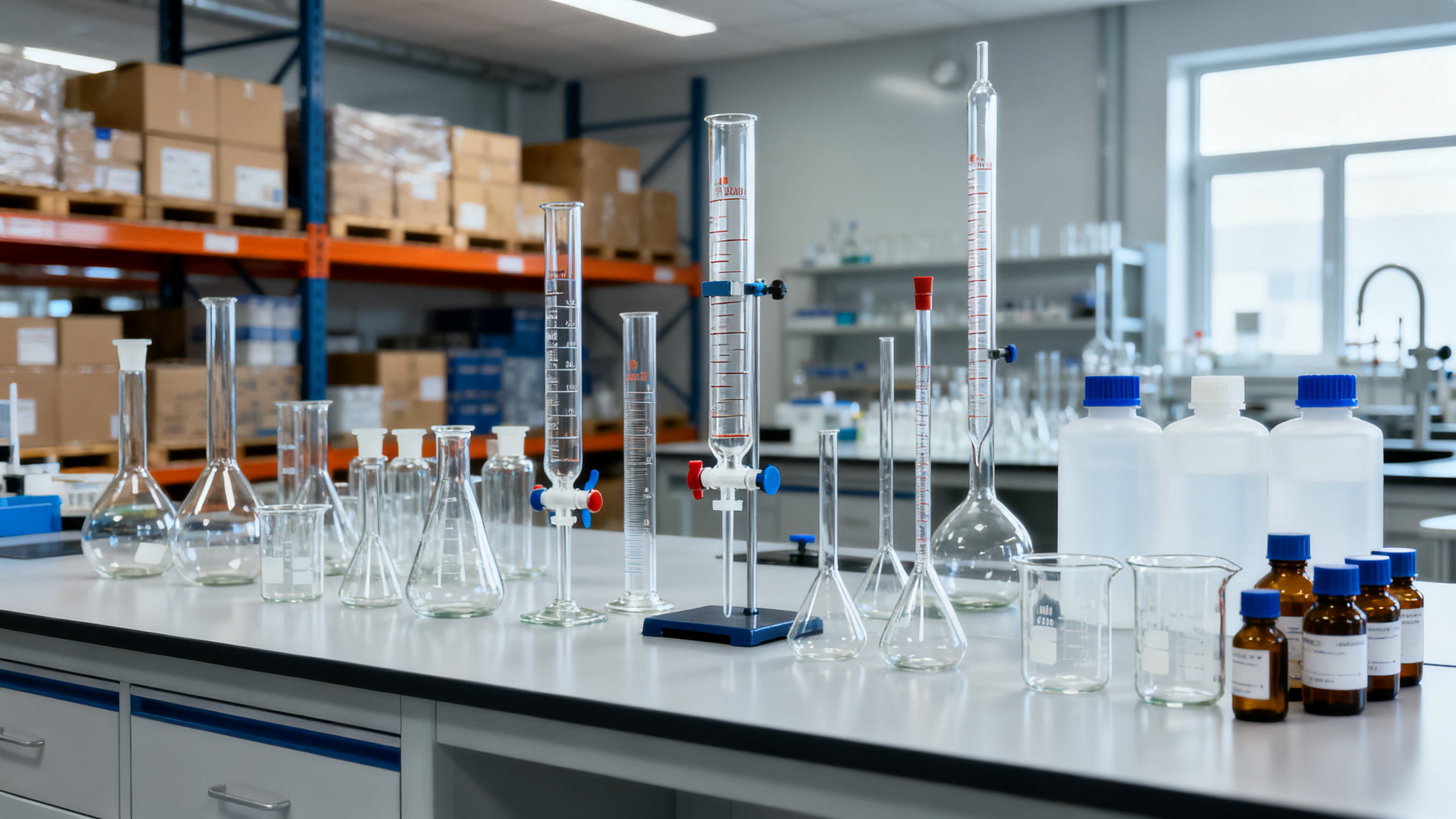
Why does the supplier choice matter so much in chemistry lab glassware wholesale?
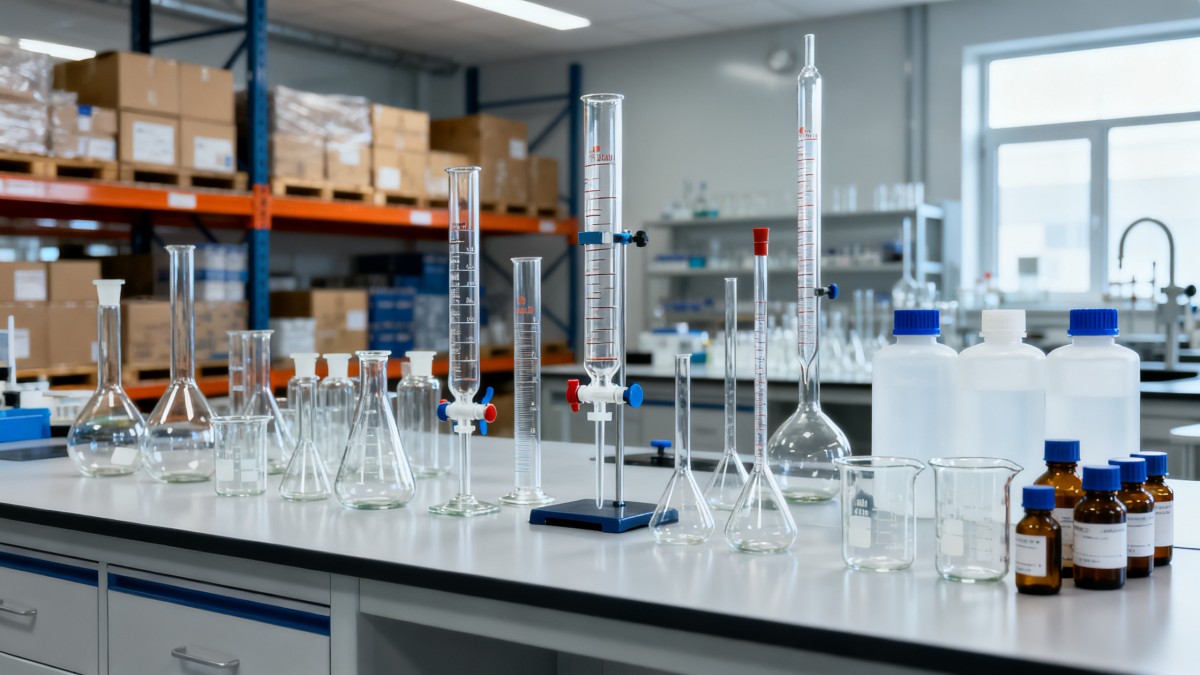
A low unit price can look attractive at first.
In laboratory operations, though, inconsistent glassware creates hidden costs through breakage, failed tests, delayed validation, and replacement orders.
That is why chemistry lab glassware wholesale decisions should be treated as a quality and compliance issue, not only a sourcing exercise.
For industrial buyers working across regulated environments, the real question is simple: can the supplier deliver repeatable quality at scale?
The answer depends on material control, dimensional accuracy, documentation, packaging discipline, and delivery consistency.
In practice, chemistry lab glassware wholesale often supports testing labs, pilot plants, water analysis, environmental monitoring, and process control facilities.
Those settings demand more than general catalog availability.
They require traceability, technical responsiveness, and confidence that every batch matches the stated standard.
This is also where a data-driven sourcing approach matters.
Global Industrial Core consistently frames procurement around compliance, reliability, and operational resilience, which fits this category well.
What should be checked first when comparing wholesale glassware suppliers?
Start with the basics, but do not stop there.
A supplier may offer a broad product range, yet still lack process control for critical items such as volumetric flasks, burettes, condensers, or reagent bottles.
The first screen should cover five areas.
- Glass composition, especially borosilicate grade and thermal resistance.
- Manufacturing consistency, including wall thickness and dimensional tolerances.
- Calibration capability for volumetric products.
- Quality documentation, such as batch records and inspection reports.
- Export readiness, including packaging, labeling, and shipment protection.
A useful early test is to ask for technical data sheets and sample inspection criteria.
Reliable suppliers answer clearly and specifically.
Weak suppliers usually respond with generic brochures or broad claims about “high quality” without evidence.
Another practical step is to review whether the supplier serves only education distributors or also industrial laboratories.
Industrial references tend to indicate stronger process discipline.
A quick comparison table helps narrow the field
When several options appear similar, this kind of screening table makes the differences visible.
How do quality and compliance show up in real purchasing decisions?
Buyers often ask whether compliance documents alone are enough.
Usually, they are not.
A certificate matters, but it should match observable manufacturing quality.
For chemistry lab glassware wholesale, that means smooth joints, legible graduation marks, stable bases, uniform walls, and clean annealing.
When these details are poor, paperwork loses value quickly.
Compliance should also be interpreted by product type.
A beaker for general handling does not carry the same risk as a Class A volumetric flask used in validated measurement procedures.
In actual sourcing reviews, the more useful approach is to separate critical and noncritical items.
- Critical items need tighter calibration evidence and batch consistency.
- Routine items may allow broader tolerance, but still need strong breakage control.
- Custom glass assemblies require drawing review and change management.
This distinction helps prevent overspending on low-risk items while protecting measurement integrity where it matters.
That balance mirrors the broader industrial sourcing logic often emphasized by GIC: compliance should be specific, documented, and tied to operational consequences.
Is the cheapest chemistry lab glassware wholesale option ever the right one?
Sometimes yes, but only under controlled conditions.
If the item is low-risk, frequently replaced, and not used for precise measurement, a lower-cost source may be acceptable.
The mistake is assuming this logic applies to the whole category.
A better question is total acquisition cost.
That includes inspection time, freight damage, rejected batches, internal qualification work, and the effect of delays on lab schedules.
In many cases, the lowest quote becomes the most expensive line item after two or three purchasing cycles.
To compare pricing more accurately, ask suppliers to quote on the same basis.
- Specify glass grade and standard.
- Request identical packaging expectations.
- Clarify acceptable breakage rates in transit.
- Separate tooling, calibration, and freight from unit price.
- Confirm reorder lead time for the same SKU.
Without that structure, chemistry lab glassware wholesale quotations are difficult to compare fairly.
Where do sourcing risks usually hide?
Most risk does not sit in the visible product photo.
It appears later, in variation between batches, poor carton protection, incomplete labeling, or changes in raw material without notice.
One frequent issue is sample bias.
A supplier may send strong preproduction samples, then ship mixed-quality batches once the order scales.
Another is document mismatch.
The certification may refer to one production line, while the shipped goods come from another subcontracted source.
To reduce these risks, a staged qualification process works better than a one-time approval.
- Review documents and product scope before sampling.
- Inspect samples against defined acceptance points.
- Run a pilot order with transit and receiving checks.
- Approve recurring orders only after batch consistency is proven.
This method is slower at the beginning.
It is usually faster over the life of the supplier relationship.
A few warning signs deserve immediate attention
- Technical questions are answered only by sales staff.
- Calibration language is vague or inconsistent.
- The supplier avoids discussing defect rates.
- Packaging details are not documented.
- Lead times shift significantly between inquiry and purchase order.
What does a dependable approval workflow look like before placing a larger order?
A practical workflow does not need to be complicated.
It does need to be consistent.
For chemistry lab glassware wholesale, the strongest approvals usually combine technical review, commercial review, and logistics validation.
That prevents decisions based only on price or only on sample appearance.
A dependable approval path often includes the following checks.
With this structure, supplier selection becomes easier to defend internally and easier to repeat across sites.
So, how should the final decision be made?
The best chemistry lab glassware wholesale supplier is rarely the one with the lowest visible price or the largest catalog.
It is the one that can prove material consistency, meet the required standard, ship safely, and stay reliable over time.
In real purchasing work, the strongest decisions come from comparing risk, not just quotes.
That means separating critical and routine items, checking compliance against actual use, and validating packaging before scaling volume.
It also helps to keep a written supplier scorecard covering quality, lead time, claims response, and document accuracy.
This creates a better basis for repeat orders than memory or ad hoc comparison.
If the next sourcing round is approaching, begin by listing the exact glassware categories, the standards that apply, and the acceptable failure points.
Then compare suppliers using the same technical and commercial framework.
That approach reduces cost surprises and improves compliance confidence from the first shipment onward.
Technical Specifications
- How to Select Electronic Hotel Key Card Locks for Guest Rooms and Staff AreasAuthor :Safety Compliance Lead
- How to Select Lab Instruments for Reliable Chemical Analysis WorkflowsAuthor :Precision Metrology Expert
- How to Size a UPS for Server Rooms: Load, Runtime, and Redundancy FactorsAuthor :Grid Infrastructure Analyst
Expert Insights

Chief Security Architect
Dr. Thorne specializes in the intersection of structural engineering and digital resilience. He has advised three G7 governments on industrial infrastructure security.
Related Analysis
- Sep 17, 2026How to Select Electronic Hotel Key Card Locks for Guest Rooms and Staff AreasAuthor :Safety Compliance Lead
- Sep 16, 2026How to Select Lab Instruments for Reliable Chemical Analysis WorkflowsAuthor :Precision Metrology Expert
- Sep 15, 2026How to Size a UPS for Server Rooms: Load, Runtime, and Redundancy FactorsAuthor :Grid Infrastructure Analyst
Core Sector // 01
Security & Safety
- How to Select Lab Instruments for Reliable Chemical Analysis WorkflowsAuthor :Precision Metrology Expert

- Buying Lint-Free Wipes in Bulk: How to Match Material and Packaging to Cleanroom UseAuthor :Precision Metrology Expert

- How to Choose a Class II Biosafety Cabinet Supplier for Compliant Lab ProcurementAuthor :Precision Metrology Expert

- Wholesale Binocular Microscopes: Comparing Specifications, MOQs, and QC RiskAuthor :Precision Metrology Expert

- How to Evaluate a UV-Visible Spectrophotometer Manufacturer for Lab Accuracy?Author :Precision Metrology Expert

- China Temporarily Bans Helium ExportsAuthor :Precision Metrology Expert

- What to Check Before Buying a Digital Lab Incubator Wholesale OrderAuthor :Precision Metrology Expert

- Electric Muffle Furnace Wholesale: How to Evaluate Capacity, Temperature, and MOQAuthor :Precision Metrology Expert