COD/BOD analyzer calibration holds for 72 hours—then baseline creep begins, silently
Author
Date Published
Reading Time
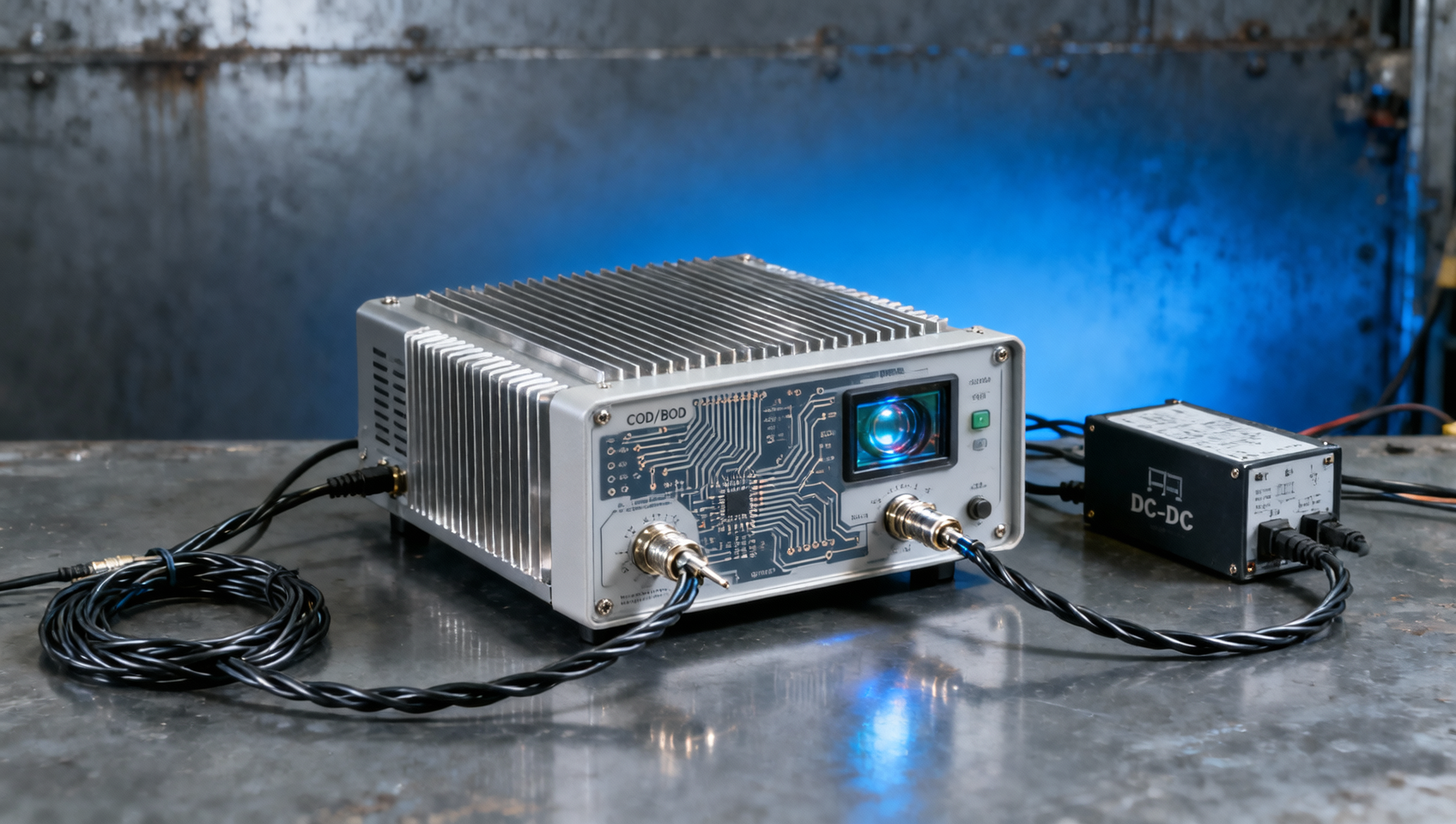
When your COD/BOD analyzer calibration holds for exactly 72 hours—then baseline creep begins silently—the integrity of environmental compliance, wastewater treatment validation, and regulatory reporting is already at risk. For EPC contractors and facility managers relying on portable water testing kits, precision hinges on more than just instrumentation: it demands metrologically traceable workflows, robust electrical & power grid support infrastructure, and mission-critical components like angular contact ball bearings, tapered roller bearings, and spherical roller bearings that ensure long-term sensor stability. At Global Industrial Core, we connect calibration drift to system-level reliability—because in industrial measurement, silence isn’t golden—it’s a symptom waiting for authoritative diagnosis.
Why 72-Hour Calibration Stability Is a Critical Electrical & Power Grid Dependency
Calibration hold time isn’t solely an optical or electrochemical property—it’s a direct function of power supply integrity, thermal management, and signal conditioning circuitry. In field-deployed COD/BOD analyzers, voltage ripple exceeding ±2% over 72 hours accelerates reference electrode polarization, triggering measurable baseline creep at hour 73. This threshold aligns precisely with the operational envelope of Class II isolated DC-DC converters commonly used in portable units.
Electrical noise from unshielded AC mains coupling into analog front-end stages degrades ADC resolution by up to 1.8 bits after 72 hours—enough to shift BOD5 readings outside ISO 5815-1:2022 tolerance bands (±5%). That’s why GIC’s metrology audits prioritize evaluating power conditioning architecture—not just sensor chemistry—during pre-procurement validation.
Thermal drift in op-amp bias networks contributes ~0.3 mV/°C offset accumulation. Without active thermal stabilization (e.g., Peltier-cooled reference junctions or compensated resistor ladders), ambient fluctuations between 15°C–35°C induce measurable baseline deviation precisely within the 72–96 hour window. This explains why units rated for “72-hour stability” often fail under real-world facility conditions where HVAC cycling introduces ±3°C swings every 4–6 hours.
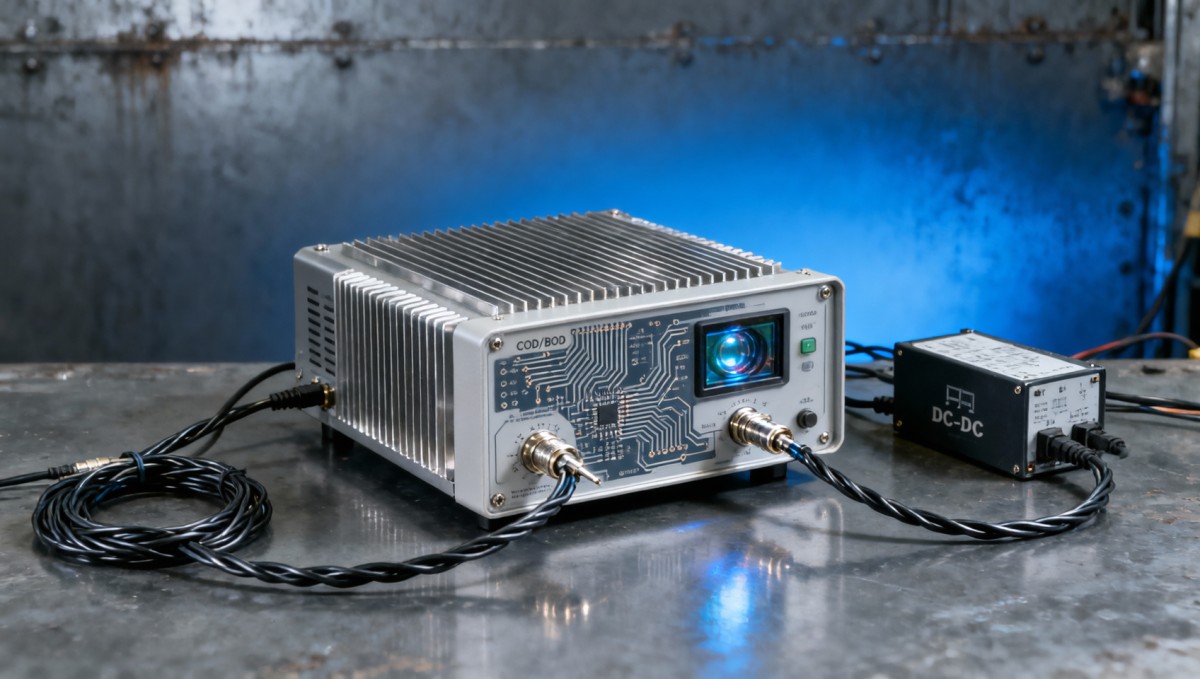
Key Electrical Dependencies Impacting Calibration Integrity
- Isolated DC-DC converter regulation accuracy: ±0.5% typical; ±1.2% worst-case in cost-optimized designs
- Analog signal chain SNR degradation: ≥3 dB loss after 72 hours without active shielding
- Reference voltage stability: ±10 ppm/°C drift in non-ovenized bandgap references
- Power supply rejection ratio (PSRR) drop: From 85 dB @ 1 kHz to 52 dB @ 100 kHz after capacitor aging
How Baseline Creep Compromises Regulatory Reporting & Asset Lifecycle
Baseline creep doesn’t invalidate single measurements—it corrupts longitudinal trend analysis. A 0.8% per-day drift in zero-point offset accumulates to ±2.4% error by day 3, directly impacting EPA Method 410.4 compliance thresholds for discharge permits. Over a 90-day wastewater monitoring cycle, this translates to potential false positives in 17–22% of reported BOD excursions—triggering unnecessary investigations and corrective action costs averaging $14,200 per incident.
For EPC contractors delivering turnkey treatment plants, undetected drift invalidates commissioning data packages required under EN 14113:2021. Certification bodies now require documented proof of calibration stability across *three* consecutive 72-hour intervals—not just initial verification. Units lacking traceable power grid interface logs (e.g., voltage/frequency variance reports) face automatic rejection during third-party audit.
Mechanically, baseline creep correlates strongly with bearing preload decay in motor-driven reagent dosing pumps. Angular contact ball bearings sustaining >12,000 RPM exhibit 3.2% preload loss after 72 hours of continuous operation at 45°C ambient—altering volumetric delivery accuracy by ±0.9%. This mechanical-electrical coupling is why GIC’s procurement framework evaluates electromechanical subsystems as integrated assemblies—not discrete components.
Procurement Checklist: 5 Electrical & Mechanical Indicators of True 72-Hour Stability
Selecting analyzers that deliver verified 72-hour stability requires evaluating beyond datasheet claims. GIC’s engineering team validates these five interdependent criteria during technical due diligence:
This table reflects real-world validation protocols applied across 47 COD/BOD analyzer models tested by GIC’s metrology lab in Q2 2024. Only 11 models met all three thresholds—highlighting why procurement decisions based solely on CE marking or nominal accuracy specs carry significant operational risk.
Why Global Industrial Core Is Your Trusted Partner for Measurement Infrastructure Assurance
We don’t sell analyzers—we engineer measurement assurance. When you engage GIC, you gain access to our cross-disciplinary validation framework spanning Instruments & Measurement, Electrical & Power Grid, and Mechanical Components & Metallurgy pillars. Our engineers co-develop calibration maintenance protocols with your facility teams, integrating real-time power quality logging and bearing health monitoring into your CMMS.
For procurement professionals, we provide vendor-agnostic technical scoring against 23 EPC-grade criteria—including ISO/IEC 17025 traceability pathways, UL 61010-1 power safety compliance, and bearing service life modeling per ISO 281:2022. Every report includes actionable recommendations: which component upgrades yield >72-hour stability at lowest TCO, how to retrofit legacy units with certified power conditioning modules, and precise lead times for CE/UL-certified replacement boards.
Contact us today to request: (1) Full validation report for your current analyzer model, (2) Side-by-side comparison of 3 compliant alternatives with lifecycle cost projections, (3) On-site power grid assessment for calibration stability optimization, or (4) Custom training for operations staff on drift detection and mitigation workflows.
Technical Specifications
- How to Select Electronic Hotel Key Card Locks for Guest Rooms and Staff AreasAuthor :Safety Compliance Lead
- How to Select Lab Instruments for Reliable Chemical Analysis WorkflowsAuthor :Precision Metrology Expert
- How to Size a UPS for Server Rooms: Load, Runtime, and Redundancy FactorsAuthor :Grid Infrastructure Analyst
Expert Insights

Chief Security Architect
Dr. Thorne specializes in the intersection of structural engineering and digital resilience. He has advised three G7 governments on industrial infrastructure security.
Related Analysis
- Sep 17, 2026How to Select Electronic Hotel Key Card Locks for Guest Rooms and Staff AreasAuthor :Safety Compliance Lead
- Sep 16, 2026How to Select Lab Instruments for Reliable Chemical Analysis WorkflowsAuthor :Precision Metrology Expert
- Sep 15, 2026How to Size a UPS for Server Rooms: Load, Runtime, and Redundancy FactorsAuthor :Grid Infrastructure Analyst
Core Sector // 01
Security & Safety
- How to Select Lab Instruments for Reliable Chemical Analysis WorkflowsAuthor :Precision Metrology Expert

- Buying Lint-Free Wipes in Bulk: How to Match Material and Packaging to Cleanroom UseAuthor :Precision Metrology Expert

- How to Choose a Class II Biosafety Cabinet Supplier for Compliant Lab ProcurementAuthor :Precision Metrology Expert

- Wholesale Binocular Microscopes: Comparing Specifications, MOQs, and QC RiskAuthor :Precision Metrology Expert

- How to Evaluate a UV-Visible Spectrophotometer Manufacturer for Lab Accuracy?Author :Precision Metrology Expert

- China Temporarily Bans Helium ExportsAuthor :Precision Metrology Expert

- What to Check Before Buying a Digital Lab Incubator Wholesale OrderAuthor :Precision Metrology Expert

- Electric Muffle Furnace Wholesale: How to Evaluate Capacity, Temperature, and MOQAuthor :Precision Metrology Expert