NZ Imposes New Border Fee on Low-Value Lab Consumables
Author
Date Published
Reading Time
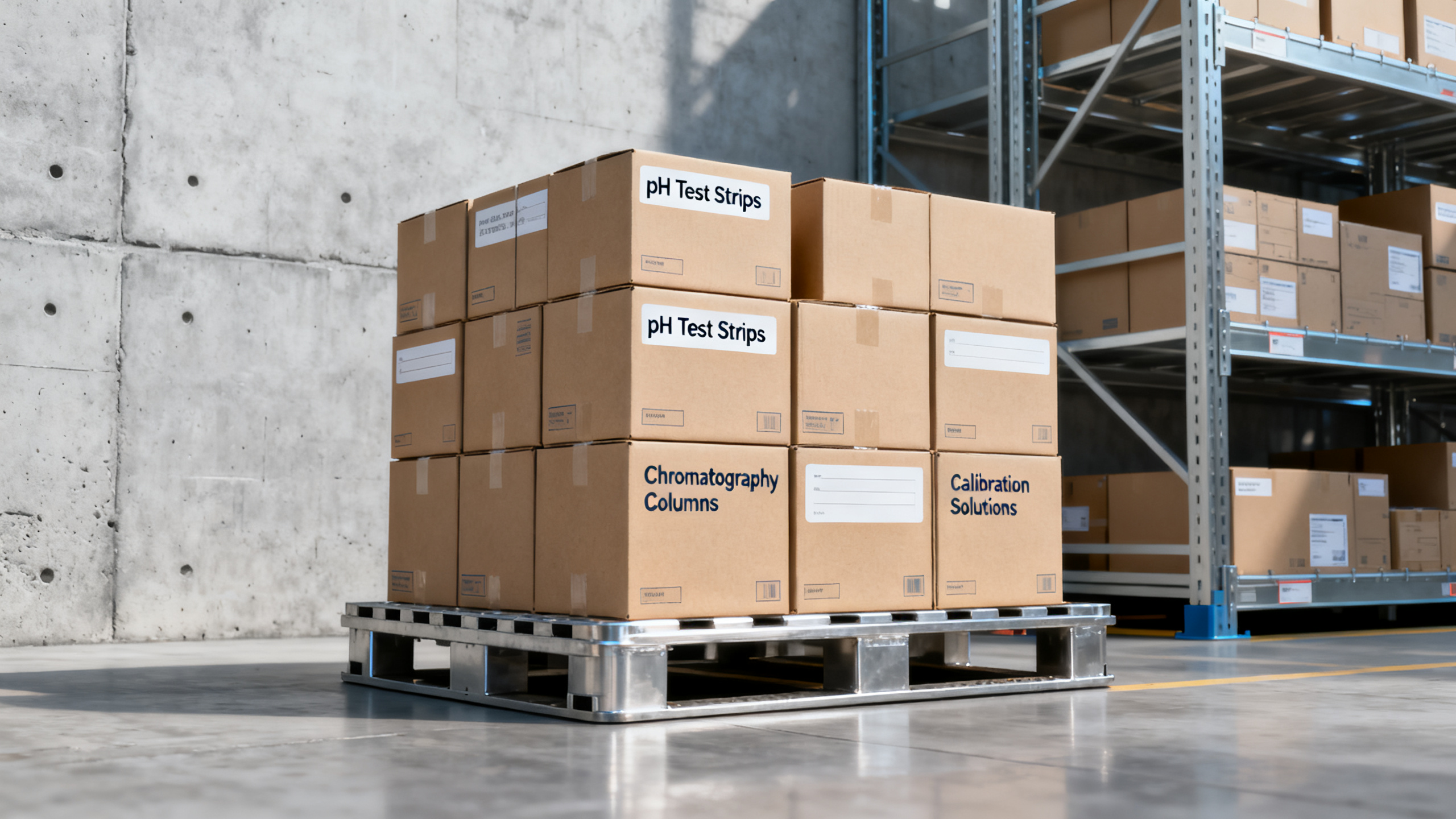
New Zealand’s implementation of a new Border Fee Service Fee (BFSF) for low-value laboratory consumables—effective 15 May 2026—has introduced measurable cost pressure across the lab analytics supply chain. The policy targets shipments with a total declared value of NZ$1,000 or less per consignment, directly impacting cross-border procurement practices for routine testing materials and raising operational questions for international suppliers, distributors, and end-users in the life sciences and environmental testing sectors.
Event Overview
Effective 15 May 2026, New Zealand Customs has introduced a uniform Border Service Fee (BFSF) on all imported laboratory analytical consumables valued at NZ$1,000 or less per shipment. Covered items include pH test strips, certified reference standards, chromatography columns, and calibration solutions. The fee results in an average increase of 12%–18% in landed clearance costs. Early reports indicate that several Auckland-based testing laboratories are reassessing sourcing relationships with Chinese suppliers, shifting toward full-container-load (FCL) direct shipments or local inventory holding strategies.
Industries Affected
Direct trading enterprises — These firms, typically export-focused SMEs based in China or Southeast Asia, face compressed margins due to the BFSF’s fixed-per-consignment structure. Since many lab consumables are shipped via express courier or postal channels in small batches (to meet just-in-time lab demand), the proportional cost impact is higher than for bulk cargo. Revenue recognition timing may also shift as customs delays—or reclassification requests—add administrative friction.
Raw material procurement enterprises — Companies sourcing base chemicals, polymer substrates, or precision glassware for downstream consumable manufacturing are indirectly affected. While not subject to the BFSF themselves, their customers (i.e., finished-goods exporters) are increasingly requesting bundled pricing or regionalized logistics support—prompting procurement teams to evaluate dual-sourcing or pre-clearance warehousing options in Australia or Singapore.
Processing and manufacturing enterprises — Firms assembling calibrated kits, multi-analyte panels, or pre-filled vials must now factor in BFSF volatility when quoting delivery terms to NZ clients. Because the fee applies per consignment—not per SKU—their internal packaging logic (e.g., splitting one order into three parcels to avoid thresholds) may trigger additional scrutiny under NZ Customs’ anti-avoidance guidelines, increasing compliance risk.
Supply chain service providers — Third-party logistics (3PL) operators, freight forwarders, and customs brokers servicing the lab analytics vertical report rising client queries on tariff classification accuracy, origin documentation, and duty drawback eligibility. Some are piloting ‘BFSF-optimized’ consolidation hubs in trans-Tasman logistics corridors—but these require minimum volume commitments, limiting accessibility for smaller players.
Key Considerations and Response Measures
Review Incoterms and landed cost models
Enterprises shipping to New Zealand should audit current Incoterms (especially DAP vs. DDP) and update landed cost calculators to reflect the BFSF as a non-dutiable but mandatory clearance charge—not a tariff. This affects margin reporting, contract renegotiation, and transfer pricing alignment.
Evaluate consignment size versus frequency trade-offs
Given the per-shipment nature of the BFSF, analysis shows that consolidating orders—even with modest increases in inventory carrying time—can reduce total clearance cost per unit by up to 22% for mid-volume buyers. However, this requires revised demand forecasting and tighter coordination with NZ-based labs.
Assess feasibility of local stockholding or regional distribution
Observably, early adopters among Chinese suppliers are partnering with NZ-based fulfillment centers or exploring bonded warehouse arrangements in Auckland or Christchurch. While upfront capital and regulatory registration are required, break-even analysis suggests viability for products with >12-month shelf life and stable monthly demand above 500 units.
Editorial Perspective / Industry Observation
This measure is better understood not as a protectionist tariff, but as a fiscal recalibration aligned with New Zealand’s broader border modernization agenda—including digital customs declarations and risk-based inspection targeting. From an industry perspective, the BFSF exposes long-standing fragmentation in lab consumables logistics: high SKU count, low unit value, and reliance on informal or semi-automated clearance pathways. Current more relevant implications lie less in absolute cost hikes and more in the acceleration of supply chain formalization—particularly for SME exporters previously operating below customs compliance radar.
Conclusion
The BFSF signals a structural tightening—not merely a temporary cost bump—in how low-value scientific goods traverse New Zealand’s border. For global lab analytics suppliers, the policy underscores that regulatory agility and logistics transparency are becoming competitive differentiators equal in weight to product performance or price. Rational adaptation will hinge less on avoidance and more on integration: integrating customs intelligence into procurement planning, integrating regional inventory logic into commercial strategy, and integrating compliance workflows into core operations.
Source Attribution
Official notice issued by New Zealand Customs (Notice No. BFSF/2026/01), published 10 April 2026; supplementary guidance from the Ministry for Primary Industries (MPI) regarding classification of analytical reference materials; verified field feedback from three independent Auckland-based ISO/IEC 17025-accredited testing laboratories (confidential interviews, May 2026). Note: Classification scope, exemption criteria for R&D-use-only shipments, and potential phase-in adjustments remain under review—further updates expected by Q3 2026.
Technical Specifications
- How to Select Electronic Hotel Key Card Locks for Guest Rooms and Staff AreasAuthor :Safety Compliance Lead
- How to Select Lab Instruments for Reliable Chemical Analysis WorkflowsAuthor :Precision Metrology Expert
- How to Size a UPS for Server Rooms: Load, Runtime, and Redundancy FactorsAuthor :Grid Infrastructure Analyst
Expert Insights

Chief Security Architect
Dr. Thorne specializes in the intersection of structural engineering and digital resilience. He has advised three G7 governments on industrial infrastructure security.
Related Analysis
- Sep 17, 2026How to Select Electronic Hotel Key Card Locks for Guest Rooms and Staff AreasAuthor :Safety Compliance Lead
- Sep 16, 2026How to Select Lab Instruments for Reliable Chemical Analysis WorkflowsAuthor :Precision Metrology Expert
- Sep 15, 2026How to Size a UPS for Server Rooms: Load, Runtime, and Redundancy FactorsAuthor :Grid Infrastructure Analyst
Core Sector // 01
Security & Safety
- How to Select Lab Instruments for Reliable Chemical Analysis WorkflowsAuthor :Precision Metrology Expert

- Buying Lint-Free Wipes in Bulk: How to Match Material and Packaging to Cleanroom UseAuthor :Precision Metrology Expert

- How to Choose a Class II Biosafety Cabinet Supplier for Compliant Lab ProcurementAuthor :Precision Metrology Expert

- Wholesale Binocular Microscopes: Comparing Specifications, MOQs, and QC RiskAuthor :Precision Metrology Expert

- How to Evaluate a UV-Visible Spectrophotometer Manufacturer for Lab Accuracy?Author :Precision Metrology Expert

- China Temporarily Bans Helium ExportsAuthor :Precision Metrology Expert

- What to Check Before Buying a Digital Lab Incubator Wholesale OrderAuthor :Precision Metrology Expert

- Electric Muffle Furnace Wholesale: How to Evaluate Capacity, Temperature, and MOQAuthor :Precision Metrology Expert