New Zealand Imposes New Border Fee on Low-Value Lab Consumables
Author
Date Published
Reading Time

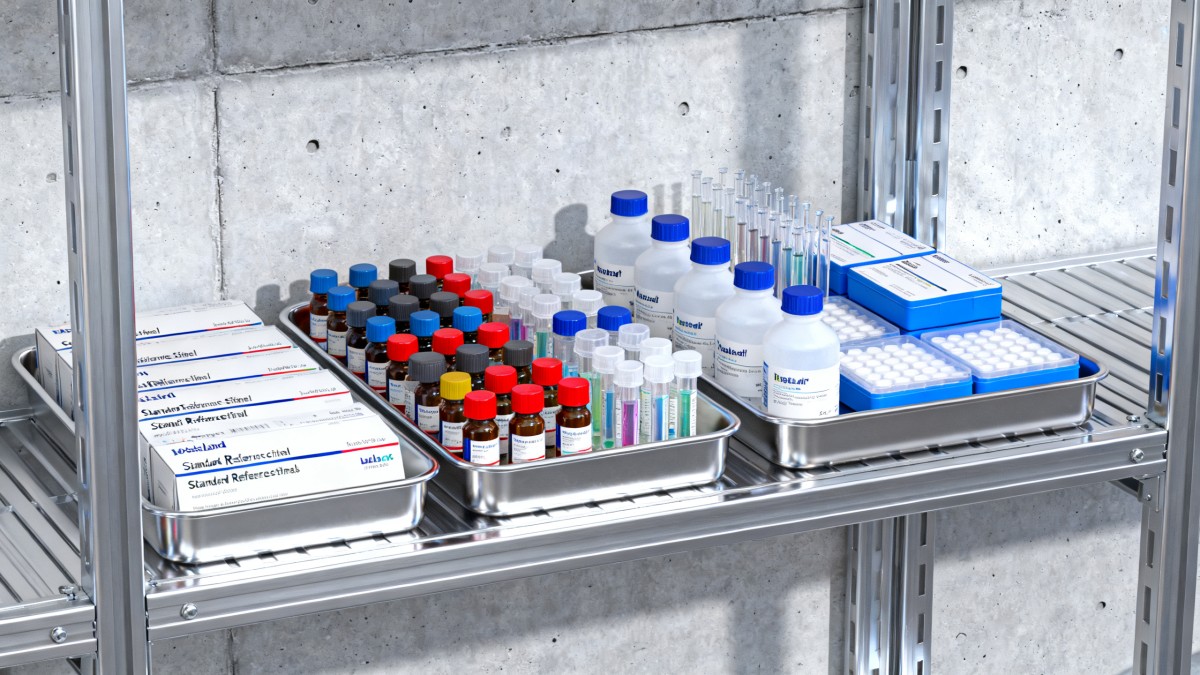
Effective 1 May 2026, New Zealand Customs Service (NZCS) introduced a unified Border Services Fee (BSF) on laboratory analytical consumables valued at NZD 1,000 or less — including reference standards, calibration solutions, chromatography columns, and filter membranes. This change increases landed costs for exporters by 12%–18% after GST, directly affecting China-based lab & analytics export enterprises.
Event Overview
New Zealand Customs Service confirmed on 20 May 2026 that, as of 1 May 2026, a 5% Border Services Fee (BSF) applies to all laboratory analytical consumables with a declared value ≤ NZD 1,000 per consignment. The fee is levied on the customs value and is collected in addition to Goods and Services Tax (GST). The combined effect raises total import-related cost burdens by 12%–18% for affected shipments. This policy applies specifically to standard reference materials, calibration solutions, chromatography columns, and filtration membranes used in analytical laboratories.
Industries Affected
Direct Exporters (China-based Lab & Analytics Suppliers)
These enterprises ship low-value consumables directly to New Zealand end-users or distributors. They face immediate upward pressure on landed cost calculations, requiring revision of export pricing models and quotation templates. Margins may compress unless adjustments are passed on — which risks competitiveness in price-sensitive procurement environments.
Channel Distributors & Import Agents (NZ-based or APAC Regional)
Distributors handling consolidated shipments or drop-shipped orders must now absorb or reprice the BSF component. Since the fee applies per consignment (not per line item), order bundling strategies may shift — potentially increasing minimum order values or altering inventory planning cycles.
Contract Manufacturing & Repackaging Providers (China-based)
Suppliers performing final packaging, labeling, or kitting for NZ-bound lab consumables must reassess landed cost attribution. If their service invoices are included in the customs declaration, the BSF base may expand beyond product value alone — introducing new compliance considerations in documentation alignment.
Key Considerations and Recommended Actions
Monitor Official Guidance on Fee Application Scope
While NZCS has confirmed applicability to four named categories, further clarification is pending on whether bundled kits, multi-component test sets, or non-sterile variants fall under the same treatment. Exporters should track updates issued via NZCS’s official tariff classification portal and subscribe to trade advisory bulletins from New Zealand’s Ministry of Business, Innovation and Employment (MBIE).
Review and Recalculate Quotation Models for NZ-Bound Shipments
Enterprises must isolate the BSF (5% of customs value) and GST (15%) components in current pricing tools. Since GST is applied on top of the BSF-inclusive value, the compounding effect requires explicit recalibration — not just a flat markup. Historical quotes issued before 1 May 2026 should be flagged for validity review where delivery occurs post-implementation.
Assess Consignment-Level Logistics Strategy
Because the BSF applies per consignment (not per SKU), shippers may consider consolidating lower-value items into fewer, higher-value shipments — provided this does not trigger higher duty bands or exceed the NZD 1,000 threshold unintentionally. However, over-consolidation may conflict with NZ biosecurity requirements for certain consumables, so cross-functional coordination between logistics and regulatory teams is essential.
Update Customer Communications and Contract Terms
Existing distribution agreements or master supply contracts may lack clauses addressing newly introduced border fees. Exporters should proactively revise Incoterms (e.g., shifting from EXW to FCA or DAP where appropriate) and add fee-specific annexes to clarify responsibility for BSF payment and documentation support obligations.
Editorial Perspective / Industry Observation
Observably, this measure reflects a broader trend among OECD-aligned customs administrations to harmonise cost recovery for low-value consignment processing — especially for regulated scientific goods. Analysis shows it is not a tariff or regulatory barrier per se, but a fiscal adjustment targeting administrative cost allocation. From an industry perspective, it functions less as an isolated policy shift and more as a signal of tightening scrutiny on lab supply chain transparency and valuation accuracy. Current implementation appears fully operational as of 1 May 2026; however, the absence of published guidance on borderline cases (e.g., mixed consignments, sample-only shipments) means practical interpretation remains subject to case-by-case customs assessment.
In summary, this BSF introduction represents a material, quantifiable change in the cost structure for exporting specific lab consumables to New Zealand — not a procedural update or temporary pilot. It necessitates concrete adjustments in pricing, documentation, and channel management. More broadly, it signals increasing administrative expectations for scientific goods entering regulated markets — where cost predictability and compliance traceability are becoming inseparable.
Source: New Zealand Customs Service (NZCS) official notice, confirmed 20 May 2026; scope and effective date publicly documented on nzcustoms.govt.nz. Areas requiring ongoing observation include: (1) NZCS classification rulings for hybrid or composite lab kits, and (2) potential alignment with upcoming MBIE-led review of de minimis thresholds for scientific imports, expected Q4 2026.
Technical Specifications
- How to Select Electronic Hotel Key Card Locks for Guest Rooms and Staff AreasAuthor :Safety Compliance Lead
- How to Select Lab Instruments for Reliable Chemical Analysis WorkflowsAuthor :Precision Metrology Expert
- How to Size a UPS for Server Rooms: Load, Runtime, and Redundancy FactorsAuthor :Grid Infrastructure Analyst
Expert Insights

Chief Security Architect
Dr. Thorne specializes in the intersection of structural engineering and digital resilience. He has advised three G7 governments on industrial infrastructure security.
Related Analysis
- Sep 17, 2026How to Select Electronic Hotel Key Card Locks for Guest Rooms and Staff AreasAuthor :Safety Compliance Lead
- Sep 16, 2026How to Select Lab Instruments for Reliable Chemical Analysis WorkflowsAuthor :Precision Metrology Expert
- Sep 15, 2026How to Size a UPS for Server Rooms: Load, Runtime, and Redundancy FactorsAuthor :Grid Infrastructure Analyst
Core Sector // 01
Security & Safety
- How to Select Lab Instruments for Reliable Chemical Analysis WorkflowsAuthor :Precision Metrology Expert

- Buying Lint-Free Wipes in Bulk: How to Match Material and Packaging to Cleanroom UseAuthor :Precision Metrology Expert

- How to Choose a Class II Biosafety Cabinet Supplier for Compliant Lab ProcurementAuthor :Precision Metrology Expert

- Wholesale Binocular Microscopes: Comparing Specifications, MOQs, and QC RiskAuthor :Precision Metrology Expert

- How to Evaluate a UV-Visible Spectrophotometer Manufacturer for Lab Accuracy?Author :Precision Metrology Expert

- China Temporarily Bans Helium ExportsAuthor :Precision Metrology Expert

- What to Check Before Buying a Digital Lab Incubator Wholesale OrderAuthor :Precision Metrology Expert

- Electric Muffle Furnace Wholesale: How to Evaluate Capacity, Temperature, and MOQAuthor :Precision Metrology Expert