How to Choose a Microplate Reader: Detection Modes, Throughput, and Software Compared
Author
Date Published
Reading Time
How to Choose a Microplate Reader: Detection Modes, Throughput, and Software Compared
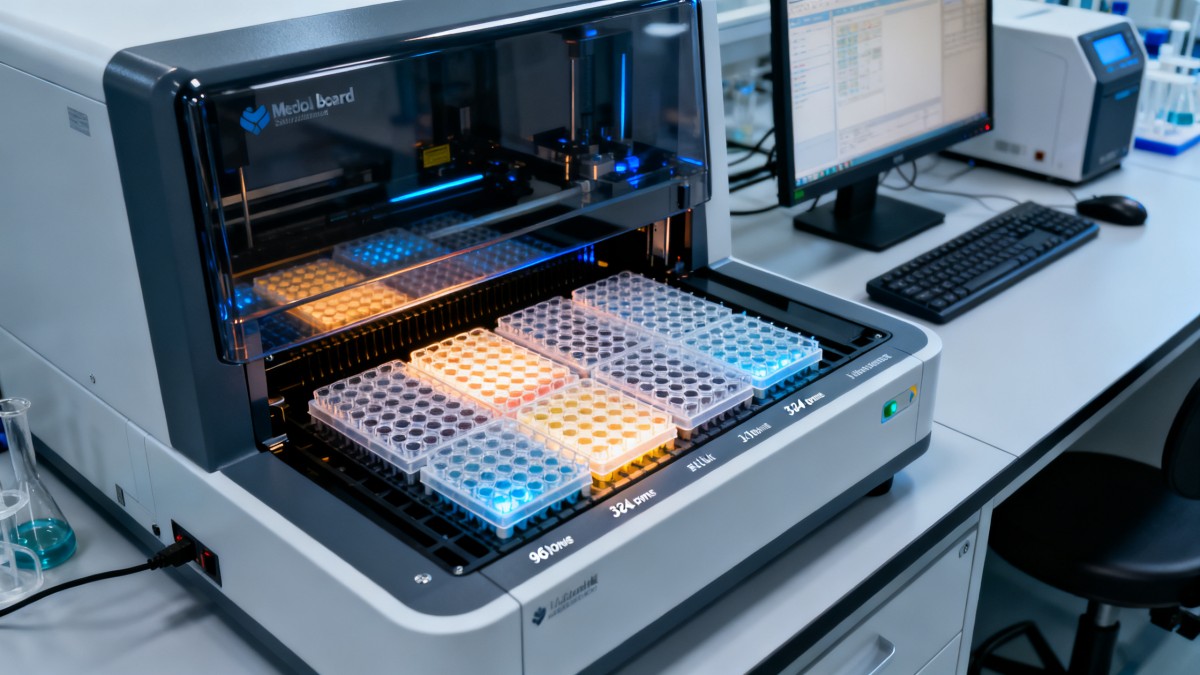
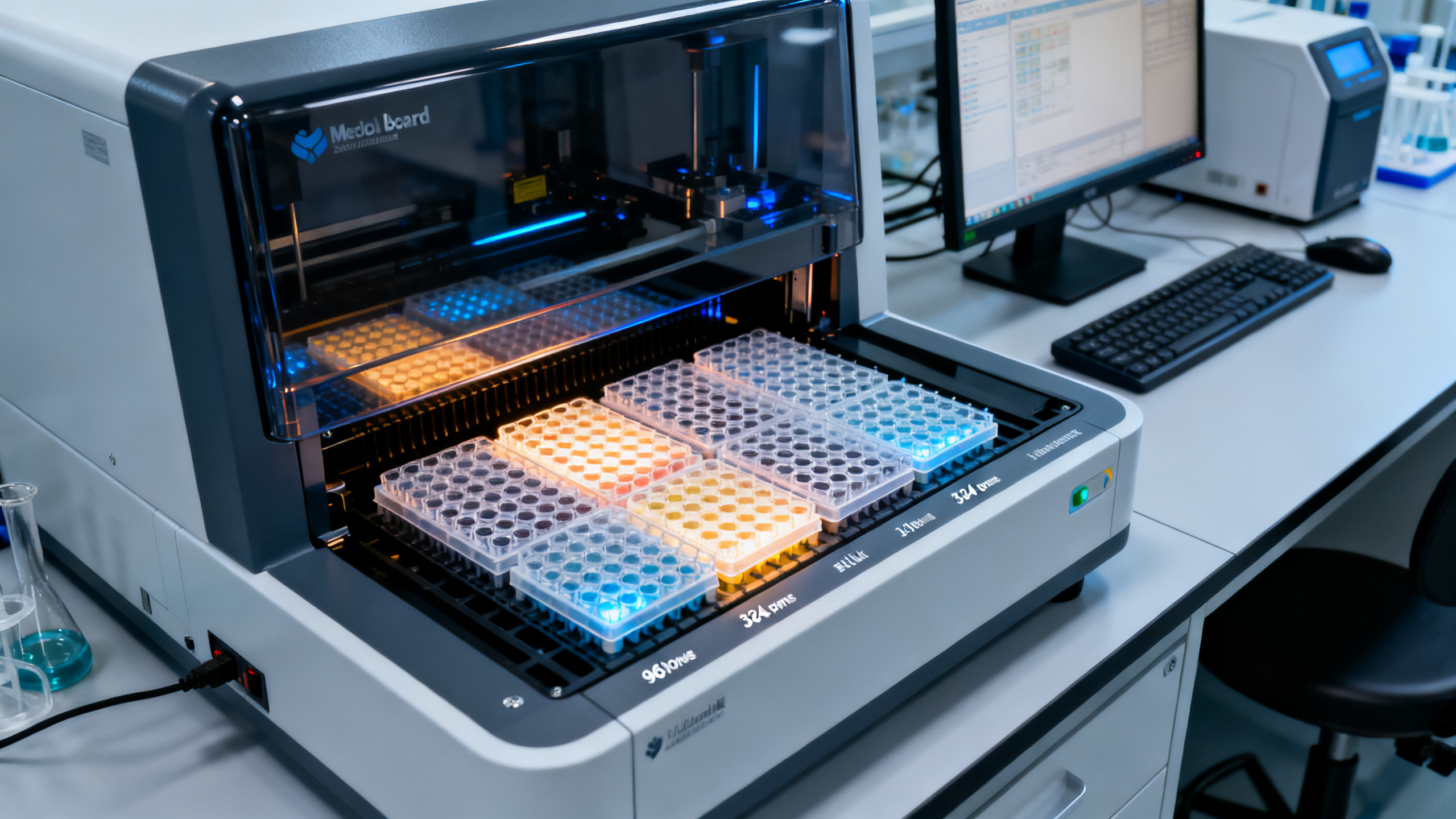
Choosing the right microplate reader affects data quality, turnaround time, and future assay flexibility.
That matters even more when workflows must stay accurate under growing sample volumes.
A strong buying decision starts with three areas: detection modes, throughput, and software.
The best microplate reader is not always the most advanced model.
It is the system that matches assay needs, compliance expectations, and expansion plans.
This guide breaks down the practical comparison points that shape a confident selection.
Start with Application Fit, Not Feature Count
Many teams compare a microplate reader by headline specifications first.
In practice, assay type should lead the process.
If the workload is mainly ELISA, absorbance performance may be enough.
If cell-based assays are growing, fluorescence and luminescence become more important.
For kinetic studies, timing stability and temperature control can outweigh raw speed.
This also means future applications deserve equal weight.
A microplate reader chosen only for today may create replacement pressure next year.
- Map current assays by frequency, criticality, and detection requirement.
- Separate must-have functions from occasional experimental needs.
- Estimate whether assay complexity will increase within two to three years.
Compare Detection Modes with Real Assay Demands
Detection mode is the core technical filter when evaluating a microplate reader.
Each mode supports different signal behavior, sensitivity targets, and sample types.
Absorbance
Absorbance is common in ELISA, protein quantification, and enzyme activity assays.
The key comparison points are wavelength range, accuracy, stray light, and speed.
A filter-based system may be fine for routine fixed-wavelength testing.
A monochromator-based microplate reader adds flexibility for changing protocols.
Fluorescence
Fluorescence supports higher sensitivity than absorbance in many assay formats.
Look closely at detection limits, optical design, and available wavelength control.
Bottom reading can matter for adherent cell assays.
Top reading may be better for standard plates and faster workflows.
Luminescence
Luminescence is essential for reporter gene assays and ATP-based viability testing.
Here, sensitivity and low background noise are usually decisive.
Injector options may also matter if assays require rapid reagent addition.
Multimode Capability
A multimode microplate reader combines absorbance, fluorescence, and luminescence in one platform.
That reduces instrument sprawl and supports method growth.
Still, buying multimode only makes sense if those modes will be used regularly.
Evaluate Throughput Beyond Plates per Hour
Throughput is often reduced to a simple speed number.
That is useful, but incomplete.
A microplate reader may run quickly in vendor demos, yet slow down in real workflows.
Plate loading, shaking, incubation, software setup, and data export all affect daily output.
From a selection standpoint, throughput should be measured as usable workflow capacity.
Questions That Clarify Throughput
- How many plates must be processed per shift or per day?
- Are reads endpoint, kinetic, or multi-step?
- Will the microplate reader serve one assay family or many?
- Does the lab need barcode tracking or automation compatibility?
- Will 96-well plates remain standard, or will 384-well use expand?
A higher-throughput microplate reader usually pays off when sample queues are frequent.
But overbuying can tie budget to unused capacity.
That budget may be better spent on software, service, or validation support.
Software Often Decides the User Experience
Software is where many microplate reader evaluations become more practical.
Even strong hardware loses value if setup is slow or analysis is hard to trust.
A good software package reduces training time and lowers the risk of method errors.
What to Compare in Software
- Protocol creation speed for routine and custom assays.
- Data visualization, curve fitting, and QC flagging tools.
- User permissions, audit trails, and electronic record support.
- LIMS integration and export compatibility.
- Remote monitoring, scheduling, and template management.
This is especially important in regulated or multi-user environments.
If records must support traceability, software becomes part of the compliance strategy.
More clearly now, buyers are comparing the microplate reader and the data ecosystem together.
Key Hardware Details That Influence Performance
Once core modes and software are shortlisted, hardware details deserve a closer look.
These factors often shape repeatability and maintenance burden.
Service access also matters more than it may seem at first.
A microplate reader with limited local support can create expensive downtime later.
Compare Total Cost Over the Full Lifecycle
Purchase price is only one part of the decision.
A smart microplate reader comparison includes operating cost, software licensing, qualification, and service coverage.
This is where a lower-priced platform can become more expensive over time.
- Check preventive maintenance intervals and expected consumables.
- Confirm whether software upgrades are included or subscription-based.
- Review installation, calibration, and training scope.
- Ask about response times for field service and replacement parts.
In many labs, reliability and support quality protect productivity better than small upfront savings.
A Practical Shortlist Framework
If the options still look similar, a weighted shortlist helps.
Use scoring that reflects operational priorities, not marketing language.
- Define mandatory detection modes for current and planned assays.
- Set minimum throughput based on real daily workflow.
- Score software usability, traceability, and integration.
- Compare service network strength and lifecycle cost.
- Request a live demo using your own assay workflow if possible.
That final step often reveals the real difference between two similar systems.
A microplate reader should feel efficient in your process, not just impressive on paper.
Final Decision Points
The right microplate reader balances analytical performance with daily usability.
Detection modes determine assay fit, throughput defines workflow capacity, and software shapes long-term efficiency.
When these three areas align, the instrument becomes a scalable lab asset.
Before making a final purchase, validate performance with representative samples and real reporting needs.
That is usually the fastest way to choose a microplate reader with confidence and fewer downstream compromises.
Technical Specifications
- How to Select Electronic Hotel Key Card Locks for Guest Rooms and Staff AreasAuthor :Safety Compliance Lead
- How to Select Lab Instruments for Reliable Chemical Analysis WorkflowsAuthor :Precision Metrology Expert
- How to Size a UPS for Server Rooms: Load, Runtime, and Redundancy FactorsAuthor :Grid Infrastructure Analyst
Expert Insights

Chief Security Architect
Dr. Thorne specializes in the intersection of structural engineering and digital resilience. He has advised three G7 governments on industrial infrastructure security.
Related Analysis
- Sep 17, 2026How to Select Electronic Hotel Key Card Locks for Guest Rooms and Staff AreasAuthor :Safety Compliance Lead
- Sep 16, 2026How to Select Lab Instruments for Reliable Chemical Analysis WorkflowsAuthor :Precision Metrology Expert
- Sep 15, 2026How to Size a UPS for Server Rooms: Load, Runtime, and Redundancy FactorsAuthor :Grid Infrastructure Analyst
Core Sector // 01
Security & Safety
- How to Select Lab Instruments for Reliable Chemical Analysis WorkflowsAuthor :Precision Metrology Expert

- Buying Lint-Free Wipes in Bulk: How to Match Material and Packaging to Cleanroom UseAuthor :Precision Metrology Expert

- How to Choose a Class II Biosafety Cabinet Supplier for Compliant Lab ProcurementAuthor :Precision Metrology Expert

- Wholesale Binocular Microscopes: Comparing Specifications, MOQs, and QC RiskAuthor :Precision Metrology Expert

- How to Evaluate a UV-Visible Spectrophotometer Manufacturer for Lab Accuracy?Author :Precision Metrology Expert

- China Temporarily Bans Helium ExportsAuthor :Precision Metrology Expert

- What to Check Before Buying a Digital Lab Incubator Wholesale OrderAuthor :Precision Metrology Expert

- Electric Muffle Furnace Wholesale: How to Evaluate Capacity, Temperature, and MOQAuthor :Precision Metrology Expert