5th TCM High-Quality Development Conference Held in Tianjin
Author
Date Published
Reading Time
On May 10, 2026, the 5th TCM High-Quality Development Conference took place at the Tianjin Meijiang Convention and Exhibition Center. The event drew overseas pharmaceutical procurement delegations from Saudi Arabia, the UAE, and Brazil — prompting heightened attention from manufacturers of laboratory and analytical instrumentation, regulatory compliance service providers, and exporters serving global pharmacopoeial markets.
Event Overview
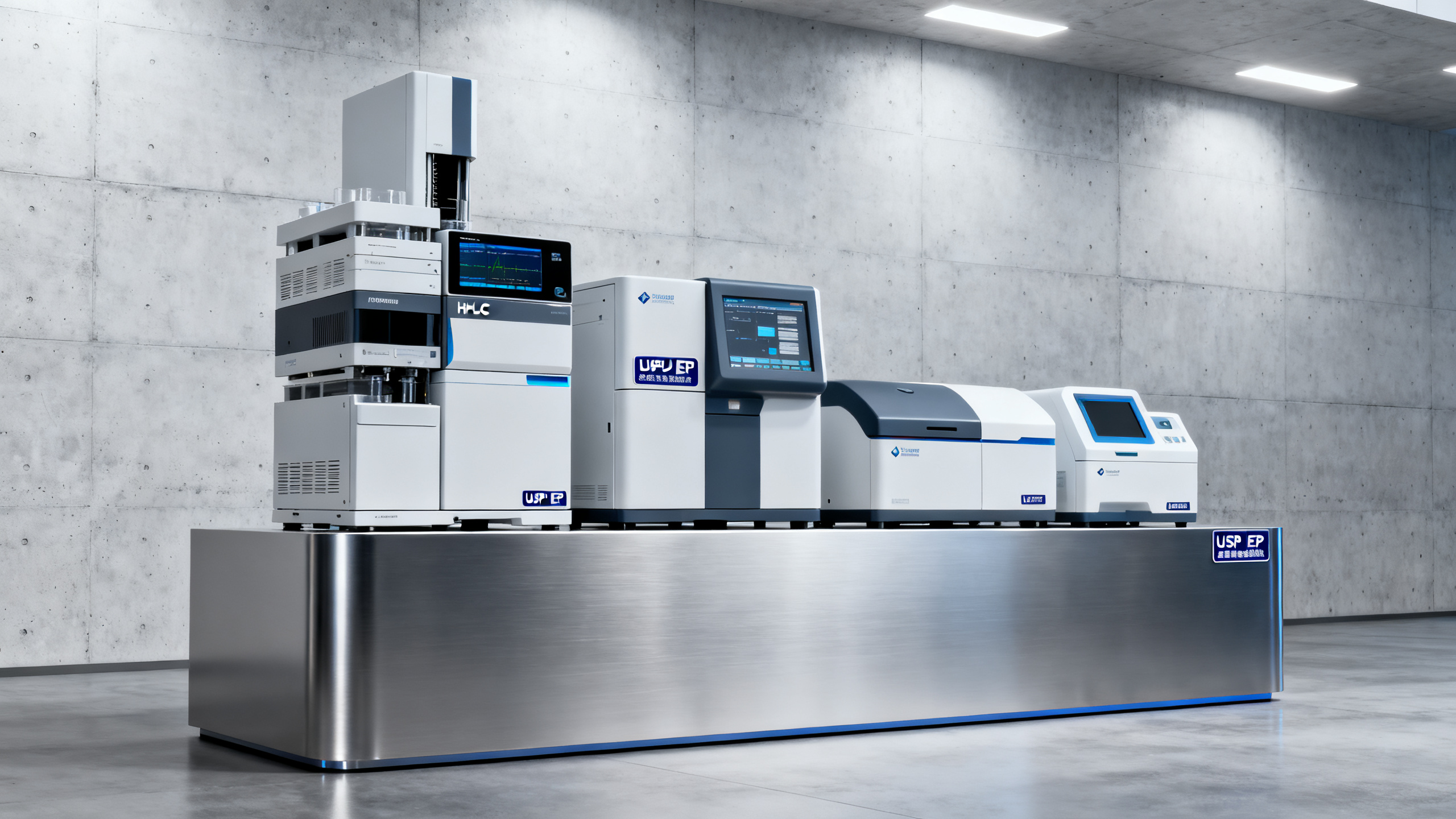
The 5th TCM High-Quality Development Conference was held on May 10, 2026, at the Tianjin Meijiang Convention and Exhibition Center. During the three-day event, procurement delegations from Saudi Arabia, the United Arab Emirates, and Brazil conducted on-site evaluations of domestically produced high-performance liquid chromatography (HPLC) systems, near-infrared spectroscopy (NIRS) analyzers, and rapid heavy-metal detection equipment for traditional Chinese medicine (TCM). According to official organizers, preliminary export agreements for lab and analytics equipment totaled over RMB 120 million, with 73% of interested buyers explicitly requiring USP/EP pharmacopoeial method presets and audit trail functionality.
Impact on Specific Industry Segments
Lab Instrument Exporters & OEM Manufacturers
These enterprises face direct demand pressure stemming from international procurement criteria tied to TCM quality assurance. The 73% requirement for USP/EP method presets and audit trails signals a shift from basic hardware supply toward regulated, software-integrated instrumentation — affecting product design cycles, validation documentation, and post-sale technical support capacity.
Regulatory Compliance & Validation Service Providers
With growing emphasis on pharmacopoeial alignment and data integrity features (e.g., audit trails), demand is rising for third-party validation, 21 CFR Part 11 readiness assessments, and pharmacopoeia-specific method transfer support. This segment is affected through increased inquiry volume and tighter timelines for documentation deliverables.
TCM Exporters & Contract Testing Laboratories
TCM producers and labs engaged in overseas market access are increasingly required to demonstrate analytical traceability and method consistency across jurisdictions. Their reliance on compliant instrumentation directly influences their ability to meet import requirements in Gulf Cooperation Council (GCC) and Mercosur-regulated markets — making equipment selection a strategic upstream decision, not just an operational one.
Supply Chain & Certification Intermediaries
Entities facilitating CE marking, FDA registration, or GCC conformity assessment are observing more frequent pre-submission queries related to instrument-level compliance — particularly around electronic record integrity and pharmacopoeial method verification. This affects workflow prioritization and resource allocation for technical review teams.
What Relevant Enterprises or Practitioners Should Focus On Now
Monitor evolving pharmacopoeial alignment requirements in target export markets
Current buyer specifications emphasize USP/EP compatibility — but regional pharmacopoeias (e.g., Saudi Pharmacopoeia, Brazilian Pharmacopoeia) are undergoing updates. Enterprises should track official revisions and assess whether existing method presets cover newly adopted monographs or testing parameters.
Verify audit trail implementation against internationally accepted definitions
“Audit trail” is not uniformly defined across regulatory frameworks. Buyers citing this requirement may expect ALCOA+ principles (Attributable, Legible, Contemporaneous, Original, Accurate, Complete, Consistent, Enduring, Available). Companies should confirm whether their software logs meet these attributes — not just whether the feature is enabled.
Prepare for pre-shipment compliance documentation packages
Overseas procurement delegations are requesting validation summaries and pharmacopoeial method verification reports during early engagement. Firms should standardize templates for IQ/OQ documentation, method equivalence statements, and user-accessible configuration files — reducing response time for formal RFQs.
Distinguish between expressed interest and binding procurement criteria
The reported 1.2 billion RMB in意向 orders reflects preliminary expressions, not executed contracts. Enterprises should avoid scaling production or certification efforts based solely on exhibition feedback; instead, prioritize follow-up with buyers who provided written technical specifications or requested formal validation protocols.
Editorial Observation / Industry Insight
Observably, this event functions less as a discrete commercial milestone and more as a visible inflection point: it confirms that TCM internationalization is now driving downstream instrumentation standards — not the reverse. Analysis shows that demand for pharmacopoeia-aligned, audit-trail-capable devices is no longer niche but structurally embedded in procurement delegation briefs from emerging markets. From an industry perspective, this signals a widening gap between general-purpose lab equipment and regulated analytical infrastructure — a distinction increasingly enforced by end-user expectations rather than manufacturer initiative. Current developments are better understood as a policy-adjacent signal: they reflect alignment between national TCM export strategy and international regulatory convergence trends, rather than standalone market demand.
This is not yet a fully matured export channel — but it is a measurable acceleration in specification-driven procurement behavior. Sustained observation is warranted, particularly regarding whether subsequent editions of the conference yield higher contract conversion rates or broader geographic participation beyond the initial three delegations.
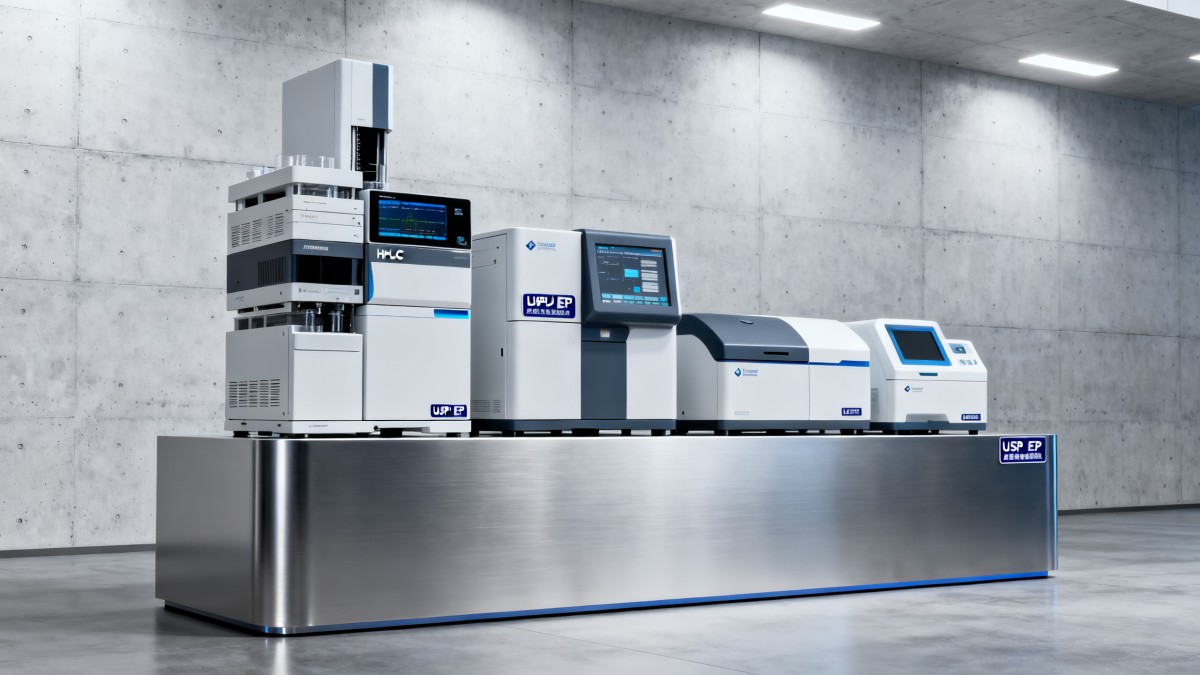
In summary, the conference underscores how TCM’s global expansion is reshaping technical expectations for supporting analytical infrastructure — shifting focus from device performance alone to verifiable compliance readiness. The current situation is best interpreted as an early-stage, specification-led market signal: actionable for firms already operating in regulated life sciences instrumentation, but still requiring careful validation before informing long-term capacity or certification investments.
Source: Official statistics and public announcements from the organizing committee of the 5th TCM High-Quality Development Conference.
Note: Conversion rates for the reported RMB 120 million in preliminary export agreements, and the timeline for buyer follow-up activities, remain under observation.
Technical Specifications
- How to Select Electronic Hotel Key Card Locks for Guest Rooms and Staff AreasAuthor :Safety Compliance Lead
- How to Select Lab Instruments for Reliable Chemical Analysis WorkflowsAuthor :Precision Metrology Expert
- How to Size a UPS for Server Rooms: Load, Runtime, and Redundancy FactorsAuthor :Grid Infrastructure Analyst
Expert Insights

Chief Security Architect
Dr. Thorne specializes in the intersection of structural engineering and digital resilience. He has advised three G7 governments on industrial infrastructure security.
Related Analysis
- Sep 17, 2026How to Select Electronic Hotel Key Card Locks for Guest Rooms and Staff AreasAuthor :Safety Compliance Lead
- Sep 16, 2026How to Select Lab Instruments for Reliable Chemical Analysis WorkflowsAuthor :Precision Metrology Expert
- Sep 15, 2026How to Size a UPS for Server Rooms: Load, Runtime, and Redundancy FactorsAuthor :Grid Infrastructure Analyst
Core Sector // 01
Security & Safety
- How to Select Lab Instruments for Reliable Chemical Analysis WorkflowsAuthor :Precision Metrology Expert

- Buying Lint-Free Wipes in Bulk: How to Match Material and Packaging to Cleanroom UseAuthor :Precision Metrology Expert

- How to Choose a Class II Biosafety Cabinet Supplier for Compliant Lab ProcurementAuthor :Precision Metrology Expert

- Wholesale Binocular Microscopes: Comparing Specifications, MOQs, and QC RiskAuthor :Precision Metrology Expert

- How to Evaluate a UV-Visible Spectrophotometer Manufacturer for Lab Accuracy?Author :Precision Metrology Expert

- China Temporarily Bans Helium ExportsAuthor :Precision Metrology Expert

- What to Check Before Buying a Digital Lab Incubator Wholesale OrderAuthor :Precision Metrology Expert

- Electric Muffle Furnace Wholesale: How to Evaluate Capacity, Temperature, and MOQAuthor :Precision Metrology Expert