How to Select an End Suction Water Pump for Industrial Water Transfer
Author
Date Published
Reading Time
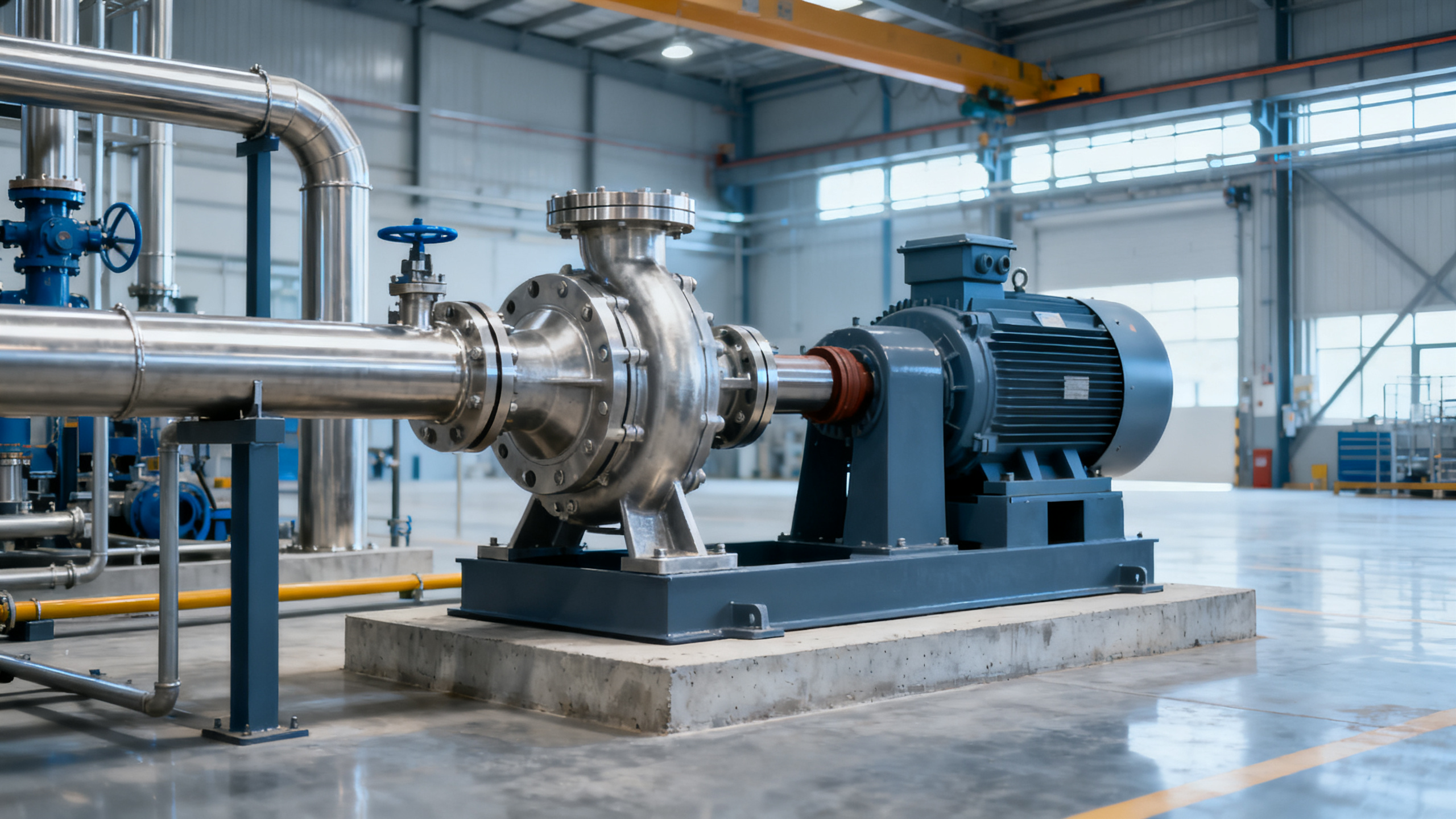
How to Select an End Suction Water Pump for Industrial Water Transfer
Selecting the right end suction water pump for industrial water transfer directly affects system reliability, energy efficiency, and long-term operating costs.
The decision rarely comes down to flow and head alone.
In real projects, water quality, operating profile, maintenance access, and compliance targets shape the better choice.
A well-matched end suction water pump can stabilize performance for years.
A poorly matched unit often drives repeat shutdowns, seal failures, energy waste, and avoidable replacement costs.
This guide focuses on practical selection points for industrial water transfer, so decisions stay technical, commercial, and operational at the same time.
Start with the Actual Duty, Not the Catalog
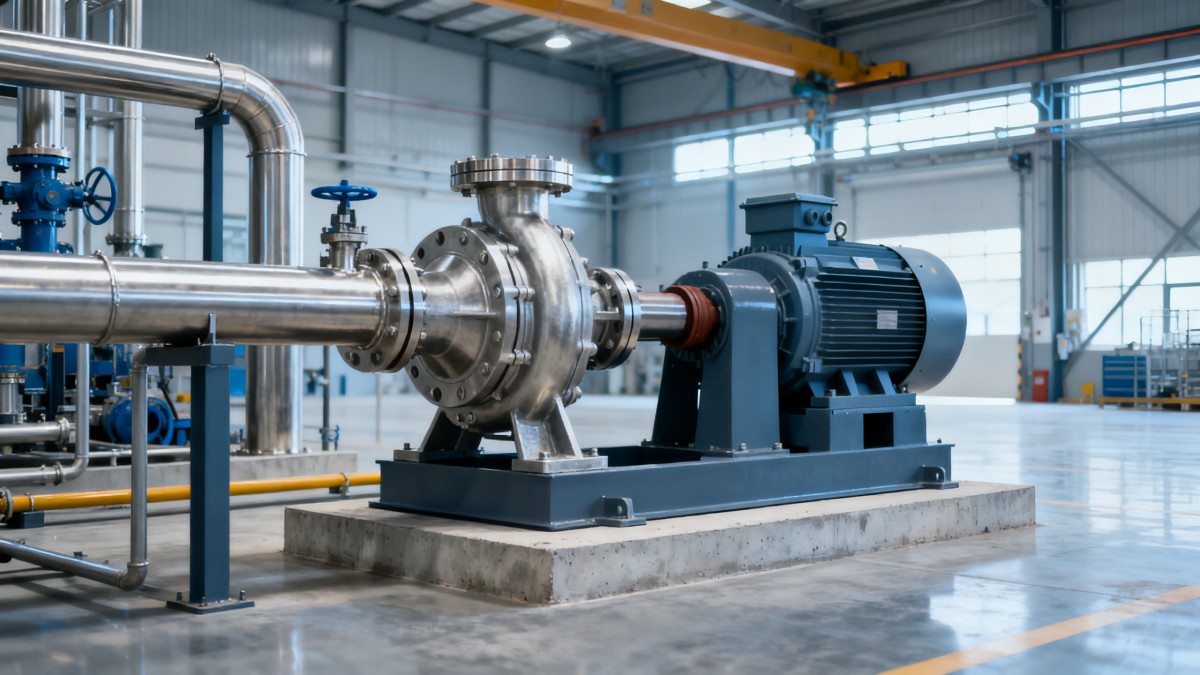
An end suction water pump should be selected around the real operating point, not the best-looking catalog curve.
That sounds obvious, but it is still where many industrial pump decisions go off track.
Start by confirming four basics:
- Required flow rate across normal, minimum, and peak demand
- Total dynamic head at each duty point
- Liquid temperature and water quality
- Operating pattern, including continuous or intermittent service
Many systems are sized around one nominal number.
The better approach is to map the full duty window.
If the end suction water pump runs far left or right of its best efficiency point, vibration and wear usually rise faster than expected.
This also means the selected pump should match the system curve, not just the design estimate prepared early in procurement.
Confirm Flow, Head, and System Curve Behavior
For industrial water transfer, static head is only one part of the picture.
Friction losses from long pipe runs, fittings, strainers, valves, and heat exchangers can shift the duty point significantly.
A common mistake is underestimating future fouling or temporary operating restrictions.
When that happens, the end suction water pump may never reach target delivery.
During selection, check whether the system will operate at one fixed duty or several load conditions.
If demand changes through the day, a variable frequency drive may improve control and reduce energy loss.
That said, not every end suction water pump performs equally well under speed variation.
Review the pump curve, motor range, and minimum flow limit together.
A quick selection check
- Plot the real system curve using installed pipe data.
- Locate the pump best efficiency point.
- Keep the duty point close to that zone.
- Check overload risk at low head or high flow.
- Allow a sensible margin, but avoid excessive oversizing.
Match Materials to Water Quality and Site Conditions
Material selection is where many long-term failures start.
An end suction water pump moving clean ambient water has very different needs from one handling warm process water, treated water, or mildly corrosive liquid.
For standard industrial transfer, cast iron casings are still common.
But if chloride levels, chemical traces, or humidity are elevated, stainless steel or upgraded wetted components may be justified.
The same applies to shaft material, impeller choice, wear rings, and elastomers.
Seal compatibility deserves extra attention.
A mechanical seal that works well on one line may fail early when temperature, solids, or cleaning chemicals change.
In practice, reviewing actual water analysis often saves more money than negotiating a lower pump price.
Material questions worth asking
- Is the water clean, treated, abrasive, or chemically active?
- Will the pump face outdoor exposure or washdown conditions?
- Are there temperature swings that affect seals or gaskets?
- Do local standards require specific material traceability?
Do Not Overlook NPSH, Cavitation, and Suction Layout
If an end suction water pump sounds good on paper but struggles in service, suction conditions are often the reason.
Available NPSH must exceed required NPSH with a realistic safety margin.
Warm water, long suction piping, poor tank geometry, and excessive fittings can quickly reduce that margin.
Cavitation does not always appear as an immediate failure.
More often, it shows up as noise, unstable flow, impeller damage, and falling performance over time.
When evaluating an end suction water pump, review the full suction arrangement, not only the pump datasheet.
Straight inlet length, reducer orientation, and suction elevation can materially affect reliability.
Evaluate Efficiency Across the Life Cycle
Purchase price is visible.
Operating cost is usually much larger.
For many industrial systems, electricity over the pump life far exceeds the initial equipment cost.
That is why a slightly higher-efficiency end suction water pump can still be the lower-cost option.
The more useful comparison is total cost of ownership.
From a decision standpoint, the best end suction water pump is often the one that balances efficiency, serviceability, and predictable support.
Check Maintenance Access and Service Model Early
Maintenance is rarely discussed enough during selection.
Yet it has a direct effect on uptime.
A compact end suction water pump may fit the layout, but service can become difficult if seal replacement or coupling alignment needs major disassembly.
Back pull-out designs can reduce intervention time.
So can standard bearing frames and locally available spare kits.
It also helps to verify support expectations before purchase.
Ask about lead times, commissioning support, vibration limits, warranty conditions, and field service response.
For critical duty, those points can matter as much as rated performance.
Review Compliance, Documentation, and Supplier Credibility
Industrial water transfer equipment is increasingly reviewed through a compliance lens.
That includes CE, UL, ISO, site rules, testing records, and quality documentation.
An end suction water pump that meets hydraulic needs but lacks clear documentation can still delay project approval.
This is especially relevant in multi-country procurement or EPC environments.
Look for consistent test data, traceable materials, dimensional drawings, and performance guarantees tied to the offered configuration.
Supplier credibility also deserves a practical review.
Can the manufacturer support startup, provide replacement parts, and answer technical deviations quickly?
In procurement terms, the risk profile of the supplier is part of the pump selection.
A Practical Selection Framework
When comparing options, keep the review simple and disciplined.
A strong end suction water pump selection usually follows this order:
- Validate system duty with real operating data.
- Check the pump curve against the system curve.
- Confirm NPSH margin and suction layout.
- Match materials and seals to water conditions.
- Review energy use across expected run hours.
- Assess maintenance effort and spare parts access.
- Verify compliance documents and supplier support.
That sequence keeps technical risk visible before commercial comparison takes over.
It also helps separate a low bid from a sound industrial decision.
Final Decision: Select for Stable Operation, Not Just Initial Cost
Choosing an end suction water pump for industrial water transfer is really a reliability decision with cost consequences attached.
The strongest selections are grounded in real duty data, realistic margins, compatible materials, and credible support.
That approach reduces surprise failures and makes performance easier to defend later.
Before issuing a final purchase decision, compare shortlisted options against lifecycle cost, maintainability, and compliance readiness.
A well-selected end suction water pump should not only meet the specification today.
It should keep the water transfer system stable, efficient, and easier to manage over the years ahead.
Technical Specifications
- How to Select Electronic Hotel Key Card Locks for Guest Rooms and Staff AreasAuthor :Safety Compliance Lead
- How to Select Lab Instruments for Reliable Chemical Analysis WorkflowsAuthor :Precision Metrology Expert
- How to Size a UPS for Server Rooms: Load, Runtime, and Redundancy FactorsAuthor :Grid Infrastructure Analyst
Expert Insights

Chief Security Architect
Dr. Thorne specializes in the intersection of structural engineering and digital resilience. He has advised three G7 governments on industrial infrastructure security.
Related Analysis
- Sep 17, 2026How to Select Electronic Hotel Key Card Locks for Guest Rooms and Staff AreasAuthor :Safety Compliance Lead
- Sep 16, 2026How to Select Lab Instruments for Reliable Chemical Analysis WorkflowsAuthor :Precision Metrology Expert
- Sep 15, 2026How to Size a UPS for Server Rooms: Load, Runtime, and Redundancy FactorsAuthor :Grid Infrastructure Analyst
Core Sector // 01
Security & Safety
- How to Size a Wafer Butterfly Valve for HVAC Chilled-Water and Heating LoopsAuthor :Environmental Engineering Director

- How Pressure Class and Joint Design Affect Long-Term Performance of Ductile Iron Pipes in Drainage InfrastructureAuthor :Environmental Engineering Director

- How Ductile Iron Pipe Joints Affect Installation Reliability and Leak ControlAuthor :Environmental Engineering Director

- How to Size Effluent Treatment Equipment for Variable Industrial Wastewater LoadsAuthor :Environmental Engineering Director

- US Battery Push Raises New Entry Rules for SuppliersAuthor :Environmental Engineering Director

- EU EMC Rule Tightens for Water Treatment ExportsAuthor :Environmental Engineering Director

- EU REACH Restriction Targets PFAS Water Treatment ImportsAuthor :Environmental Engineering Director

- EU Mandates EN 14113:2026 for Water Treatment ExportsAuthor :Environmental Engineering Director