How to Choose Industrial Water Treatment Systems for Different Process Water Needs
Author
Date Published
Reading Time
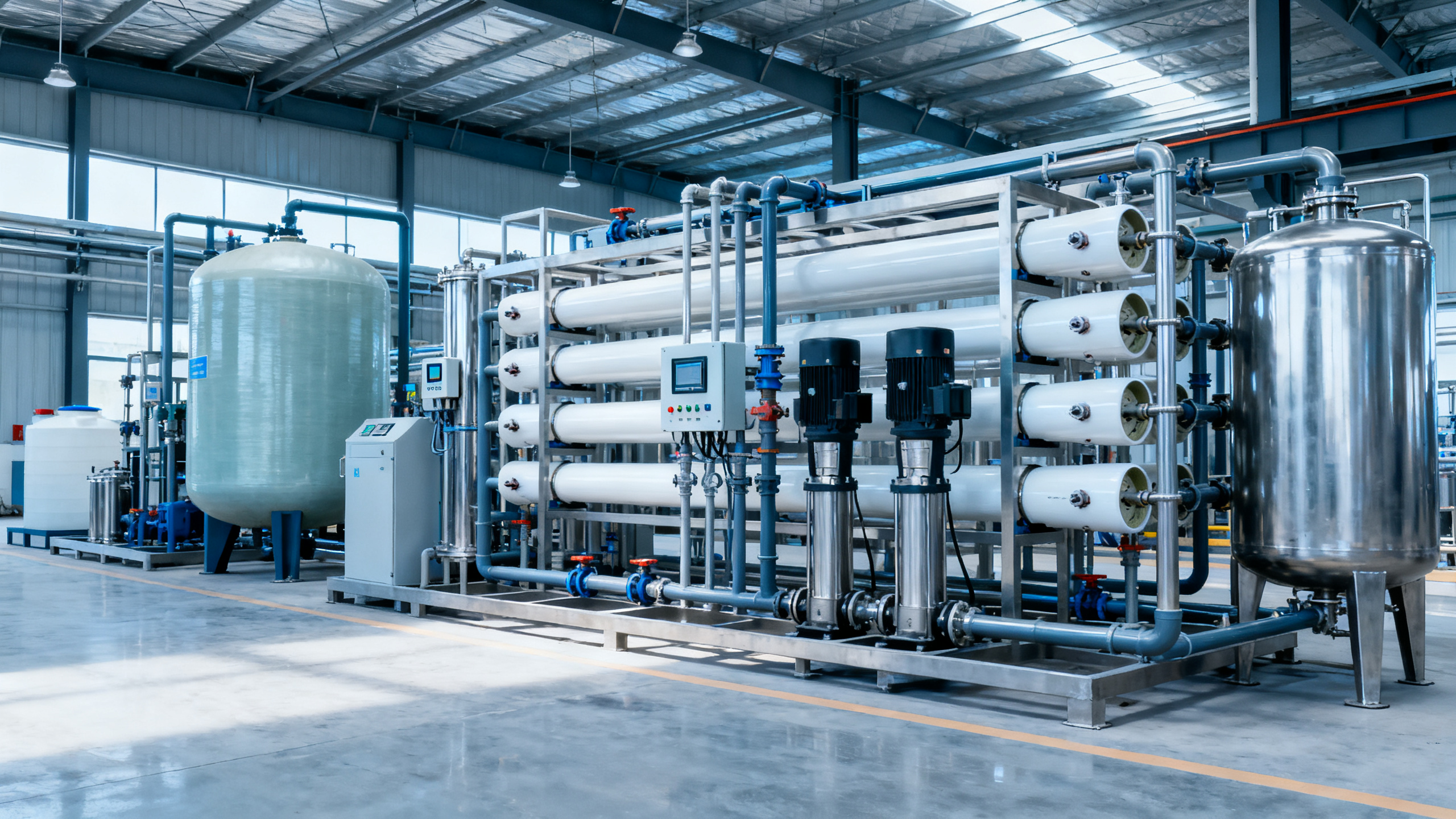
Choosing industrial water treatment systems is rarely a simple equipment decision. Process water quality affects uptime, product consistency, asset life, discharge compliance, and project economics. When one facility needs boiler feedwater, cooling water, rinse water, and wastewater recovery at the same time, a single treatment logic usually falls short.
That is why system selection starts with process intent rather than technology preference. Filtration, softening, demineralization, reverse osmosis, disinfection, and reuse each solve different problems. The stronger approach is to match water risks, operating conditions, and compliance targets to a treatment train that remains reliable under real plant conditions.
Why process water needs now demand closer evaluation
Across heavy industry, water is no longer treated as a background utility. It is tied to energy efficiency, environmental performance, corrosion control, and production stability. That shift has made industrial water treatment systems more strategic in project planning.
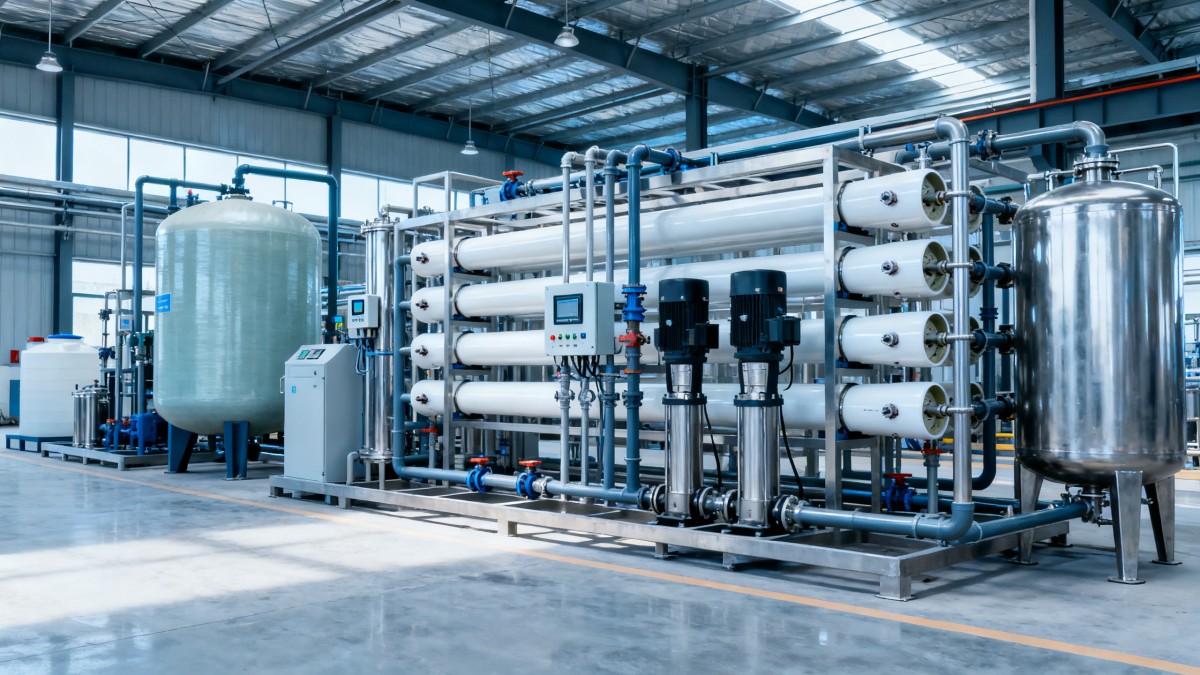
The pressure is coming from several directions at once. Water sources are more variable. Discharge limits are tighter. Reuse targets are rising. Equipment is also expected to run longer with fewer unplanned interruptions.
From the perspective of Global Industrial Core, this is part of a wider infrastructure question. Foundational systems must perform safely, measurably, and consistently. Water treatment sits at the intersection of environment, measurement, power use, and mechanical integrity.
In practical terms, poor system selection often appears later as scaling, membrane fouling, biofilm growth, unstable conductivity, failed audits, or excessive chemical consumption. By that stage, correction is much more expensive than careful specification at the beginning.
Start with the water, not the equipment list
The first question is not which brand or package looks most complete. It is what the incoming water contains, what the process requires, and what the outlet must meet. That baseline defines the treatment path.
Raw water may come from municipal supply, surface water, groundwater, desalinated water, or mixed sources. Each brings a different profile of hardness, turbidity, silica, organics, suspended solids, microbes, chlorides, and seasonal variability.
Process demand is equally important. Some lines need visually clean wash water. Others need low hardness. Others require ultra-low conductivity, controlled TOC, or predictable microbiological quality. Without that distinction, industrial water treatment systems are often oversized in one area and weak in another.
Core inputs that shape system design
- Source water analysis, including seasonal or batch variation
- Required treated water quality at each process point
- Peak and average flow demand
- Operating temperature and pressure conditions
- Discharge, reuse, and permitting constraints
- Available footprint, utilities, and maintenance capability
This early definition work is not paperwork for its own sake. It prevents later conflicts between process guarantees, piping layouts, instrumentation strategy, and lifecycle cost assumptions.
Different process needs call for different treatment trains
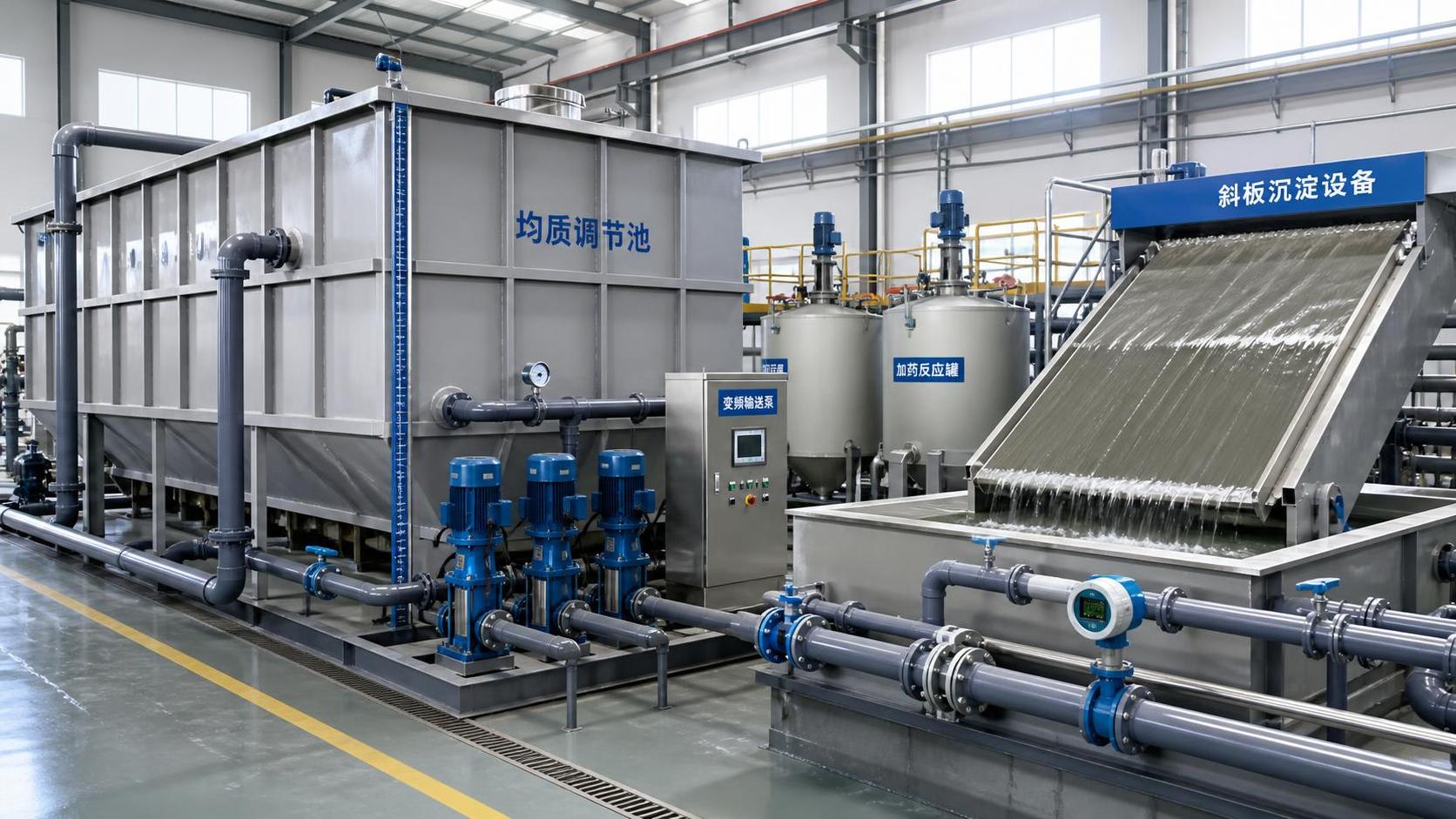
Most industrial water treatment systems are not single machines. They are combinations of pretreatment, primary purification, polishing, monitoring, and waste handling. The right sequence depends on the duty.
Cooling water
Cooling systems usually prioritize scale control, corrosion management, suspended solids reduction, and microbiological stability. Media filtration, side-stream filtration, softening, dosing, and blowdown control are common building blocks.
Boiler feedwater
Boilers demand much tighter control. Hardness, dissolved solids, silica, and oxygen must be managed to protect heat transfer surfaces. Softening may be enough for low-pressure duty, but higher-pressure systems often require RO, dealkalization, or demineralization.
Process wash and rinse water
Here, the key issue is often product quality. Particulate carryover, hardness spotting, residual chlorine, or microbial contamination can directly affect surface finish or downstream chemistry. Cartridge filtration, activated carbon, UV, and RO are typical options.
High-purity and precision applications
Electronics, specialty coatings, laboratory support, and some power applications require tighter conductivity and silica limits. These systems often combine RO with mixed-bed polishing, EDI, degasification, and stronger online monitoring.
Wastewater recovery and reuse
When water scarcity or discharge cost is a driver, the target changes. Treatment must address solids, COD, oils, metals, salts, or biological load before reuse. The design may involve clarification, DAF, biological treatment, UF, RO, or evaporation.
Selection criteria that matter beyond headline performance
A system can meet water quality on paper and still be the wrong choice. Selection has to account for operating resilience, instrumentation quality, service burden, and how the package behaves under upset conditions.
Pretreatment usually determines reliability
Many failures blamed on membranes or resin beds begin upstream. Inconsistent turbidity, iron, oil, or oxidants can shorten component life quickly. Well-designed pretreatment often delivers the best return in industrial water treatment systems.
Instrumentation should support decisions, not just compliance
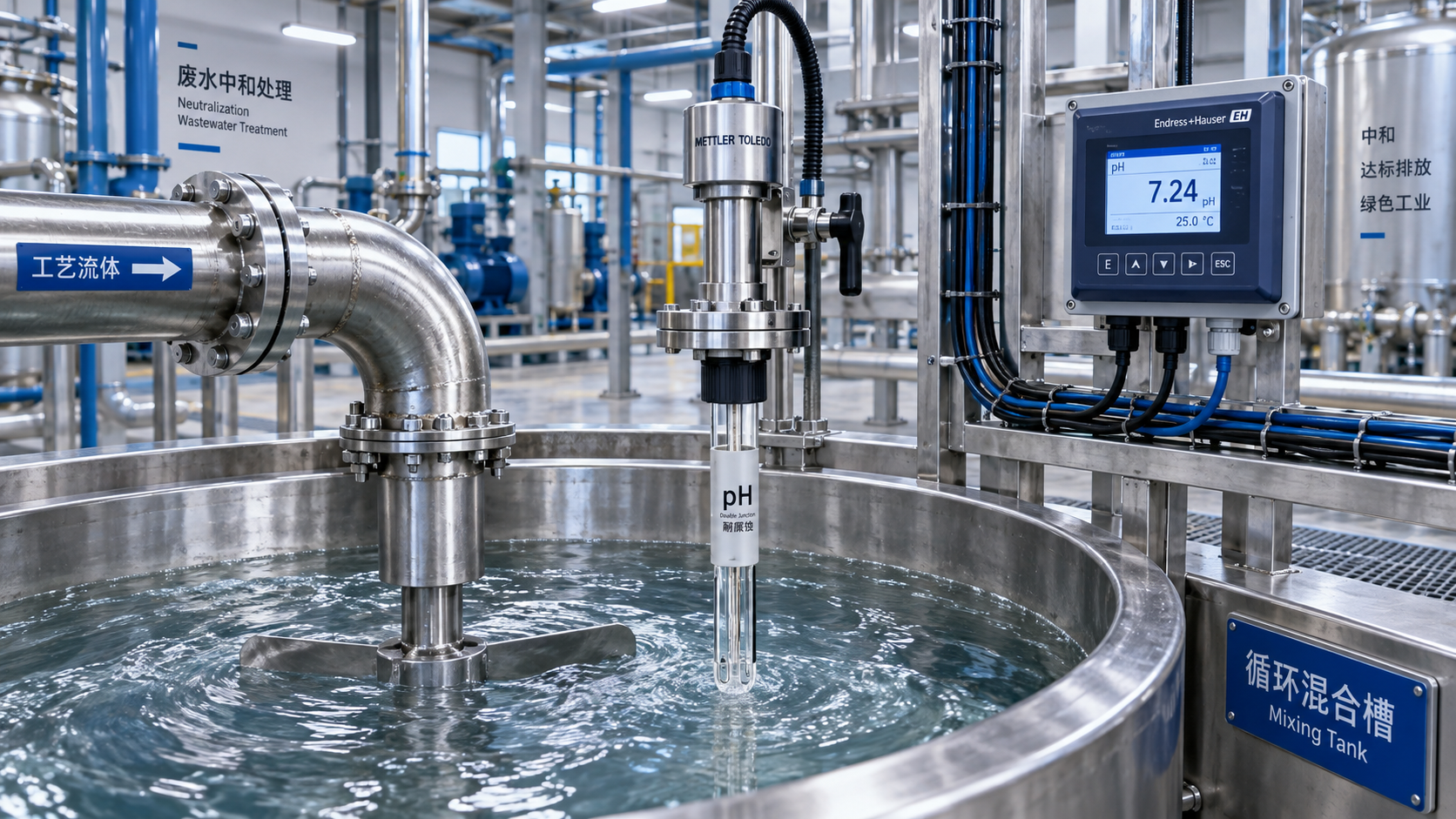
Conductivity, pH, ORP, turbidity, flow, pressure, and differential pressure data are essential. Accurate measurement supports dosing control, fouling detection, membrane cleaning triggers, and audit readiness.
Standards and documentation are part of system value
For international projects, CE, UL, ISO alignment, material traceability, performance test records, and O&M documentation can be as important as treatment efficiency. GIC’s editorial focus on compliance reflects a real procurement risk area.
Lifecycle cost deserves more weight than capex alone
Energy, chemicals, membrane replacement, waste disposal, labor, cleaning downtime, and reject losses can outweigh initial price differences. A lower-cost package may become the expensive option within one operating cycle.
Common mismatches seen in project execution
Several patterns appear repeatedly when industrial water treatment systems are selected too early or too generically. They usually emerge during commissioning, ramp-up, or the first seasonal shift.
- RO specified without enough pretreatment for variable raw water
- Softening chosen where silica or organics remain critical
- Reuse goals set without accounting for concentrate management
- Disinfection included without checking material compatibility
- Instrumentation reduced during value engineering, then replaced later
- Skid sizing based on average flow instead of peak process demand
These are not minor details. They affect schedule certainty, warranty discussions, and the ability to reach steady-state operation without repeated redesign.
A practical framework for comparing options
When several industrial water treatment systems appear technically acceptable, comparison should be structured. That avoids decisions driven only by price, familiarity, or vendor presentation quality.
Useful comparison points
- Guaranteed outlet quality under normal and upset conditions
- Tolerance for source water variability
- Recovery rate and waste stream burden
- Chemical dependency and cleaning frequency
- Spare parts availability and operator workload
- Integration with controls, alarms, and reporting systems
- Compliance records, FAT or SAT support, and documentation quality
A strong review process also tests assumptions. For example, if the system depends on stable feed pressure or narrow chlorine limits, that condition should be verified before procurement closes.
What to clarify before moving forward
The next step is usually not choosing a final model immediately. It is tightening the decision basis. That means confirming water analysis, mapping every use point, and separating must-have performance from preferred features.
It also helps to ask how the system will be measured after handover. If KPIs are unclear, even well-built industrial water treatment systems can become difficult to evaluate fairly.
A disciplined shortlist should connect process requirements, compliance expectations, maintenance reality, and total operating cost. With that structure in place, comparing treatment trains becomes more objective, and the final specification becomes easier to defend.
For complex facilities, the most useful move is often a targeted review of source water risk, treatment sequence, controls, and documentation standards before release for procurement. That early work tends to prevent the most expensive corrections later.
Technical Specifications
- Air Handling Unit Supplier Checklist: Performance Data, Lead Times, and SupportAuthor :Environmental Engineering Director
- Buying Fiberglass Water Tanks Wholesale: Compare Quotes and Delivery CostsAuthor :Environmental Engineering Director
- Choosing an XLPE Power Cable Supplier: Test Reports, Traceability, and Lead TimesAuthor :Grid Infrastructure Analyst
Expert Insights

Chief Security Architect
Dr. Thorne specializes in the intersection of structural engineering and digital resilience. He has advised three G7 governments on industrial infrastructure security.
Related Analysis
- Oct 19, 2026Air Handling Unit Supplier Checklist: Performance Data, Lead Times, and SupportAuthor :Environmental Engineering Director
- Oct 18, 2026Buying Fiberglass Water Tanks Wholesale: Compare Quotes and Delivery CostsAuthor :Environmental Engineering Director
- Oct 17, 2026Choosing an XLPE Power Cable Supplier: Test Reports, Traceability, and Lead TimesAuthor :Grid Infrastructure Analyst
Core Sector // 01
Security & Safety
- Buying Fiberglass Water Tanks Wholesale: Compare Quotes and Delivery CostsAuthor :Environmental Engineering Director

- How to Select Industrial pH Meters for Continuous Wastewater Process ControlAuthor :Environmental Engineering Director

- How to Size a Rinse Fill Cap Machine for Your Bottle Format and Target OutputAuthor :Environmental Engineering Director

- How to Size a Heavy-Duty Submersible Sewage Pump for High-Solids Lift StationsAuthor :Environmental Engineering Director

- How to Size a Wafer Butterfly Valve for HVAC Chilled-Water and Heating LoopsAuthor :Environmental Engineering Director

- How Pressure Class and Joint Design Affect Long-Term Performance of Ductile Iron Pipes in Drainage InfrastructureAuthor :Environmental Engineering Director

- How Ductile Iron Pipe Joints Affect Installation Reliability and Leak ControlAuthor :Environmental Engineering Director

- How to Size Effluent Treatment Equipment for Variable Industrial Wastewater LoadsAuthor :Environmental Engineering Director