How to Choose Reverse Osmosis Water Purification Systems for Different Feed Water Quality
Author
Date Published
Reading Time
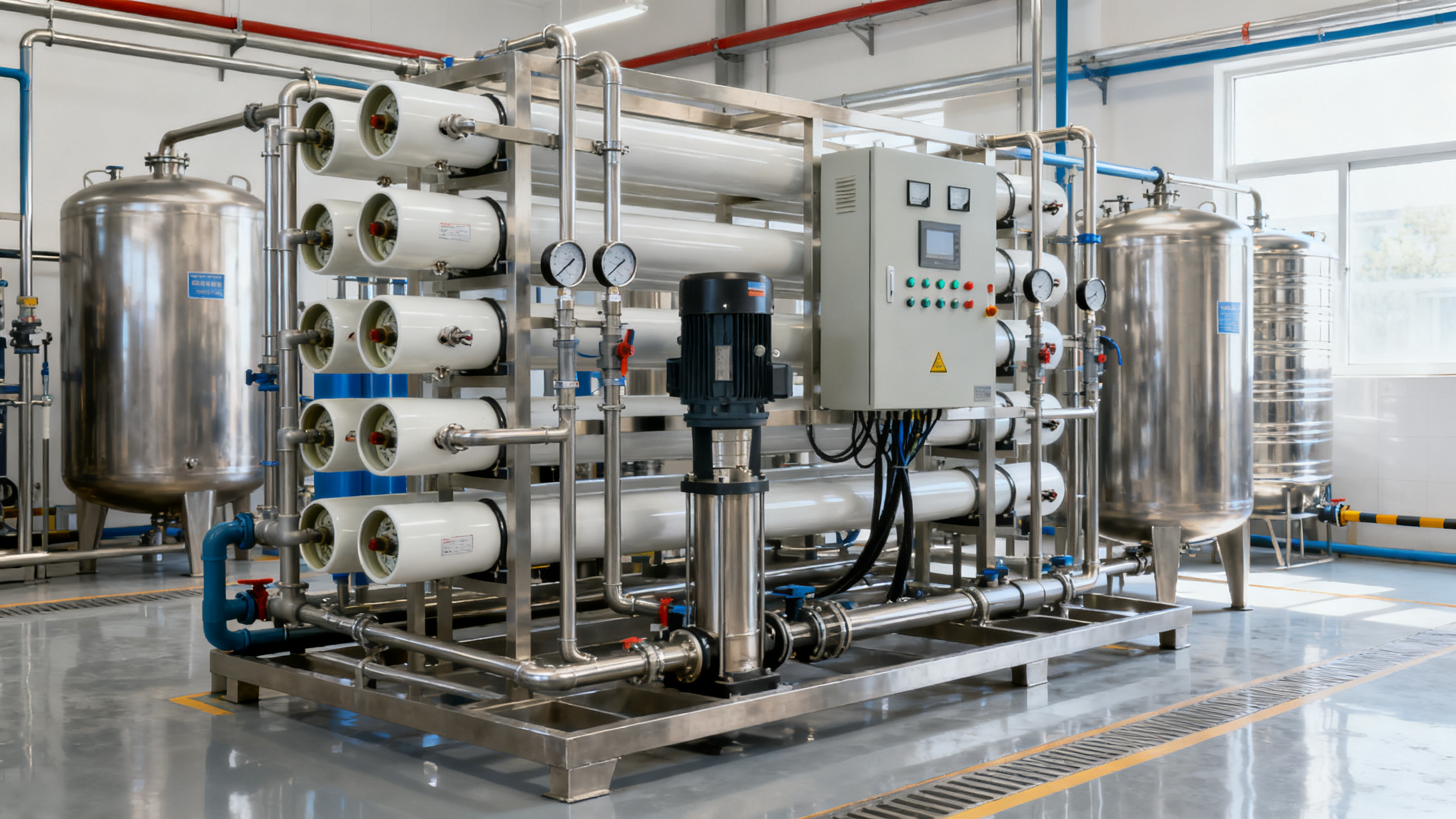
How to Choose Reverse Osmosis Water Purification Systems for Different Feed Water Quality
Selecting reverse osmosis water purification systems starts with feed water quality. That first step shapes membrane life, recovery rate, operating pressure, and total treatment cost.
In real projects, capacity alone is never enough. A system that looks efficient on paper can struggle if hardness, silica, organics, or suspended solids are underestimated.
That is why reverse osmosis water purification systems should be chosen as matched process packages, not as standalone membrane skids.
The practical goal is simple. Match pretreatment, membrane configuration, and cleaning strategy to the actual feed profile and required water quality.
Start with a Feed Water Quality Map
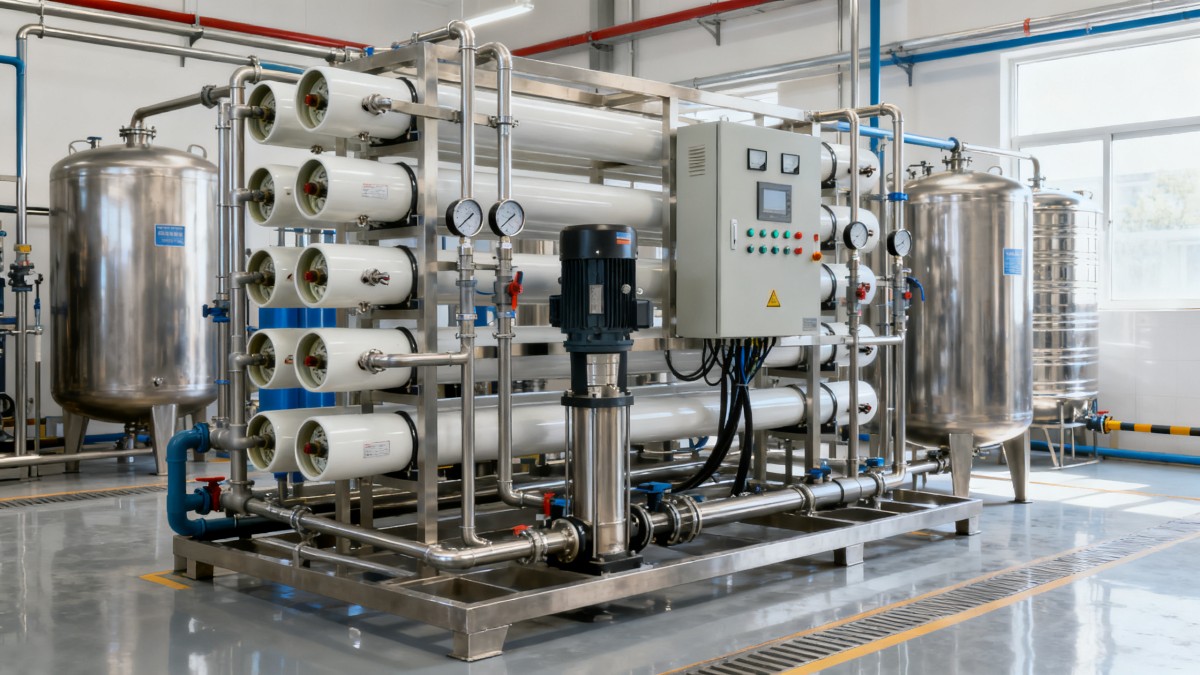
Before comparing reverse osmosis water purification systems, build a clear water analysis baseline. This avoids overdesign, underprotection, and repeated troubleshooting after commissioning.
At minimum, review these parameters:
- TDS and conductivity for salinity level
- Hardness, alkalinity, and pH for scaling tendency
- Silica for difficult inorganic fouling risk
- SDI and turbidity for suspended solids loading
- TOC, COD, or color for organic fouling potential
- Iron, manganese, and hydrogen sulfide for oxidation concerns
- Free chlorine or oxidants that may damage membranes
- Microbial indicators for biofouling tendency
This early map does more than guide equipment choice. It also helps define pretreatment depth, CIP frequency, and expected membrane replacement interval.
If seasonal fluctuations are common, design to worst credible conditions. That matters especially for surface water, mixed-source water, and industrial reuse streams.
Match System Design to the Main Feed Water Challenge
Most reverse osmosis water purification systems fail selection reviews for one reason. They are sized for flow, but not optimized for the dominant fouling or scaling mechanism.
High salinity feed water
For brackish water with elevated TDS, focus on membrane salt rejection, operating pressure, and energy demand. Recovery must stay realistic, especially when concentrate limits are strict.
If salinity rises further, seawater-grade configurations or staged designs may be necessary. In these cases, pressure vessel rating and energy recovery become more important.
High hardness and scaling ions
When calcium, magnesium, sulfate, or barium are high, scaling risk can quickly limit system recovery. Reverse osmosis water purification systems need stronger pretreatment and tighter recovery control.
Common responses include softening, antiscalant dosing, pH adjustment, or a lower design recovery. The right mix depends on chemistry stability and discharge economics.
High organics and biofouling tendency
Surface water and reused process water often carry organics, colloids, and microbial activity. Here, membrane fouling may become the true bottleneck, even when TDS is moderate.
In this situation, reverse osmosis water purification systems benefit from multimedia filtration, activated carbon, UF, or optimized chemical conditioning before the RO stage.
High suspended solids and turbidity
When SDI is high, membrane plugging happens fast. Cartridge filters alone are rarely enough for unstable solids loading.
A better route may include clarification, coagulation, media filtration, or UF. That pretreatment often decides whether RO performance stays stable for months or degrades in weeks.
Evaluate Pretreatment as Seriously as the RO Skid
A common procurement mistake is comparing only membrane brands, vessel count, or nominal permeate output. In practice, pretreatment usually decides system reliability.
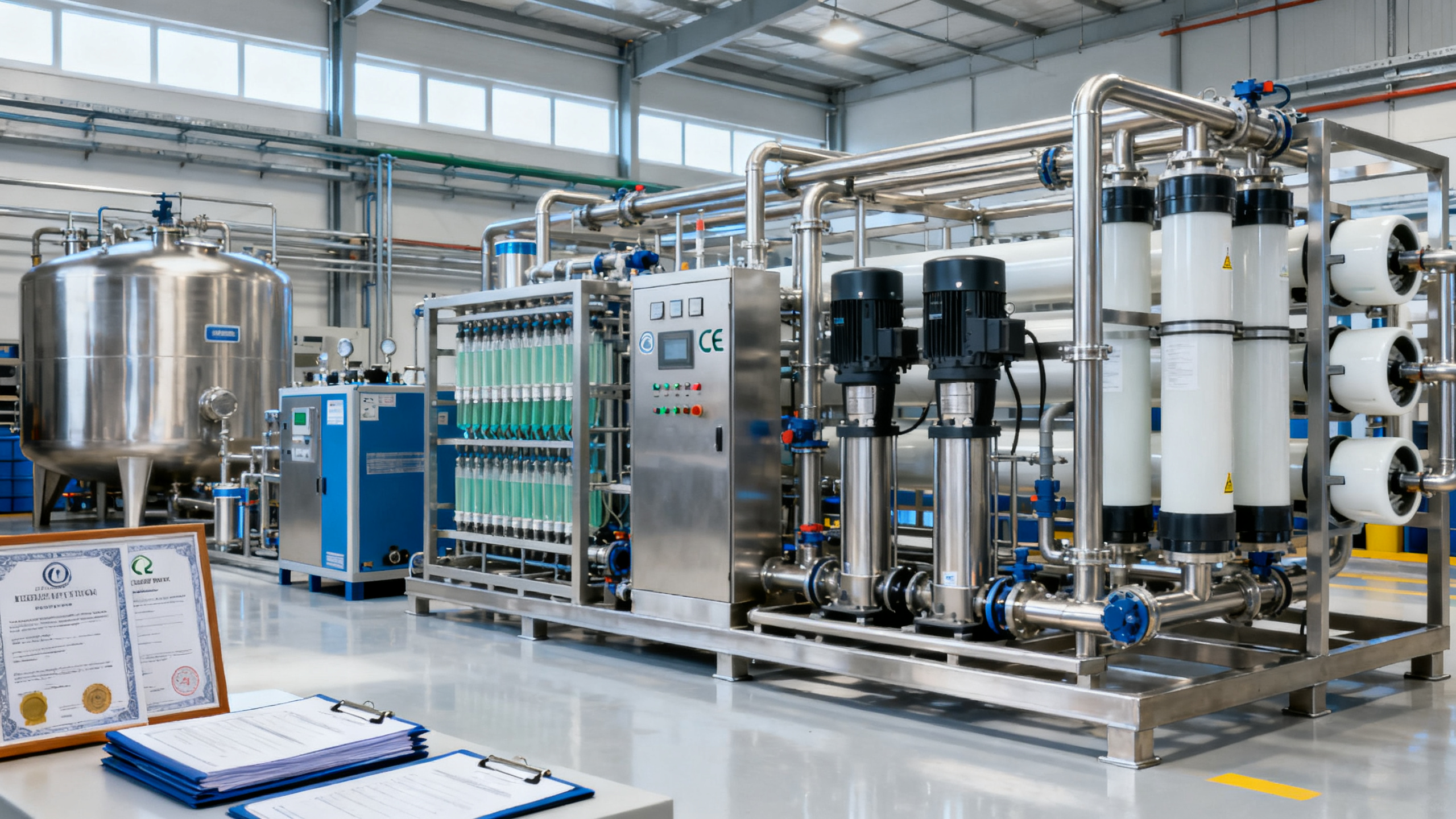
Well-matched reverse osmosis water purification systems usually include pretreatment designed around the actual foulants, not generic package assumptions.
Key pretreatment options include:
- Multimedia filtration for suspended solids reduction
- Activated carbon for chlorine and organics control
- Water softening for hardness removal
- Ultrafiltration for colloid and bacteria management
- Dechlorination by sodium bisulfite where needed
- Antiscalant dosing for controlled higher recovery
- pH adjustment for scale and rejection optimization
If free chlorine reaches polyamide membranes, damage can be rapid and irreversible. That single detail can turn a good specification into an expensive failure.
This also means pretreatment instrumentation matters. Online SDI, ORP, conductivity, pressure drop, and dosing control improve consistency and reduce blind spots.
Choose Membranes and Operating Windows for Real Conditions
Not all reverse osmosis water purification systems use the same membrane logic. Feed chemistry, temperature, and product water targets should guide membrane selection.
Operating window matters just as much as membrane type. Check design flux, recovery, crossflow, and temperature correction, not only nameplate output.
Conservative flux can reduce cleaning frequency and improve lifecycle value. That often beats an aggressive design that only looks better during bid comparison.
Assess Lifecycle Cost, Not Just Purchase Price
For reverse osmosis water purification systems, the cheapest quote is rarely the lowest-cost solution over time. Energy, chemicals, membrane replacement, labor, and downtime can outweigh initial savings.
A solid evaluation should compare:
- Specific energy consumption at actual salinity and recovery
- Pretreatment chemical demand and dosing stability
- Expected CIP frequency and cleaning downtime
- Membrane replacement cycle under real feed conditions
- Reject disposal or concentrate management cost
- Instrumentation, automation, and operator workload
This is where many decisions become clearer. A slightly higher upfront investment may deliver better uptime, lower fouling risk, and stronger compliance confidence.
In industrial settings, stable output often has more value than peak theoretical efficiency. That is especially true when downstream production depends on water quality consistency.
Use a Practical Selection Checklist Before Final Approval
A final decision on reverse osmosis water purification systems should bring technical fit, operating resilience, and supplier credibility into one review framework.
Use this short checklist before approval:
- Does the design reflect complete and recent water analysis?
- Is pretreatment sized for peak solids, organics, and oxidants?
- Are recovery and flux conservative enough for long-term stability?
- Is membrane compatibility confirmed for the chemical regime?
- Are CIP provisions, monitoring points, and alarms clearly defined?
- Has the supplier documented similar industrial references?
- Are CE, UL, ISO, and local compliance needs addressed where relevant?
- Is concentrate handling realistic within site constraints?
If any answer is uncertain, pause the purchase decision. A short technical clarification now is far cheaper than membrane failure, unstable output, or repeated redesign later.
Choosing reverse osmosis water purification systems is ultimately about fit. When feed water quality drives the design, performance becomes more predictable, operating cost becomes more transparent, and long-term value becomes easier to defend.
The best next move is practical. Verify the latest feed water data, stress-test pretreatment assumptions, and compare reverse osmosis water purification systems using lifecycle performance, not headline capacity alone.
Technical Specifications
- How to Select an Access Control Management System for Multi-Site FacilitiesAuthor :Safety Compliance Lead
- Portable Gas Monitor Calibration: How Often Is It Needed for Safe Confined-Space Work?Author :Precision Metrology Expert
- Wholesale Borosilicate Lab Glassware: How Buyers Verify Quality, Specs, and Supply ReliabilityAuthor :Precision Metrology Expert
Expert Insights

Chief Security Architect
Dr. Thorne specializes in the intersection of structural engineering and digital resilience. He has advised three G7 governments on industrial infrastructure security.
Related Analysis
- Sep 20, 2026How to Select an Access Control Management System for Multi-Site FacilitiesAuthor :Safety Compliance Lead
- Sep 19, 2026Portable Gas Monitor Calibration: How Often Is It Needed for Safe Confined-Space Work?Author :Precision Metrology Expert
- Sep 18, 2026Wholesale Borosilicate Lab Glassware: How Buyers Verify Quality, Specs, and Supply ReliabilityAuthor :Precision Metrology Expert
Core Sector // 01
Security & Safety
- How to Size a Wafer Butterfly Valve for HVAC Chilled-Water and Heating LoopsAuthor :Environmental Engineering Director

- How Pressure Class and Joint Design Affect Long-Term Performance of Ductile Iron Pipes in Drainage InfrastructureAuthor :Environmental Engineering Director

- How Ductile Iron Pipe Joints Affect Installation Reliability and Leak ControlAuthor :Environmental Engineering Director

- How to Size Effluent Treatment Equipment for Variable Industrial Wastewater LoadsAuthor :Environmental Engineering Director

- US Battery Push Raises New Entry Rules for SuppliersAuthor :Environmental Engineering Director

- EU EMC Rule Tightens for Water Treatment ExportsAuthor :Environmental Engineering Director

- EU REACH Restriction Targets PFAS Water Treatment ImportsAuthor :Environmental Engineering Director

- EU Mandates EN 14113:2026 for Water Treatment ExportsAuthor :Environmental Engineering Director