Industrial Wastewater Treatment Systems: Process Options, Costs, and Compliance Factors
Author
Date Published
Reading Time

Industrial Wastewater Treatment Systems: Process Options, Costs, and Compliance Factors
Choosing the right industrial wastewater treatment systems is no longer just an operational issue. It shapes compliance, cost control, and long-term plant resilience.
For manufacturers, EPC teams, and facility operators, the decision affects uptime, discharge risk, and future expansion options.
The challenge is simple to describe but harder to solve. Wastewater quality changes, regulations tighten, and treatment costs can rise fast without a solid design basis.
Why Industrial Wastewater Treatment Systems Matter More Now
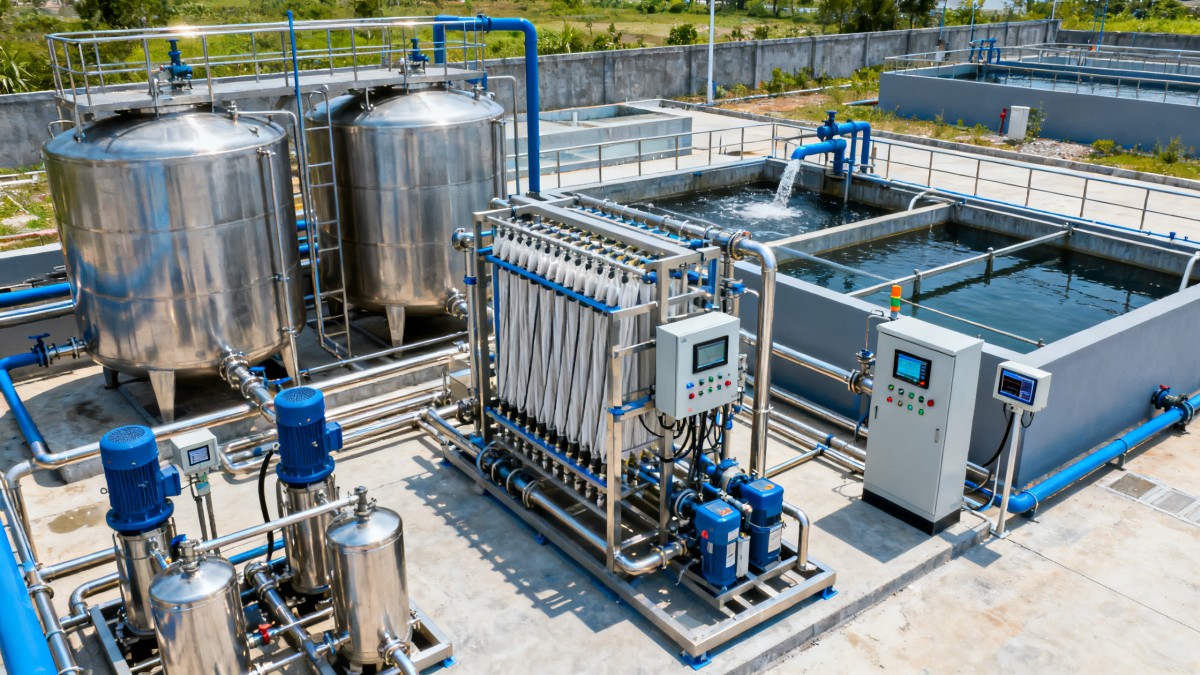
Industrial wastewater treatment systems now sit at the intersection of operations, ESG goals, and regulatory accountability.
In many sectors, wastewater is no longer a side utility issue. It has become a board-level risk and investment topic.
More obvious signals are stricter discharge permits, higher water tariffs, and growing pressure to reuse process water.
That also means poorly matched industrial wastewater treatment systems can create hidden costs for years.
These costs often appear as chemical overuse, sludge handling charges, unplanned downtime, or permit exceedance penalties.
Typical drivers behind investment
- New production lines increase hydraulic load and contaminant concentration.
- Corporate sustainability targets push water reuse and lower discharge volumes.
- Aging treatment assets fail to meet current performance or maintenance expectations.
- Customer and investor audits require stronger environmental controls and traceability.
Core Process Options in Industrial Wastewater Treatment Systems
The best industrial wastewater treatment systems are rarely built around one process alone.
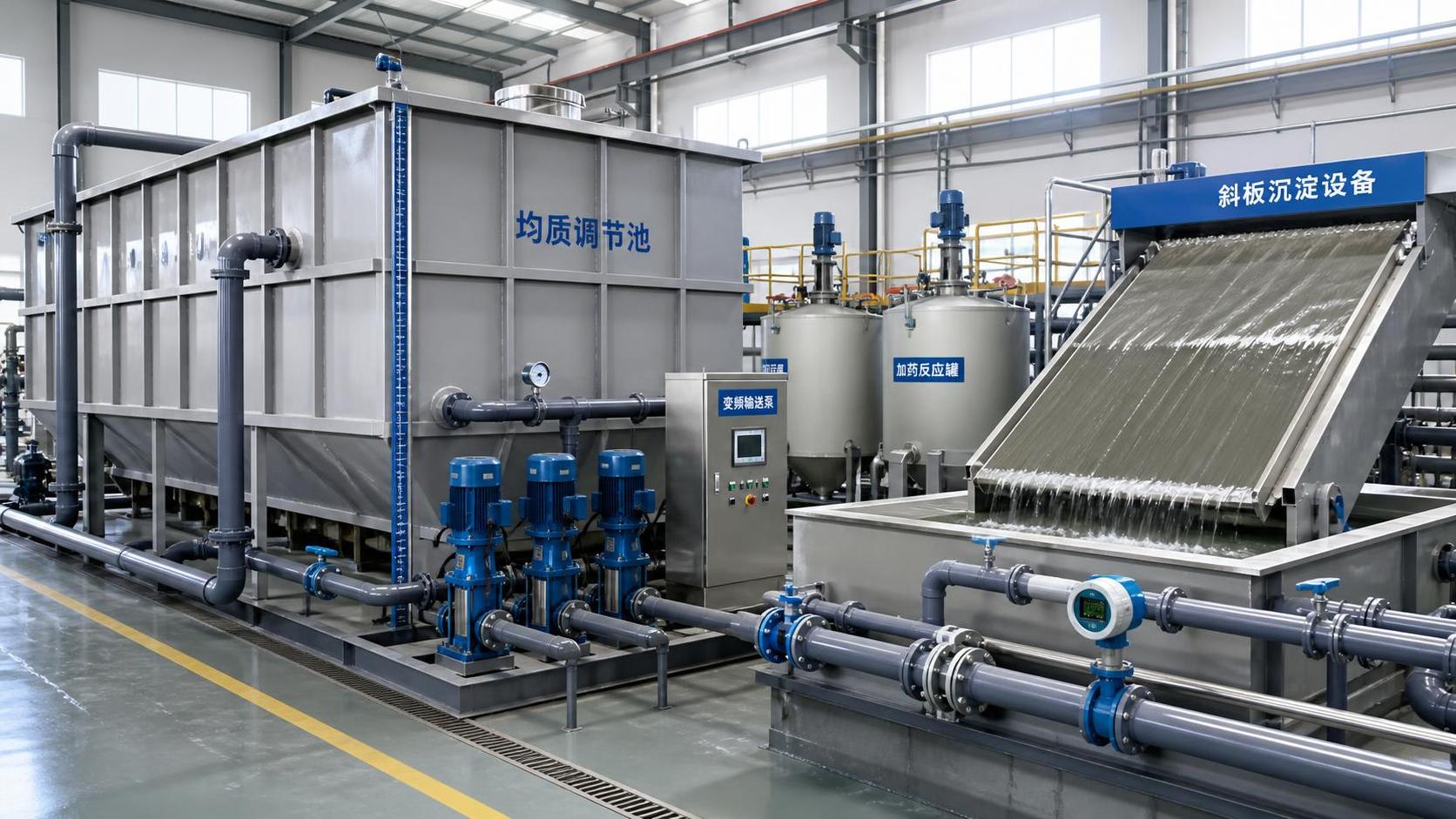
Most facilities need a treatment train. Each step removes a specific contaminant or stabilizes plant performance.
1. Preliminary and primary treatment
This stage removes large solids, grit, oils, and equalizes flow. It protects downstream equipment and smooths load variation.
- Screens and strainers for coarse solids.
- Oil-water separators for free oil and grease.
- Equalization tanks for flow and pH balancing.
- Primary clarification for settleable solids.
2. Physicochemical treatment
This option is common when wastewater contains metals, suspended solids, emulsified oils, or difficult pH conditions.
Popular methods include coagulation, flocculation, neutralization, dissolved air flotation, and chemical precipitation.
These industrial wastewater treatment systems are often selected for plating, chemical processing, and surface treatment plants.
3. Biological treatment
When BOD, COD, or biodegradable organics are the main issue, biological systems usually offer better operating economics.
Common technologies include activated sludge, MBR, MBBR, SBR, and anaerobic treatment.
The right choice depends on load stability, footprint, operator skill, and required effluent quality.
4. Tertiary and advanced treatment
Advanced industrial wastewater treatment systems target polishing, reuse, or very strict discharge limits.
- Sand or multimedia filtration for residual solids.
- Activated carbon for organics, color, and odor.
- UF and RO for high-purity reuse applications.
- Advanced oxidation for persistent contaminants.
- Disinfection using UV, ozone, or chlorination.
How to Match the System to the Wastewater Profile
In real projects, process selection starts with characterization, not vendor preference.
Many industrial wastewater treatment systems underperform because the influent was sampled too narrowly or under ideal conditions only.
A reliable design basis should capture peak loads, seasonal changes, cleaning cycles, and upset events.
Key parameters to review
- Flow rate, peak flow, and batch discharge patterns.
- pH, temperature, salinity, and conductivity.
- BOD, COD, TSS, TDS, oil and grease.
- Heavy metals, nutrients, solvents, and toxic compounds.
- Sludge generation and disposal route.
- Required discharge or reuse standard.
This step usually separates low-risk purchases from expensive redesigns. It also reveals whether modular expansion should be included from day one.
Cost Structure: CAPEX, OPEX, and Hidden Budget Risks
Procurement decisions often focus first on capital price. That is understandable, but incomplete.
Industrial wastewater treatment systems should be compared through total lifecycle cost, not equipment price alone.
What drives CAPEX
- Influent variability and treatment complexity.
- Required automation, redundancy, and monitoring.
- Civil works, tank materials, and site constraints.
- Reuse quality targets and membrane stages.
- Integration with existing utilities and controls.
What drives OPEX
- Chemical consumption and dosing stability.
- Power demand for aeration, pumping, and membranes.
- Labor, operator training, and maintenance intensity.
- Sludge dewatering, transport, and disposal.
- Membrane replacement and spare parts strategy.
A cheaper system can become the more expensive option if it produces high sludge volumes or needs frequent operator intervention.
Quick comparison table
Compliance Factors That Should Shape Procurement
Compliance should not be checked after equipment selection. It should shape the specification from the start.
Industrial wastewater treatment systems must meet local discharge limits, internal EHS policies, and often customer-driven reporting expectations.
For international projects, alignment with CE, UL, ISO, and documented operating procedures can also matter during approval.
Critical compliance questions
- Can the system meet normal and peak discharge conditions?
- What online monitoring and alarm functions are included?
- How is non-compliant flow isolated during upsets?
- Are records audit-ready for regulators and customers?
- Is sludge handling compliant with local waste rules?
From a risk perspective, compliance failure is rarely just a fine. It can halt production, delay exports, and damage customer confidence.
A Practical Buying Framework for Industrial Wastewater Treatment Systems
A more practical approach is to compare industrial wastewater treatment systems through business outcomes, not only technical brochures.
Use this checklist during evaluation
- Confirm influent data quality across normal, peak, and abnormal conditions.
- Request guaranteed effluent performance tied to your actual limits.
- Compare lifecycle cost over five to ten years.
- Review sludge volume and disposal implications early.
- Check automation depth, remote diagnostics, and spare parts access.
- Assess service support, commissioning scope, and operator training.
- Plan future capacity expansion before the layout is frozen.
This is where strong suppliers stand out. They translate wastewater data into process logic, operating cost realism, and compliance confidence.
Final Takeaway
The right industrial wastewater treatment systems protect more than discharge quality. They support uptime, cost predictability, and long-term site resilience.
When process selection, cost modeling, and compliance planning move together, procurement decisions become much stronger.
In practice, the smartest next step is simple. Start with accurate wastewater data, define performance targets clearly, and evaluate suppliers on total business value.
That approach gives industrial wastewater treatment systems the best chance to deliver reliable compliance and measurable operational return.
Technical Specifications
- How to Select an Emissions Monitoring System Analyzer for Compliance ReportingAuthor :Precision Metrology Expert
- How to Select an Access Control Management System for Multi-Site FacilitiesAuthor :Safety Compliance Lead
- Portable Gas Monitor Calibration: How Often Is It Needed for Safe Confined-Space Work?Author :Precision Metrology Expert
Expert Insights

Chief Security Architect
Dr. Thorne specializes in the intersection of structural engineering and digital resilience. He has advised three G7 governments on industrial infrastructure security.
Related Analysis
- Sep 21, 2026How to Select an Emissions Monitoring System Analyzer for Compliance ReportingAuthor :Precision Metrology Expert
- Sep 20, 2026How to Select an Access Control Management System for Multi-Site FacilitiesAuthor :Safety Compliance Lead
- Sep 19, 2026Portable Gas Monitor Calibration: How Often Is It Needed for Safe Confined-Space Work?Author :Precision Metrology Expert
Core Sector // 01
Security & Safety
- How to Size a Wafer Butterfly Valve for HVAC Chilled-Water and Heating LoopsAuthor :Environmental Engineering Director

- How Pressure Class and Joint Design Affect Long-Term Performance of Ductile Iron Pipes in Drainage InfrastructureAuthor :Environmental Engineering Director

- How Ductile Iron Pipe Joints Affect Installation Reliability and Leak ControlAuthor :Environmental Engineering Director

- How to Size Effluent Treatment Equipment for Variable Industrial Wastewater LoadsAuthor :Environmental Engineering Director

- US Battery Push Raises New Entry Rules for SuppliersAuthor :Environmental Engineering Director

- EU EMC Rule Tightens for Water Treatment ExportsAuthor :Environmental Engineering Director

- EU REACH Restriction Targets PFAS Water Treatment ImportsAuthor :Environmental Engineering Director

- EU Mandates EN 14113:2026 for Water Treatment ExportsAuthor :Environmental Engineering Director