Faster Property Transfer Registration Supports FIE Plant Expansion
Author
Date Published
Reading Time
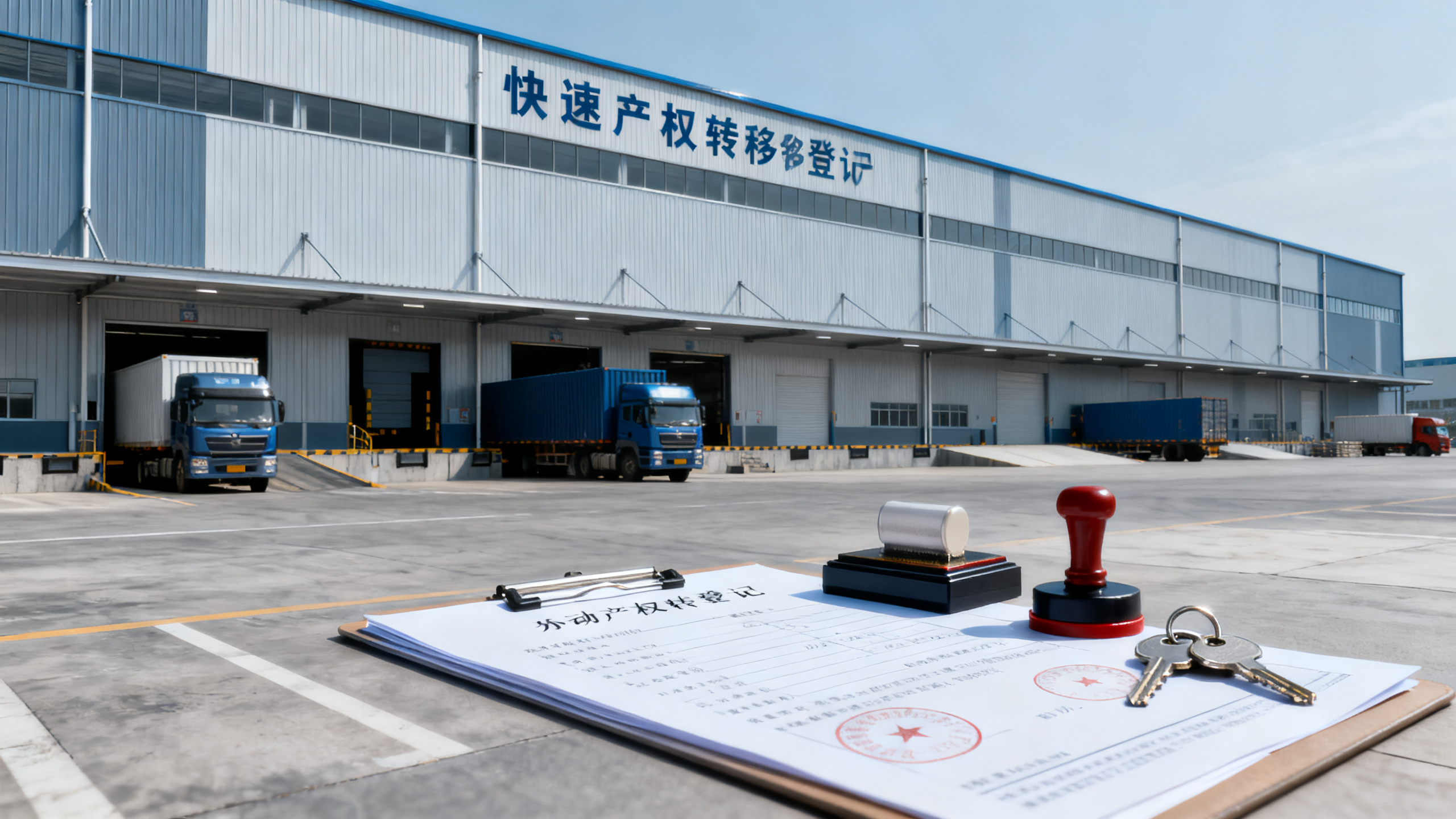
The timing of the event is not specified in the provided information, but the policy signal is clear: five departments jointly issued a June notice to streamline transfer registration for foreign-invested enterprises purchasing factories, warehouses, and other real estate in China. By shortening the registration timeline to within three working days and linking the process to a land-acquisition-and-immediate-construction approach, the change deserves attention from capital-intensive manufacturers, procurement teams, local project operators, and supply chain planners that depend on localized production and service capacity.
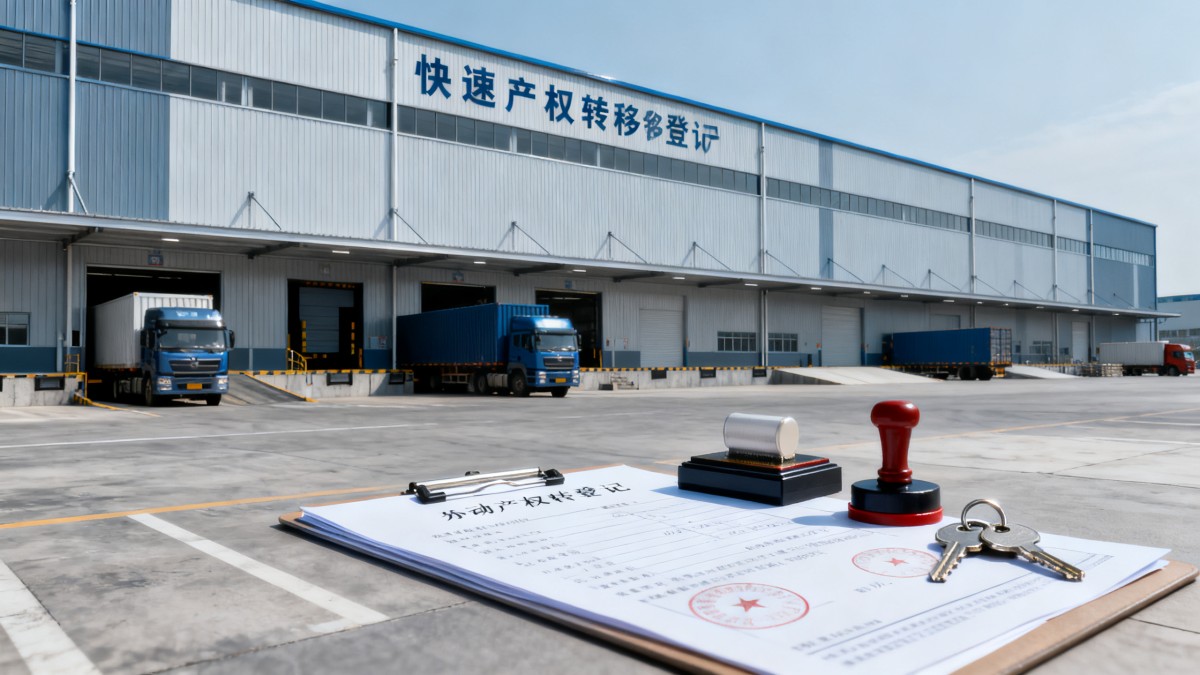
A clearer administrative path for factory and warehouse acquisitions
According to the provided summary, the notice was jointly issued in June by five departments including the natural resources authority. It is aimed at improving the registration process for foreign-invested enterprises buying real estate in China, including factory buildings and warehousing facilities.
The confirmed changes described in the input are twofold: the transfer registration timeline is to be compressed to within three working days, and the policy supports a model commonly understood as enabling construction to start immediately after land acquisition.
The same summary states that this arrangement is expected to accelerate localized capacity deployment and localized service capability building for asset-heavy manufacturing segments such as Fire & Rescue Equip, Industrial Water Treatment, and Solid Waste Mgmt, while reinforcing long-term confidence in China-based supply chains.
Where the operational impact may appear first
For manufacturers planning local capacity
From an industry perspective, companies that rely on factories, storage sites, and fixed-asset investment may be the first to feel the practical effect of faster transfer registration. The most relevant business links are site acquisition, project sequencing, equipment installation planning, and the timing of local production ramp-up. What deserves closer attention is whether internal compliance review, project documentation, and facility handover materials are prepared early enough to match a shorter administrative cycle.
For procurement and delivery coordination teams
Procurement teams may also be affected because a faster property transfer process can change assumptions around production launch timing, warehouse readiness, and localized after-sales support. Analysis shows that supplier onboarding schedules, delivery planning, and buffer inventory decisions may need to be reviewed if site readiness is no longer the main bottleneck. Teams should pay attention to document consistency across purchasing files, facility use arrangements, and any tender documents tied to local capacity commitments.
For supply chain and service operators
Companies providing installation, maintenance, warehousing, or localized technical support may need to track this policy as a signal that more foreign-invested manufacturers could expand physical footprints in China. The impact would likely show up in service coverage planning, spare-parts stocking, and local response capability. Observably, these participants should watch for changes in customer qualification requirements, site activation timelines, and traceability expectations linked to locally delivered products and services.
What companies should monitor as implementation develops
Document readiness should match a shorter process window
Analysis shows that the headline benefit of a three-working-day registration target only becomes meaningful when transaction and compliance materials are complete and internally aligned. Companies involved in factory or warehouse acquisitions should pay close attention to ownership transfer files, application materials, and supporting documents used across legal, procurement, and project functions.
Project schedules may need recalibration
Where businesses are evaluating local manufacturing or service expansion, it is more appropriate to understand this policy as a potential scheduling variable rather than an automatic acceleration of every project. Enterprises should monitor whether site registration timing affects equipment procurement, commissioning preparation, warehouse activation, or local service launch plans.
Local compliance and tender language remain worth watching
The provided information does not include detailed execution standards, so companies should not assume a uniform outcome across all projects. What deserves closer attention is whether official wording, implementation practices, or tender-related requirements begin to reflect faster property transfer and earlier site readiness in practice.
After-sales and supply commitments may be reviewed differently
For segments such as Fire & Rescue Equip, Industrial Water Treatment, and Solid Waste Mgmt, localized facilities often connect directly to delivery assurance and service responsiveness. Analysis shows that companies may need to review how local footprint claims are described in commercial materials, qualification documents, technical files, and customer-facing service commitments.
Why this looks like an execution signal, not just an administrative update
Observably, this development is more meaningful as an execution signal than as a simple procedural notice. The rule change described in the input touches a practical barrier in asset-heavy localization: the time and coordination required to complete transfer registration for industrial property. That matters because site control often affects factory fit-out, warehousing deployment, and local service organization.
At the same time, it is more appropriate to understand this as a rule dynamic that still requires observation. The summary confirms the direction of change, but it does not provide detailed local implementation arrangements, case outcomes, or follow-up guidance. For that reason, market participants should continue to track policy wording, project-level application, and industry feedback before treating the change as fully standardized in execution.
How the market may read this development for now
In practical terms, the policy can be read as a supportive administrative adjustment for foreign-invested enterprises that need factories or warehousing to build local capacity in China. Its relevance is likely highest for manufacturers and service-linked industrial businesses whose production, spare-parts, and field response models depend on physical assets rather than purely cross-border delivery.
A neutral reading is that the change improves the administrative environment around industrial property acquisition, while the full market effect will depend on how consistently it is carried through in project execution. For now, it is better understood as a concrete implementation signal with real operational implications, but one that still needs continued observation at the level of compliance practice, tender language, and business rollout.
Basis of this article and points still to verify
This article is generated from the user-provided news title, the event time marked as not specified, and the summary describing the June notice jointly issued by five departments. No specific official source link was provided in the input, so the exact official release path still needs to be verified on an ongoing basis.
For this type of development, commonly relevant source categories may include official notices, releases from regulatory authorities, information from trade or customs-related departments, industry association updates, standard-setting documents, and reporting by authoritative media. Further observation should focus on detailed implementation rules, compliance interpretation, tender document changes, industry feedback, and how enterprises actually apply the process in project execution.
Technical Specifications
- Portable Gas Monitor Calibration: How Often Is It Needed for Safe Confined-Space Work?Author :Precision Metrology Expert
- Wholesale Borosilicate Lab Glassware: How Buyers Verify Quality, Specs, and Supply ReliabilityAuthor :Precision Metrology Expert
- How to Select Electronic Hotel Key Card Locks for Guest Rooms and Staff AreasAuthor :Safety Compliance Lead
Expert Insights

Chief Security Architect
Dr. Thorne specializes in the intersection of structural engineering and digital resilience. He has advised three G7 governments on industrial infrastructure security.
Related Analysis
- Sep 19, 2026Portable Gas Monitor Calibration: How Often Is It Needed for Safe Confined-Space Work?Author :Precision Metrology Expert
- Sep 18, 2026Wholesale Borosilicate Lab Glassware: How Buyers Verify Quality, Specs, and Supply ReliabilityAuthor :Precision Metrology Expert
- Sep 17, 2026How to Select Electronic Hotel Key Card Locks for Guest Rooms and Staff AreasAuthor :Safety Compliance Lead
Core Sector // 01
Security & Safety
- How to Size a Wafer Butterfly Valve for HVAC Chilled-Water and Heating LoopsAuthor :Environmental Engineering Director

- How Pressure Class and Joint Design Affect Long-Term Performance of Ductile Iron Pipes in Drainage InfrastructureAuthor :Environmental Engineering Director

- How Ductile Iron Pipe Joints Affect Installation Reliability and Leak ControlAuthor :Environmental Engineering Director

- How to Size Effluent Treatment Equipment for Variable Industrial Wastewater LoadsAuthor :Environmental Engineering Director

- US Battery Push Raises New Entry Rules for SuppliersAuthor :Environmental Engineering Director

- EU EMC Rule Tightens for Water Treatment ExportsAuthor :Environmental Engineering Director

- EU REACH Restriction Targets PFAS Water Treatment ImportsAuthor :Environmental Engineering Director

- EU Mandates EN 14113:2026 for Water Treatment ExportsAuthor :Environmental Engineering Director