Reverse Osmosis Water Purification Systems: When RO Is the Right Industrial Choice
Author
Date Published
Reading Time
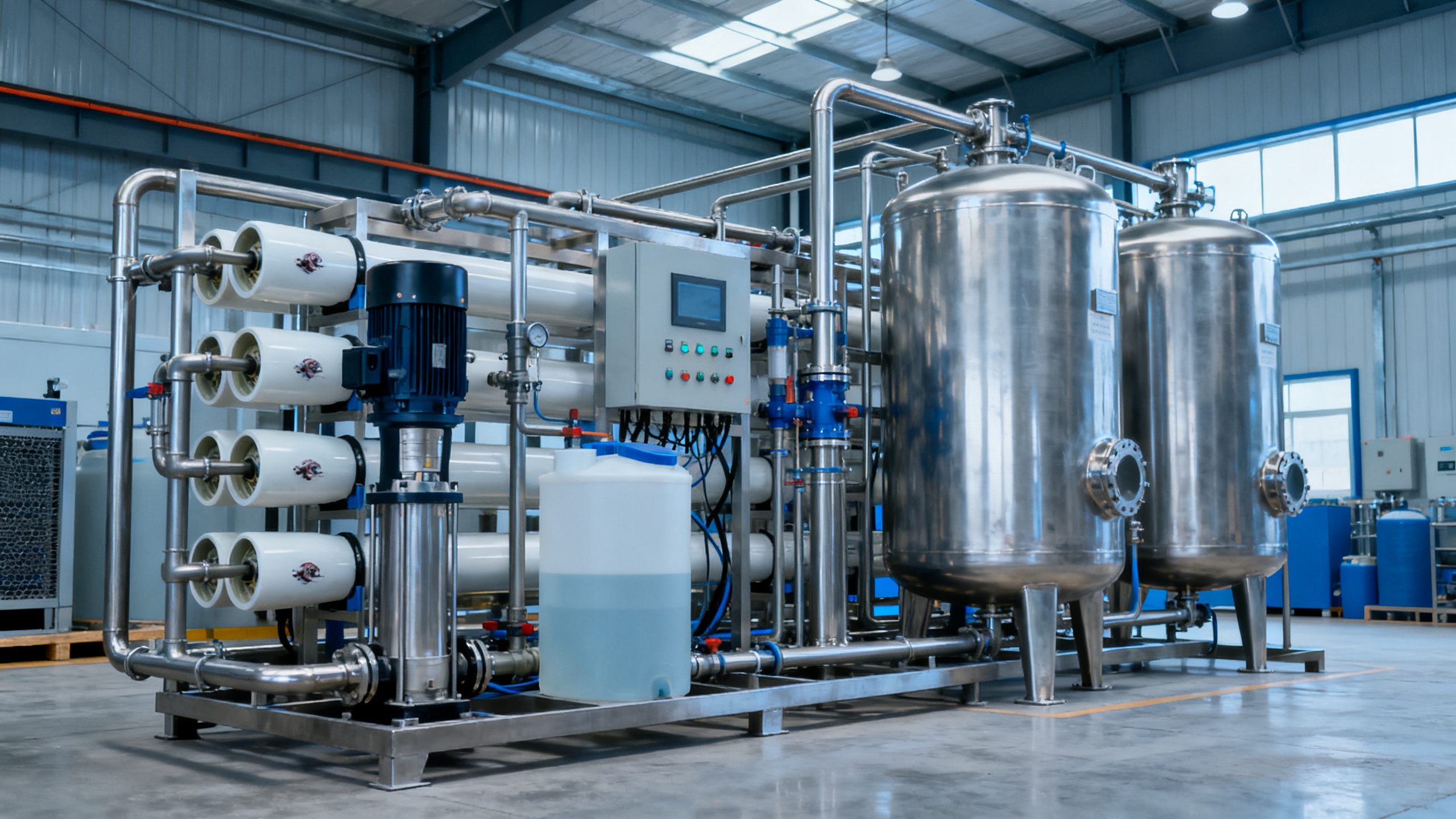
When reverse osmosis water purification systems solve the right industrial problem
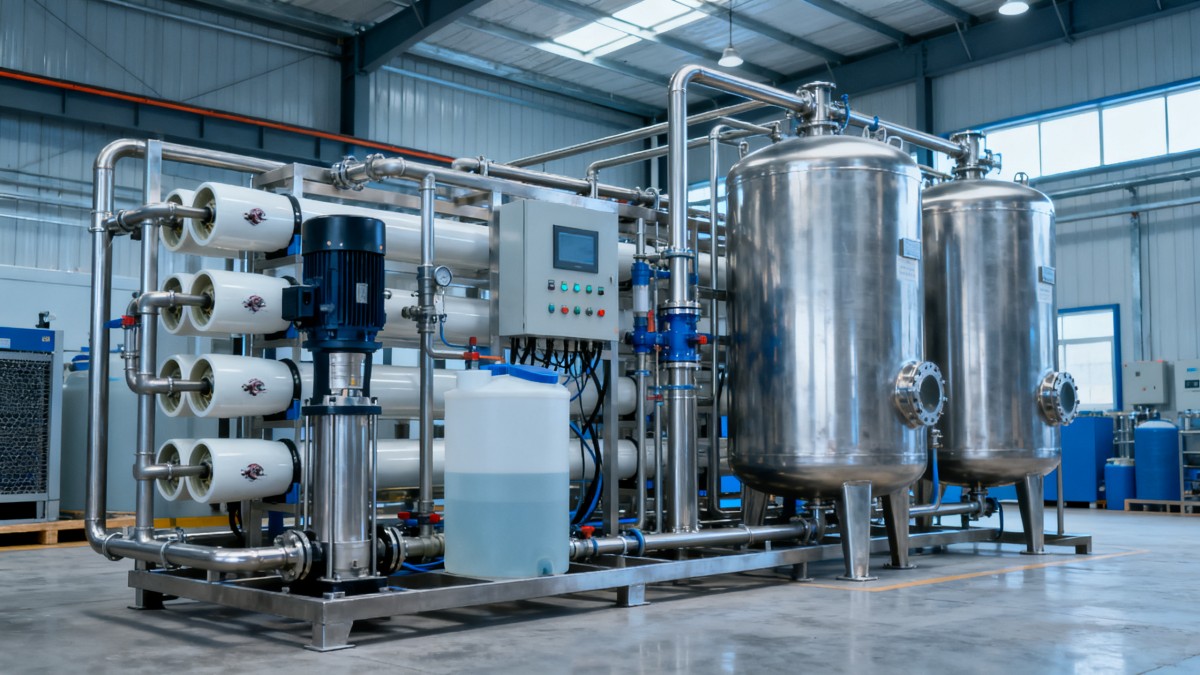
Choosing reverse osmosis water purification systems is rarely a simple water-quality upgrade.
In industrial settings, the real issue is process control.
A stable membrane system can protect boilers, cooling loops, wash lines, and precision processes from dissolved solids, scaling, and inconsistent conductivity.
That matters when downtime, corrosion, or failed compliance testing can disrupt an entire facility.
The best decisions around reverse osmosis water purification systems usually start with a practical question.
Is the site trying to polish already-treated water, or manage difficult raw water under demanding operating conditions?
That distinction changes membrane selection, pretreatment design, recovery targets, monitoring requirements, and operating cost.
Across the sectors covered by Global Industrial Core, the pattern is consistent.
Where infrastructure reliability, standards compliance, and life-cycle economics matter, reverse osmosis water purification systems need to be judged as operational assets, not standalone equipment.
Actual fit depends on why the water standard is tight
Different industrial sites need similar purity levels for very different reasons.
A power-related application may focus on silica and conductivity.
A surface treatment line may care more about spotting, rinse quality, and reject rates.
A food-support utility system may be driven by hygiene controls and cleaning consistency.
This is why reverse osmosis water purification systems cannot be evaluated only by nominal rejection percentage.
In practice, the critical variables include seasonal feedwater swings, suspended solids, hardness, iron, chlorine exposure, temperature, and daily production variation.
A system that performs well on a stable municipal supply may struggle on brackish groundwater or recycled process water.
The more demanding the environment, the more pretreatment and controls determine success.
A quick comparison of common industrial conditions
The table below shows why the same reverse osmosis water purification systems can perform very differently by application.
Where RO makes sense in high-purity and precision-driven operations
Reverse osmosis water purification systems are often the right industrial choice when downstream quality tolerance is narrow.
That is common in electronics support utilities, laboratory-grade process water trains, pharmaceutical support systems, and critical rinse applications.
In these environments, minor conductivity drift can create visible defects or unstable test results.
RO is valuable here because it removes a broad range of dissolved contaminants predictably.
More importantly, it creates a dependable base for polishing technologies such as EDI, mixed bed resin, or UV treatment.
A common mistake is assuming the membrane skid alone defines water quality.
In precision operations, distribution piping, storage turnover, sanitization routines, and online instrumentation can be just as important.
If the process is highly sensitive, a well-designed RO stage should be integrated into a complete control philosophy.
Boilers, cooling, and utility systems call for a different judgment
In utility-heavy facilities, reverse osmosis water purification systems are usually justified by risk reduction and asset protection.
Feedwater with high hardness or dissolved solids increases blowdown, chemical use, and heat-transfer losses.
Over time, that affects energy cost and maintenance intervals more than many initial estimates suggest.
For boiler makeup, RO is often a practical choice when softening alone cannot control silica or total dissolved solids tightly enough.
For cooling applications, the decision is more nuanced.
RO may be used to improve cycles of concentration, support reuse, or handle discharge restrictions, but not every cooling loop needs it.
The better question is whether the site benefits more from lower makeup contamination or from simpler chemistry management.
Where water scarcity, discharge permits, or scaling risk are severe, reverse osmosis water purification systems become easier to justify.
Signals that utility applications are strong RO candidates
- Feedwater quality changes through the year and disrupts treatment stability.
- Scaling or corrosion keeps shortening maintenance cycles.
- Blowdown, discharge, or chemical usage creates compliance pressure.
- Energy penalties from poor water quality exceed membrane operating cost.
Sites using reclaimed or difficult source water need closer scrutiny
The strongest case for reverse osmosis water purification systems often appears where source water is unpredictable.
Groundwater with high salinity, surface water with seasonal organics, and partially treated reuse streams all raise the stakes.
In these cases, RO can enable reuse strategies that would be difficult with conventional filtration alone.
Yet this is also where poor assumptions cause the most disappointment.
High fouling potential means the decision cannot stop at membrane capacity.
Pretreatment may require multimedia filtration, activated carbon, softening, antiscalant dosing, dechlorination, or ultrafiltration.
Concentrate handling also needs early attention.
If reject disposal is expensive or regulated, the economics of reverse osmosis water purification systems can change quickly.
Different settings place different weight on cost, compliance, and uptime
A useful decision framework compares the operational priority, not just the target water specification.
This is often the difference between a membrane system that looks efficient on paper and one that stays reliable in service.
Where industrial teams often misread reverse osmosis fit
One common misjudgment is treating all low-TDS objectives as identical.
A line that needs cosmetic rinse quality does not always need the same architecture as a critical steam system.
Another mistake is underestimating pretreatment.
When chlorine, silt density, or hardness are not controlled, even well-specified reverse osmosis water purification systems lose performance early.
Cost analysis is also frequently too narrow.
Capital price alone says little about membrane life, cleaning frequency, spare parts demand, instrumentation reliability, and reject-water obligations.
The last blind spot is assuming feedwater data from one season tells the whole story.
In actual projects, source variability often drives the final design more than average water analysis values.
A practical way to judge whether RO is the right industrial choice
A sound evaluation of reverse osmosis water purification systems should move from site conditions to operating consequences.
- Map the required water quality at each use point, not only at system outlet.
- Review full feedwater variation, including peak fouling or seasonal chemistry shifts.
- Check pretreatment compatibility with membrane chemistry and maintenance capacity.
- Estimate life-cycle cost using cleaning frequency, recovery, reject handling, and downtime exposure.
- Verify standards, materials, and instrumentation where compliance documentation matters.
In many industrial environments, reverse osmosis water purification systems are the right answer when water quality directly influences reliability, compliance, or resource efficiency.
They are less convincing when upstream water is already stable and the process can tolerate broader variation at lower operating complexity.
The next step is usually straightforward.
Define the operating scenario, compare the real risks of untreated variability, and test whether RO improves the whole system rather than one isolated metric.
That approach leads to better design choices and more durable industrial water strategy.
Technical Specifications
- How to Select an Access Control Management System for Multi-Site FacilitiesAuthor :Safety Compliance Lead
- Portable Gas Monitor Calibration: How Often Is It Needed for Safe Confined-Space Work?Author :Precision Metrology Expert
- Wholesale Borosilicate Lab Glassware: How Buyers Verify Quality, Specs, and Supply ReliabilityAuthor :Precision Metrology Expert
Expert Insights

Chief Security Architect
Dr. Thorne specializes in the intersection of structural engineering and digital resilience. He has advised three G7 governments on industrial infrastructure security.
Related Analysis
- Sep 20, 2026How to Select an Access Control Management System for Multi-Site FacilitiesAuthor :Safety Compliance Lead
- Sep 19, 2026Portable Gas Monitor Calibration: How Often Is It Needed for Safe Confined-Space Work?Author :Precision Metrology Expert
- Sep 18, 2026Wholesale Borosilicate Lab Glassware: How Buyers Verify Quality, Specs, and Supply ReliabilityAuthor :Precision Metrology Expert
Core Sector // 01
Security & Safety
- How to Size a Wafer Butterfly Valve for HVAC Chilled-Water and Heating LoopsAuthor :Environmental Engineering Director

- How Pressure Class and Joint Design Affect Long-Term Performance of Ductile Iron Pipes in Drainage InfrastructureAuthor :Environmental Engineering Director

- How Ductile Iron Pipe Joints Affect Installation Reliability and Leak ControlAuthor :Environmental Engineering Director

- How to Size Effluent Treatment Equipment for Variable Industrial Wastewater LoadsAuthor :Environmental Engineering Director

- US Battery Push Raises New Entry Rules for SuppliersAuthor :Environmental Engineering Director

- EU EMC Rule Tightens for Water Treatment ExportsAuthor :Environmental Engineering Director

- EU REACH Restriction Targets PFAS Water Treatment ImportsAuthor :Environmental Engineering Director

- EU Mandates EN 14113:2026 for Water Treatment ExportsAuthor :Environmental Engineering Director