What drives Environment & Ecology cost in 2026 projects?
Author
Date Published
Reading Time
In 2026, Environment & Ecology cost is becoming a decisive factor for financial approvers overseeing industrial projects. Beyond equipment pricing, total cost is shaped by regulatory compliance, emissions control, waste treatment, lifecycle efficiency, and risk exposure. Understanding what truly drives these expenses helps decision-makers approve budgets with greater confidence, reduce hidden liabilities, and align capital planning with long-term operational resilience.
For most financial approvers, the key question is not whether environmental spending is necessary. It is which cost drivers are unavoidable, which are variable, and which investments prevent larger losses later.
That is the real search intent behind Environment & Ecology cost in 2026 projects. Buyers want a budgeting lens that connects compliance, engineering, and risk into practical approval logic.
What is really driving Environment & Ecology cost in 2026?
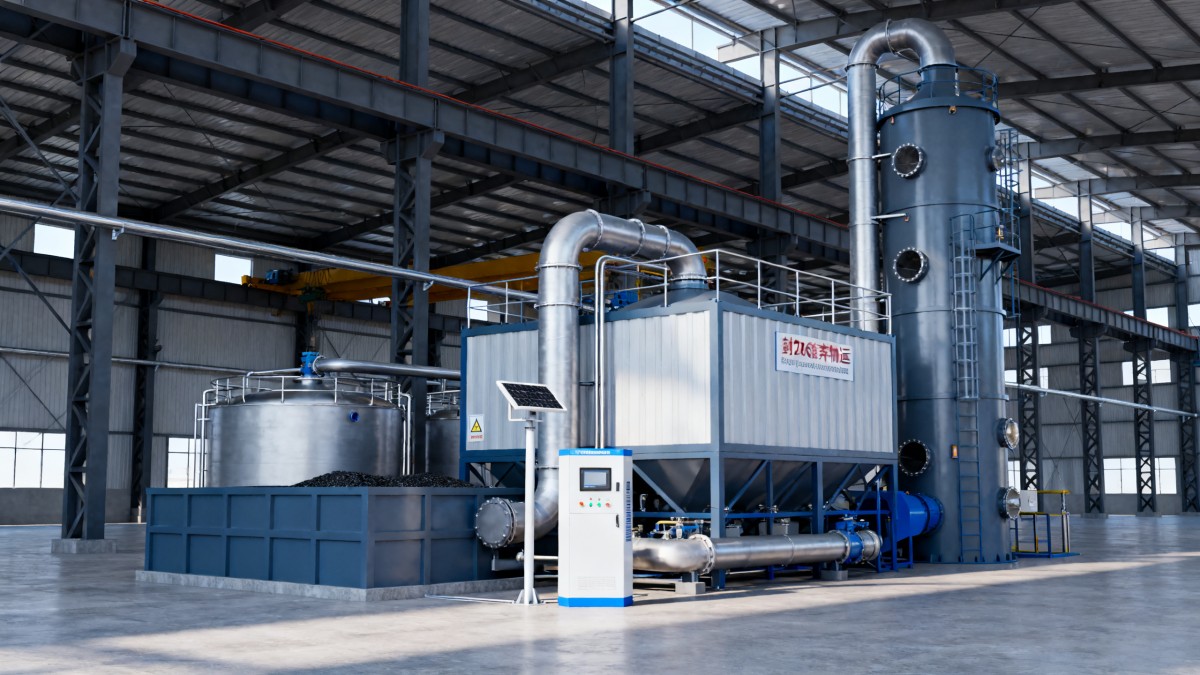
The biggest drivers in 2026 are tighter regulation, site-specific treatment requirements, energy-intensive control systems, waste handling complexity, and the rising cost of operational and legal non-compliance.
For finance teams, Environment & Ecology cost is no longer a narrow line item. It increasingly combines capex, recurring opex, monitoring obligations, reporting systems, insurance exposure, and shutdown risk.
In industrial projects, environmental cost inflation rarely comes from a single expensive machine. It usually comes from cumulative obligations across air, water, waste, noise, land use, and documentation.
That is why budget approvals in 2026 need a whole-system view. A lower upfront bid can become the highest-cost option once permitting delays, retrofits, and disposal costs are included.
Why are financial approvers paying closer attention now?
Financial approvers are being asked to sign off on larger environmental budgets because the consequences of underfunding have become more visible, more measurable, and more immediate.
Across heavy industry, lenders, insurers, clients, and regulators now examine environmental performance as a financial stability issue, not only a technical or sustainability issue.
A project with weak environmental controls may still be built, but it can face slower commissioning, higher insurance premiums, stricter audits, and reduced customer confidence after start-up.
For EPC contractors and industrial owners, this changes approval standards. Finance leaders increasingly want proof that environmental spend protects project timelines, asset life, and contractual reliability.
How do regulations and compliance obligations increase total project cost?
Regulation is one of the strongest cost drivers because it affects design, procurement, installation, commissioning, documentation, and long-term operation at the same time.
In 2026, more jurisdictions are tightening limits on emissions, discharge quality, hazardous waste traceability, and environmental monitoring frequency. Each requirement adds cost before and after handover.
Compliance costs often include permit applications, third-party assessments, environmental impact studies, baseline sampling, laboratory testing, and digital reporting platforms.
Many finance teams underestimate the cost of design changes caused by compliance gaps. If a selected system fails to meet local thresholds, retrofit costs can exceed the original equipment savings.
This is especially relevant in cross-border procurement. A component that meets one market standard may still require redesign, recertification, or supporting controls in another operating region.
Which technical system choices have the largest budget impact?
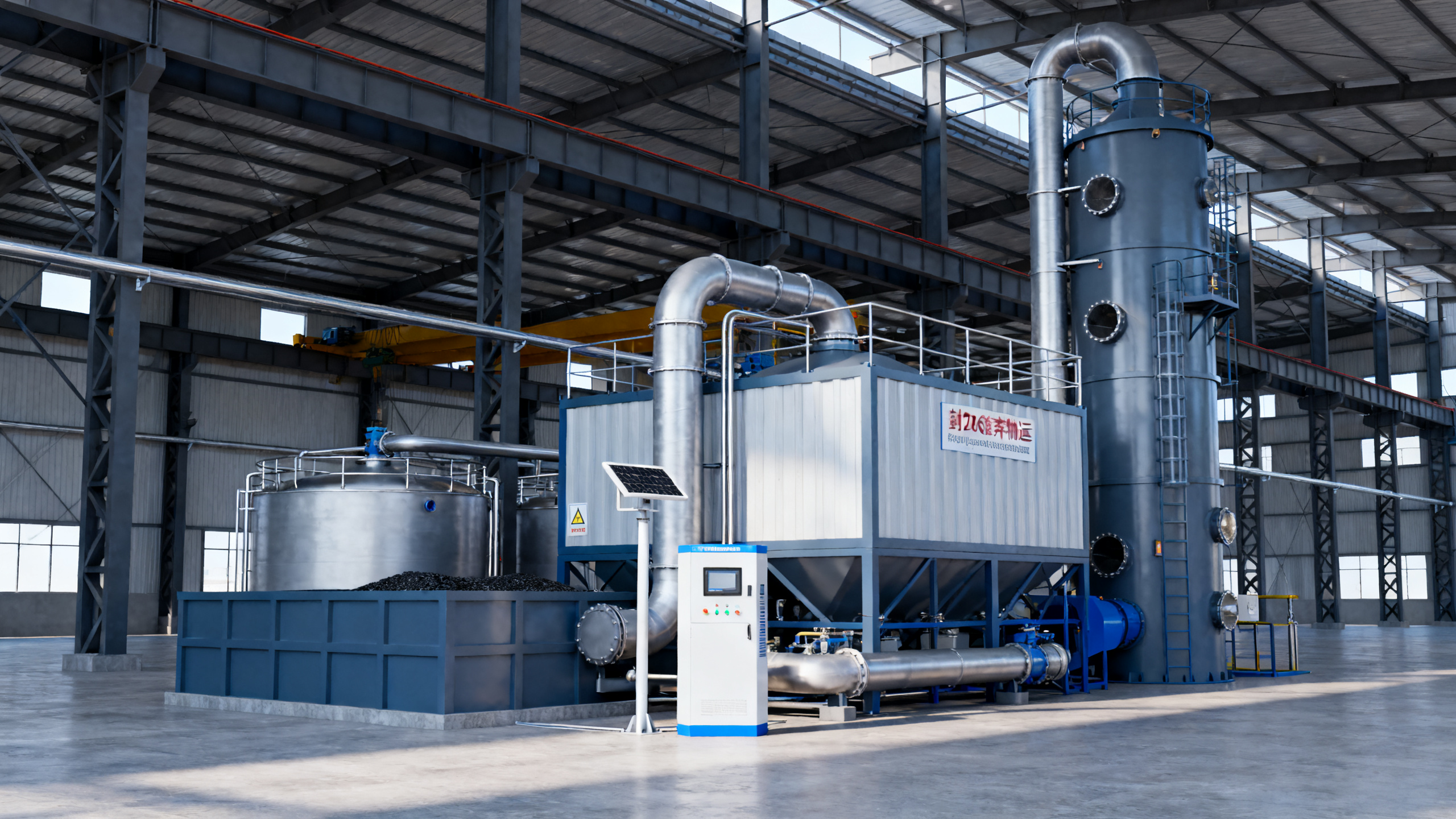
Air pollution control, wastewater treatment, solid waste processing, spill containment, and continuous monitoring systems are usually the largest technical contributors to Environment & Ecology cost.
Within these categories, the budget impact depends on process load, contaminant type, flow variability, redundancy requirements, footprint constraints, and expected uptime targets.
For example, wastewater costs rise quickly when projects involve mixed effluent streams, heavy metals, high salinity, or variable pH. Those conditions demand more advanced treatment trains.
Air systems show a similar pattern. Dust collection, VOC control, scrubbers, and filtration become significantly more expensive when emission limits are strict or process conditions fluctuate.
Monitoring infrastructure also matters. Continuous emissions monitoring, leak detection, online analyzers, and automated reporting software can materially increase both capital and operating expenditure.
For finance decision-makers, the useful question is not only “What does the system cost?” but also “What process complexity is forcing this system specification?”
How much do operating costs matter compared with upfront purchase price?
In many projects, operating cost becomes more important than purchase price within just a few years. This is where many approval errors begin.
Environmental systems can consume large amounts of electricity, chemicals, replacement media, water, compressed air, maintenance labor, and laboratory support over their lifetime.
A lower-cost unit may require more frequent filter changes, more operator intervention, higher sludge generation, or greater energy draw. That shifts cost from capex into recurring opex.
For financial approvers, total cost of ownership should include utility demand, consumables, maintenance intervals, calibration needs, spare parts availability, and disposal charges for residual waste.
Lifecycle efficiency matters because environmental systems are rarely optional once installed. They operate as long as the plant operates, which makes small recurring inefficiencies financially meaningful.
Why do site conditions and project location change environmental budgets so much?
Two projects with similar production capacity can show very different Environment & Ecology cost profiles because location changes both engineering requirements and compliance obligations.
Water availability, discharge routes, land constraints, climate, transport distance, seismic design, labor cost, and local permitting timelines all influence the final budget.
A remote site may face higher cost for reagent supply, specialist maintenance, and waste transport. An urban site may face stricter noise, odor, and discharge restrictions.
Brownfield projects often carry extra cost because legacy contamination, space limitations, and integration with older utilities complicate environmental system design and installation.
Greenfield projects may look simpler, but they can still incur major cost through baseline studies, civil works, drainage planning, and ecosystem protection measures required before construction begins.
How do waste handling and by-product management affect project economics?
Waste is often treated as a downstream issue, yet it is one of the clearest drivers of hidden cost in industrial environmental planning.
The cost does not stop at collecting waste. It includes classification, segregation, storage, labeling, transport, treatment, recovery potential, documentation, and final disposal liability.
Hazardous waste streams raise costs sharply because they require stricter containers, licensed transporters, approved treatment pathways, and auditable chain-of-custody records.
Even non-hazardous by-products can become costly when volumes are high, moisture content is unstable, or local reuse markets are weak. Disposal economics can change an entire project model.
Finance approvers should ask whether process design reduces waste at source. Prevention is usually cheaper than managing large residual volumes for years after commissioning.
What hidden costs are most often missed during budget approval?
The most frequently missed costs are permitting delays, commissioning failures, training gaps, data management, emergency response provisions, and post-installation process optimization.
Another common blind spot is integration cost. Environmental systems often need connections to plant controls, utilities, drainage, storage, and safety infrastructure that are not fully priced early.
Performance testing is also underestimated. Validation, third-party sampling, and demonstration runs can consume time and money, especially where guarantees are linked to regulatory thresholds.
Then there is the cost of underperformance. If a system misses discharge or emission targets, the project may face temporary curtailment, emergency fixes, or accelerated equipment replacement.
These hidden costs explain why the cheapest vendor proposal can be financially dangerous if scope boundaries, assumptions, and performance responsibilities are not fully transparent.
How should financial approvers evaluate vendor proposals more effectively?
Financial approvers do not need to become environmental engineers, but they do need a sharper review framework that exposes long-term cost drivers behind each proposal.
Start by separating mandatory compliance scope from optional performance enhancements. This helps identify which costs are legally unavoidable and which are strategic upgrades.
Next, request a lifecycle cost breakdown covering energy use, consumables, maintenance, waste outputs, spare parts, and required operator hours under expected operating conditions.
Ask vendors to define performance assumptions clearly. Influent quality, operating temperature, load variability, and uptime assumptions can materially change actual cost after installation.
It is also wise to review serviceability. A technically sound system may still become expensive if replacement parts are imported slowly or qualified service support is regionally limited.
Finally, verify compliance evidence. Certifications, testing history, reference installations, and local regulatory experience reduce the chance of costly surprises during commissioning and audit.
How can companies reduce Environment & Ecology cost without increasing risk?
Cost reduction is possible, but it should come from better design logic, not from stripping critical controls out of the project.
The most effective approach is early integration. When environmental requirements are addressed during concept and FEED stages, projects avoid expensive late-stage redesign and overengineering.
Standardization also helps. Repeating proven modules, instruments, and reporting architectures across sites can reduce engineering effort, training complexity, and spare parts inventory.
Process optimization is another strong lever. Reducing water use, segregating waste streams, stabilizing process loads, and recovering reusable by-products can lower both equipment size and opex.
Digital monitoring can improve economics when it reduces manual sampling, detects underperformance early, and supports predictive maintenance. However, it should be tied to operational decisions, not added as a trend feature.
Well-structured procurement matters too. Selecting based on verified lifecycle value rather than lowest initial quote usually produces better financial outcomes in regulated industrial environments.
What approval mindset makes the best financial decision in 2026?
The best approval mindset is to treat Environment & Ecology cost as a resilience investment with measurable financial consequences, not as an isolated compliance burden.
In 2026, strong decisions come from comparing options across total ownership cost, operational continuity, regulatory certainty, and downside risk if performance fails.
For financial approvers, the practical goal is not to approve the smallest budget. It is to approve the most defensible budget for the project’s technical reality and risk profile.
That means asking better questions: What cost is fixed by regulation? What cost is driven by process complexity? What cost can be reduced through earlier engineering choices?
When those questions are answered clearly, Environment & Ecology cost becomes easier to justify internally and easier to control after project execution begins.
Conclusion: what should financial approvers remember most?
The main driver of Environment & Ecology cost in 2026 projects is not equipment alone. It is the interaction of compliance, process conditions, site realities, operating demands, and risk exposure.
For financial approvers, the smartest move is to judge environmental budgets on lifecycle economics and failure prevention, not just purchase price. Hidden costs usually sit outside the initial quote.
If a proposal supports compliance, stable operations, efficient resource use, and manageable maintenance, it is often the financially safer choice even when upfront spending is higher.
In short, the right environmental budget protects more than permits. It protects schedule certainty, asset performance, insurability, and long-term industrial resilience.
Technical Specifications
- How to Select Electronic Hotel Key Card Locks for Guest Rooms and Staff AreasAuthor :Safety Compliance Lead
- How to Select Lab Instruments for Reliable Chemical Analysis WorkflowsAuthor :Precision Metrology Expert
- How to Size a UPS for Server Rooms: Load, Runtime, and Redundancy FactorsAuthor :Grid Infrastructure Analyst
Expert Insights

Chief Security Architect
Dr. Thorne specializes in the intersection of structural engineering and digital resilience. He has advised three G7 governments on industrial infrastructure security.
Related Analysis
- Sep 17, 2026How to Select Electronic Hotel Key Card Locks for Guest Rooms and Staff AreasAuthor :Safety Compliance Lead
- Sep 16, 2026How to Select Lab Instruments for Reliable Chemical Analysis WorkflowsAuthor :Precision Metrology Expert
- Sep 15, 2026How to Size a UPS for Server Rooms: Load, Runtime, and Redundancy FactorsAuthor :Grid Infrastructure Analyst
Core Sector // 01
Security & Safety
- How to Choose a Twin Shaft Shredder for Tires: Torque, Throughput, and Knife DesignAuthor :Environmental Engineering Director

- Selecting Waste Recycling Equipment by Waste Stream, Throughput, and Contamination LevelAuthor :Environmental Engineering Director

- How to Choose Waste Sorting Equipment for Recycling Plants by Material Stream and CapacityAuthor :Environmental Engineering Director

- Scrap Metal Baler Buying Guide: Horizontal vs Vertical, Capacity, Power, and OutputAuthor :Environmental Engineering Director

- What Is Industrial Ecology and How Does It Improve Resource Efficiency in Manufacturing?Author :Environmental Engineering Director

- Pet Bottle Washing Line Problems: Common Causes of Flake Contamination and How to Fix ThemAuthor :Environmental Engineering Director

- How to Evaluate Environment & Ecology Cost in Industrial ProjectsAuthor :Environmental Engineering Director

- Why does a magnetic separator machine lose efficiency?Author :Environmental Engineering Director