Why does a magnetic separator machine lose efficiency?
Author
Date Published
Reading Time
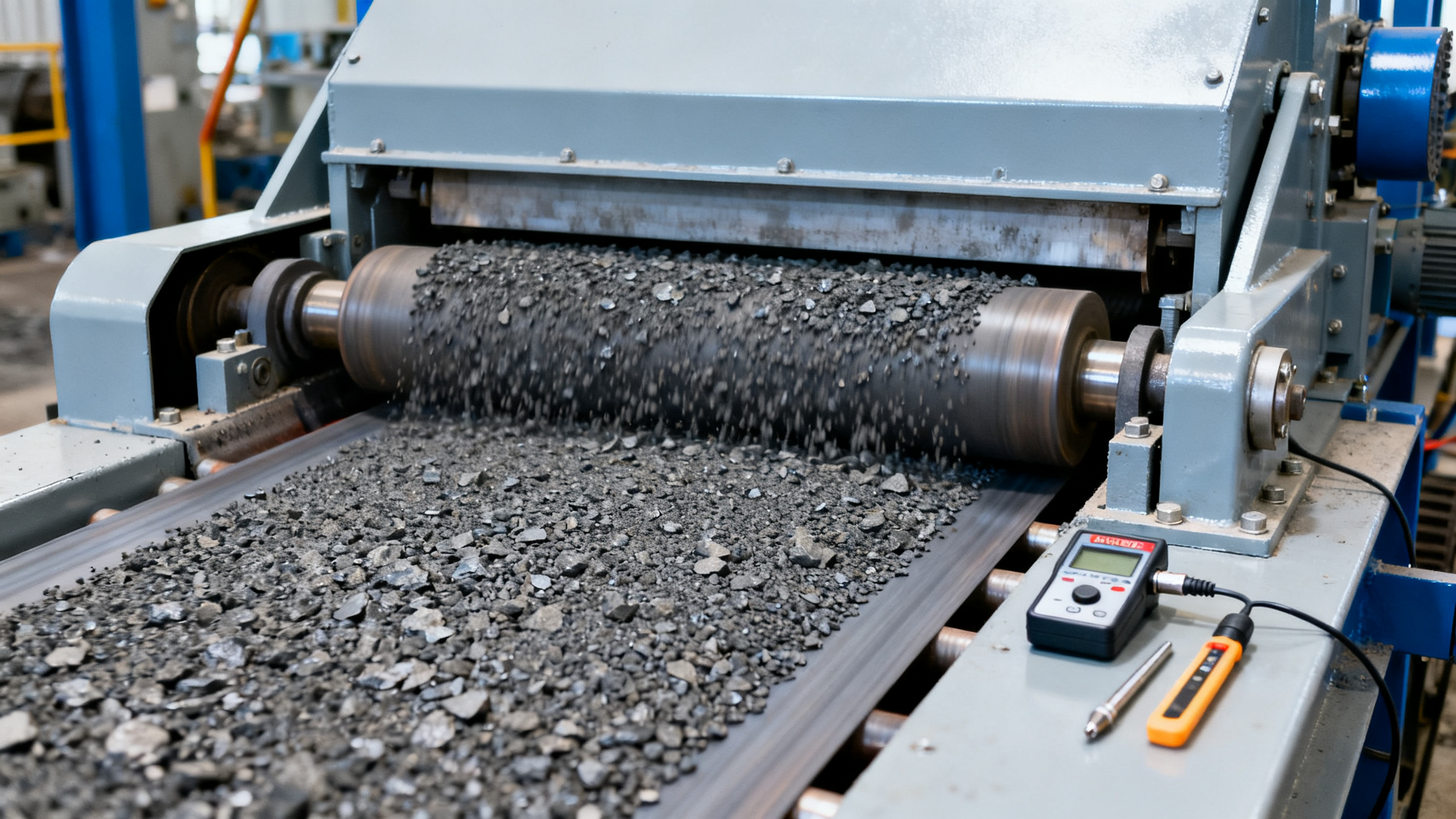
When a magnetic separator machine starts losing efficiency, the cause is rarely a single fault.
For after-sales maintenance teams, declining separation performance may indicate weakened magnetic intensity, poor feed distribution, belt wear, material buildup, wrong parameters, or inadequate cleaning.
Identifying these factors early helps prevent contamination, unplanned downtime, rework, and costly complaints.
This guide explains why a magnetic separator machine loses efficiency and how to restore stable performance through practical inspection and maintenance.
Why does a magnetic separator machine lose magnetic strength?
Magnetic strength is the core force behind separation efficiency.
When the magnetic field weakens, ferrous particles may pass through the separation zone instead of being captured.
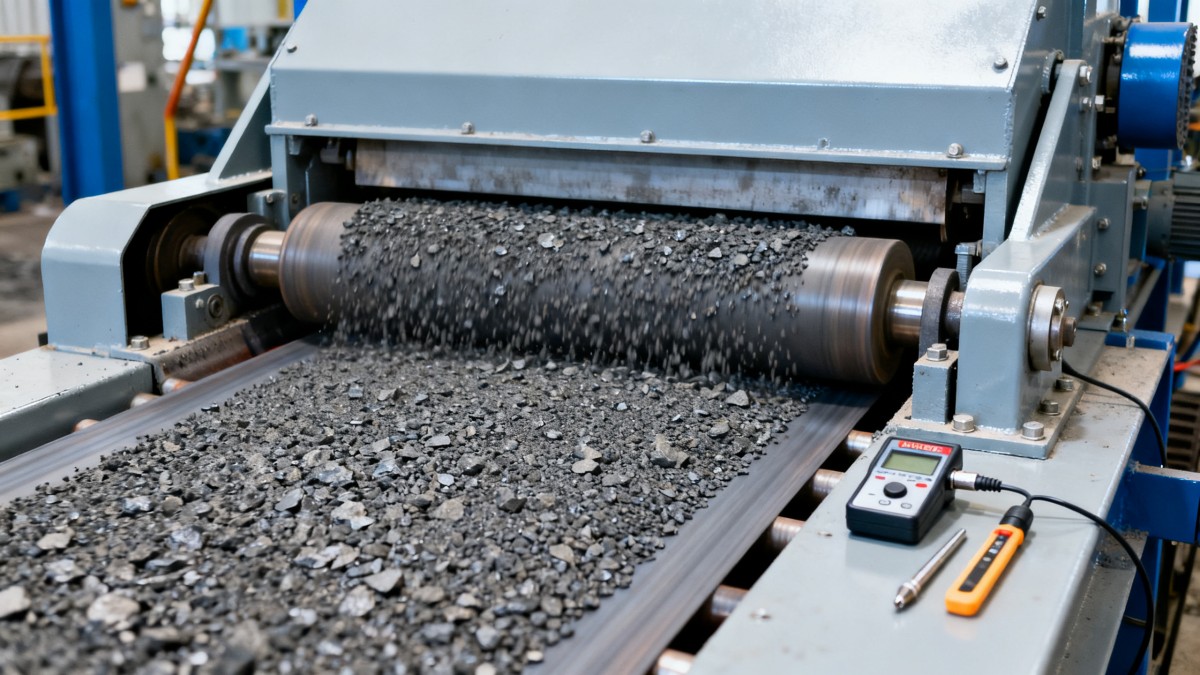
A magnetic separator machine may lose magnetic intensity because of thermal exposure, impact damage, magnet aging, or improper installation near strong external fields.
Permanent magnets usually decline slowly, but heat above design limits can accelerate demagnetization.
Electromagnetic separators can lose effective field strength when coils, power supplies, insulation, or cooling systems become unstable.
In heavy-duty environments, vibration may also loosen magnet assemblies or shift internal components.
The simplest first check is field measurement at defined points across the working surface.
Use a calibrated gauss meter, then compare readings with commissioning records or factory reference data.
If no baseline exists, create one after cleaning and stabilizing the magnetic separator machine under normal conditions.
- Check magnetic intensity at the center and edges.
- Verify power input on electromagnetic models.
- Inspect cooling, insulation, wiring, and grounding.
- Look for mechanical displacement after shock or vibration.
If readings are consistently low, the magnetic separator machine may need magnet replacement, coil service, or professional remagnetization assessment.
How does poor material feeding reduce separation efficiency?
Even a strong magnetic separator machine cannot perform well with uneven or excessive feed.
Separation depends on stable exposure between the material stream and the magnetic field.
When the feed layer is too thick, particles inside the lower layer may never reach effective capture distance.
Surges, bridging, and clumping also reduce contact time and create hidden bypass zones.
This problem appears often in minerals, recycling, grain handling, powder processing, ceramics, chemicals, and aggregate production.
Moisture can make fine particles stick together, shielding iron contamination inside non-magnetic material.
Oversized lumps may bounce or roll across the belt, reducing the residence time required for reliable separation.
A magnetic separator machine works best when feed is controlled, evenly spread, and matched to its magnetic zone.
Before replacing components, review the upstream feeder, chute angle, conveyor speed, and material moisture level.
- Reduce feed depth when contamination rises.
- Install spreaders or flow guides before the separation area.
- Stabilize vibration feeders to avoid sudden surges.
- Control moisture when handling powders or fine granules.
If efficiency improves after lowering throughput, the issue is probably loading, not magnet failure.
Can belt wear, scraper failure, or buildup affect a magnetic separator machine?
Mechanical condition has a direct impact on separation performance.
A worn belt can increase the distance between material and the magnetic surface.
Even a small increase in air gap can reduce capture force, especially for fine or weakly magnetic particles.
Scrapers, brushes, discharge lips, and wipers also influence how well trapped metals are removed.
If the cleaning system fails, collected ferrous material may accumulate and block the magnetic surface.
This buildup creates a barrier that reduces the effective magnetic field reaching new incoming particles.
In wet processing, scale, slurry solids, and corrosion deposits can create similar shielding effects.
A magnetic separator machine should be inspected for both visible wear and hidden accumulation.
Maintenance should not focus only on the magnet itself.
Check drive rollers, bearings, belt tracking, tension, scraper pressure, and discharge alignment.
A clean, aligned, and correctly tensioned magnetic separator machine usually delivers more stable recovery than a neglected unit with stronger magnets.
Are incorrect operating parameters causing the efficiency loss?
Operating parameters often drift after product changes, maintenance work, or seasonal variations in raw materials.
Common parameter issues include belt speed, drum speed, feed rate, magnetic roll position, gap setting, and wash water flow.
If belt speed is too high, particles may leave the magnetic zone before attraction is complete.
If speed is too low, material may pile up and cause re-entrainment or poor discharge.
For wet magnetic separation, slurry density and flow velocity are critical.
High slurry concentration may trap magnetic particles inside non-magnetic solids.
Excessive water flow may wash captured particles away before they reach the discharge zone.
A magnetic separator machine should be adjusted according to material behavior, not only nameplate capacity.
The most reliable approach is controlled testing with one variable changed at a time.
- Record current feed rate and separation results.
- Adjust one parameter within safe limits.
- Collect separated metal and product samples.
- Compare results against contamination targets.
- Document the final setting for repeatability.
This method prevents random adjustments that hide the real cause of poor magnetic separation efficiency.
When is the material itself the reason for poor separation?
Sometimes the magnetic separator machine is functioning correctly, but the material has changed.
Particle size, moisture, temperature, density, mineral composition, and contamination type all affect magnetic response.
Fine iron powder behaves differently from nails, scale, tramp metal, stainless fragments, or weakly magnetic minerals.
Some stainless steels become slightly magnetic after deformation, but others remain difficult to capture.
Weakly magnetic particles may require higher gradient separation rather than standard tramp metal removal equipment.
In recycling lines, mixed plastics, rubber, textiles, and fines can bury ferrous particles in unstable material beds.
In food, chemical, and ceramic processes, sticky materials may carry iron beyond the magnetic field.
A magnetic separator machine must match the contamination profile and the process environment.
If the product source changes, repeat sample testing instead of assuming previous settings remain valid.
- Analyze the size and shape of missed contaminants.
- Test dry, moist, and normal operating samples.
- Confirm whether particles are strongly or weakly magnetic.
- Review whether higher gradient equipment is required.
Material testing helps distinguish equipment failure from process mismatch.
What maintenance routine helps restore a magnetic separator machine?
A practical maintenance routine should combine cleaning, inspection, measurement, and documented performance checks.
Cleaning frequency depends on contamination load, material stickiness, operating hours, and safety requirements.
High-risk production lines may require inspection every shift.
Lower-risk bulk handling lines may use daily or weekly checks, depending on failure consequences.
The maintenance plan should include a clear acceptance standard.
Without measurable limits, teams may rely on visual judgment and miss gradual efficiency loss.
A magnetic separator machine should also be evaluated after breakdowns, material changes, and upstream equipment modifications.
Keep records of field strength, throughput, contamination rate, cleaning intervals, and replacement parts.
These records support root-cause analysis and reduce repeated troubleshooting time.
Conclusion: how to regain stable separation performance
A magnetic separator machine loses efficiency when magnetic force, material exposure, mechanical condition, or process settings move outside the effective range.
The best response is a structured check, not immediate component replacement.
Start with cleaning and visual inspection, then measure magnetic strength and verify the feed condition.
Next, review belts, scrapers, gaps, speeds, slurry behavior, and material changes.
If performance remains unstable, conduct sample testing and compare results with documented acceptance limits.
For critical industrial processes, scheduled inspection of the magnetic separator machine protects product quality and equipment reliability.
A disciplined maintenance checklist turns efficiency loss into a manageable engineering task instead of a recurring production risk.
Technical Specifications
- How to Select Electronic Hotel Key Card Locks for Guest Rooms and Staff AreasAuthor :Safety Compliance Lead
- How to Select Lab Instruments for Reliable Chemical Analysis WorkflowsAuthor :Precision Metrology Expert
- How to Size a UPS for Server Rooms: Load, Runtime, and Redundancy FactorsAuthor :Grid Infrastructure Analyst
Expert Insights

Chief Security Architect
Dr. Thorne specializes in the intersection of structural engineering and digital resilience. He has advised three G7 governments on industrial infrastructure security.
Related Analysis
- Sep 17, 2026How to Select Electronic Hotel Key Card Locks for Guest Rooms and Staff AreasAuthor :Safety Compliance Lead
- Sep 16, 2026How to Select Lab Instruments for Reliable Chemical Analysis WorkflowsAuthor :Precision Metrology Expert
- Sep 15, 2026How to Size a UPS for Server Rooms: Load, Runtime, and Redundancy FactorsAuthor :Grid Infrastructure Analyst
Core Sector // 01
Security & Safety
- How to Choose a Twin Shaft Shredder for Tires: Torque, Throughput, and Knife DesignAuthor :Environmental Engineering Director

- Selecting Waste Recycling Equipment by Waste Stream, Throughput, and Contamination LevelAuthor :Environmental Engineering Director

- How to Choose Waste Sorting Equipment for Recycling Plants by Material Stream and CapacityAuthor :Environmental Engineering Director

- Scrap Metal Baler Buying Guide: Horizontal vs Vertical, Capacity, Power, and OutputAuthor :Environmental Engineering Director

- What Is Industrial Ecology and How Does It Improve Resource Efficiency in Manufacturing?Author :Environmental Engineering Director

- Pet Bottle Washing Line Problems: Common Causes of Flake Contamination and How to Fix ThemAuthor :Environmental Engineering Director

- How to Evaluate Environment & Ecology Cost in Industrial ProjectsAuthor :Environmental Engineering Director

- Why does a magnetic separator machine lose efficiency?Author :Environmental Engineering Director