Pet Bottle Washing Line Problems: Common Causes of Flake Contamination and How to Fix Them
Author
Date Published
Reading Time
Pet Bottle Washing Line Problems: Common Causes of Flake Contamination and How to Fix Them
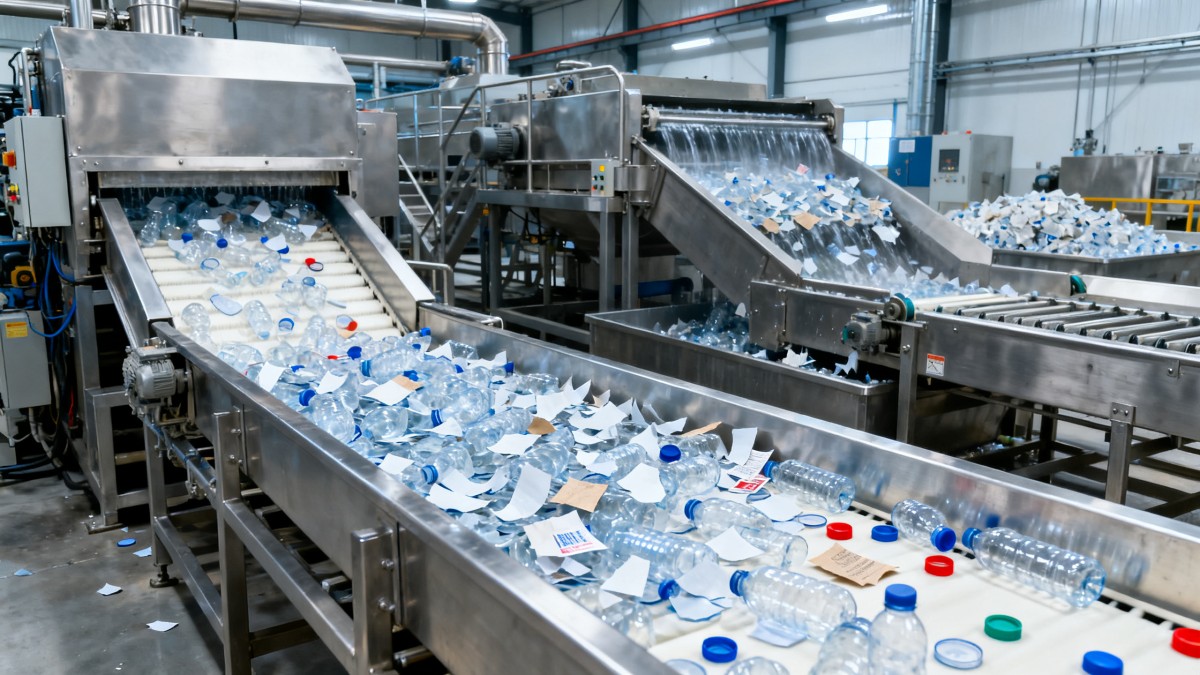
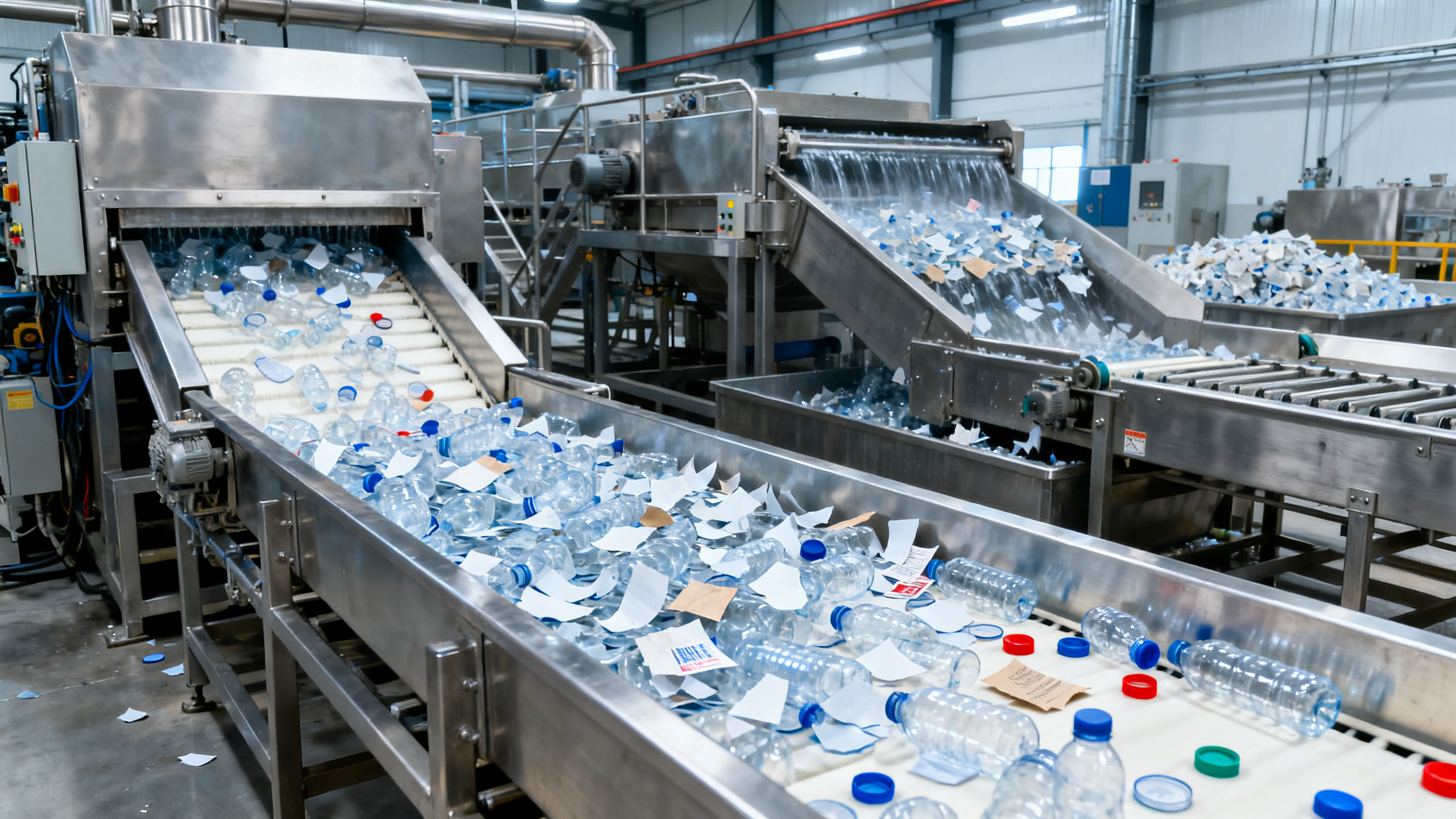
Flake contamination can quietly damage the performance of a pet bottle washing line.
It raises reject rates, lowers bale value, and creates unstable recycled flake quality.
In daily operation, the issue rarely comes from one single fault.
More often, contamination builds through several weak points across the full process.
That is why a reliable pet bottle washing line needs consistent control from sorting to drying.
If flakes leave the line with PVC, glue, paper, dirt, metal, or excessive moisture, downstream performance suffers fast.
This guide explains the common causes of contamination and the practical fixes that improve purity and line stability.
Why flake contamination matters in a pet bottle washing line
Contaminated flakes are not just a quality issue.
They affect washing efficiency, extrusion stability, filter pressure, and final product consistency.
In many plants, the first signal is rising black specks or haze in finished material.
Another clear sign is higher chemical use without better cleaning results.
A pet bottle washing line also becomes harder to control when contamination changes with every incoming batch.
This means operators need to watch both equipment condition and feedstock quality.
- Lower flake purity can reduce resale value.
- Residual labels can block screens and filters.
- Moisture and fines can create processing instability.
- PVC or metal can trigger serious downstream defects.
From a practical view, preventing contamination is cheaper than correcting bad flakes later.
The most common contamination sources
Most pet bottle washing line problems follow a predictable pattern.
When one stage underperforms, the next stage carries extra cleaning burden.
1. Poor bottle sorting before washing
A pet bottle washing line cannot deliver clean flakes if the feed mix is already wrong.
PVC bottles, colored containers, multilayer packaging, and metal closures often enter mixed bales.
Even a small amount of the wrong material can contaminate a large flake batch.
This becomes more visible when melt filtration loads suddenly increase.
Fix this by tightening manual inspection, improving optical sorting, and rejecting unstable bale sources earlier.
2. Labels and glue not fully removed
Label residue is one of the most common pet bottle washing line contamination problems.
Sleeves, wet-strength paper, strong adhesives, and shrink labels are especially difficult.
If the pre-wash or friction stage is weak, glue stays on the flakes.
That sticky residue then traps dirt and fines across the rest of the line.
The fix may involve hotter wash water, longer retention time, stronger agitation, or better chemical dosing.
3. Ineffective rinsing after hot washing
A pet bottle washing line often looks clean at the hot wash stage, but rinsing is where many issues remain hidden.
If detergent, loosened glue, and suspended dirt are not rinsed away, they redeposit on flakes.
This usually happens when spray pressure is weak or rinse water quality drops.
Check nozzle blockage, water circulation quality, and overflow rates first.
In real operation, a good rinse stage often delivers bigger gains than adding extra chemistry.
4. Worn equipment adding fines and dirt
Mechanical wear is easy to miss in a busy pet bottle washing line.
However, worn paddles, blades, screens, bearings, and liners can create extra fines and dark particles.
These contaminants often show up as unexplained dust or black specks in clean flake samples.
Routine inspection should include wear patterns, vibration, and irregular noise.
Replacing worn parts on time protects both cleanliness and throughput.
5. Dirty process water and weak filtration
Water quality directly affects every section of a pet bottle washing line.
If recirculated water carries suspended solids, glue, oil, and paper fibers, flakes get recontaminated.
This issue becomes worse when filtration maintenance is delayed.
Operators should track turbidity, sludge buildup, screen condition, and tank cleaning frequency.
Cleaner water usually means cleaner flakes, lower chemical waste, and more predictable washing performance.
How to diagnose contamination faster
When a pet bottle washing line starts producing unstable flakes, random adjustments rarely help.
A simple checkpoint method works better.
Take samples at each stage and compare contamination type, not only total contamination level.
- Check feed bales for PVC, caps, labels, and non-PET items.
- Inspect flakes after crushing for excessive fines.
- Review hot wash output for glue and surface stickiness.
- Measure rinse water clarity and nozzle performance.
- Check final flakes for moisture, dust, and visible foreign particles.
This stage-by-stage method shows exactly where the pet bottle washing line loses control.
It also helps separate raw material problems from equipment problems.
Practical fixes that improve flake purity
The best improvements in a pet bottle washing line usually come from disciplined daily control.
Major upgrades help, but simple process fixes often bring quick wins.
Improve front-end feed control
- Create bale acceptance rules by source and contamination level.
- Separate heavily labeled or mixed-color loads before processing.
- Reduce line overload during poor-quality feed periods.
A pet bottle washing line runs cleaner when the incoming stream is more stable.
Stabilize hot wash performance
- Verify wash temperature against label and glue type.
- Check chemical concentration with routine sampling.
- Avoid short retention time caused by excessive throughput.
If flakes still feel sticky, the pet bottle washing line may need stronger agitation rather than more chemicals.
Tighten water and rinse management
- Clean nozzles and spray bars on a fixed schedule.
- Remove sludge before it re-enters circulation.
- Refresh rinse water when conductivity or solids rise too far.
This is one of the fastest ways to restore pet bottle washing line cleanliness.
Prevent contamination from wear
- Track spare part life by operating hours.
- Inspect screens for tears or bypass paths.
- Respond early to vibration and heat around rotating units.
A pet bottle washing line with good maintenance usually produces more consistent flake size and lower dust.
A simple troubleshooting table for daily use
How to keep a pet bottle washing line stable over time
Long-term cleanliness depends on routine, not guesswork.
The strongest plants treat contamination control as a daily operating discipline.
That includes feed inspection, water monitoring, equipment checks, and simple sample reviews.
When trends change, the pet bottle washing line should be adjusted early, before poor flakes reach storage.
A useful approach is to keep a short contamination log for each shift.
Over time, that record makes repeat causes easier to identify.
If a pet bottle washing line is producing dirty flakes today, the answer is usually in the process details.
Start with sorting, verify washing, protect water quality, and do not ignore wear.
Small corrections, applied consistently, are what keep flake purity high and production reliable.
Technical Specifications
- Selecting High-Temperature Gaskets for Steam, Flanges, and Thermal CyclingAuthor :Heavy Industry Strategist
- How to Select an Emissions Monitoring System Analyzer for Compliance ReportingAuthor :Precision Metrology Expert
- How to Select an Access Control Management System for Multi-Site FacilitiesAuthor :Safety Compliance Lead
Expert Insights

Chief Security Architect
Dr. Thorne specializes in the intersection of structural engineering and digital resilience. He has advised three G7 governments on industrial infrastructure security.
Related Analysis
- Sep 22, 2026Selecting High-Temperature Gaskets for Steam, Flanges, and Thermal CyclingAuthor :Heavy Industry Strategist
- Sep 21, 2026How to Select an Emissions Monitoring System Analyzer for Compliance ReportingAuthor :Precision Metrology Expert
- Sep 20, 2026How to Select an Access Control Management System for Multi-Site FacilitiesAuthor :Safety Compliance Lead
Core Sector // 01
Security & Safety
- How to Choose a Twin Shaft Shredder for Tires: Torque, Throughput, and Knife DesignAuthor :Environmental Engineering Director

- Selecting Waste Recycling Equipment by Waste Stream, Throughput, and Contamination LevelAuthor :Environmental Engineering Director

- How to Choose Waste Sorting Equipment for Recycling Plants by Material Stream and CapacityAuthor :Environmental Engineering Director

- Scrap Metal Baler Buying Guide: Horizontal vs Vertical, Capacity, Power, and OutputAuthor :Environmental Engineering Director

- What Is Industrial Ecology and How Does It Improve Resource Efficiency in Manufacturing?Author :Environmental Engineering Director

- Pet Bottle Washing Line Problems: Common Causes of Flake Contamination and How to Fix ThemAuthor :Environmental Engineering Director

- How to Evaluate Environment & Ecology Cost in Industrial ProjectsAuthor :Environmental Engineering Director

- Why does a magnetic separator machine lose efficiency?Author :Environmental Engineering Director