What Is Industrial Ecology and How Does It Improve Resource Efficiency in Manufacturing?
Author
Date Published
Reading Time
Why is industrial ecology getting so much attention in manufacturing?
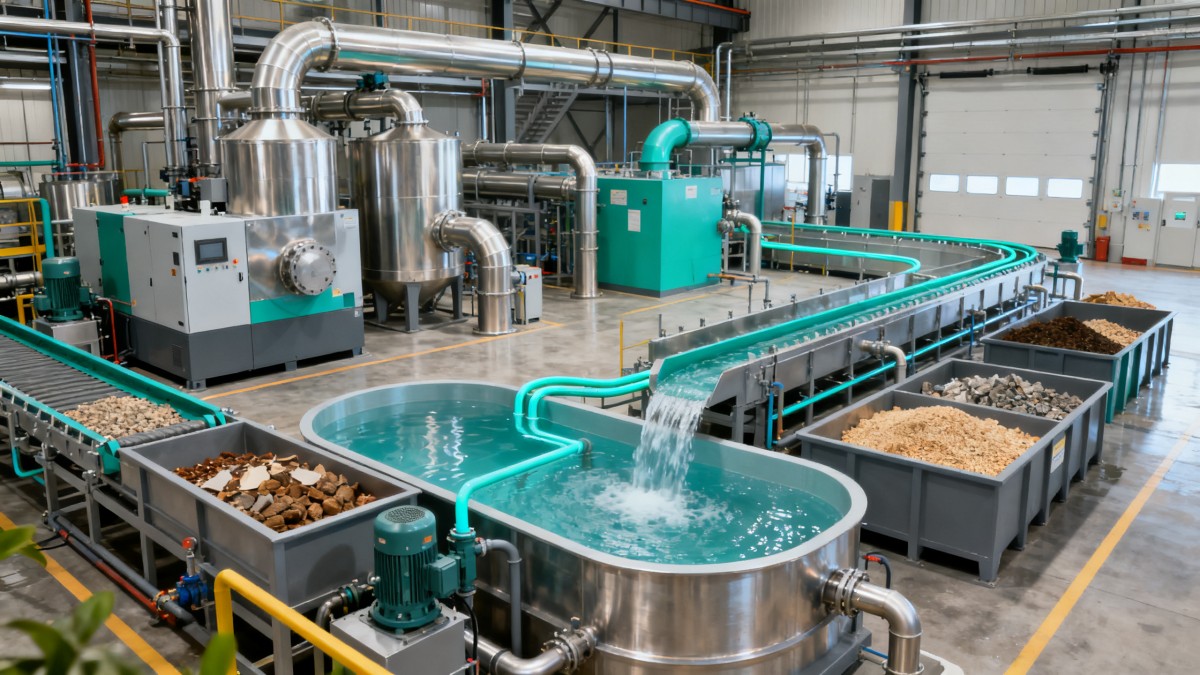
Industrial ecology is no longer a niche sustainability term. It is becoming a practical way to improve resource efficiency across complex manufacturing systems.
At its core, industrial ecology looks at factories, utilities, suppliers, and waste streams as connected parts of one operating ecosystem.
That shift matters because waste rarely comes from one machine alone. It usually comes from broken links between materials, energy, water, logistics, and process control.
In practical terms, industrial ecology helps identify where heat is lost, where scrap can return to production, and where by-products still hold value.
This is one reason the topic appears more often in technical intelligence platforms such as Global Industrial Core, especially within environment, ecology, power, and measurement discussions.
The interest is not only environmental. Better industrial ecology often means lower input costs, stronger compliance performance, and more resilient operations during supply volatility.
So what does industrial ecology actually mean?
A simple definition is this: industrial ecology studies how industrial systems can work more like natural ecosystems, where outputs from one process become inputs for another.
Nature wastes very little. Industrial ecology applies that same logic to manufacturing, but with engineering data, compliance rules, and cost controls built in.
It does not mean every site must become a closed loop overnight. More often, it starts with targeted improvements in resource mapping and process integration.
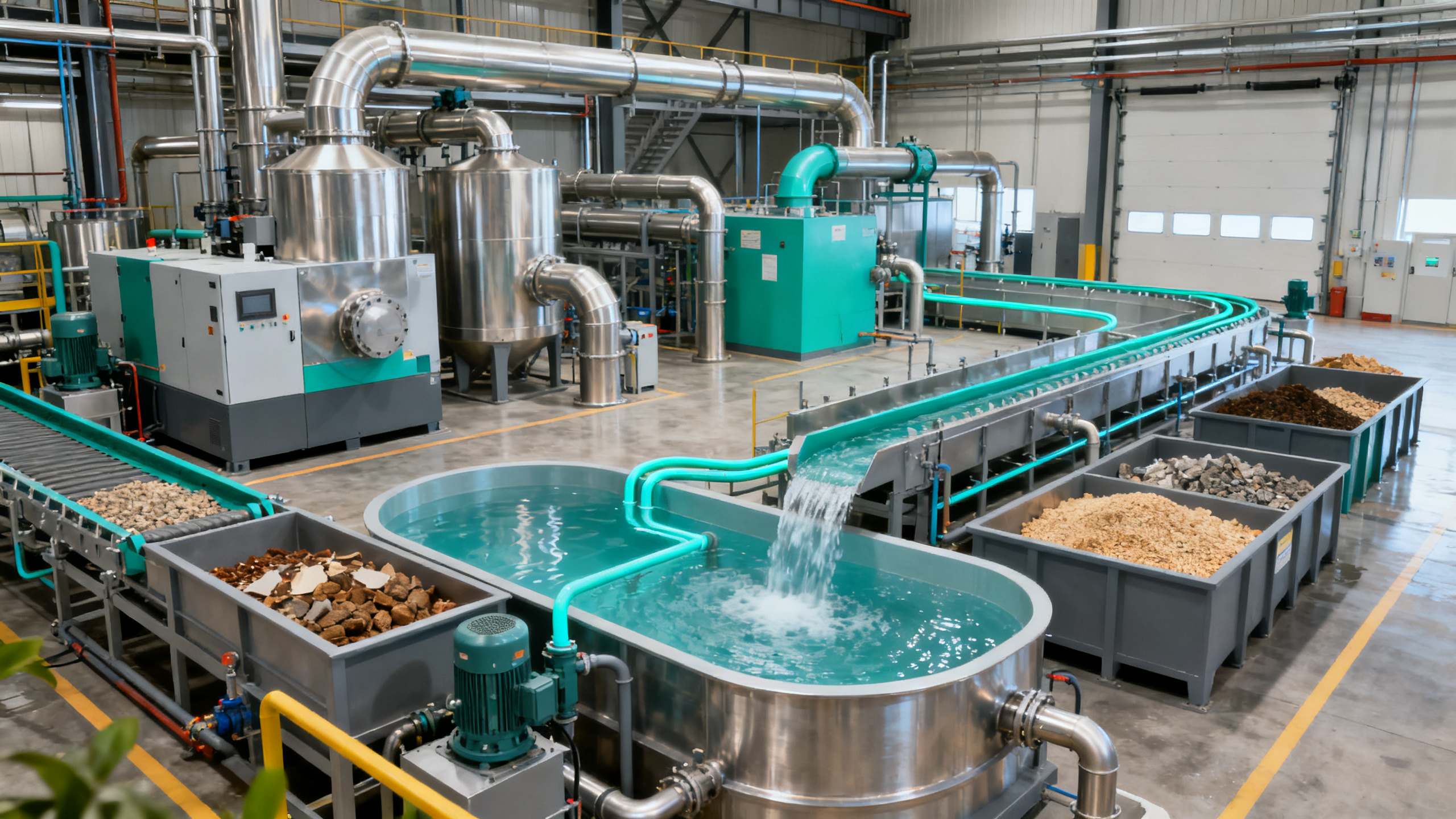
For example, a plant may recover waste heat for another stage, reuse treated process water, or redirect metal scrap into a verified secondary stream.
Industrial ecology also depends on good measurement. Without reliable data from instruments, meters, and monitoring systems, it is hard to see real losses.
That is why the concept often overlaps with metrology, energy management, environmental engineering, and mechanical system design rather than sitting in one isolated department.
The idea sounds broad, but what changes on the ground?
The real change is operational thinking. Teams stop asking only, “How efficient is this machine?” and start asking, “How efficient is this system?”
That broader view reveals issues that traditional efficiency projects can miss, especially when losses move between departments rather than showing in one budget line.
Seen this way, industrial ecology is not abstract. It is a structured method for finding hidden inefficiencies across an industrial network.
Where does industrial ecology improve resource efficiency most clearly?
The biggest gains usually appear where resource flows are continuous, measurable, and expensive to waste. Heavy process environments are common examples.
Energy-intensive operations often benefit first. Waste heat recovery, load optimization, and smarter utility coordination can produce visible returns in a short cycle.
Water-stressed facilities also see clear value. Industrial ecology encourages cascade use, treatment for reuse, and tighter control of contamination points.
Material-heavy sectors, including metallurgy, chemicals, and engineered components, can gain from improved by-product separation and secondary material pathways.
In actual plant planning, the most useful starting point is often not a large redesign. It is a map of material, water, energy, and waste at each transfer point.
Once those flows are visible, industrial ecology makes it easier to judge which losses are technical, which are organizational, and which are simply unmeasured.
A practical shortlist of high-impact applications
- Recovering furnace or compressor heat for preheating, drying, or nearby utility loads.
- Returning qualified metal offcuts, slag fractions, or polymer scrap into controlled reuse streams.
- Using treated wastewater for cooling, washing, or non-critical support functions.
- Coordinating adjacent processes so one output reduces another unit’s raw material or energy demand.
- Connecting environmental compliance data with operational decisions instead of reviewing it only after the fact.
These examples show why industrial ecology is increasingly discussed alongside safety, power reliability, and precision measurement rather than as a separate green initiative.
Is industrial ecology the same as recycling or circular manufacturing?
Not exactly. Recycling is one tool. Circular manufacturing is a broader business model. Industrial ecology is the systems framework that helps connect both to real operations.
A recycling program may focus on end-of-life material recovery. Industrial ecology looks earlier, asking how waste was created and whether it could be avoided.
Circular strategies often discuss loops at product and supply-chain level. Industrial ecology adds site-level engineering detail, utility integration, and process interdependence.
That distinction matters. A site can recycle a lot and still be resource inefficient if energy, water, or process losses remain poorly managed.
More useful questions are: what resource is leaving the system, why is it leaving, and can another process safely use it?
Industrial ecology pushes decisions toward verified technical fit, not just good intentions. In industrial settings, that means checking contamination, consistency, traceability, and standards.
What usually gets in the way when companies try to apply industrial ecology?
The first barrier is often poor visibility. If flow data is incomplete, teams may chase obvious waste while missing larger system losses.
The second barrier is organizational. Energy, environment, maintenance, and production teams may track different goals with limited shared analysis.
Another common issue is quality uncertainty. A by-product may look reusable, but without classification and testing, reuse can create compliance or performance risk.
There is also a timing challenge. Some industrial ecology projects deliver quick savings, while others require design changes, partner coordination, or utility upgrades.
This is where credible technical review matters. A data-driven approach, similar to the editorial discipline seen in Global Industrial Core, helps separate attractive ideas from viable ones.
Common mistakes to avoid
- Treating industrial ecology as a branding exercise instead of a measurement-based improvement method.
- Starting with expensive redesign before mapping current flows and losses.
- Ignoring safety, CE, UL, ISO, or site-specific compliance when planning reuse loops.
- Assuming every waste stream has value without checking quality stability and handling cost.
- Looking only inside one process and missing opportunities between departments or neighboring operations.
In other words, industrial ecology works best when it is treated as operational engineering supported by verified data and realistic implementation planning.
How can a facility evaluate whether industrial ecology is worth pursuing?
A good starting point is to identify the most expensive or constrained resource first. That may be electricity, thermal energy, water, raw material, or waste disposal.
Then review where that resource enters, changes form, loses quality, and exits the system. This creates a more useful picture than isolated equipment metrics.
The next step is to compare three things: technical feasibility, compliance fit, and operational payback. All three matter. One strong result cannot replace the others.
It also helps to rank opportunities by effort level. Some actions need only controls tuning or metering upgrades. Others require redesign, contracts, or new treatment equipment.
A simple evaluation checklist
If several of these signs are present, industrial ecology is usually worth deeper analysis rather than a quick surface review.
What is the practical takeaway for anyone learning industrial ecology?
Industrial ecology improves resource efficiency by changing the unit of analysis from single assets to connected industrial systems.
That means better decisions about materials, energy, water, waste, and by-products, especially when those decisions are based on reliable measurements.
It is not limited to sustainability reporting. It is a practical framework for reducing losses, improving resilience, and supporting stronger operational performance.
A useful next step is to map one high-cost resource stream, verify the data behind it, and look for system links rather than isolated fixes.
From there, compare options by feasibility, standards, and payback. That approach keeps industrial ecology grounded in real manufacturing priorities.
When the goal is safe, efficient, and resilient industry, industrial ecology becomes less of a theory and more of a working method.
Technical Specifications
- Air Handling Unit Supplier Checklist: Performance Data, Lead Times, and SupportAuthor :Environmental Engineering Director
- Buying Fiberglass Water Tanks Wholesale: Compare Quotes and Delivery CostsAuthor :Environmental Engineering Director
- Choosing an XLPE Power Cable Supplier: Test Reports, Traceability, and Lead TimesAuthor :Grid Infrastructure Analyst
Expert Insights

Chief Security Architect
Dr. Thorne specializes in the intersection of structural engineering and digital resilience. He has advised three G7 governments on industrial infrastructure security.
Related Analysis
- Oct 19, 2026Air Handling Unit Supplier Checklist: Performance Data, Lead Times, and SupportAuthor :Environmental Engineering Director
- Oct 18, 2026Buying Fiberglass Water Tanks Wholesale: Compare Quotes and Delivery CostsAuthor :Environmental Engineering Director
- Oct 17, 2026Choosing an XLPE Power Cable Supplier: Test Reports, Traceability, and Lead TimesAuthor :Grid Infrastructure Analyst
Core Sector // 01
Security & Safety
- How to Select a Twin Shaft Shredder for Bulky Waste, Scrap Metal, and PlasticsAuthor :Environmental Engineering Director

- How to Choose a Twin Shaft Shredder for Tires: Torque, Throughput, and Knife DesignAuthor :Environmental Engineering Director

- Selecting Waste Recycling Equipment by Waste Stream, Throughput, and Contamination LevelAuthor :Environmental Engineering Director

- How to Choose Waste Sorting Equipment for Recycling Plants by Material Stream and CapacityAuthor :Environmental Engineering Director

- Scrap Metal Baler Buying Guide: Horizontal vs Vertical, Capacity, Power, and OutputAuthor :Environmental Engineering Director

- What Is Industrial Ecology and How Does It Improve Resource Efficiency in Manufacturing?Author :Environmental Engineering Director

- Pet Bottle Washing Line Problems: Common Causes of Flake Contamination and How to Fix ThemAuthor :Environmental Engineering Director

- How to Evaluate Environment & Ecology Cost in Industrial ProjectsAuthor :Environmental Engineering Director