How to Choose Waste Sorting Equipment for Recycling Plants by Material Stream and Capacity
Author
Date Published
Reading Time
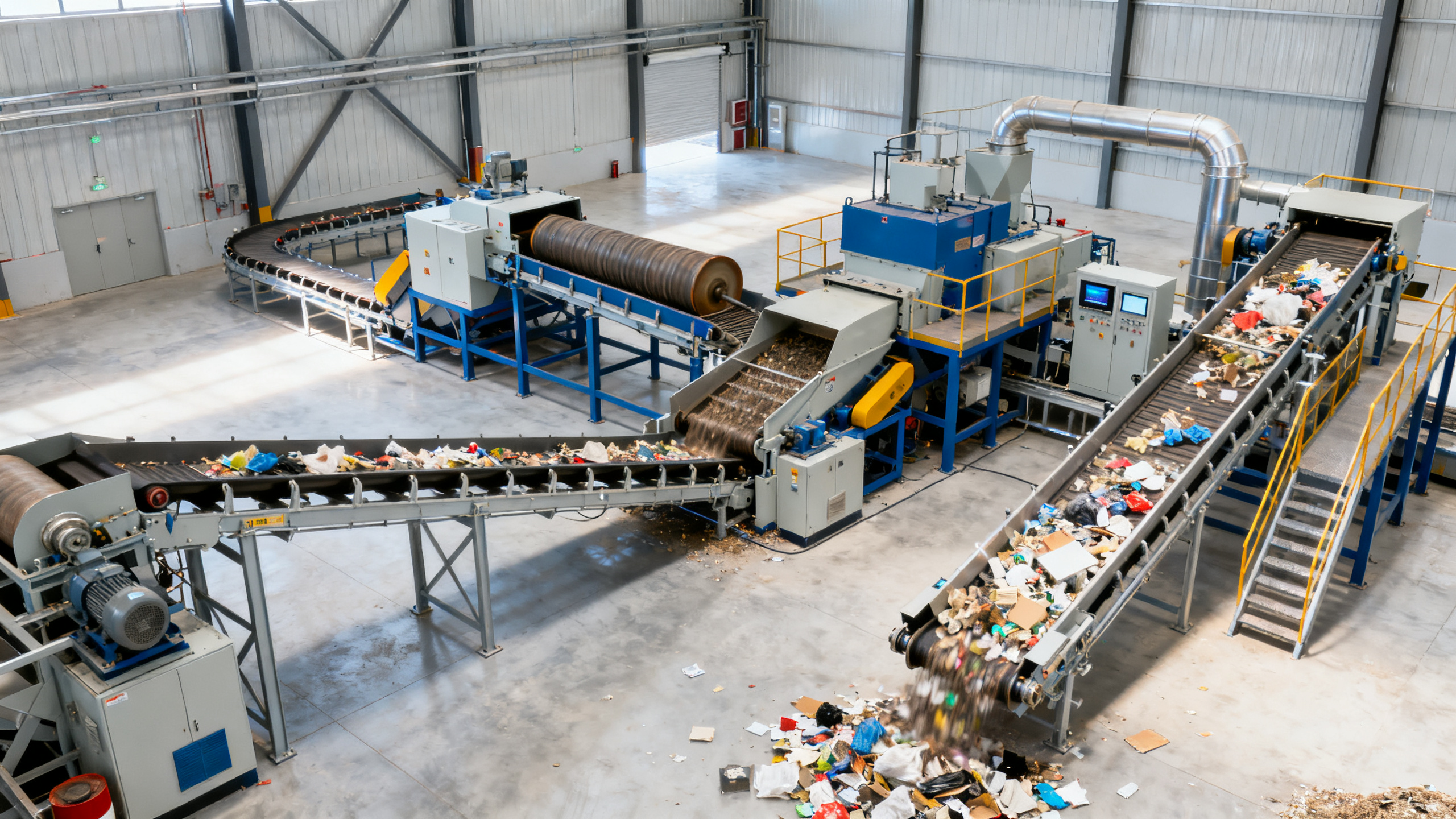
Choosing waste sorting equipment for recycling plants rarely begins with the machine itself. The real starting point is the material stream entering the line and the hourly capacity the plant must hold under normal and peak loads.
That matters because recovery quality, labor balance, energy use, maintenance frequency, and resale value all depend on those two variables. A system sized for clean PET behaves very differently from one handling mixed municipal waste.
Across industrial infrastructure, decision quality is increasingly tied to measurable performance and compliance. That is also the approach favored by Global Industrial Core, where sourcing decisions are judged by uptime, safety, traceability, and long-term operating resilience.
Why material stream and capacity should drive selection
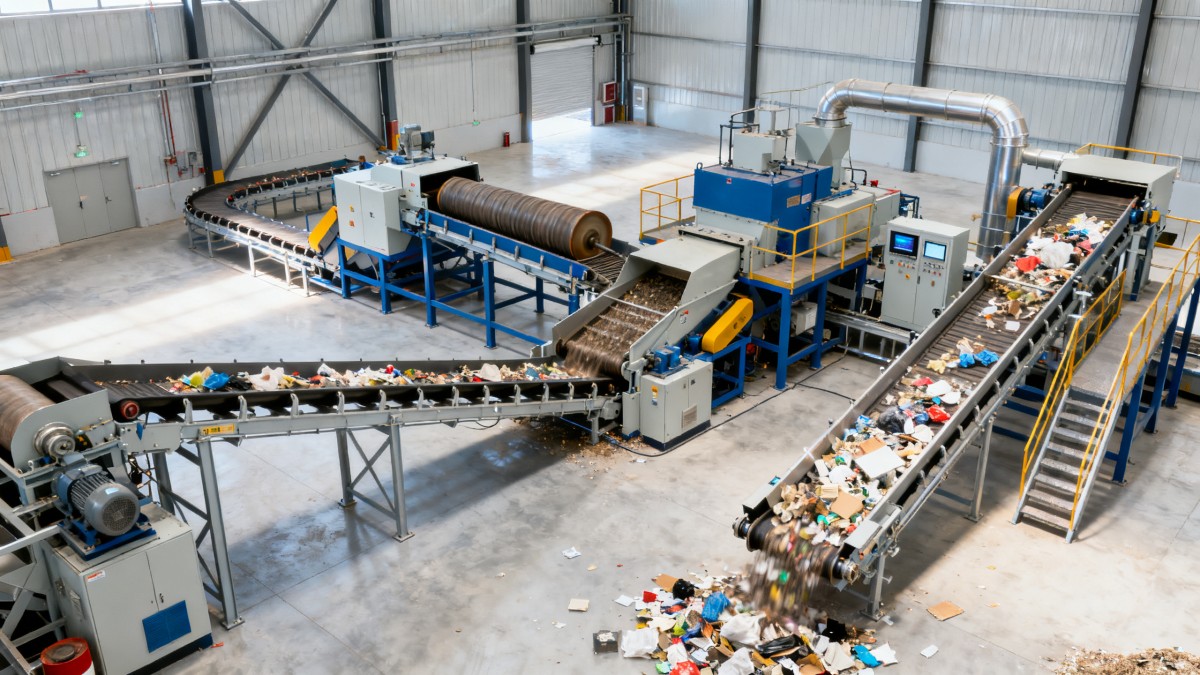
Waste sorting equipment for recycling plants is not a single product category. It is a coordinated sequence of feeding, separation, detection, conveyance, and discharge functions built around a defined waste profile.
Material stream determines what must be separated. Capacity determines how fast every separation step must work without excessive carryover, bottlenecks, or equipment stress.
If either variable is misunderstood, even premium equipment can underperform. Plants then face higher residue rates, unstable purity, emergency maintenance, and redesign costs that exceed the original savings.
In practice, the best waste sorting equipment for recycling plants is the configuration that keeps target purity and throughput stable under real feed variability, not only under ideal test conditions.
Start with the actual composition of incoming waste
A material stream should be defined by composition, particle size range, bulk density, moisture, contamination level, and seasonal variation. These factors directly affect the sorting route and machine combination.
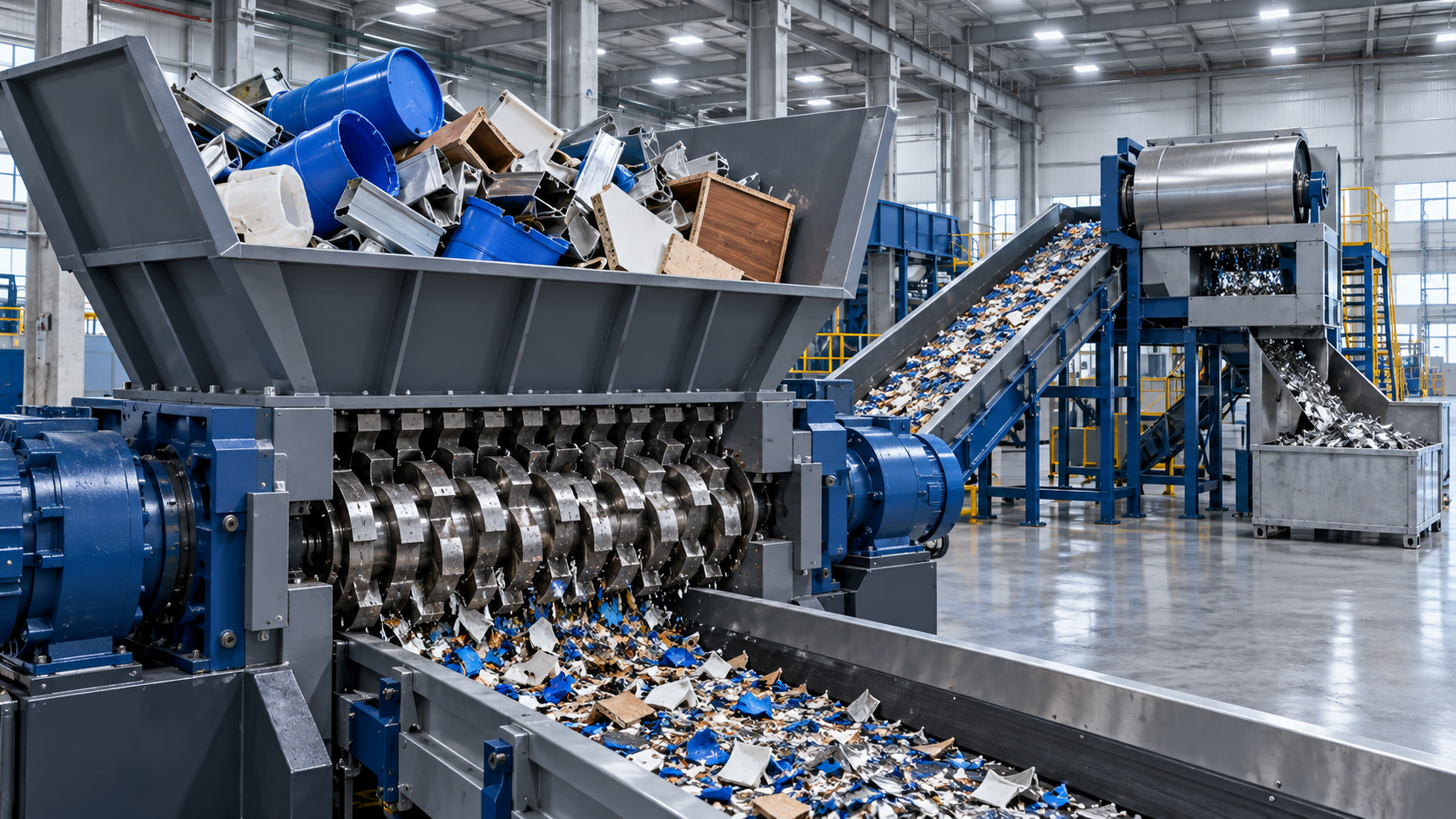
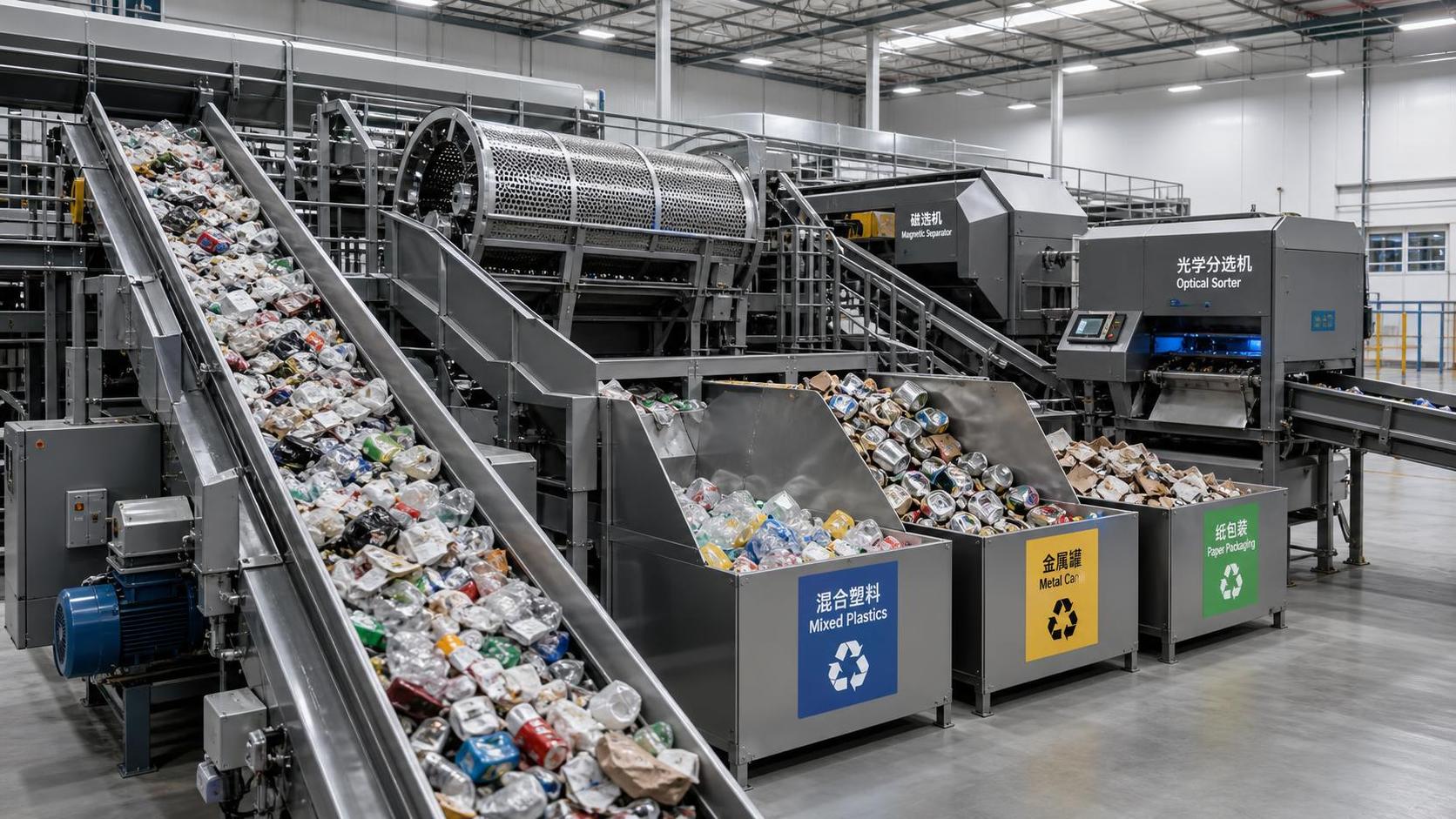
For example, dry packaging waste often requires ballistic separation, magnetic separation, eddy current separation, and optical sorting. Construction and demolition waste may need heavier pre-shredding and robust screening first.
Organic-rich municipal streams create another challenge. Moisture and fines reduce sensor accuracy, increase wrapping risk, and change conveyor behavior. In that case, bag opening, trommel screening, and anti-clogging design become more important.
A simple composition audit before procurement often prevents costly overengineering. It also helps separate essential process steps from optional upgrades that can be phased in later.
Common stream-to-technology fit
Capacity is more than tons per hour
Rated throughput figures often look straightforward, but they can be misleading. Vendors may quote capacity under narrow conditions, such as uniform feed, controlled particle size, or reduced contamination.
For waste sorting equipment for recycling plants, useful capacity should be checked against three numbers: nominal throughput, peak surge capacity, and sustained throughput over a full operating shift.
The relationship between feed rate and sorting accuracy also matters. As belt loading increases, detection windows shrink, object overlap rises, and ejection precision can fall.
That means a sorter rated for 8 tons per hour may not deliver the required product purity at that speed. The practical operating point could be closer to 6 tons per hour.
This is where line balancing becomes critical. Screens, conveyors, bunkers, and downstream balers must be matched to the same realistic capacity envelope.
Questions that clarify real capacity
- What feed composition was used to establish the quoted tons per hour?
- At that throughput, what purity and recovery rates were achieved?
- How does performance change under wet, dusty, or highly variable loads?
- What buffer capacity is built into hoppers and transfer points?
- Can the line handle future expansion without replacing core machines?
Matching equipment type to plant objectives
Not every plant is pursuing the same outcome. Some need cleaner commodity fractions for resale. Others need landfill diversion, RDF preparation, or compliance with municipal recovery targets.
Those goals change the right equipment mix. A plant optimized for PET and HDPE recovery will prioritize sensor resolution and ejection precision. A residue reduction line may focus more on screening and mechanical robustness.
Waste sorting equipment for recycling plants usually falls into several functional groups. The selection challenge is deciding how much value each group adds within a specific recovery strategy.
Core equipment groups
- Feeding and opening equipment for controlled material presentation.
- Sizing equipment such as trommels or disc screens for fraction separation.
- Ferrous and non-ferrous separators for metal recovery.
- Optical sorters for polymer, fiber, color, or product recognition.
- Air and density systems for light versus heavy fraction management.
- Bunkers, conveyors, and controls that stabilize the complete line.
When reviewing layouts, it helps to judge each machine by its contribution to the final bale or recovered fraction, not by technology appeal alone.
The overlooked factors that affect uptime
Plants often focus on separation efficiency first. Yet uptime losses usually come from wear parts, clogging, poor access, inconsistent controls, or weak dust management.
This is especially relevant in heavy industrial environments, where missed production windows can disrupt transport schedules, labor planning, and downstream material contracts.
Several engineering details deserve early attention:
- Access for cleaning sensor windows, replacing belts, and changing wear liners.
- Dust extraction interfaces and enclosure quality.
- Fire prevention strategy for batteries, fines, and combustible fractions.
- Control system diagnostics, alarm history, and remote support readiness.
- Availability of local service, spare parts lead times, and operator training.
Compliance should also be checked early. CE, UL, ISO alignment, guarding design, lockout provisions, and electrical integration standards can shape both cost and commissioning time.
A practical evaluation framework for supplier comparison
A useful procurement process compares complete operating outcomes, not isolated machine specifications. This is where a structured scoring sheet becomes more reliable than broad claims.
For waste sorting equipment for recycling plants, a balanced evaluation usually includes technical fit, recoverable value, maintainability, and total operating risk.
Reference visits and third-party performance documentation are especially useful. They reveal how equipment behaves after commissioning, when contamination, wear, and staffing realities appear.
How to move from concept to a dependable short list
A strong next step is to build a brief process basis before comparing vendors. That document should define stream composition, target outputs, hourly capacity, utility constraints, compliance expectations, and expansion assumptions.
From there, request line-level proposals instead of disconnected machine quotes. That keeps attention on throughput balance, control logic, maintenance access, and downstream product quality.
Waste sorting equipment for recycling plants delivers the best return when it is selected as part of a complete operating system. The more precisely the stream and capacity envelope are defined, the easier it becomes to judge risk, compare suppliers, and protect future performance.
A disciplined review of test data, layout assumptions, and lifecycle service terms usually does more for project success than chasing the highest nominal throughput. That is the point where equipment selection becomes an engineering decision, not just a purchasing event.
Technical Specifications
- Air Handling Unit Supplier Checklist: Performance Data, Lead Times, and SupportAuthor :Environmental Engineering Director
- Buying Fiberglass Water Tanks Wholesale: Compare Quotes and Delivery CostsAuthor :Environmental Engineering Director
- Choosing an XLPE Power Cable Supplier: Test Reports, Traceability, and Lead TimesAuthor :Grid Infrastructure Analyst
Expert Insights

Chief Security Architect
Dr. Thorne specializes in the intersection of structural engineering and digital resilience. He has advised three G7 governments on industrial infrastructure security.
Related Analysis
- Oct 19, 2026Air Handling Unit Supplier Checklist: Performance Data, Lead Times, and SupportAuthor :Environmental Engineering Director
- Oct 18, 2026Buying Fiberglass Water Tanks Wholesale: Compare Quotes and Delivery CostsAuthor :Environmental Engineering Director
- Oct 17, 2026Choosing an XLPE Power Cable Supplier: Test Reports, Traceability, and Lead TimesAuthor :Grid Infrastructure Analyst
Core Sector // 01
Security & Safety
- How to Select a Twin Shaft Shredder for Bulky Waste, Scrap Metal, and PlasticsAuthor :Environmental Engineering Director

- How to Choose a Twin Shaft Shredder for Tires: Torque, Throughput, and Knife DesignAuthor :Environmental Engineering Director

- Selecting Waste Recycling Equipment by Waste Stream, Throughput, and Contamination LevelAuthor :Environmental Engineering Director

- How to Choose Waste Sorting Equipment for Recycling Plants by Material Stream and CapacityAuthor :Environmental Engineering Director

- Scrap Metal Baler Buying Guide: Horizontal vs Vertical, Capacity, Power, and OutputAuthor :Environmental Engineering Director

- What Is Industrial Ecology and How Does It Improve Resource Efficiency in Manufacturing?Author :Environmental Engineering Director

- Pet Bottle Washing Line Problems: Common Causes of Flake Contamination and How to Fix ThemAuthor :Environmental Engineering Director

- How to Evaluate Environment & Ecology Cost in Industrial ProjectsAuthor :Environmental Engineering Director