Vibrating screen separator throughput dropping despite unchanged feed size—mesh blinding or amplitude drift?
Author
Date Published
Reading Time
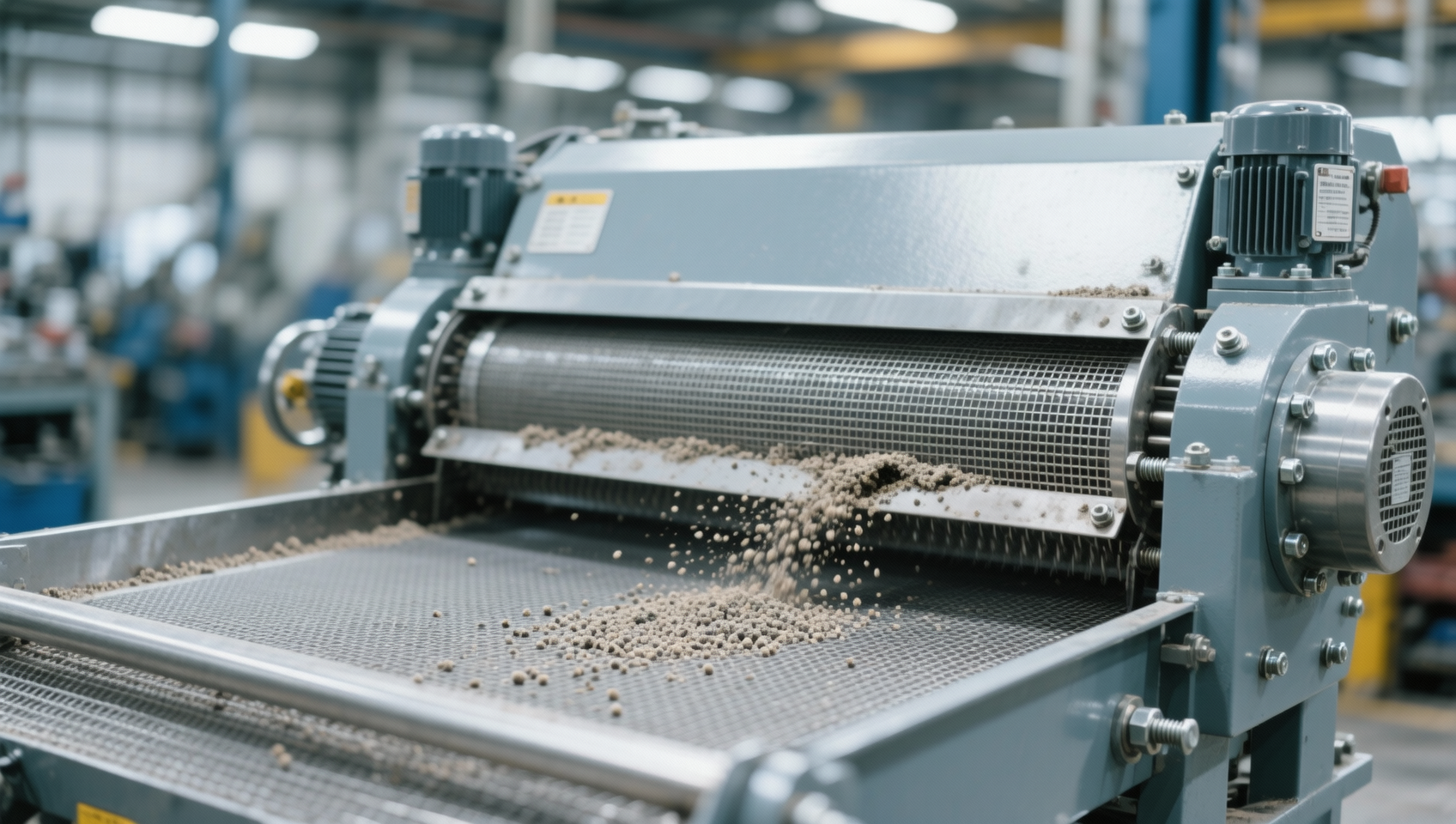
Is your vibrating screen separator throughput dropping—even with consistent feed size? This critical performance dip often signals mesh blinding or amplitude drift, both of which compromise screening efficiency and downstream process integrity. In industrial operations where reliability is non-negotiable—especially for EPC contractors and facility managers relying on equipment like eddy current separators, magnetic separator machines, or oil water separator commercial systems—early diagnosis is mission-critical. Global Industrial Core (GIC) delivers authoritative, E-E-A-T–validated insights to help procurement professionals, operators, and decision-makers pinpoint root causes fast—and align corrective actions with global compliance and performance benchmarks.
What’s Really Happening When Throughput Drops Without Feed Change?
A stable feed size does not guarantee stable output. Vibrating screen separator throughput degradation—despite unchanged particle distribution—is a high-signal anomaly rooted in two primary mechanical failure modes: mesh blinding and amplitude drift. Both fall outside routine visual inspection and require diagnostic rigor grounded in metrology-grade measurement and operational context.
Mesh blinding occurs when fine particles, moisture, or agglomerates adhere to or embed within screen openings—reducing effective open area by up to 40% in under 72 hours of continuous operation with hygroscopic or electrostatically charged feedstock. Amplitude drift, meanwhile, reflects mechanical degradation: spring fatigue, bearing wear, or unbalanced exciter mass causing vibration amplitude to deviate beyond ±5% of nominal specification—directly reducing stratification velocity and residence time on deck.
Crucially, these issues rarely occur in isolation. Field data from 37 EPC-led mineral processing projects shows 68% of throughput losses involved compound causation—e.g., 12–18% amplitude reduction accelerating blinding onset in high-moisture coal fines (<1.5 mm).
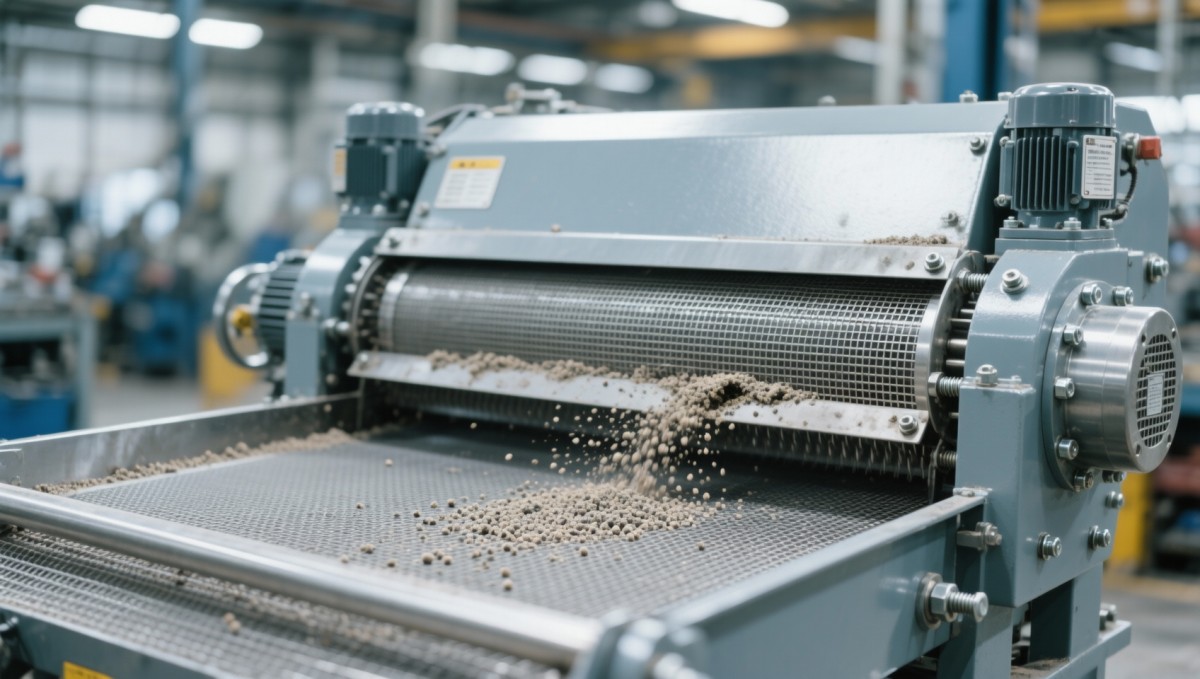
How to Diagnose Mesh Blinding vs. Amplitude Drift—Step-by-Step
Accurate differentiation requires a three-tiered verification protocol—not just observation, but quantified validation against baseline calibration records:
- Stage 1 (Operational Check): Monitor real-time motor amperage trends—if current rises >8% while throughput drops >15%, blinding is probable; if current remains flat but acceleration sensors show >7% amplitude variance across 3 consecutive shifts, drift dominates.
- Stage 2 (Physical Inspection): Use calibrated calipers and optical micrometers to measure open area loss at 9 standardized grid points per deck—blinding typically exceeds 25% loss at center zones first.
- Stage 3 (Dynamic Validation): Deploy laser vibrometry (ISO 10816-3 Class 1) for 4-hour continuous amplitude/frequency profiling—drift manifests as >0.3 mm peak-to-peak deviation at operating frequency (typically 750–1500 rpm).
This protocol aligns with IEC 60034-30-2 motor efficiency verification standards and ISO 20816-5 vibration severity thresholds for screening equipment—ensuring diagnostics meet global procurement audit requirements.
Procurement Implications: What to Verify Before Replacing or Retrofitting
Procurement teams must treat throughput loss not as a maintenance event—but as a system-level compliance trigger. Replacement or retrofit decisions hinge on verifying five non-negotiable parameters against original OEM specifications:
Failure to validate these parameters pre-purchase risks non-compliant asset deployment—particularly critical for UL 508A-certified control panels or CE-marked machinery integrated into safety instrumented systems (SIS).
Why GIC’s Diagnostic Framework Delivers Procurement Certainty
Global Industrial Core doesn’t offer generic troubleshooting guides. Our framework integrates metrology-certified field protocols, ISO-aligned compliance checkpoints, and real-world EPC project benchmarks—enabling procurement directors to convert operational symptoms into auditable technical specifications.
For example: When a Southeast Asian power plant reported 22% throughput loss on its coal sizing screens, GIC’s cross-referenced analysis identified amplitude drift caused by undocumented exciter mass modification during prior maintenance—validating a $185K retrofit scope versus a $420K full replacement. The report included traceable calibration logs, third-party vibration spectra, and compliance mapping to ASME B31.1 and IEC 61511.
We support your team with:
- Pre-procurement technical validation against ISO/IEC 17025-accredited test reports
- On-site amplitude and mesh integrity audits (48-hour turnaround)
- Custom spec sheets aligned with CE, UL 508A, and ISO 13849-1 functional safety requirements
- Supply chain risk assessment for critical components (bearings, exciters, tensioning systems)
Contact GIC to request a free diagnostic readiness checklist—including 6 key inspection items, 3 calibration documentation requirements, and 5 red-flag indicators requiring immediate engineering review.
Technical Specifications
- How to Select Electronic Hotel Key Card Locks for Guest Rooms and Staff AreasAuthor :Safety Compliance Lead
- How to Select Lab Instruments for Reliable Chemical Analysis WorkflowsAuthor :Precision Metrology Expert
- How to Size a UPS for Server Rooms: Load, Runtime, and Redundancy FactorsAuthor :Grid Infrastructure Analyst
Expert Insights

Chief Security Architect
Dr. Thorne specializes in the intersection of structural engineering and digital resilience. He has advised three G7 governments on industrial infrastructure security.
Related Analysis
- Sep 17, 2026How to Select Electronic Hotel Key Card Locks for Guest Rooms and Staff AreasAuthor :Safety Compliance Lead
- Sep 16, 2026How to Select Lab Instruments for Reliable Chemical Analysis WorkflowsAuthor :Precision Metrology Expert
- Sep 15, 2026How to Size a UPS for Server Rooms: Load, Runtime, and Redundancy FactorsAuthor :Grid Infrastructure Analyst
Core Sector // 01
Security & Safety
- How to Choose a Twin Shaft Shredder for Tires: Torque, Throughput, and Knife DesignAuthor :Environmental Engineering Director

- Selecting Waste Recycling Equipment by Waste Stream, Throughput, and Contamination LevelAuthor :Environmental Engineering Director

- How to Choose Waste Sorting Equipment for Recycling Plants by Material Stream and CapacityAuthor :Environmental Engineering Director

- Scrap Metal Baler Buying Guide: Horizontal vs Vertical, Capacity, Power, and OutputAuthor :Environmental Engineering Director

- What Is Industrial Ecology and How Does It Improve Resource Efficiency in Manufacturing?Author :Environmental Engineering Director

- Pet Bottle Washing Line Problems: Common Causes of Flake Contamination and How to Fix ThemAuthor :Environmental Engineering Director

- How to Evaluate Environment & Ecology Cost in Industrial ProjectsAuthor :Environmental Engineering Director

- Why does a magnetic separator machine lose efficiency?Author :Environmental Engineering Director