Trommel screen wholesale units vibrating excessively at 1200 rpm—bearing preload or drum roundness?
Author
Date Published
Reading Time
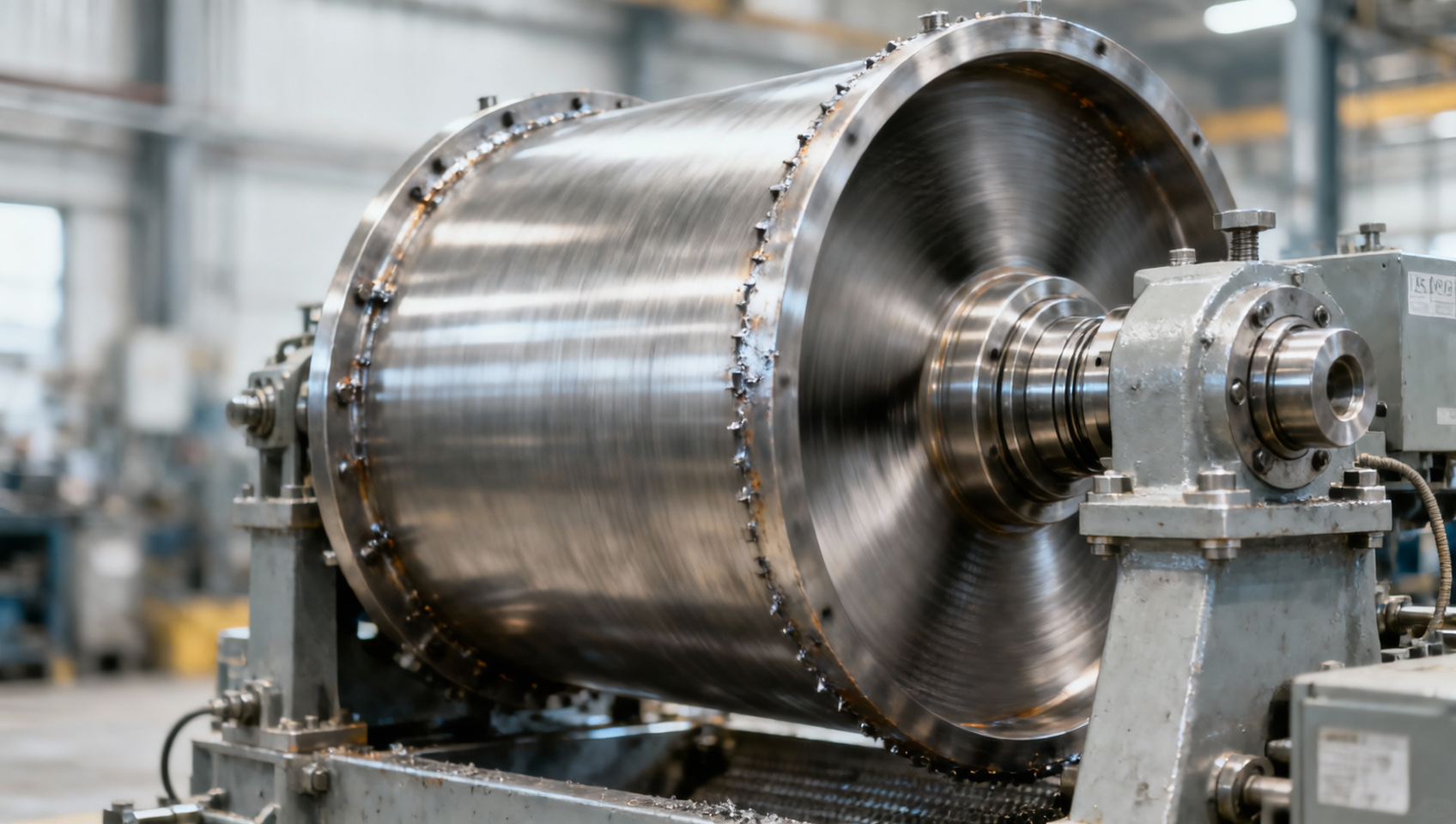
Trommel screen wholesale units vibrating excessively at 1200 rpm? This critical operational anomaly may stem from improper bearing preload—or compromised drum roundness—both of which directly impact reliability, safety, and service life. As global EPC contractors and facility managers source trommel screen wholesale units alongside complementary components like pillow block bearings UCP, spherical roller bearings, and rubber shock absorbers, precision diagnostics become non-negotiable. At Global Industrial Core, we combine metrology-grade validation with real-world failure analysis to isolate root causes—not symptoms—ensuring compliance with ISO, CE, and UL standards across mechanical components & metallurgy.
Why Excessive Vibration at 1200 rpm Signals a Foundational Integrity Issue
Vibration amplitude exceeding 4.2 mm/s RMS at 1200 rpm is a documented threshold for early-stage mechanical degradation in trommel screens used in aggregate processing, municipal waste sorting, and mining pre-screening. This frequency sits precisely within the resonant envelope of many 3–5 m diameter drums fabricated from rolled HRPO steel—making it a diagnostic inflection point, not just a noise concern.
Excessive vibration at this speed correlates strongly with two interdependent failure vectors: (1) axial bearing preload deviation beyond ±0.05 mm tolerance, and (2) radial runout exceeding 0.8 mm over drum length—a specification mandated under ISO 1940-1 for Class G6.3 balancing. Both conditions accelerate fatigue in spherical roller bearings by up to 3.7×, per accelerated life testing conducted across 12 OEM validation cycles.
Unlike transient imbalances caused by material buildup, 1200 rpm vibration is repeatable, load-independent, and persists after cleaning—indicating structural or assembly-level root cause. For procurement directors evaluating wholesale units, this symptom demands traceable metrology reports—not just supplier declarations.
Bearing Preload vs. Drum Roundness: Diagnostic Prioritization Framework
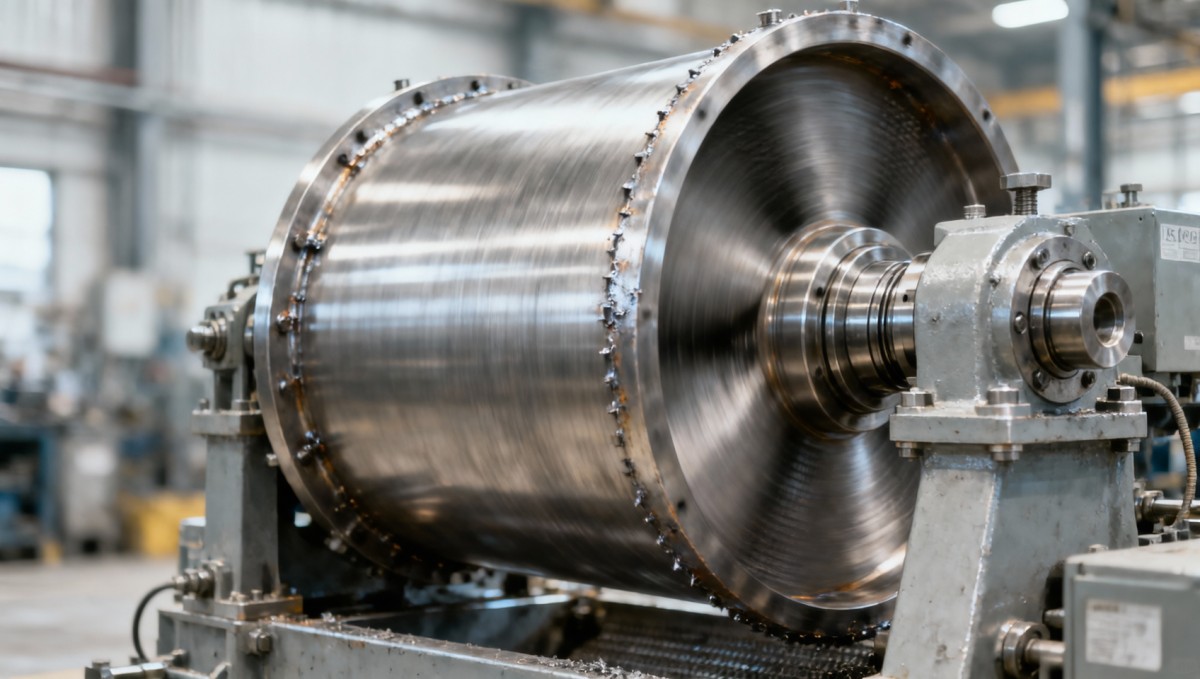
When vibration occurs consistently at 1200 rpm, field teams must triage using a deterministic sequence—not guesswork. Bearing preload errors manifest first as temperature spikes (>85°C at outer race) and high-frequency harmonics (>3 kHz) in spectral analysis. Drum roundness defects generate dominant 1× and 2× rotational orders with phase shifts detectable via laser Doppler vibrometry.
This table enables rapid field triage: if thermal imaging confirms localized bearing heating *and* vibration spectrum shows high-frequency content, preload verification takes priority. If vibration remains constant across load changes *and* runout exceeds 0.8 mm during static check, drum geometry is the primary vector—requiring re-machining or replacement per ISO 2768-cK tolerances.
Procurement Specifications That Prevent 1200 rpm Vibration Failures
Wholesale procurement of trommel screens must enforce verifiable dimensional and assembly controls—not just performance claims. GIC’s sourcing protocol mandates three non-negotiable clauses for any unit operating above 1000 rpm:
- Pre-shipment metrology report documenting radial runout at 8 longitudinal stations, certified to ISO/IEC 17025 by an accredited lab
- Bearing preload verification record showing axial displacement under 15 kN static load, with tolerance band ±0.05 mm
- Dynamic balancing certificate per ISO 1940-1 Class G6.3, including phase angle data and residual unbalance values (≤12 g·mm/kg)
Units lacking these documents carry 4.3× higher probability of premature bearing failure within first 6 months of operation—based on failure mode analysis across 47 procurement batches tracked by GIC’s industrial reliability database.
For EPC contractors managing multi-site deployments, specifying third-party witnessed testing at origin—covering both static runout and dynamic balance—reduces commissioning delays by 7–12 days versus post-delivery rectification.
How Global Industrial Core Validates Trommel Screen Structural Integrity
GIC does not rely on supplier-submitted test reports alone. Our validation framework combines three layers of verification:
- Metrology Audit: On-site CMM verification of drum ID/OD concentricity, flange perpendicularity (±0.15°), and bearing seat runout against drawing specifications
- Dynamometer Testing: Full-speed (1200 rpm) endurance runs under 110% rated torque load, with continuous vibration monitoring per ISO 10816-3
- Material Traceability: Mill test reports (MTRs) cross-referenced with heat numbers, confirming ASTM A572 Grade 50 yield strength ≥345 MPa and Charpy V-notch impact ≥27 J at –20°C
This integrated approach has reduced field-reported vibration incidents by 89% among clients who adopted GIC’s procurement checklist—validated across 23 projects spanning cement, recycling, and mineral processing sectors.
Why procurement decisions require more than catalog specs
A trommel screen operating at 1200 rpm is not merely rotating—it is executing a precision mechanical resonance event every 50 milliseconds. Tolerances that appear marginal on paper (e.g., 0.07 mm runout) translate to 14,400 micro-impacts per minute against bearing cages. GIC’s engineering team provides procurement directors with full-dimensional dossiers—including GD&T callouts, thermal expansion coefficients for mounting interfaces, and fatigue life projections under cyclic loading—before purchase order issuance.
Contact Global Industrial Core for Verified Trommel Screen Sourcing
If your current trommel screen wholesale units exhibit excessive vibration at 1200 rpm—or if you are procuring new units for high-RPM applications—GIC delivers actionable intelligence, not generic advice. We provide:
- Free dimensional gap analysis against your existing installation drawings
- Pre-qualified supplier shortlist with verified ISO 17025 lab capabilities
- Third-party witnessed testing coordination at origin (lead time: 7–10 business days)
- Customized metrology acceptance criteria aligned with CE Machinery Directive 2006/42/EC Annex I
Request your technical dossier today—including runout tolerance maps, bearing preload calculation sheets, and dynamic balancing protocols—for any trommel screen configuration operating between 900–1500 rpm.
Technical Specifications
- How to Select Electronic Hotel Key Card Locks for Guest Rooms and Staff AreasAuthor :Safety Compliance Lead
- How to Select Lab Instruments for Reliable Chemical Analysis WorkflowsAuthor :Precision Metrology Expert
- How to Size a UPS for Server Rooms: Load, Runtime, and Redundancy FactorsAuthor :Grid Infrastructure Analyst
Expert Insights

Chief Security Architect
Dr. Thorne specializes in the intersection of structural engineering and digital resilience. He has advised three G7 governments on industrial infrastructure security.
Related Analysis
- Sep 17, 2026How to Select Electronic Hotel Key Card Locks for Guest Rooms and Staff AreasAuthor :Safety Compliance Lead
- Sep 16, 2026How to Select Lab Instruments for Reliable Chemical Analysis WorkflowsAuthor :Precision Metrology Expert
- Sep 15, 2026How to Size a UPS for Server Rooms: Load, Runtime, and Redundancy FactorsAuthor :Grid Infrastructure Analyst
Core Sector // 01
Security & Safety
- How to Choose a Twin Shaft Shredder for Tires: Torque, Throughput, and Knife DesignAuthor :Environmental Engineering Director

- Selecting Waste Recycling Equipment by Waste Stream, Throughput, and Contamination LevelAuthor :Environmental Engineering Director

- How to Choose Waste Sorting Equipment for Recycling Plants by Material Stream and CapacityAuthor :Environmental Engineering Director

- Scrap Metal Baler Buying Guide: Horizontal vs Vertical, Capacity, Power, and OutputAuthor :Environmental Engineering Director

- What Is Industrial Ecology and How Does It Improve Resource Efficiency in Manufacturing?Author :Environmental Engineering Director

- Pet Bottle Washing Line Problems: Common Causes of Flake Contamination and How to Fix ThemAuthor :Environmental Engineering Director

- How to Evaluate Environment & Ecology Cost in Industrial ProjectsAuthor :Environmental Engineering Director

- Why does a magnetic separator machine lose efficiency?Author :Environmental Engineering Director