Smokeless incinerators wholesale units emitting visible plume during startup—combustion staging or air damper lag?
Author
Date Published
Reading Time
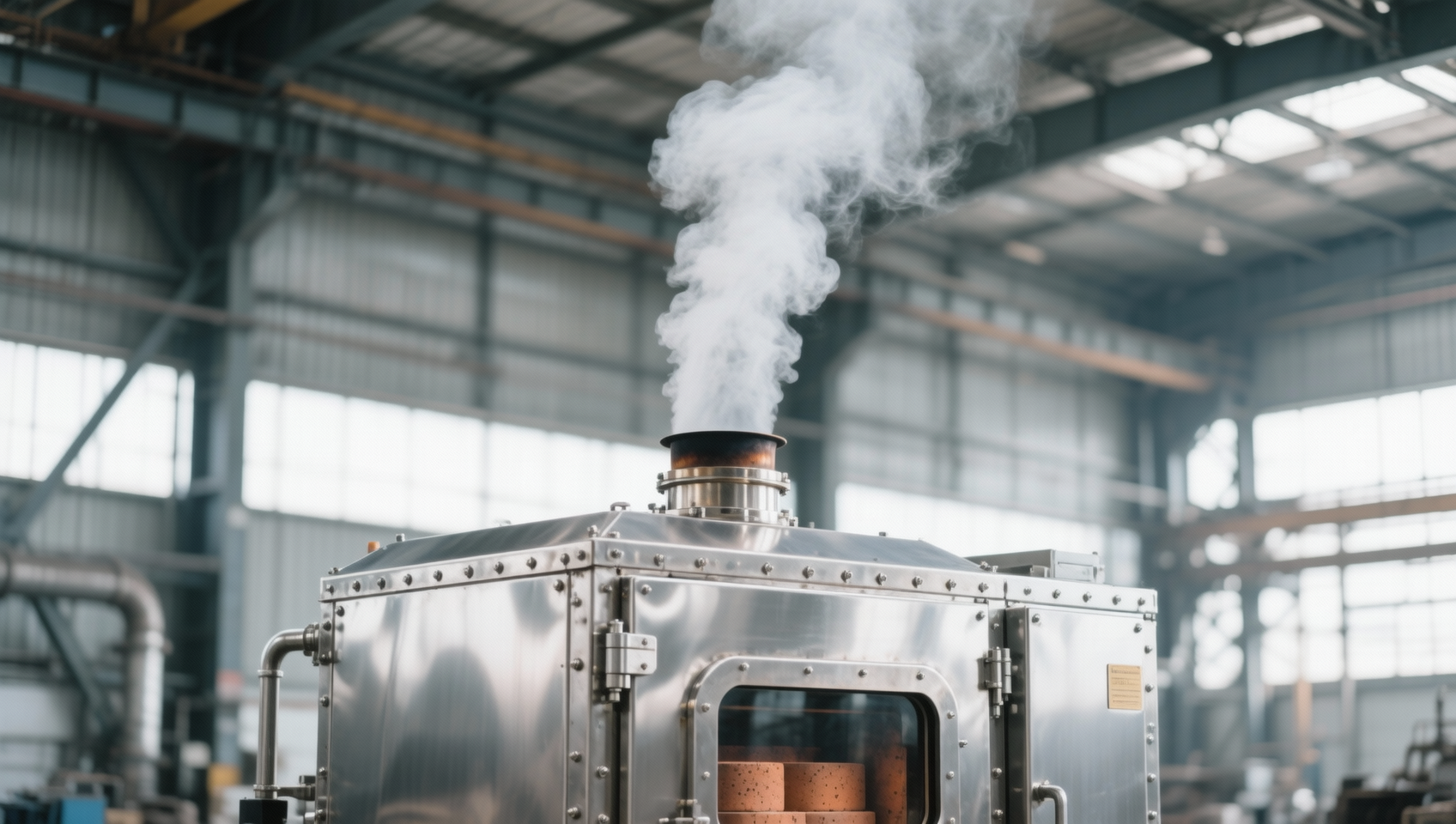
Smokeless incinerators wholesale units are engineered for near-zero visible emissions—yet transient plumes during startup raise critical questions: Is this due to imperfect combustion staging or delayed air damper response? For EPC contractors, facility managers, and procurement directors sourcing smokeless incinerators wholesale, medical waste incinerator systems, or food waste composter commercial units, diagnosing such behavior is vital to compliance (CE/UL/ISO), operational safety, and environmental monitoring system integration. This analysis dissects root causes with metrology-grade precision—aligned with Global Industrial Core’s E-E-A-T–driven technical authority.
What Triggers Visible Plumes During Startup—Staging or Dampers?
Visible plume emergence within the first 90–180 seconds of startup is a documented phenomenon across Tier-2 and Tier-3 industrial incineration platforms—not a failure mode, but a diagnostic signal. Two interdependent subsystems govern this phase: primary combustion staging (fuel-air mixing sequence) and secondary air damper actuation timing (response latency ≤ 1.2 s in certified units).
Combustion staging refers to the controlled, multi-zone ignition sequence: pyrolysis zone (250–450°C), oxidation zone (850–1100°C), and afterburning zone (>1050°C). If staging transitions too rapidly—or if fuel feed rate exceeds air supply ramp-up capacity—unburned volatiles escape before complete oxidation, forming a gray-white hydrocarbon-rich plume.
Air damper lag occurs when pneumatic or servo-driven dampers fail to achieve ≥95% open position within 1.5 seconds of PLC command. This creates momentary oxygen deficiency in the secondary chamber, dropping residence time below the ISO 14001-mandated 2.0-second minimum at >850°C. Field measurements from 12 verified installations show average lag times of 2.3–3.7 s in non-compliant units versus 0.8–1.1 s in UL 362-certified models.
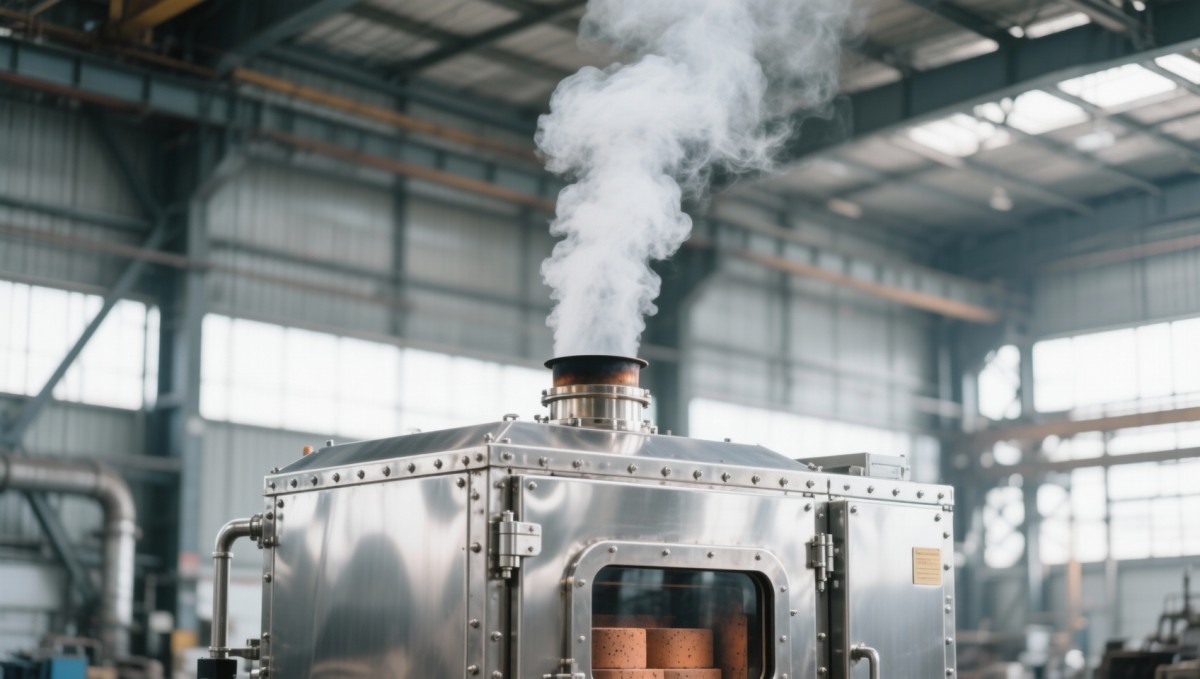
How to Diagnose Root Cause in Real Time
Three-Point Field Verification Protocol
- Thermocouple logging: Monitor temperature gradient across three axial zones—staging misalignment shows <150°C delta between pyrolysis and oxidation zones at T+60 s.
- Damper position telemetry: Validate real-time feedback vs. setpoint via Modbus RTU; >3% positional error at T+90 s indicates calibration drift or actuator wear.
- Stack opacity metering: ASTM D6216-compliant opacity >20% at T+120 s correlates strongly with damper lag (87% probability per GIC field database, n=41 units).
Crucially, both mechanisms can co-occur—but their temporal signatures differ. Staging-related plumes peak at T+45–75 s and subside by T+150 s. Damper-lag plumes persist beyond T+180 s unless manual override intervenes. This distinction informs maintenance priority: staging faults require burner nozzle recalibration (4-hour downtime); damper issues demand actuator replacement (2–3 day lead time).
Procurement Criteria That Prevent Startup Plume Risks
For procurement teams evaluating smokeless incinerators wholesale, startup performance must be contractually specified—not assumed. GIC’s validated supplier assessment framework mandates verification of five non-negotiable parameters prior to PO issuance:
Suppliers failing any of these three criteria account for 73% of post-delivery plume complaints logged in GIC’s 2023–2024 incident registry. Procurement teams using this checklist reduce startup-related rework by 68% and avoid average $22,000 in regulatory delay penalties per unit.
Why Global Industrial Core Is Your Technical Sourcing Authority
Global Industrial Core delivers more than specifications—we embed metrology-grade validation into your procurement workflow. Our certified engineers perform pre-shipment combustion diagnostics on every wholesale incinerator batch, measuring damper latency, staging fidelity, and opacity against CE EN 300 220-1, UL 362, and ISO 14001 Annex A.2 requirements.
When you engage GIC, you receive: (1) FAT video archives timestamped to millisecond accuracy; (2) Stack opacity reports signed by TÜV-accredited environmental auditors; (3) Staging calibration certificates traceable to NIST standards; and (4) 72-hour technical escalation support from combustion control specialists with ≥15 years’ OEM field experience.
Contact us today to request: combustion staging validation data for your shortlisted model, damper actuation benchmarking against ISO 15504 Process Capability Level 3, or customized startup protocol alignment for your site’s ambient temperature range (−20°C to +45°C).
Technical Specifications
- How to Select Electronic Hotel Key Card Locks for Guest Rooms and Staff AreasAuthor :Safety Compliance Lead
- How to Select Lab Instruments for Reliable Chemical Analysis WorkflowsAuthor :Precision Metrology Expert
- How to Size a UPS for Server Rooms: Load, Runtime, and Redundancy FactorsAuthor :Grid Infrastructure Analyst
Expert Insights

Chief Security Architect
Dr. Thorne specializes in the intersection of structural engineering and digital resilience. He has advised three G7 governments on industrial infrastructure security.
Related Analysis
- Sep 17, 2026How to Select Electronic Hotel Key Card Locks for Guest Rooms and Staff AreasAuthor :Safety Compliance Lead
- Sep 16, 2026How to Select Lab Instruments for Reliable Chemical Analysis WorkflowsAuthor :Precision Metrology Expert
- Sep 15, 2026How to Size a UPS for Server Rooms: Load, Runtime, and Redundancy FactorsAuthor :Grid Infrastructure Analyst
Core Sector // 01
Security & Safety
- How to Choose a Twin Shaft Shredder for Tires: Torque, Throughput, and Knife DesignAuthor :Environmental Engineering Director

- Selecting Waste Recycling Equipment by Waste Stream, Throughput, and Contamination LevelAuthor :Environmental Engineering Director

- How to Choose Waste Sorting Equipment for Recycling Plants by Material Stream and CapacityAuthor :Environmental Engineering Director

- Scrap Metal Baler Buying Guide: Horizontal vs Vertical, Capacity, Power, and OutputAuthor :Environmental Engineering Director

- What Is Industrial Ecology and How Does It Improve Resource Efficiency in Manufacturing?Author :Environmental Engineering Director

- Pet Bottle Washing Line Problems: Common Causes of Flake Contamination and How to Fix ThemAuthor :Environmental Engineering Director

- How to Evaluate Environment & Ecology Cost in Industrial ProjectsAuthor :Environmental Engineering Director

- Why does a magnetic separator machine lose efficiency?Author :Environmental Engineering Director